


Direct versus Indirect Treatment for Preschool Children who Stutter: The RESTART Randomized Trial
- PMID: 26218228
- PMCID: PMC4517884
- DOI: 10.1371/journal.pone.0133758
Direct versus Indirect Treatment for Preschool Children who Stutter: The RESTART Randomized Trial
Abstract
Objective: Stuttering is a common childhood disorder. There is limited high quality evidence regarding options for best treatment. The aim of the study was to compare the effectiveness of direct treatment with indirect treatment in preschool children who stutter.
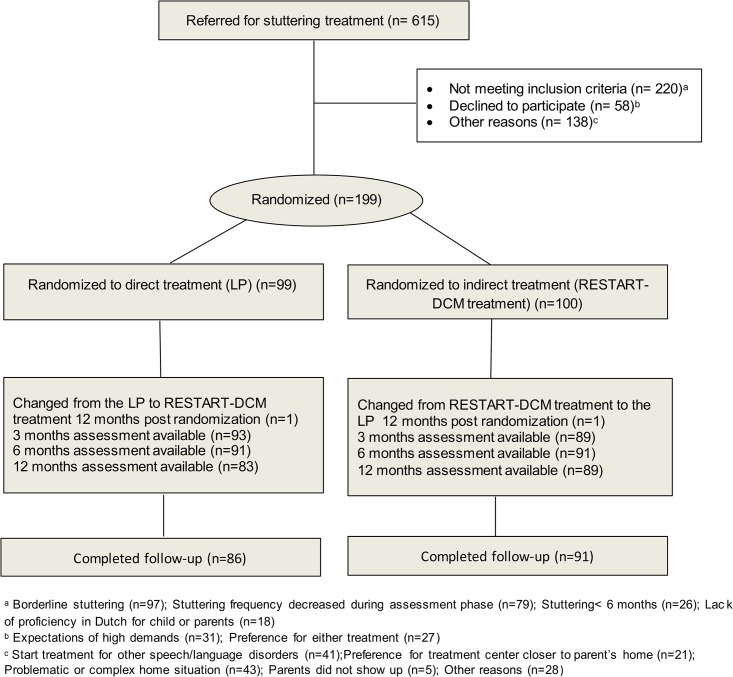
Methods: In this multicenter randomized controlled trial with an 18 month follow-up, preschool children who stutter who were referred for treatment were randomized to direct treatment (Lidcombe Program; n = 99) or indirect treatment (RESTART-DCM treatment; n = 100). Main inclusion criteria were age 3-6 years, ≥3% syllables stuttered (%SS), and time since onset ≥6 months. The primary outcome was the percentage of non-stuttering children at 18 months. Secondary outcomes included stuttering frequency (%SS), stuttering severity ratings by the parents and therapist, severity rating by the child, health-related quality of life, emotional and behavioral problems, and speech attitude.
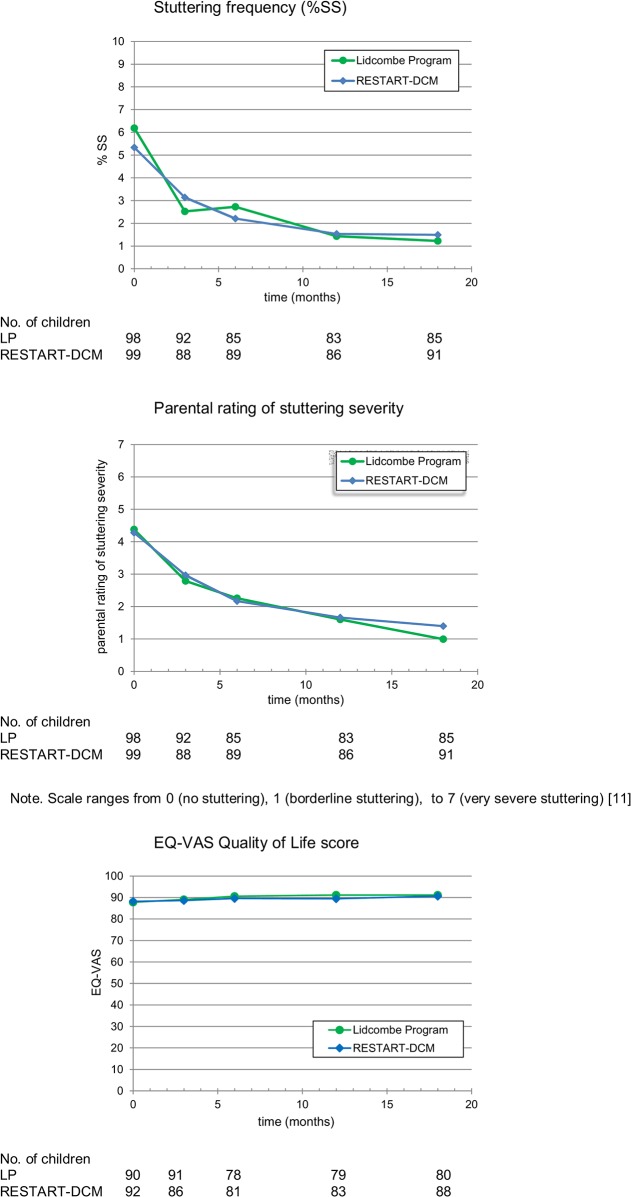
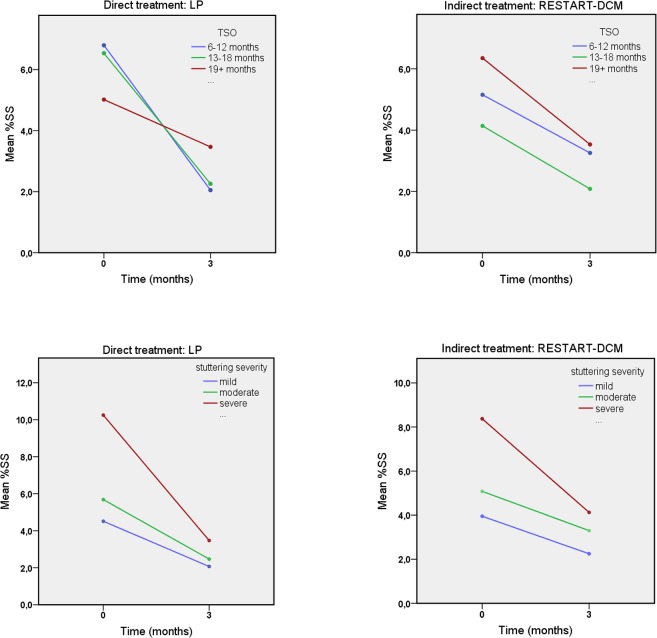
Results: Percentage of non-stuttering children for direct treatment was 76.5% (65/85) versus 71.4% (65/91) for indirect treatment (Odds Ratio (OR), 0.6; 95% CI, 0.1-2.4, p = .42). At 3 months, children treated by direct treatment showed a greater decline in %SS (significant interaction time x therapy: β = -1.89; t(282.82) = -2.807, p = .005). At 18 months, stuttering frequency was 1.2% (SD 2.1) for direct treatment and 1.5% (SD 2.1) for indirect treatment. Direct treatment had slightly better scores on most other secondary outcome measures, but no differences between treatment approaches were significant.
Conclusions: Direct treatment decreased stuttering more quickly during the first three months of treatment. At 18 months, however, clinical outcomes for direct and indirect treatment were comparable. These results imply that at 18 months post treatment onset, both treatments are roughly equal in treating developmental stuttering in ways that surpass expectations of natural recovery. Follow-up data are needed to confirm these findings in the longer term.
Trial registration: isrctn.org ISRCTN24362190.
Conflict of interest statement
Figures
References
-
- Månsson H. Childhood stuttering: Incidence and development. J Fluency Disord 2000. 0;25(1):47–57.
-
- Sommer M, Koch MA, Paulus W, Weiller C, Buchel C. Disconnection of speech-relevant brain areas in persistent developmental stuttering. Lancet 2002. August 3;360(9330):380–383. - PubMed
Publication types
MeSH terms
LinkOut - more resources
Full Text Sources
Other Literature Sources
Medical
