


Making inroads into improving treatment of bacterial vaginosis - striving for long-term cure
- PMID: 26219949
- PMCID: PMC4518586
- DOI: 10.1186/s12879-015-1027-4
Making inroads into improving treatment of bacterial vaginosis - striving for long-term cure
Abstract
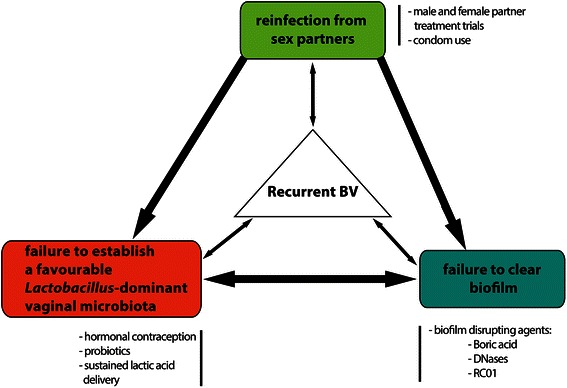
Bacterial vaginosis (BV) is one of the great enigmas in women's health, a common condition of unknown aetiology, which is associated with significant morbidity and unacceptably high recurrence rates. While it remains unclear whether BV recurrence is predominantly due to failure of current antibiotic regimens to eradicate BV-associated bacteria (BVAB) and biofilm, a failure of some women to re-establish a resilient Lactobacillus-dominant vaginal microbiota, reinfection from sexual partners, or a combination of these factors, it is inherently challenging to make significant inroads towards this goal. In this review, we will outline why BV is such a clinical and epidemiologic conundrum, and focus on several key approaches that we believe merit discussion and clinical research, including strategies to: i) prevent reinfection (partner treatment trials), ii) boost favourable vaginal Lactobacillus species and promote a Lactobacillus-dominant vaginal microbiome (hormonal contraceptive and probiotic trials) and iii) disrupt vaginal BV-associated biofilm.
Figures
References
-
- Koumans EH, Sternberg M, Bruce C, McQuillan G, Kendrick J, Sutton M, et al. The prevalence of bacterial vaginosis in the United States, 2001–2004; associations with symptoms, sexual behaviors, and reproductive health. Sex Transm Dis. 2007;34(11):864–9. doi: 10.1097/OLQ.0b013e318074e565. - DOI - PubMed
Publication types
MeSH terms
Grants and funding
LinkOut - more resources
Full Text Sources
Other Literature Sources
Medical
