. 2015 Jul 29:5:12616.
doi: 10.1038/srep12616.

Protection against dengue disease by synthetic nucleic acid antibody prophylaxis/immunotherapy

Affiliations

Protection against dengue disease by synthetic nucleic acid antibody prophylaxis/immunotherapy

Seleeke Flingai et al. Sci Rep. .

Abstract

Dengue virus (DENV) is the most important mosquito-borne viral infection in humans. In recent years, the number of cases and outbreaks has dramatically increased worldwide. While vaccines are being developed, none are currently available that provide balanced protection against all DENV serotypes. Advances in human antibody isolation have uncovered DENV neutralizing antibodies (nAbs) that are capable of preventing infection from multiple serotypes. Yet delivering monoclonal antibodies using conventional methods is impractical due to high costs. Engineering novel methods of delivering monoclonal antibodies could tip the scale in the fight against DENV. Here we demonstrate that simple intramuscular delivery by electroporation of synthetic DNA plasmids engineered to express modified human nAbs against multiple DENV serotypes confers protection against DENV disease and prevents antibody-dependent enhancement (ADE) of disease in mice. This synthetic nucleic acid antibody prophylaxis/immunotherapy approach may have important applications in the fight against infectious disease.


Figures
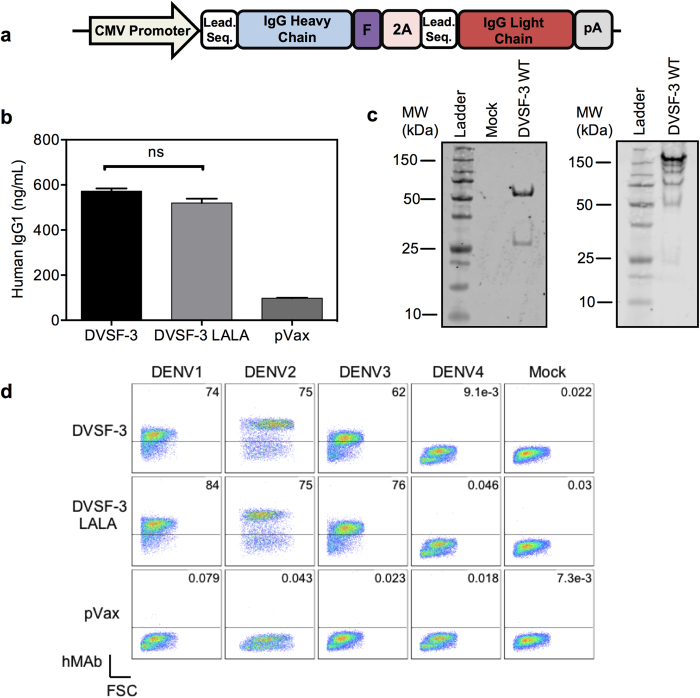
Figure 1
Figure 1. In vitro expression of human anti-DENV neutralizing mAbs by DMAb.
(a) Schematic illustration of DNA plasmid used for DMAb; antibody heavy and light chain sequences are separated by a combination of furin and 2A cleavage sites. (b) ELISA quantification analysis of human IgG in supernatants of pDVSF-3 WT- or LALA-transfected 293T cells. The data displayed are the mean of triplicate values +/− standard error of the mean (SEM) and are representative of three independent experiments. (c) Western blot analysis of pDVSF-3 WT-transfected 293T supernatants containing DVSF-3 WT. Antibodies were purified by Protein A spin columns and separated by SDS-PAGE under reducing (left) and non-reducing (right) conditions.(d) Vero cells were either uninfected (Mock) or infected by DENV1, 2, 3, or 4, then fixed, permeabilized, and stained with supernatants of pDVSF-3 WT- or LALA-transfected 293T cells. The data displayed are representative of two independent experiments.
Figure 2
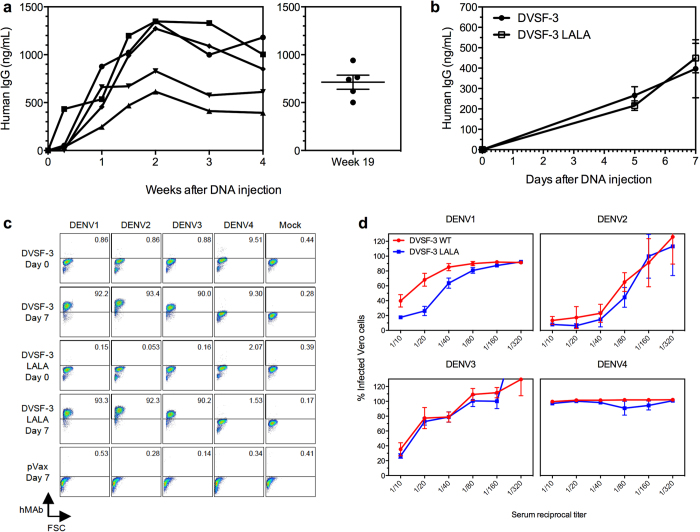
Figure 2. DMAb results in long-term expression of neutralizing DENV antibodies in mouse serum.
(a) Total serum-detectable levels of human IgG was measured by ELISA after a single intramuscular injection of DNA plasmid encoding the anti-DENV human IgG antibody DVSF-1 into Foxn1/NuJ immunodeficient mice. Human IgG levels between weeks 0–4 (left; data displayed are mean of duplicate values each animal +/−SEM) and at week 19 (right; error bars display the mean of duplicate values from five animals +/− SEM). Each line (left) or dot (right) represents an individual mouse (n = 5 mice). (b) Total human IgG in serum was measured by ELISA after intramuscular injection of pDVSF-3 WT or pDVSF-3 LALA plasmids in 129/Sv mice (n = 4–5 mice per group, data displayed are the mean +/− SEM of each group’s animals and are representative of two independent experiments). (c) Vero cells were either uninfected (Mock) or infected by DENV1, 2, 3, or 4, then fixed, permeabilized, and stained with 129/Sv mouse serum taken at days 0 or 7 post-DNA injection of either pDVSF-3 WT, pDVSF-3 LALA or pVax empty vector (n = 5 mice per group, data representative of two independent experiments).(d) Neutralization was assessed by incubating DENV1, 2, 3, or 4 with serial dilutions of 129/Sv mouse serum taken at day 7 post-DNA injection of either pDVSF-3 WT or pDVSF-3 LALA (n = 5 mice per group) before addition to Vero cells. The percentage of infected cells is shown; error bars are the mean +/− SEM of each group’s animals).
Figure 3
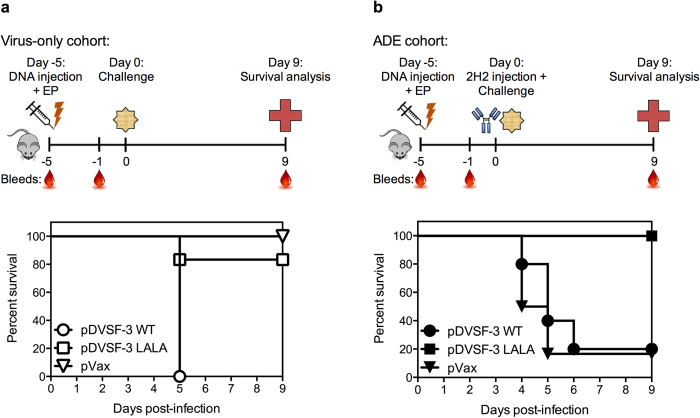
Figure 3. DMAb protects against virus-only and antibody-enhanced disease.
(a) Virus-only challenge: AG129 mice received an intramuscular injection of either pDVSF-3 WT, pDVSF-3 LALA, or pVax empty vector five days prior to challenge with a sublethal dose of DENV2 S221 (n = 5–6 mice per group; p ≤ 0.0084 for comparison between pDVSF-3 LALA and pDVSF-3 WT).(b) Antibody-dependent enhancement challenge: AG129 mice received an intramuscular injection of either pDVSF-3 WT, pDVSF-3 LALA, or pVax empty vector five days prior to administration of an enhancing dose of the non-neutralizing anti-DENV mAb 2H2. Thirty minutes later, mice were challenged with a sublethal dose of DENV2 S221 (n = 5–6 mice per group; p ≤ 0.0072 for comparison between pDVSF-3 LALA and pDVSF-3 WT). A Kaplan-Meier survival curve is shown (a–b).

References

    1. Bhatt S. et al. The global distribution and burden of dengue. Nature 496, 504–507 (2013). - PMC - PubMed
    1. Gubler D. J. The economic burden of dengue. Am. J. Trop. Med. Hyg. 86, 743–744 (2012). - PMC - PubMed
    1. Rothman A. L. Dengue: defining protective versus pathologic immunity. J. Clin. Invest. 113, 946–951 (2004). - PMC - PubMed
    1. Halstead S. B. In vivo enhancement of dengue virus infection in rhesus monkeys by passively transferred antibody. J. Infect. Dis. 140, 527–533 (1979). - PubMed
    1. Peiris J. S. & Porterfield J. S. Antibody-mediated enhancement of Flavivirus replication in macrophage-like cell lines. Nature 282, 509–511 (1979). - PubMed

Publication types

MeSH terms