


Evaluation of cutaneous wound healing activity of Malva sylvestris aqueous extract in BALB/c mice
- PMID: 26221487
- PMCID: PMC4509959
Evaluation of cutaneous wound healing activity of Malva sylvestris aqueous extract in BALB/c mice
Abstract
Objectives: The aim of this study was to evaluate the effects of Malva sylvestris aqueous extract on cutaneous wound healing in BALB/c mice.
Materials and methods: Twenty seven male BALB/c mice (2.5 months of age) were used. A cut wound (superficial fascia depth) was made locally. The mice were then divided into three groups: the first, second and third groups received topical administration of M. sylvestris 1% aqueous extract, silver sulfadiazine topical cream and cold cream (positive and negative control groups), respectively. On days 4, 7 and 10 excisional biopsies were performed and wound healing was evaluated histopathologically. The data were analyzed by the ANOVA and Tukey statistical tests.
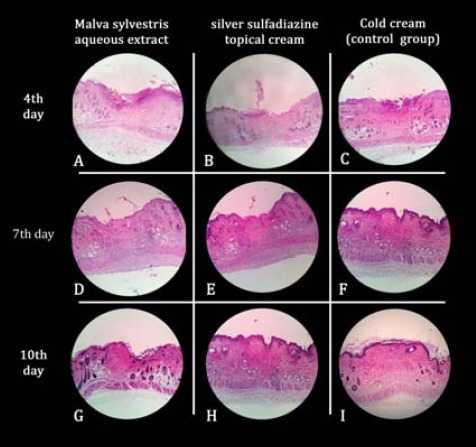
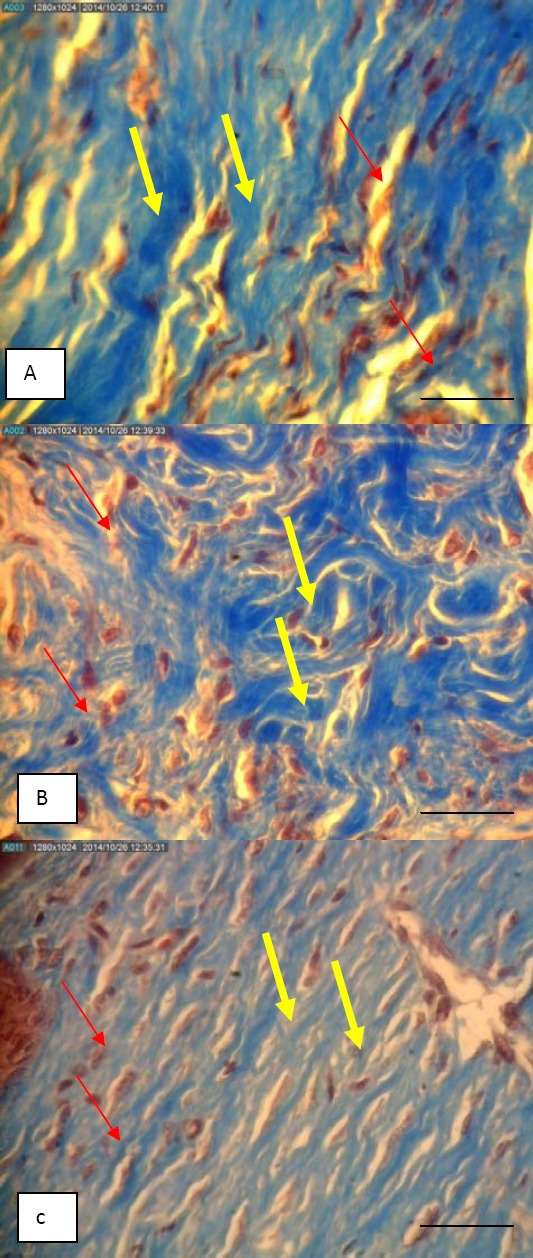
Results: On days 4 and 7, the numbers of inflammatory cells in the silver sulfadiazine and M. sylvestris-treated groups were significantly lower than the control group and keratinization at the edges of the wound in both groups was significantly higher than the control group. On the tenth day of the study, the Malva-treated mice showed better healing features and less fibrosis and scar formation, and also fewer hair follicles were damaged in this group. On the tenth day of the study, the numbers of inflammatory cells in M. sylvestris and silver sulfadiazine-treated groups were significantly lower than the control group.
Conclusion: The present study supports the beneficial effects of M. sylvestris on the wound healing process and suggests a potential clinical application.
Keywords: Malva sylvestris; Mice; Skin; Wound healing.
Figures
References
-
- Kahan V, Andersen M, Tomimori J, Tufik S. Stress, immunity and skin collagen integrity: evidence from animal models and clinical conditions. Brain Behav Immun. 2009;23:1089–1095. - PubMed
-
- Bolognia JL, Jorizzo JL, Rapini R. Mosby Elsevier; 2008. Dermatology.
-
- Martin P. Wound healing--aiming for perfect skin regeneration. Science. 1997;276:75–81. - PubMed
-
- Baum CL, Arpey CJ. Normal Cutaneous Wound Healing: Clinical Correlation with Cellular and Molecular Events. Dermatol Surg. 2005;31:674–686. - PubMed
LinkOut - more resources
Full Text Sources