


Increased Acetylcholinesterase Expression in Bumble Bees During Neonicotinoid-Coated Corn Sowing
- PMID: 26223214
- PMCID: PMC4519780
- DOI: 10.1038/srep12636
Increased Acetylcholinesterase Expression in Bumble Bees During Neonicotinoid-Coated Corn Sowing
Abstract
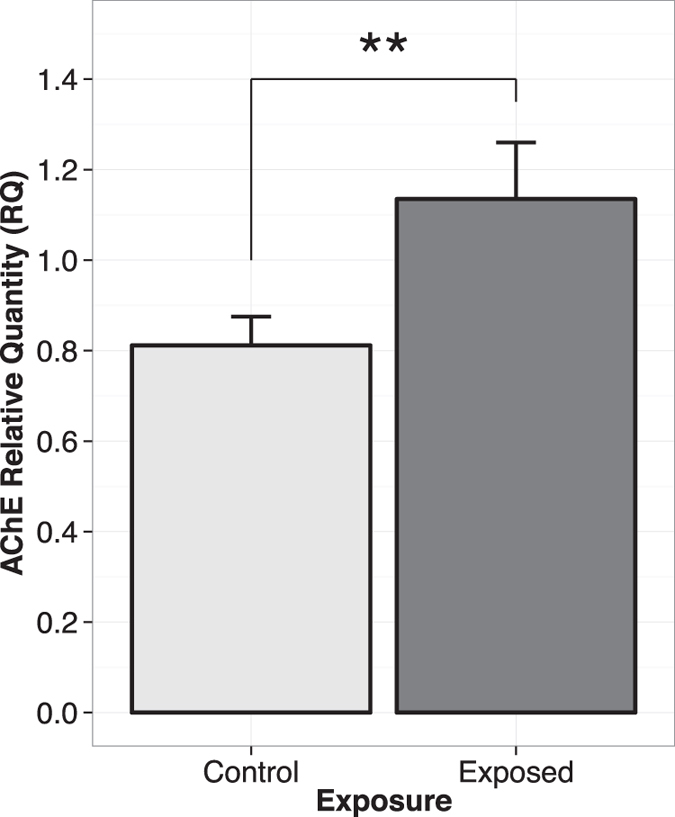
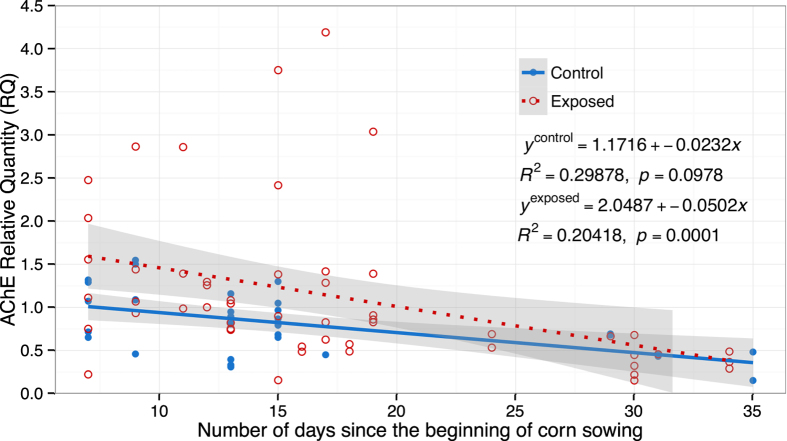
While honey bee exposure to systemic insecticides has received much attention, impacts on wild pollinators have not been as widely studied. Neonicotinoids have been shown to increase acetylcholinesterase (AChE) activity in honey bees at sublethal doses. High AChE levels may therefore act as a biomarker of exposure to neonicotinoids. This two-year study focused on establishing whether bumble bees living and foraging in agricultural areas using neonicotinoid crop protection show early biochemical signs of intoxication. Bumble bee colonies (Bombus impatiens) were placed in two different agricultural cropping areas: 1) control (≥ 3 km from fields planted with neonicotinoid-treated seeds) or 2) exposed (within 500 m of fields planted with neonicotinoid-treated seeds), and maintained for the duration of corn sowing. As determined by Real Time qPCR, AChE mRNA expression was initially significantly higher in bumble bees from exposed sites, then decreased throughout the planting season to reach a similar endpoint to that of bumble bees from control sites. These findings suggest that exposure to neonicotinoid seed coating particles during the planting season can alter bumble bee neuronal activity. To our knowledge, this is the first study to report in situ that bumble bees living in agricultural areas exhibit signs of neonicotinoid intoxication.
Figures
References
-
- Kluser S., Neumann P., Chauzat M.-P. & Pettis J. S. UNEP emerging issues: global honey bee colony disorder and other threats to insect pollinators. 1–16 (2010). Available at: http://www.unep.org/dewa/Portals/67/pdf/Global_bee_colony_disorder_and_t.... (Accessed: 7th March 2013).
-
- Levy S. What’s best for bees. Nature 479, 164–165 (2011). - PubMed
Publication types
MeSH terms
Substances
LinkOut - more resources
Full Text Sources
Other Literature Sources
Research Materials
