. 2015 Jul 29;7(298):298ra117.
doi: 10.1126/scitranslmed.aaa7619.

Cancer chemoprevention: Evidence of a nonlinear dose response for the protective effects of resveratrol in humans and mice

Affiliations

Cancer chemoprevention: Evidence of a nonlinear dose response for the protective effects of resveratrol in humans and mice

Hong Cai et al. Sci Transl Med. .

Abstract

Resveratrol is widely promoted as a potential cancer chemopreventive agent, but a lack of information on the optimal dose prohibits rationally designed trials to assess efficacy. To challenge the assumption that "more is better," we compared the pharmacokinetics and activity of a dietary dose with an intake 200 times higher. The dose-response relationship for concentrations generated and the metabolite profile of [(14)C]-resveratrol in colorectal tissue of cancer patients helped us to define clinically achievable levels. In Apc(Min) mice (a model of colorectal carcinogenesis) that received a high-fat diet, the low resveratrol dose suppressed intestinal adenoma development more potently than did the higher dose. Efficacy correlated with activation of adenosine monophosphate-activated protein kinase (AMPK) and increased expression of the senescence marker p21. Nonlinear dose responses were observed for AMPK and mechanistic target of rapamycin (mTOR) signaling in mouse adenoma cells, culminating in autophagy and senescence. In human colorectal tissues exposed to low dietary concentrations of resveratrol ex vivo, we measured enhanced AMPK phosphorylation and autophagy. The expression of the cytoprotective NAD(P)H dehydrogenase, quinone 1 (NQO1) enzyme was also increased in tissues from cancer patients participating in our [(14)C]-resveratrol trial. These findings warrant a revision of developmental strategies for diet-derived agents designed to achieve cancer chemoprevention.


Figures

Figure 1
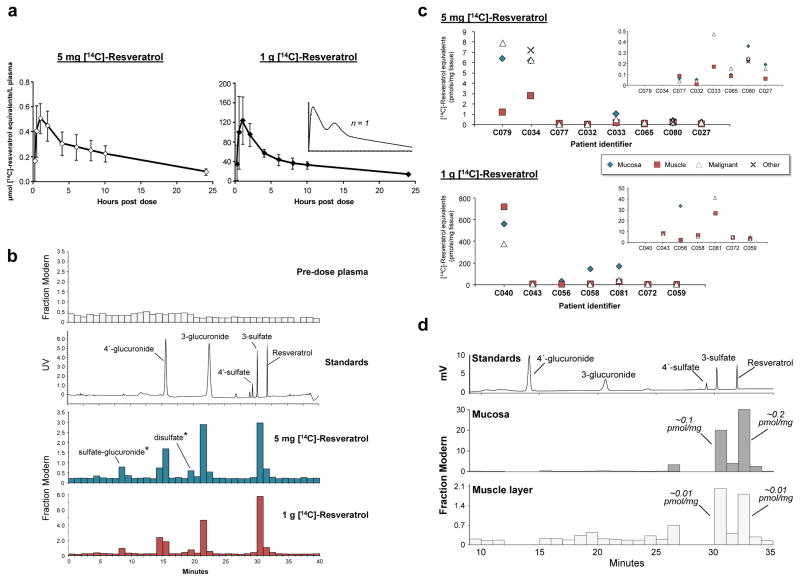
Figure 1. Comparison of the plasma pharmacokinetics and target tissue distribution of [14C]-resveratrol and its metabolites in humans following a low dietary achievable dose or high pharmacological dose
(a–b) Healthy volunteers received a single [14C]-labelled oral dose of either 5 mg or 1 g resveratrol (44.5 kBq, 0.962 μSv) and plasma samples were taken over 24 h for determination of total [14C]-resveratrol equivalents by AMS analysis. (a) Graphs show average (± SD) concentrations for 10 volunteers per group, whilst the inset represents a single participant to illustrate the second peak maxima commonly observed with resveratrol due to enterohepatic recirculation. (b) Plasma metabolite profiles determined by HPLC-AMS analysis of selected samples from one patient on each resveratrol dose, taken 1 h after ingestion. Also included are a pre-dose plasma sample for determination of background levels of radiocarbon and a UV chromatogram from the analysis of authentic metabolite standards. Peaks designated by * were tentatively assigned on the basis of their chromatographic properties, since synthetic standards were not available. (c) Levels of [14C]-resveratrol equivalents in tissues of patients with colorectal cancer that received either 5 mg (n=8) or 1 g (n=7) resveratrol daily for 1 week prior to surgery, with the last dose being [14C]-radiolabelled. Where possible, malignant tissue and normal colorectal mucosa and muscle were obtained for each patient. For some participants, other tissue types (fat, ovarian tumour) were also available for analysis (Supplementary Table 2). One patient in the high dose group had surgery delayed by 6 days after taking [14C]-resveratrol and has been excluded. Enlargements are included as insets to enable comparisons at lower concentrations. (d) Metabolite profile in colorectal mucosa and muscle tissue of a patient that received 5 mg [14C]-resveratrol, determined by HPLC-AMS analysis. Peaks of radiocarbon in both tissue types correspond to resveratrol and its 3-sulfate, based on similarity of retention times to authentic standards, and the concentrations stated translate to μM, assuming 1g of tissue equates to 1mL.
Figure 2
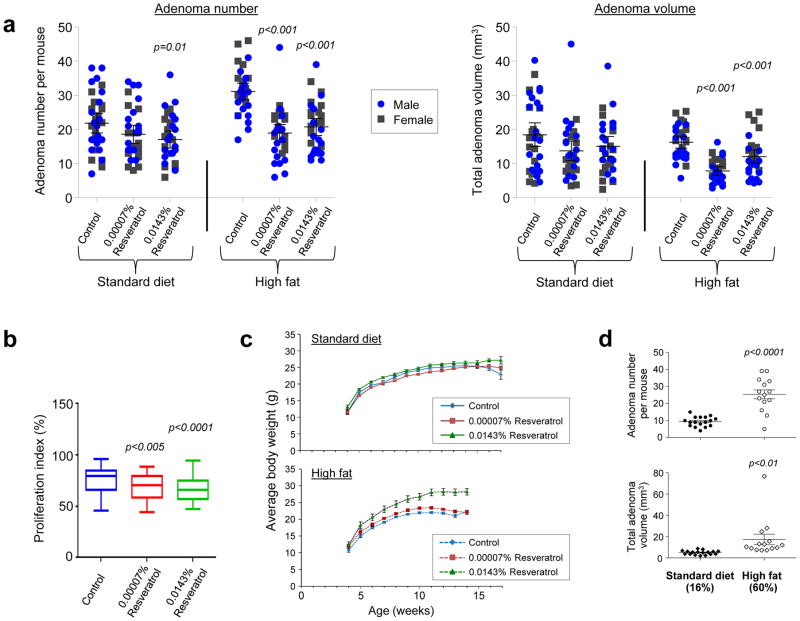
Figure 2. Low dose resveratrol inhibits adenoma development in ApcMin mice on HFD more potently than a dose 200-fold higher
Male and female mice were maintained on SD or HFD from weaning (4 weeks of age) supplemented with resveratrol (0.00007 or 0.0143%). Unless stated otherwise, mice on the SD (16% of calories from fat) were culled at 17 weeks whilst those on the HFD (60% of calories from fat) had to be killed at 14 weeks due to the tumour promoting effects of the latter. (a) Comparison of the number of adenomas per mouse and total adenoma volume in the small intestine of each animal. Data represent the mean ± SEM of 14–16 female plus 17–19 male mice per group. Significant treatment-related differences relative to the corresponding control diet group are shown. (b) Box plot showing the effect of resveratrol on the proliferative index in intestinal adenomas of ApcMin mice on HFD, as measured by immunohistochemical staining for nuclear Ki-67. Data represent the median percentage (plus 25th and 75th percentile) of Ki-67 positive cells per field, where 6 different visual fields were scored for each mouse (n = 6 males and 5 females per group). Whiskers indicate the maximum and minimum values. (c) Body weight of male ApcMin mice on SD or HFD alone or containing resveratrol. Data represent the mean ± SEM of 15–19 mice per group. High dose resveratrol significantly increased the body weight of mice on SD (p<0.05) and HFD (p<0.001) compared to corresponding controls; low dose resveratrol increased the body weight of animals on HFD only (p=0.05). (d) Effect of a control HFD on intestinal adenoma number and total volume compared to ApcMin mice on a SD. Animals in both groups (7–9 females plus 7–8 males) were culled at 14 weeks of age and data illustrate the mean ± SEM.
Figure 3
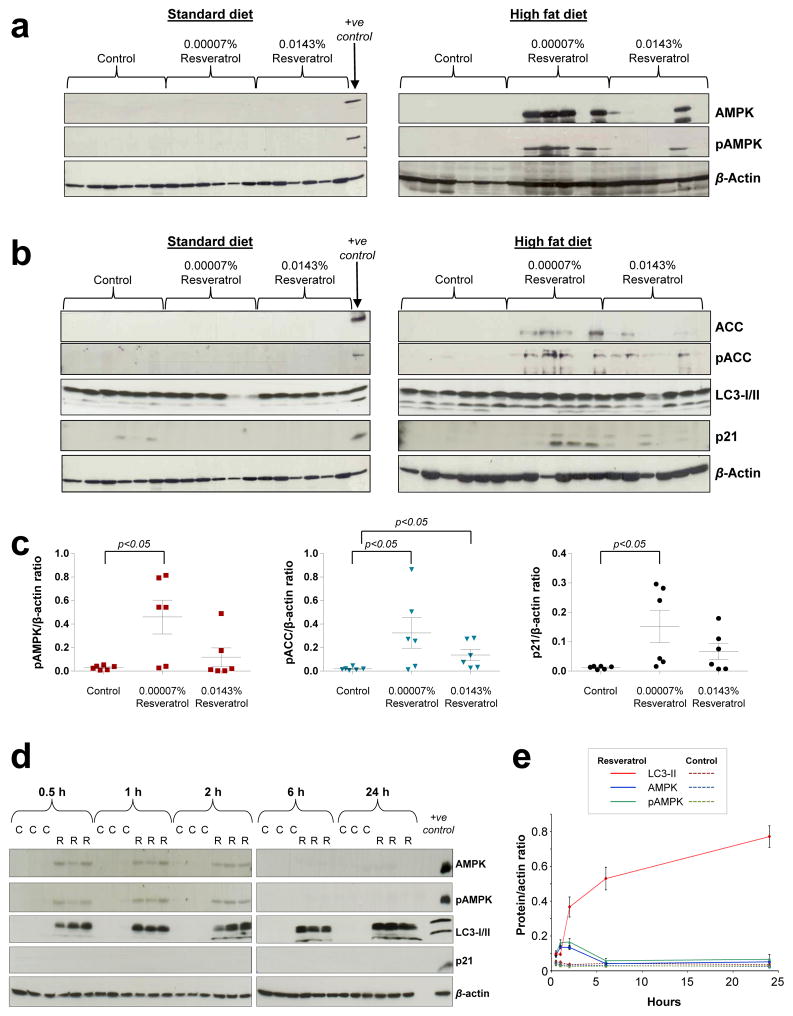
Figure 3. Low dose dietary resveratrol activates AMPK and causes senescence in intestinal mucosa of mice on HFD
(a–c) Expression and phosphorylation of AMPK and its downstream target ACC, together with levels of autophagy and senescence markers in tissue of female ApcMin mice maintained on SD or HFD, with or without resveratrol. The positive control sample is Apc10.1 cells exposed to 1 μM resveratrol. Mice were culled at 17 or 14 weeks of age for the standard and high fat groups, respectively. (c) Data represent the mean ± SEM of 6 mice per group. (d–e) Kinetics of AMPK activation and downstream effects in intestinal tissue of C57BL/6J wild-type male mice maintained on HFD which received a single gavage dose of resveratrol (2.1 μg per mouse; R) or vehicle control (C). Mice were culled post-dosing at the indicated time. (d) Representative immunoblots are shown for 3 mice per group. (e) Data represent the mean ± SEM of 4–6 mice per group.
Figure 4
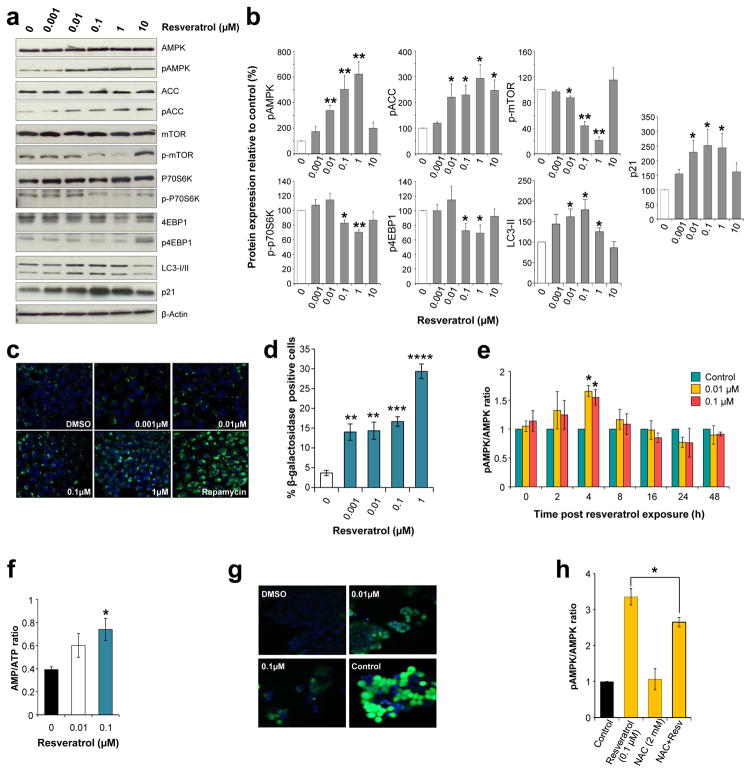
Figure 4. Low, dietary achievable concentrations of resveratrol activate AMPK signalling and cause autophagy and senescence in Apc10.1 mouse adenoma cells
(a–b) Six days of repeated exposure to resveratrol enhances AMPK phosphorylation, inhibits mTOR signalling and increases markers of autophagy and senescence. Representative immunoblots are shown (a). (c) Detection of Cyto-ID Green-stained autophagic vacuoles visualised by fluorescence microscopy of live cells treated repeatedly with resveratrol for 6 days. Hoechst 33342-stained nuclei are in blue and rapamycin (500 nM) was used as a positive control. (d) Proportion of Senescence-Associated β-galactosidase positive stained cells after 6 days of repeated resveratrol treatment. (e) Kinetics of AMPK activation following exposure to resveratrol for 2 h, replacement of the media and further incubation without resveratrol for the times indicated. (f) AMP/ATP ratio determined by HPLC analysis. Cells were treated with resveratrol for 2 h, media was replaced and incubation continued for 4 h. (g) Levels of intracellular reactive oxygen species visualised using an Image-iT LIVE green ROS detection kit, 1 h after addition of resveratrol. Nuclei were counterstained blue with Hoechst 33342 and tert-butyl hydroperoxide (100 μM) was used as a positive control. (h) Effect of NAC on resveratrol-induced AMPK activation measured after 6 h co-incubation. All graphs illustrate the mean ± SEM of three independent experiments. Significant differences relative to control incubations are indicated by *(p<0.05), **(p<0.01), ***(p<0.001) and ****(p<0.0005).
Figure 5
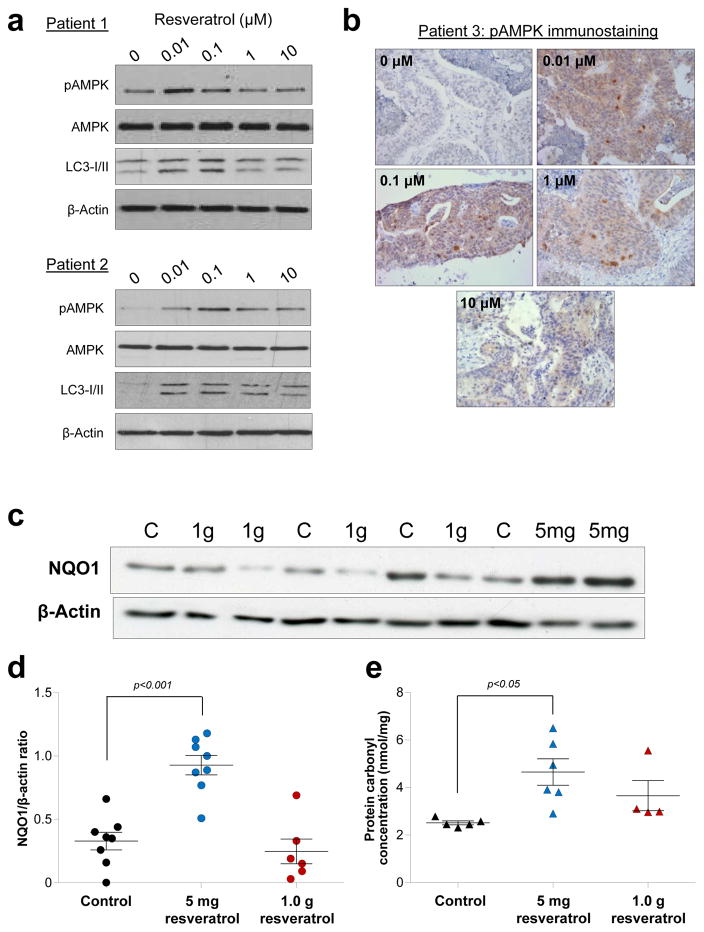
Figure 5. Low concentrations of resveratrol activate AMPK and increase markers of oxidative stress in human colorectal tissues
Exposure to resveratrol (2h) increases pAMPK levels and up-regulates autophagy in primary colorectal cancer explants, as assessed by Western blotting (a) and/or immunohistochemical staining (b) in samples from three different patients. Expression of NQO1 (c–d) and levels of protein carbonylation (e) in colorectal mucosa tissue of patients participating in the [14C]-resveratrol trial who received a dose of either 5 mg or 1 g daily for one week prior to surgery, or untreated control patients. Samples were analysed blind, and significant differences between control and treated groups are indicated. (c) A typical Western blot for NQO1. (d) Data represent the mean ± SEM of 6–8 patients per group. (e) Data show the mean ± SEM of 4–6 patients per group.

Comment in

References

    1. Cuzick J, et al. Long-term results of tamoxifen prophylaxis for breast cancer—96-month follow-up of the randomized IBIS-I trial. J Natl Cancer Inst. 2007;99:272–282. - PubMed
    1. Hershman D, Sundararajan V, Jacobson JS, Heitjan DF, Neugut AI, Grann VR. Outcomes of tamoxifen chemoprevention for breast cancer in very high-risk women: a cost effectiveness analysis. J Clin Oncol. 2011;20:9–16. - PubMed
    1. Steinbach G, et al. The effect of celecoxib, a cyclooxygenase-2 inhibitor, in familial adenomatous polyposis. N Engl J Med. 2000;342:1946–1952. - PubMed
    1. Bernstein L, et al. Tamoxifen therapy for breast cancer and endometrial cancer risk. J Natl Cancer Inst. 1999;91:1654–62. - PubMed
    1. Solomon SD, et al. Cardiovascular risk associated with celecoxib in a clinical trial for colorectal adenoma prevention. N Engl J Med. 2005;352:1071–1080. - PubMed

Publication types