. 2015 Sep 1;195(5):1939-43.
doi: 10.4049/jimmunol.1500969. Epub 2015 Jul 29.

Cutting Edge: cGAS Is Required for Lethal Autoimmune Disease in the Trex1-Deficient Mouse Model of Aicardi-Goutières Syndrome

Affiliations

Cutting Edge: cGAS Is Required for Lethal Autoimmune Disease in the Trex1-Deficient Mouse Model of Aicardi-Goutières Syndrome

Elizabeth E Gray et al. J Immunol. .

Abstract

Detection of intracellular DNA triggers activation of the stimulator of IFN genes-dependent IFN-stimulatory DNA (ISD) pathway, which is essential for antiviral immune responses. However, chronic activation of this pathway is implicated in autoimmunity. Mutations in TREX1, a 3' repair exonuclease that degrades cytosolic DNA, cause Aicardi-Goutières syndrome and chilblain lupus. Trex1 (-/-) mice develop lethal, IFN-driven autoimmune disease that is dependent on activation of the ISD pathway, but the DNA sensors that detect the endogenous DNA that accumulates in Trex1 (-/-) mice have not been defined. Multiple DNA sensors have been proposed to activate the ISD pathway, including cyclic GMP-AMP synthase (cGAS). In this study, we show that Trex1 (-/-) mice lacking cGAS are completely protected from lethality, exhibit dramatically reduced tissue inflammation, and fail to develop autoantibodies. These findings implicate cGAS as a key driver of autoimmune disease and suggest that cGAS inhibitors may be useful therapeutics for Aicardi-Goutières syndrome and related autoimmune diseases.


Figures

Figure 1
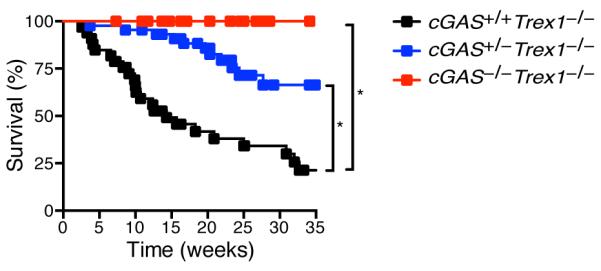
Figure 1. cGAS is required for lethal autoimmune disease in Trex1-deficient mice
Survival curves of cGAS+/+Trex1−/− (n=33), cGAS+/−Trex1−/− (n=44), and cGAS−/−Trex1−/− (n=29) mice. Both cGAS-deficient and Trex1-deficient mice were on a pure C57BL/6 background. Statistical analysis was performed with a Log-rank (Mantel-Cox) test. *p < 0.0001.
Figure 2
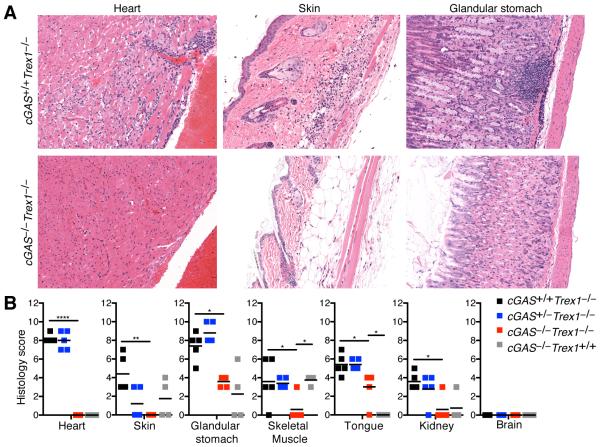
Figure 2. cGAS drives tissue inflammation in Trex1-deficient mice
(A) Representative H&E-stained heart, skin, and glandular stomach tissue sections from cGAS+/+Trex1−/− and cGAS−/−Trex1−/− mice (20X original magnification). (B) Histological scores of inflammation in the indicated tissues from cGAS+/+Trex1−/−, cGAS+/−Trex1−/−, cGAS−/−Trex1−/− and cGAS−/−Trex1+/+ mice. All histological analysis was performed in a blinded manner. Data are representative of at least four mice of each genotype. Statistical analysis was performed comparing cGAS−/−Trex1−/− to cGAS+/+Trex1−/− and cGAS−/−Trex1+/+ mice using a one-way ANOVA with Tukey’s multiple comparison posttest. *p < 0.05, **p < 0.005, ****p < 0.0001.
Figure 3
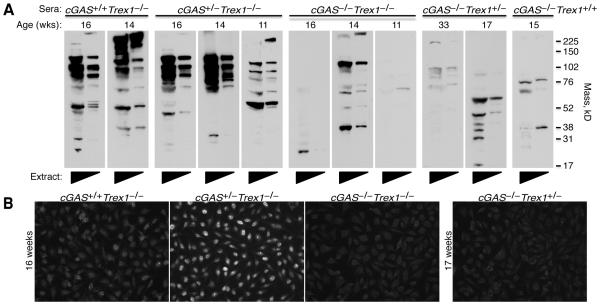
Figure 3. cGAS-dependent autoantibodies in Trex1-deficient mice
(A) Autoantibodies against heart antigens evaluated by blotting neat and 1:5 diluted heart extracts from Rag2−/−Trex1−/− mice with sera from mice of the indicated genotype. Immunoblots were prepared with sera from different mice harvested at the age indicated, rather than with sera harvested repeatedly from a single mouse. Data are representative of two independent experiments. (B) Antinuclear antibodies (ANA) in sera from littermate cGAS+/+Trex1−/−, cGAS+/−Trex1−/−, and cGAS−/−Trex1−/− mice (left panels) analyzed by immunofluorescence staining of HEp-2 cell-coated slides. ANA in serum from cGAS−/−Trex1+/− mice was analyzed as a control (right panel). Data are representative of three independent experiments with a total of at least three mice of each genotype.
Figure 4
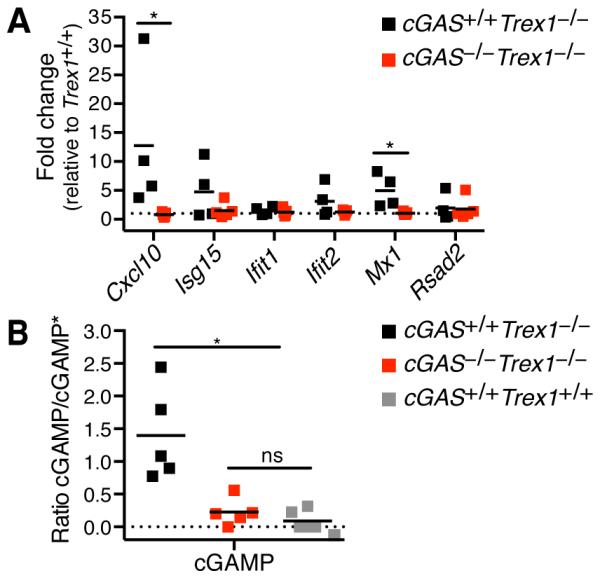
Figure 4. cGAS promotes type I IFN production in Trex1-deficient mice
(A) Quantification by RT-PCR of a panel of IFN-stimulated gene transcripts in total peripheral blood cells from cGAS+/+Trex1−/− and cGAS−/−Trex1−/− mice relative Trex1+/+ mice. Data are representative of one independent experiment with at least four mice of each genotype. (B) Analysis of cGAMP production in whole heart extracts from cGAS+/+Trex1−/−, cGAS−/−Trex1−/−, and Trex1+/+ mice by LC-MS/MS. Data are plotted relative to the internal standard (cGAMP*). Data are representative of one independent experiment with at least five mice of each genotype. Statistical analysis was performed with a Mann-Whitney test. *p < 0.05.

References

    1. Wu J, Chen ZJ. Innate immune sensing and signaling of cytosolic nucleic acids. Annu Rev Immunol. 2014;32:461–488. - PubMed
    1. Sun L, Wu J, Du F, Chen X, Chen ZJ. Cyclic GMP-AMP synthase is a cytosolic DNA sensor that activates the type I interferon pathway. Science. 2013;339:786–791. - PMC - PubMed
    1. Wu J, Sun L, Chen X, Du F, Shi H, Chen C, Chen ZJ. Cyclic GMP-AMP is an endogenous second messenger in innate immune signaling by cytosolic DNA. Science. 2013;339:826–830. - PMC - PubMed
    1. Gao D, Wu J, Wu YT, Du F, Aroh C, Yan N, Sun L, Chen ZJ. Cyclic GMP-AMP synthase is an innate immune sensor of HIV and other retroviruses. Science. 2013;341:903–906. - PMC - PubMed
    1. Li XD, Wu J, Gao D, Wang H, Sun L, Chen ZJ. Pivotal roles of cGAS-cGAMP signaling in antiviral defense and immune adjuvant effects. Science. 2013;341:1390–1394. - PMC - PubMed

Publication types

MeSH terms

Supplementary concepts