


Renal denervation for the treatment of resistant hypertension: review and clinical perspective
- PMID: 26224718
- PMCID: PMC4593817
- DOI: 10.1152/ajprenal.00246.2015
Renal denervation for the treatment of resistant hypertension: review and clinical perspective
Abstract
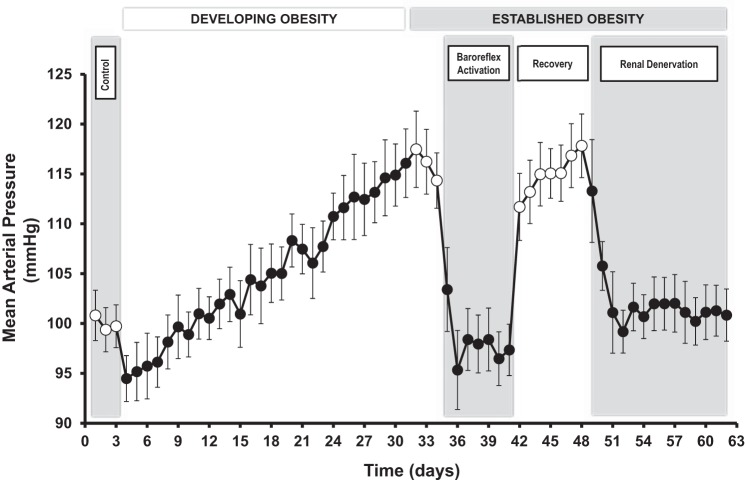
When introduced clinically 6 years ago, renal denervation was thought to be the solution for all patients whose blood pressure could not be controlled by medication. The initial two studies, SYMPLICITY HTN-1 and HTN-2, demonstrated great magnitudes of blood pressure reduction within 6 mo of the procedure and were based on a number of assumptions that may not have been true, including strict adherence to medication and absence of white-coat hypertension. The SYMPLICITY HTN-3 trial controlled for all possible factors believed to influence the outcome, including the addition of a sham arm, and ultimately proved the demise of the initial overly optimistic expectations. This trial yielded a much lower blood pressure reduction compared with the previous SYMPLICITY trials. Since its publication in 2014, there have been many analyses to try and understand what accounted for the differences. Of all the variables examined that could influence blood pressure outcomes, the extent of the denervation procedure was determined to be inadequate. Beyond this, the physiological mechanisms that account for the heterogeneous fall in arterial pressure following renal denervation remain unclear, and experimental studies indicate dependence on more than simply reduced renal sympathetic activity. These and other related issues are discussed in this paper. Our perspective is that renal denervation works if done properly and used in the appropriate patient population. New studies with new approaches and catheters and appropriate controls will be starting later this year to reassess the efficacy and safety of renal denervation in humans.
Keywords: denervation; hypertension; pathophysiology; renal nerves; resistance.
Copyright © 2015 the American Physiological Society.
Figures



References
-
- Alnima T, de Leeuw PW, Tan FE, Kroon AA. Renal responses to long-term carotid baroreflex activation therapy in patients with drug-resistant hypertension. Hypertension 61: 1334–1339, 2013. - PubMed
-
- Armitage JA, Burke SL, Prior LJ, Barzel B, Eikelis N, Lim K, Head GA. Rapid onset of renal sympathetic nerve activation in rabbits fed a high-fat diet. Hypertension 60: 163–171, 2012. - PubMed
-
- Bakris GL, Sarafidis PA, Weir MR, Dahlof B, Pitt B, Jamerson K, Velazquez EJ, Staikos-Byrne L, Kelly RY, Shi V, Chiang YT, Weber MA. Renal outcomes with different fixed-dose combination therapies in patients with hypertension at high risk for cardiovascular events (ACCOMPLISH): a prespecified secondary analysis of a randomised controlled trial. Lancet 375: 1173–1181, 2010. - PubMed
-
- Bhatt DL, Kandzari DE, O'Neill WW, D'Agostino R, Flack JM, Katzen BT, Leon MB, Liu M, Mauri L, Negoita M, Cohen SA, Oparil S, Rocha-Singh K, Townsend RR, Bakris GL. A controlled trial of renal denervation for resistant hypertension. N Engl J Med 370: 1393–1401, 2014. - PubMed
-
- Bomback AS, Klemmer PJ. The incidence and implications of aldosterone breakthrough. Nat Clin Pract Nephrol 3: 486–492, 2007. - PubMed
Publication types
MeSH terms
Grants and funding
LinkOut - more resources
Full Text Sources
Other Literature Sources
