


Infant sleep and feeding patterns are associated with maternal sleep, stress, and depressed mood in women with a history of major depressive disorder (MDD)
- PMID: 26228760
- PMCID: PMC4781668
- DOI: 10.1007/s00737-015-0557-5
Infant sleep and feeding patterns are associated with maternal sleep, stress, and depressed mood in women with a history of major depressive disorder (MDD)
Abstract
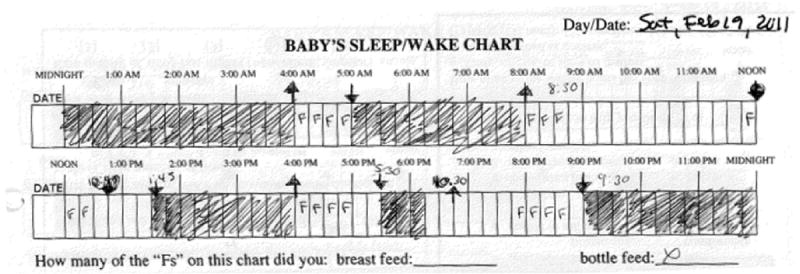
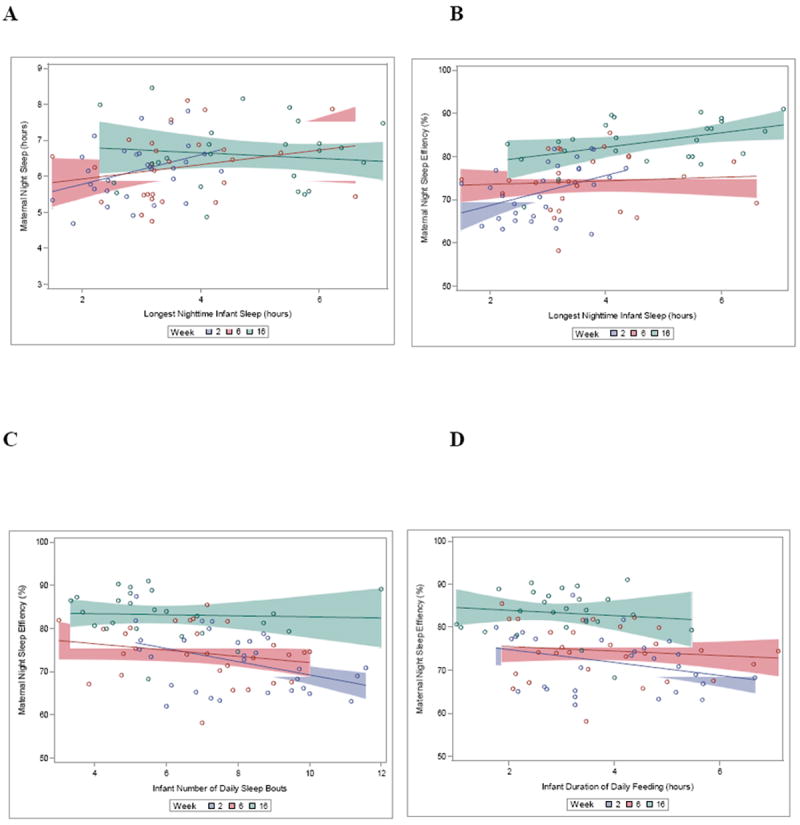
Our goal was to examine associations of infant sleep and feeding patterns with maternal sleep and mood among women at risk for postpartum depression. Participants were 30 women (age ± SD = 28.3 ± 5.1 years) with a history of MDD (but not in a mood episode at enrollment) who completed daily sleep diaries, wore wrist actigraphs to estimate sleep, and had their mood assessed with the Hamilton Depression Rating Scale (HAM-D-17) during four separate weeks of the perinatal period (33 weeks pregnancy and weeks 2, 6, and 16 postpartum). They logged their infants' sleep and feeding behaviors daily and reported postnatal stress on the Childcare Stress Inventory (CSI) at week 16. Mothers' actigraphically estimated sleep showed associations with infant sleep and feeding patterns only at postpartum week 2. Shorter duration of the longest infant-sleep bout was associated with shorter maternal sleep duration (p = .02) and lower sleep efficiency (p = .04), and maternal sleep efficiency was negatively associated with the number of infant-sleep bouts (p = .008) and duration of infant feeding (p = .008). Neither infant sleep nor feeding was associated with maternal sleep at 6 or 16 weeks, but more disturbed infant sleep and more frequent feeding at 6 weeks were associated with higher HAM-D scores at 6 and 16 weeks and higher CSI scores. Sleep in the mother-infant dyad is most tightly linked in the early postpartum weeks, but mothers continue to experience disturbed sleep and infant sleep and feeding behaviors continue to be associated with mothers' depressive symptoms and stress ratings as long as 16 weeks postpartum. These data imply that interventions designed to improve maternal sleep and postpartum mood should include both mothers and infants because improving infant sleep alone is not likely to improve maternal sleep, and poor infant sleep is linked to postpartum depression and stress.
Keywords: Depression; Infants; Postpartum; Pregnancy; Sleep; Stress.
Conflict of interest statement
The authors declare that they have no conflict of interest.
Figures
References
Publication types
MeSH terms
Grants and funding
LinkOut - more resources
Full Text Sources
Other Literature Sources
Medical
