


The cAMP/protein kinase A signaling pathway in pathogenic basidiomycete fungi: Connections with iron homeostasis
- PMID: 26231374
- PMCID: PMC4697456
- DOI: 10.1007/s12275-015-5247-5
The cAMP/protein kinase A signaling pathway in pathogenic basidiomycete fungi: Connections with iron homeostasis
Abstract
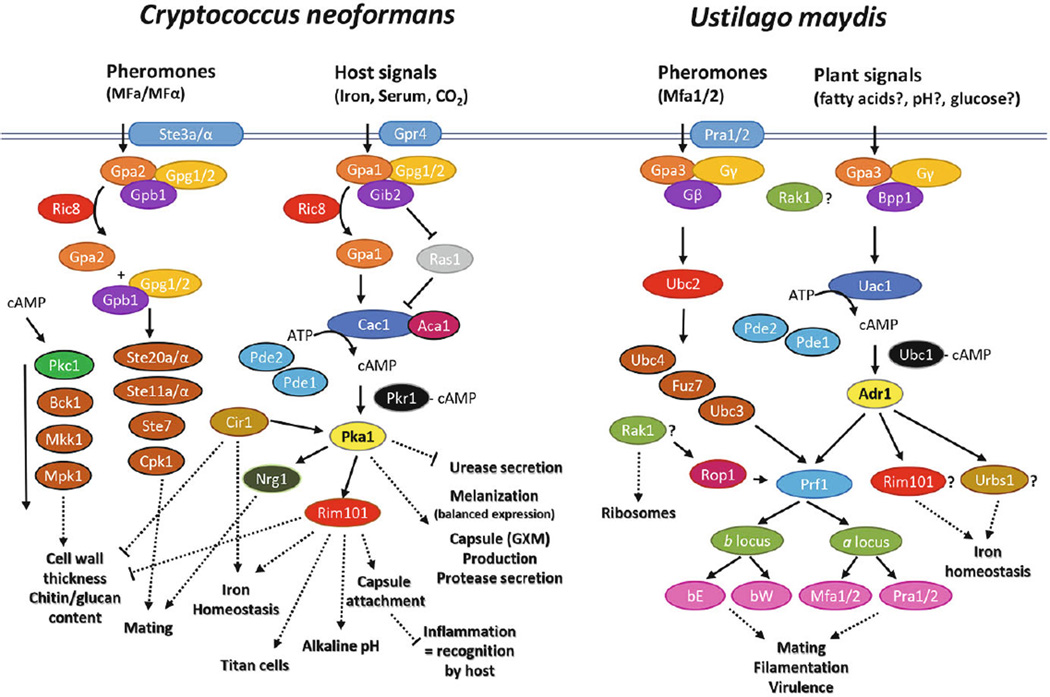
A number of pathogenic species of basidiomycete fungi are either life-threatening pathogens of humans or major economic pests for crop production. Sensing the host is a key aspect of pathogen proliferation during disease, and signal transduction pathways are critically important for detecting environmental conditions and facilitating adaptation. This review focuses on the contributions of the cAMP/protein kinase A (PKA) signaling pathway in Cryptococcus neoformans, a species that causes meningitis in humans, and Ustilago maydis, a model phytopathogen that causes a smut disease on maize. Environmental sensing by the cAMP/PKA pathway regulates the production of key virulence traits in C. neoformans including the polysaccharide capsule and melanin. For U. maydis, the pathway controls the dimorphic transition from budding growth to the filamentous cell type required for proliferation in plant tissue. We discuss recent advances in identifying new components of the cAMP/PKA pathway in these pathogens and highlight an emerging theme that pathway signaling influences iron acquisition.
Figures
References
-
- Alspaugh JA, Cavallo LM, Perfect JR, Heitman J. RAS1 regulates filamentation, mating and growth at high temperature of Cryptococcus neoformans. Mol. Microbiol. 2000;36:352–365. - PubMed
-
- Andrews DL, Egan JD, Mayorga ME, Gold SE. The Ustilago maydis ubc4 and ubc5 genes encode members of a MAP kinase cascade required for filamentous growth. Mol. Plant-Microbe Interact. 2000;13:781–786. - PubMed
Publication types
MeSH terms
Substances
Grants and funding
LinkOut - more resources
Full Text Sources
Other Literature Sources
Medical
