Comment
doi: 10.1158/1078-0432.CCR-15-1214.
Epub 2015 Jul 31.
Metabolic Imaging as a Biomarker of Early Radiation Response in Tumors
Affiliations
- PMID: 26232369
- PMCID: PMC4644683
- DOI: 10.1158/1078-0432.CCR-15-1214
Item in Clipboard
Comment
Metabolic Imaging as a Biomarker of Early Radiation Response in Tumors
Clin Cancer Res.
.
Abstract
(13)C-pyruvate hyperpolarized magnetic resonance imaging (HP-MRI) is emerging as a viable quantitative biomarker for solid tumor response and normal tissue toxicity after radiotherapy. This technology effectively predicts response related to metabolic agents or alterations in the tumor microenvironment, but challenges remain to be addressed to ensure successful translational implementation. See related article by Saito et al., p. 5073.
©2015 American Association for Cancer Research.
Conflict of interest statement
No potential conflicts of interest were disclosed by the other authors.
Figures
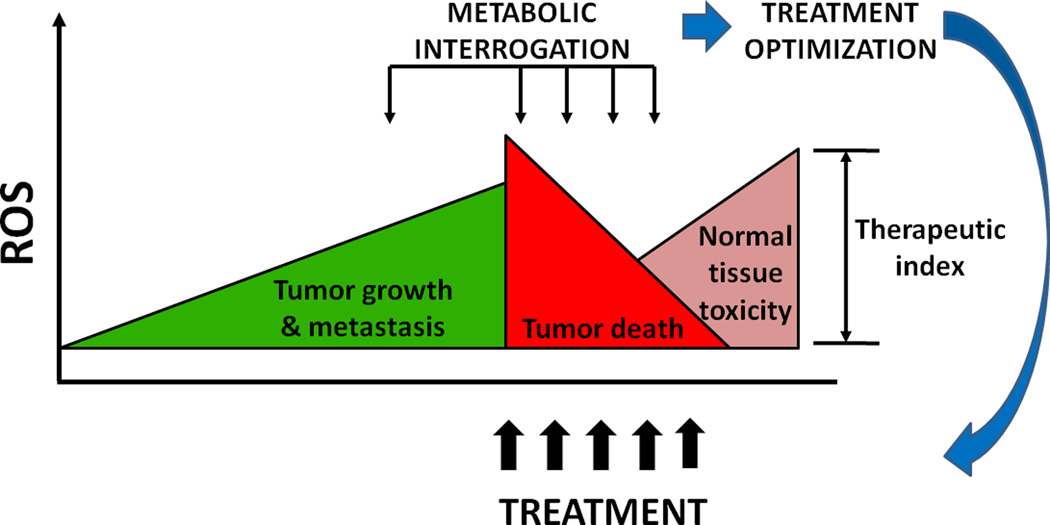
Reactive oxygen species (ROS) have important roles in tumor growth and
metastasis. Although low levels of ROS can have oncogenic effects, high levels of ROS,
such as those resulting from ionizing radiation or chemotherapy are cytotoxic, and thus
are crucial role for treatment effectiveness. Treatment-related ROS are also responsible
for some of the toxicity to normal tissue associated with treatment of solid tumors.
Metabolic interrogation, whether invasive (biochemical analysis) or noninvasive (metabolic
imaging) could be used to devise treatment regimens that generate tumoricidal levels of
ROS while maximally sparing normal tissues.
Comment on
-
13C-MR Spectroscopic Imaging with Hyperpolarized [1-13C]pyruvate Detects Early Response to Radiotherapy in SCC Tumors and HT-29 Tumors.Clin Cancer Res. 2015 Nov 15;21(22):5073-81. doi: 10.1158/1078-0432.CCR-14-1717. Epub 2015 Feb 11. Clin Cancer Res. 2015. PMID: 25673698 Free PMC article.
References
-
- Golman K, Zandt RI, Lerche M, Pehrson R, Ardenkjaer-Larsen JH. Metabolic imaging by hyperpolarized 13C magnetic resonance imaging for in vivo tumor diagnosis. Cancer Res. 2006;66:10855–10860. - PubMed
Publication types
MeSH terms
Substances
Grants and funding
LinkOut - more resources
Full Text Sources
Medical
Research Materials
Miscellaneous