


Identifying differences between depressed adolescent suicide ideators and attempters
- PMID: 26233323
- PMCID: PMC4565772
- DOI: 10.1016/j.jad.2015.06.031
Identifying differences between depressed adolescent suicide ideators and attempters
Abstract
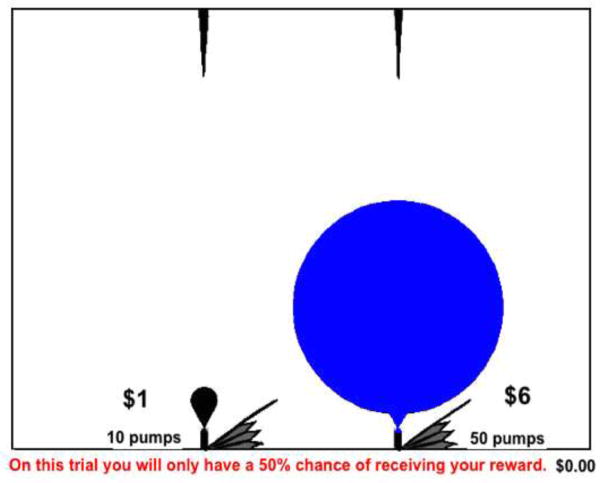
Background: Adolescent depression and suicide are pressing public health concerns, and identifying key differences among suicide ideators and attempters is critical. The goal of the current study is to test whether depressed adolescent suicide attempters report greater anhedonia severity and exhibit aberrant effort-cost computations in the face of uncertainty.
Methods: Depressed adolescents (n=101) ages 13-19 years were administered structured clinical interviews to assess current mental health disorders and a history of suicidality (suicide ideators=55, suicide attempters=46). Then, participants completed self-report instruments assessing symptoms of suicidal ideation, depression, anhedonia, and anxiety as well as a computerized effort-cost computation task.
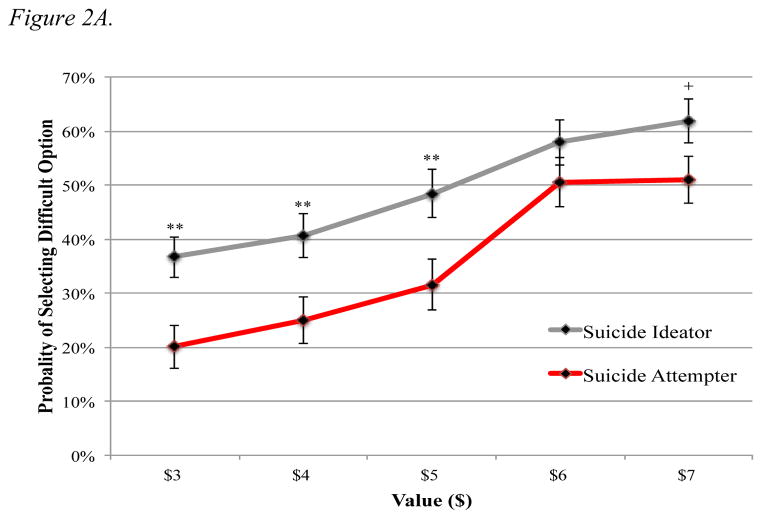
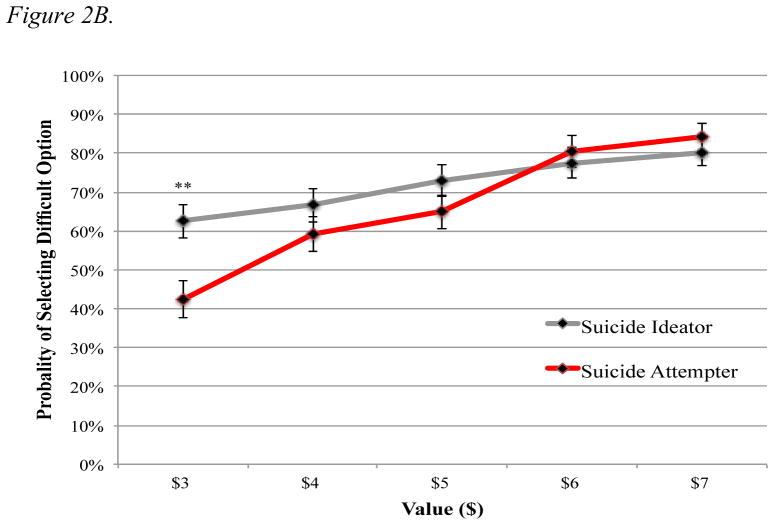
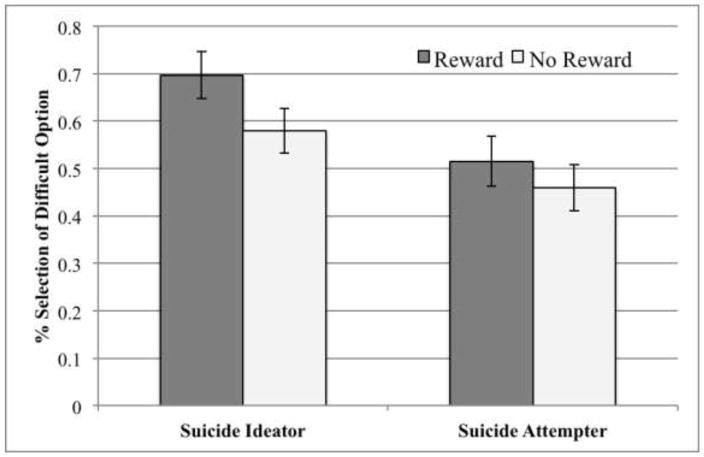
Results: Compared with depressed adolescent suicide ideators, attempters report greater anhedonia severity, even after concurrently controlling for symptoms of suicidal ideation, depression, and anxiety. Additionally, when completing the effort-cost computation task, suicide attempters are less likely to pursue the difficult, high value option when outcomes are uncertain. Follow-up, trial-level analyses of effort-cost computations suggest that receipt of reward does not influence future decision-making among suicide attempters, however, suicide ideators exhibit a win-stay approach when receiving rewards on previous trials.
Limitations: Findings should be considered in light of limitations including a modest sample size, which limits generalizability, and the cross-sectional design.
Conclusions: Depressed adolescent suicide attempters are characterized by greater anhedonia severity, which may impair the ability to integrate previous rewarding experiences to inform future decisions. Taken together, this may generate a feeling of powerlessness that contributes to increased suicidality and a needless loss of life.
Keywords: Adolescence; Anhedonia; Depression; Reward processing; Suicide.
Copyright © 2015 Elsevier B.V. All rights reserved.
Conflict of interest statement
Conflicts of Interest: none
Figures
References
-
- Ahearn EP, Jamison KR, Steffens DC, Cassidy F, Provenzale JM, Lehman A, Krishnan KR. MRI correlates of suicide attempt history in unipolar depression. Biological Psychiatry. 2001;50(4):266–270. - PubMed
-
- Auerbach RP, Tsai B, Abela JRZ. Temporal relationships among depressive symptoms, risky behavior engagement, perceived control, and gender in a sample of adolescents. Journal of Research on Adolescence. 2010;20(3):726–747.
Publication types
MeSH terms
Grants and funding
LinkOut - more resources
Full Text Sources
Other Literature Sources
Medical
Miscellaneous
