


Hypoglycemia Reduction and Changes in Hemoglobin A1c in the ASPIRE In-Home Study
- PMID: 26237308
- PMCID: PMC4528987
- DOI: 10.1089/dia.2014.0306
Hypoglycemia Reduction and Changes in Hemoglobin A1c in the ASPIRE In-Home Study
Abstract
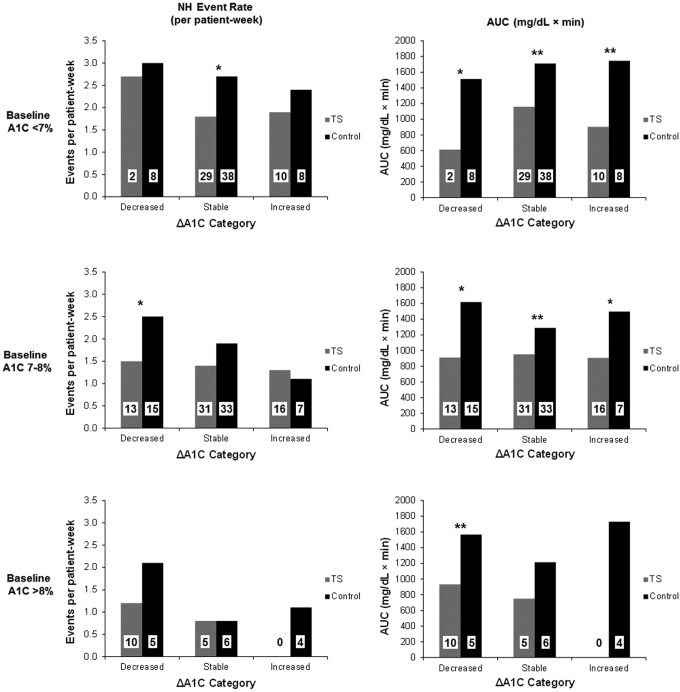
Background: ASPIRE In-Home randomized 247 subjects with type 1 diabetes to sensor-augmented pump therapy with or without the Threshold Suspend (TS) feature, which interrupts insulin delivery at a preset sensor glucose value. We studied the effects of TS on nocturnal hypoglycemia (NH) in relation to baseline hemoglobin A1c (A1C) and change in A1C during the study.
Materials and methods: NH event rates and mean area under curve (AUC) of NH events were evaluated at different levels of baseline A1C (<7%, 7-8%, and >8%) and at different levels of changes in A1C (less than -0.3% [decreased], -0.3% to 0.3% [stable], and >0.3% [increased]), in the TS Group compared with the Control Group (sensor-augmented pump only).
Results: In the TS Group, 27.9% of the NH events were accompanied by a confirmatory blood glucose value, compared with 39.3% in the Control Group. Among subjects with baseline A1C levels of <7% or 7-8%, those in the TS Group had significantly lower NH event rates than those in the Control Group (P=0.001 and P=0.004, respectively). Among subjects with decreased or stable A1C levels, those in the TS Group had significantly lower NH event rates, and the events had lower AUCs (P≤0.001 for each). Among subjects with increased A1C levels, those in the TS Group had NH events with significantly lower AUCs (P<0.001).
Conclusions: Use of the TS feature was associated with decreases in the rate and severity (as measured by AUC) of NH events in many subjects, including those with low baseline A1C levels and those whose A1C values decreased during the study period. Use of the TS feature can help protect against hypoglycemia in those wishing to intensify diabetes management to achieve target glucose levels.
Trial registration: ClinicalTrials.gov NCT01497938.
Figures
Comment in
-
Does A1c Have to Change for Hypoglycemia Reduction?Diabetes Technol Ther. 2015 Aug;17(8):527-9. doi: 10.1089/dia.2015.0164. Epub 2015 May 15. Diabetes Technol Ther. 2015. PMID: 25978209 No abstract available.
References
-
- Haugstvedt A, Wentzel-Larsen T, Rokne B, et al. : Perceived family burden and emotional distress: similarities and differences between mothers and fathers of children with type 1 diabetes in a population-based study. Pediatr Diabetes 2011;12:107–114 - PubMed
-
- The Diabetes Control and Complications Trial Research Group: Epidemiology of severe hypoglycemia in the Diabetes Control and Complications Trial. Am J Med 1991;90:450–459 - PubMed
-
- Jauch-Chara K, Hallschmid M, Gais S, et al. : Awakening and counterregulatory response to hypoglycemia during early and late sleep. Diabetes 2007;56:1938–1942 - PubMed
Publication types
MeSH terms
Substances
Associated data
LinkOut - more resources
Full Text Sources
Other Literature Sources
Medical
