


Work Stress as a Risk Factor for Cardiovascular Disease
- PMID: 26238744
- PMCID: PMC4523692
- DOI: 10.1007/s11886-015-0630-8
Work Stress as a Risk Factor for Cardiovascular Disease
Abstract
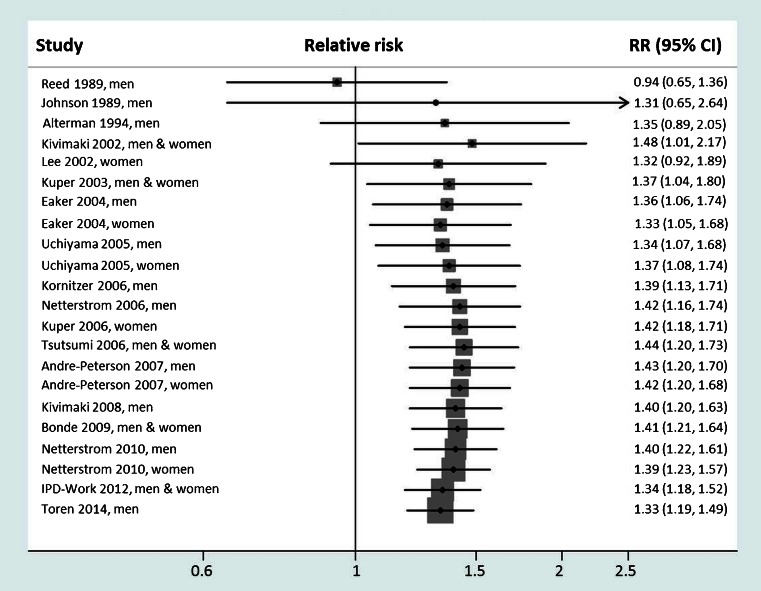
The role of psychosocial work stress as a risk factor for chronic disease has been the subject of considerable debate. Many researchers argue in support of a causal connection while others remain skeptical and have argued that the effect on specific health conditions is either negligible or confounded. This review of evidence from over 600,000 men and women from 27 cohort studies in Europe, the USA and Japan suggests that work stressors, such as job strain and long working hours, are associated with a moderately elevated risk of incident coronary heart disease and stroke. The excess risk for exposed individuals is 10-40 % compared with those free of such stressors. Differences between men and women, younger versus older employees and workers from different socioeconomic backgrounds appear to be small, indicating that the association is robust. Meta-analyses of a wider range of health outcomes show additionally an association between work stress and type 2 diabetes, though not with common cancers or chronic obstructive pulmonary disease, suggesting outcome specificity. Few studies have addressed whether mitigation of work stressors would reduce the risk of cardiovascular disease. In view of the limited interventional evidence on benefits, harms and cost-effectiveness, definitive recommendations have not been made (e.g. by the US Preventive Services Taskforce) for the primary prevention of cardiovascular disease via workplace stress reduction. Nevertheless, governments are already launching healthy workplace campaigns, and preventing excessive work stress is a legal obligation in several countries. Promoting awareness of the link between stress and health among both employers and workers is an important component of workplace health promotion.
Figures


References
-
- Resnik WH. The etiology of myocardial infarction. Arch Intern Med. 1963;112:792. doi: 10.1001/archinte.1963.03860050179030. - DOI
-
- Karasek RA. Job demands, job decision latitude and mental strain: implications for job redesign. Admin Sci Q. 1979;24:285–307. doi: 10.2307/2392498. - DOI
-
- Ferrie JE. Health consequences of job insecurity. WHO Reg Publ Eur Ser. 1999;81:59–99. - PubMed
Publication types
MeSH terms
Grants and funding
LinkOut - more resources
Full Text Sources
Other Literature Sources
Medical
