. 2015 Aug 4:5:12693.
doi: 10.1038/srep12693.

Reduction of butyrate- and methane-producing microorganisms in patients with Irritable Bowel Syndrome

Affiliations

Reduction of butyrate- and methane-producing microorganisms in patients with Irritable Bowel Syndrome

Marta Pozuelo et al. Sci Rep. .

Abstract

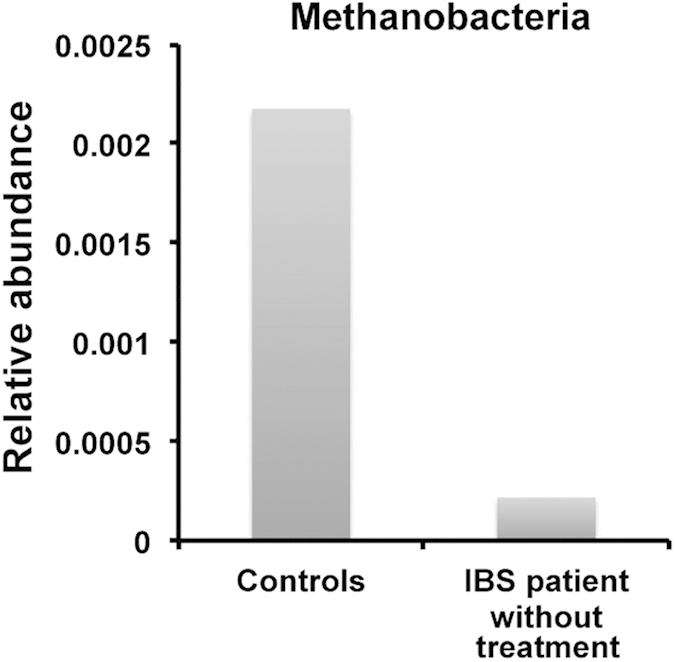
The pathophysiology of irritable bowel syndrome (IBS) remains unclear. Here we investigated the microbiome of a large cohort of patients to identify specific signatures for IBS subtypes. We examined the microbiome of 113 patients with IBS and 66 healthy controls. A subset of these participants provided two samples one month apart. We analyzed a total of 273 fecal samples, generating more than 20 million 16S rRNA sequences. In patients with IBS, a significantly lower microbial diversity was associated with a lower relative abundance of butyrate-producing bacteria (P = 0.002; q < 0.06), in particular in patients with IBS-D and IBS-M. IBS patients who did not receive any treatment harboured a lower abundance of Methanobacteria compared to healthy controls (P = 0.005; q = 0.05). Furthermore, significant correlations were observed between several bacterial taxa and sensation of flatulence and abdominal pain (P < 0.05). Altogether, our findings showed that IBS-M and IBS-D patients are characterized by a reduction of butyrate producing bacteria, known to improve intestinal barrier function, and a reduction of methane producing microorganisms a major mechanism of hydrogen disposal in the human colon, which could explain excess of abdominal gas in IBS.


Figures
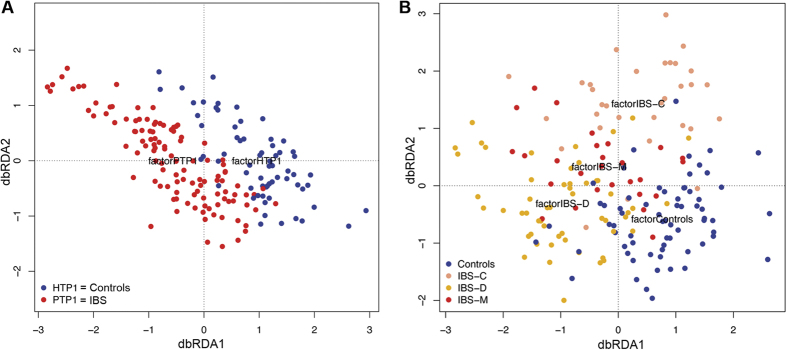
Figure 1
Figure 1
Unweighted UniFrac data redundancy analysis on the first time point samples constrained by (A) controls and IBS patients groups, and (B) constrained by the four groups of participants: controls (n = 66), IBS-C (n = 32), IBS-D (n = 54) and IBS-M (n = 27).
Figure 2
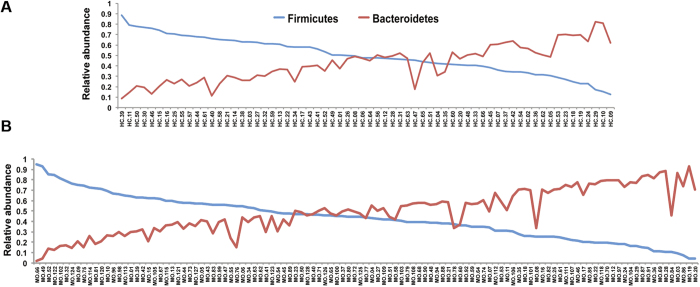
Figure 2. Higher relative abundance of Bacteroidetes.
Proportion of Firmicutes and Bacteroidetes are plotted for each healthy subject (A) and for each IBS patient (B). Patients are characterized by a relatively higher proportion of Bacteroidetes than healthy controls (P = 0.02, q = 0.09).
Figure 3
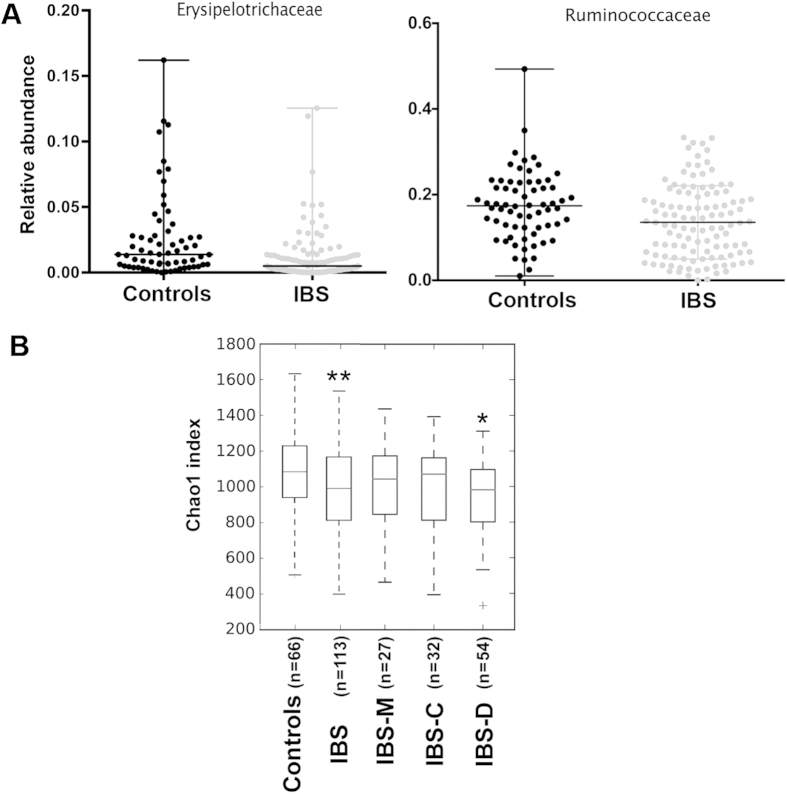
Figure 3. Higher relative abundance of two bacterial families and higher alpha-diversity in healthy controls compared to IBS patients.
(A) Erysipelotrichaceae and Ruminococcaceae were found in significantly higher abundance in healthy subjects (n = 66) compared to IBS patients, regardless of their IBS subtype (Kruskal Wallis test, P = 4.7 e-5, q = 0.002 and P = 0.002, q = 0.06, respectively). The two bacterial families belong to the Firmicutes phylum. (B) The Chao1 index based on species-level OTUs was estimated for healthy controls, IBS, IBS-M, IBS-C and IBS-D. Significance (*P = 0.04, **P < 0.003) was determined by Monte Carlo permutations, a non-parametric test.
Figure 4
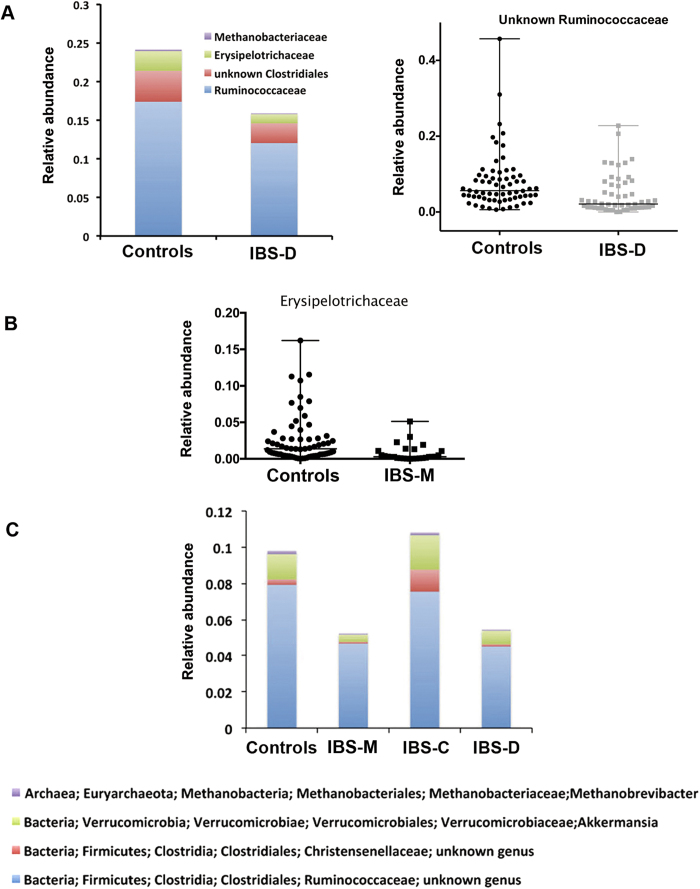
Figure 4. Dysbiosis at the family and genus level in IBS subtypes.
(A) Four microbial families and one genus discriminate the 66 healthy controls from the 54 patients with IBS-D (Kruskal Wallis test, P < 0.006; q < 0.06). (B) One bacterial family was found in a lower proportion in the 27 IBS-M patients compared to the 66 controls (P = 0.0001, q = 0.006). (C) Comparing the healthy control group with the three IBS subtypes, four genera were enriched in healthy subjects and IBS-C patients compared to IBS-M and IBS-D patients (Kruskal Wallis test, P < 0.003, q ≤ 0.05).
Figure 5
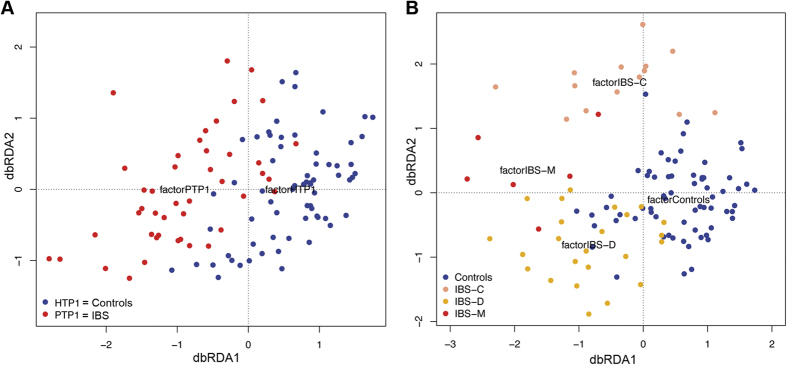
Figure 5
Unweighted UniFrac data redundancy analysis (dbRDA) on the first time point samples constrained by (A) the controls and IBS patients, and constrained by (B) the four groups of participants: controls (n = 66), IBS-C (n = 14), IBS-D (n = 24) and IBS-M (n = 6), discarding patients under treatment.
Figure 6
Figure 6. Methanobacteria from the Euryarchaeota phylum is enriched in controls (n = 66) compared to IBS patients (n = 44) who did not follow any medical treatment (Kruskal Wallis test, P = 0.005, q = 0.05).
Figure 7
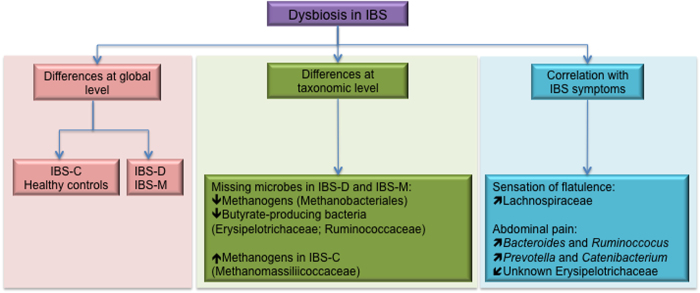
Figure 7. Summary of the findings of this study.
formula image= Higher abundance of; formula image= Lower abundance of; formula image= positive correlation with; formula image= negative correlation with.

References

    1. Canavan C., West J. & Card T. The epidemiology of irritable bowel syndrome. Clin. Epidemiol. 6, 71–80 (2014). - PMC - PubMed
    1. Longstreth G. F. et al. Functional bowel disorders. Gastroenterology 130, 1480–1491 (2006). - PubMed
    1. Carbonero F., Benefiel A. C. & Gaskins H. R. Contributions of the microbial hydrogen economy to colonic homeostasis. Nat. Rev. Gastroenterol. Hepatol. 9, 504–518 (2012). - PubMed
    1. Zaleski A., Banaszkiewicz A. & Walkowiak J. Butyric acid in irritable bowel syndrome. Prz Gastroenterol. 8, 350–353 (2013). - PMC - PubMed
    1. Simren M. et al. Intestinal microbiota in functional bowel disorders: a Rome foundation report. Gut 62, 159–176 (2013). - PMC - PubMed

Publication types

MeSH terms