


Endothelin Blockade in Diabetic Kidney Disease
- PMID: 26239552
- PMCID: PMC4484993
- DOI: 10.3390/jcm4061171
Endothelin Blockade in Diabetic Kidney Disease
Abstract
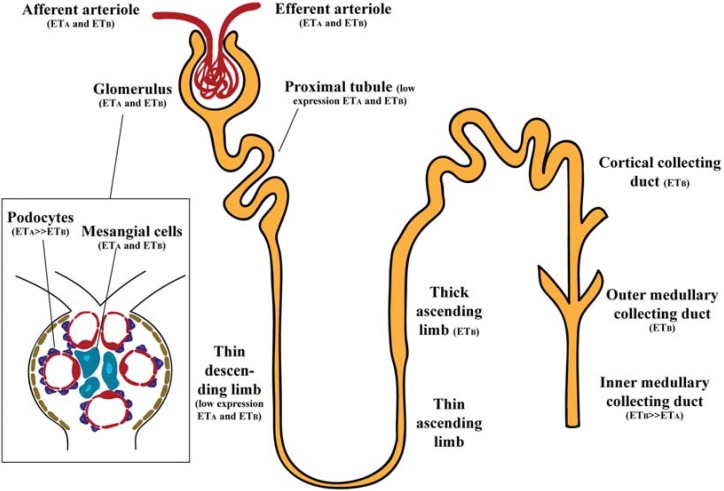
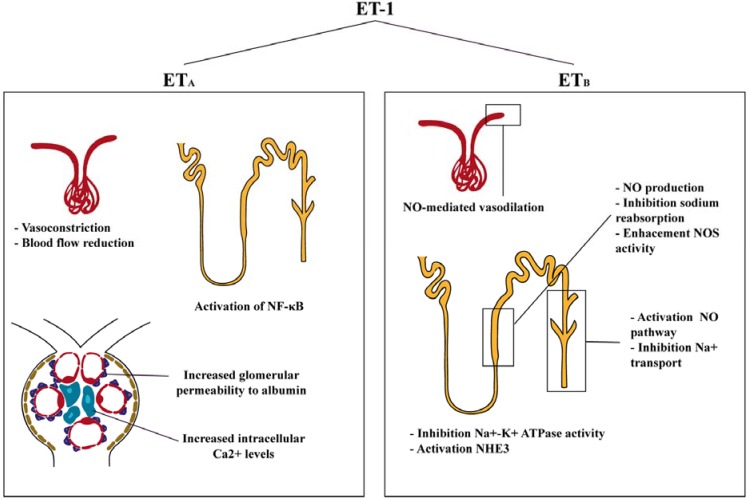
Diabetic kidney disease (DKD) remains the most common cause of chronic kidney disease and multiple therapeutic agents, primarily targeted at the renin-angiotensin system, have been assessed. Their only partial effectiveness in slowing down progression to end-stage renal disease, points out an evident need for additional effective therapies. In the context of diabetes, endothelin-1 (ET-1) has been implicated in vasoconstriction, renal injury, mesangial proliferation, glomerulosclerosis, fibrosis and inflammation, largely through activation of its endothelin A (ETA) receptor. Therefore, endothelin receptor antagonists have been proposed as potential drug targets. In experimental models of DKD, endothelin receptor antagonists have been described to improve renal injury and fibrosis, whereas clinical trials in DKD patients have shown an antiproteinuric effect. Currently, its renoprotective effect in a long-time clinical trial is being tested. This review focuses on the localization of endothelin receptors (ETA and ETB) within the kidney, as well as the ET-1 functions through them. In addition, we summarize the therapeutic benefit of endothelin receptor antagonists in experimental and human studies and the adverse effects that have been described.
Keywords: diabetic kidney disease (DKD); endothelin A receptor (ETA receptor); endothelin B receptor (ETB receptor); endothelin receptor antagonists; endothelin-1 (ET-1).
Figures
References
-
- Hickey K.A., Rubanyi G., Paul R.J., Highsmith R.F. Characterization of a coronary vasoconstrictor produced by cultured endothelial cells. Am. J. Physiol. 1985;248:C550–C556. - PubMed
-
- Inoue A., Yanagisawa M., Kimura S., Kasuya Y., Miyauchi T., Goto K., Masaki T. The human endothelin family: Three structurally and pharmacologically distinct isopeptides predicted by three separate genes. Proc. Natl. Acad. Sci. USA. 1989;86:2863–2867. doi: 10.1073/pnas.86.8.2863. - DOI - PMC - PubMed
Publication types
LinkOut - more resources
Full Text Sources
Other Literature Sources
Medical
