


The Concept and the Epidemiology of Diabetic Nephropathy Have Changed in Recent Years
- PMID: 26239554
- PMCID: PMC4484995
- DOI: 10.3390/jcm4061207
The Concept and the Epidemiology of Diabetic Nephropathy Have Changed in Recent Years
Abstract
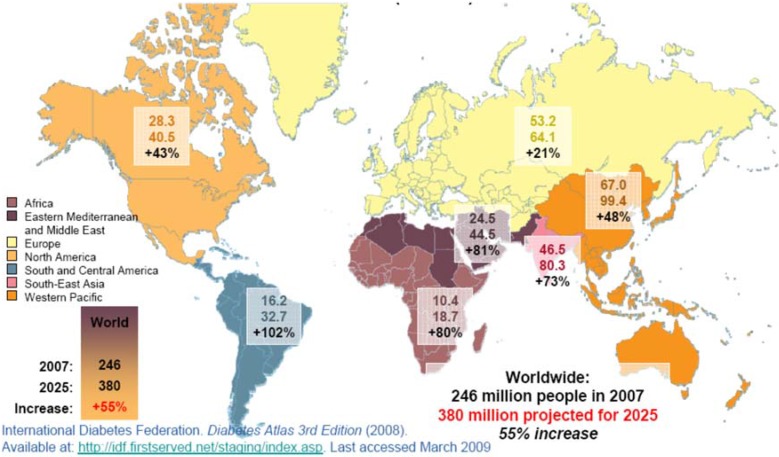
Diabetes Mellitus (DM) is a growing worldwide epidemic. It was estimated that more than 366 million people would be affected. DM has spread its presence over the world due to lifestyle changes, increasing obesity and ethnicities, among others. Diabetic nephropathy (DN) is one of the most important DM complications. A changing concept has been introduced from the classical DN to diabetic chronic kidney disease (DCKD), taking into account that histological kidney lesions may vary from the nodular or diffuse glomerulosclerosis to tubulointerstitial and/or vascular lesions. Recent data showed how primary and secondary prevention were the key to reduce cardiovascular episodes and improve life expectancy in diabetic patients. A stabilization in the rate of end stage kidney disease has been observed in some countries, probably due to the increased awareness by primary care physicians about the prognostic importance of chronic kidney disease (CKD), better control of blood pressure and glycaemia and the implementation of protocols and clinical practice recommendations about the detection, prevention and treatment of CKD in a coordinated and multidisciplinary management of the DM patient. Early detection of DM and DCKD is crucial to reduce morbidity, mortality and the social and economic impact of DM burden in this population.
Keywords: diabetes mellitus; diabetic chronic kidney disease; diabetic nephropathy; end-stage renal disease; epidemiology.
Figures
References
-
- World Health Organization . The World Health Organization Report. WHO; Geneva, Switzerland: 1997.
-
- Margolis D.J., Malay D.S., Hoffstad O.J., Leonard C.E., MaCurdy T., López de Nava K., Tan Y., Molina T., Siegel K.L. Data Points Publication Series. Agency for Healthcare Research and Quality; Rockville, MD, USA: 2011. - PubMed
-
- Anonymous. The global challenge of diabetes. Lancet. 2008;371:1723. - PubMed
-
- Danaei G., Finucane M.M., Lu Y., Singh G.M., Cowan M.J., Paciorek C.J., Lin J.K., Farzadfar F., Khang Y.H., Stevens G.A., et al. National, regional and global trends in fasting plasma glucose and diabetes since 1980: Systematic analysis of health examination surveys and epidemiological studies with 370 country-years and 2.7 million participants. Lancet. 2011;378:31–40. doi: 10.1016/S0140-6736(11)60679-X. - DOI - PubMed
Publication types
LinkOut - more resources
Full Text Sources
Other Literature Sources
Medical
