


Diabetic Nephropathy and CKD-Analysis of Individual Patient Serum Creatinine Trajectories: A Forgotten Diagnostic Methodology for Diabetic CKD Prognostication and Prediction
- PMID: 26239680
- PMCID: PMC4519794
- DOI: 10.3390/jcm4071348
Diabetic Nephropathy and CKD-Analysis of Individual Patient Serum Creatinine Trajectories: A Forgotten Diagnostic Methodology for Diabetic CKD Prognostication and Prediction
Abstract
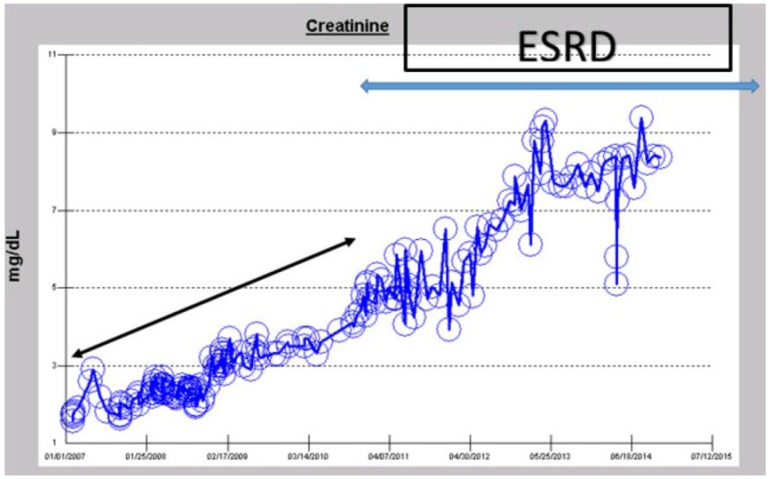
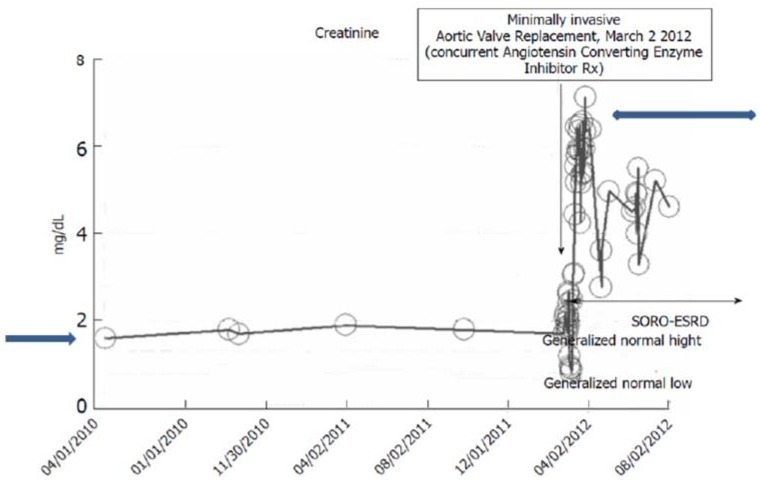
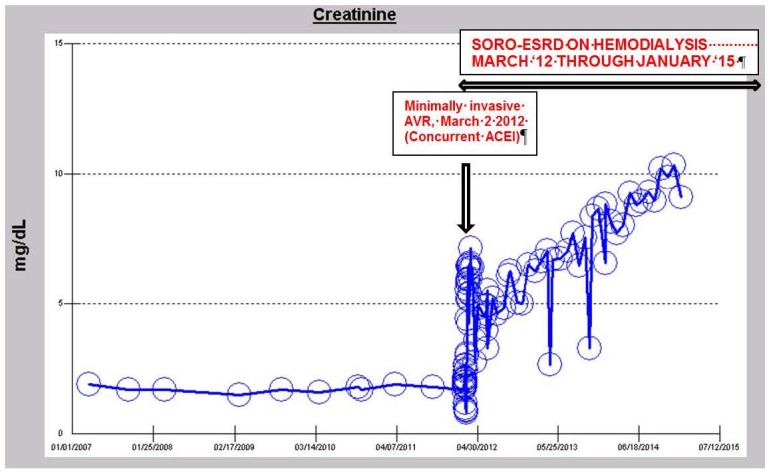
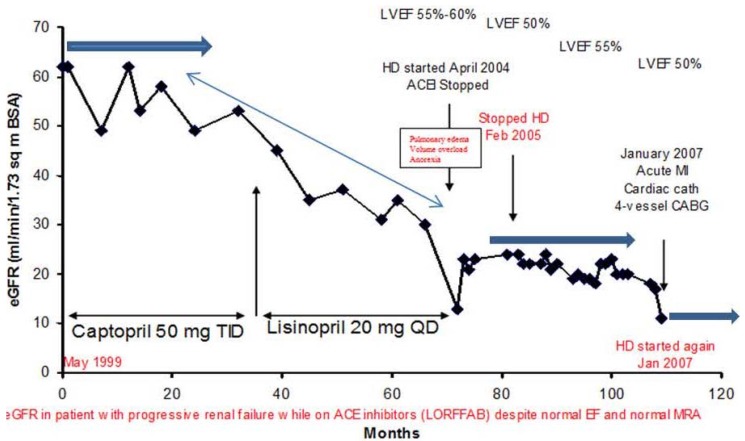
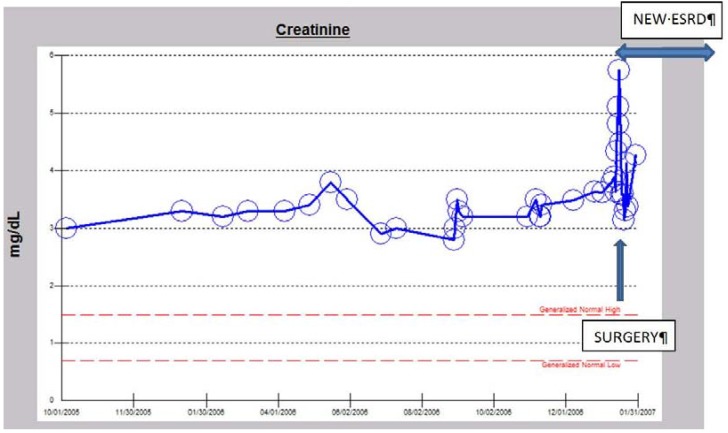
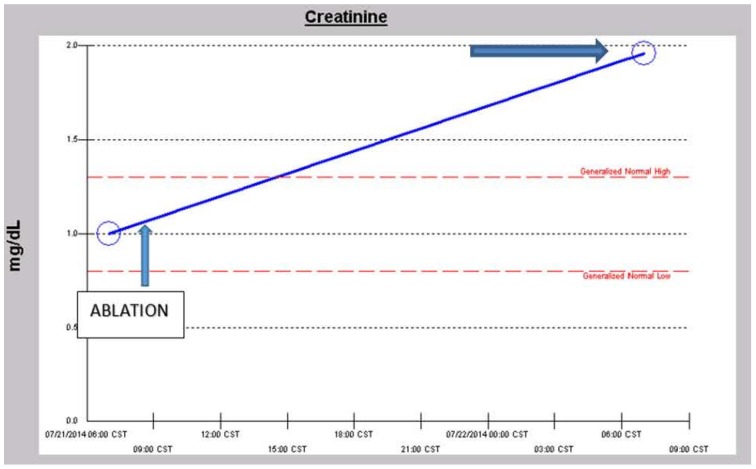
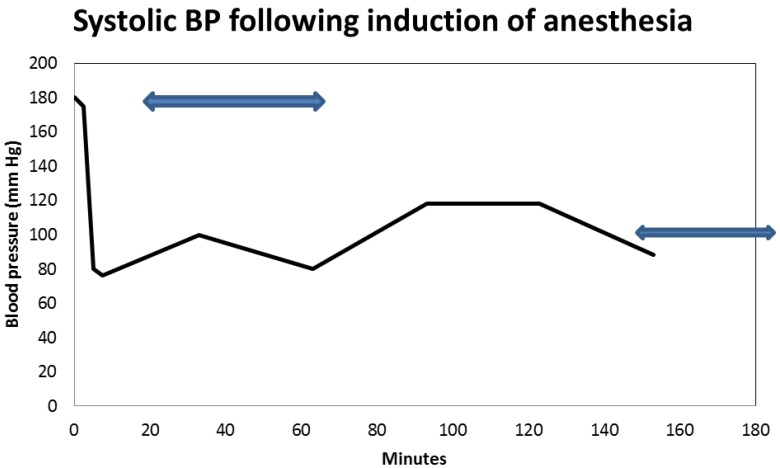
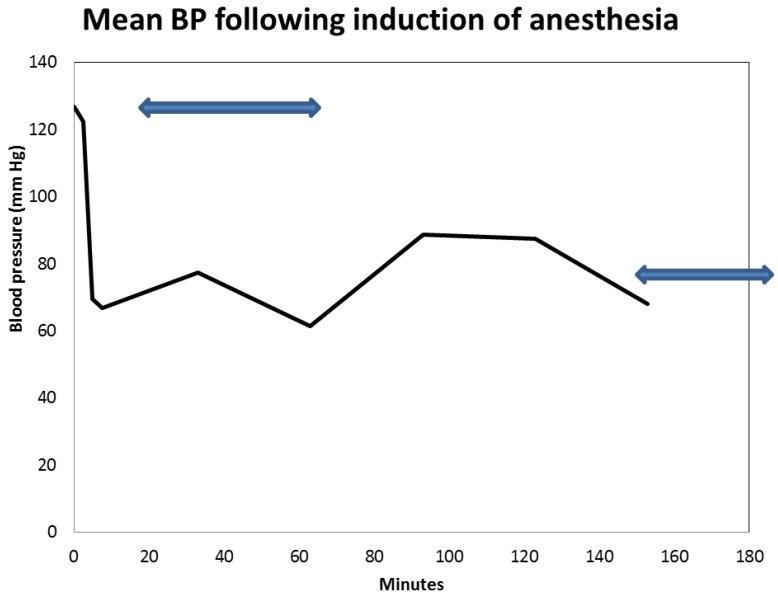
Creatinine is produced in muscle metabolism as the end-product of creatine phosphate and is subsequently excreted principally by way of the kidneys, predominantly by glomerular filtration. Blood creatinine assays constitute the most common clinically relevant measure of renal function. The use of individual patient-level real-time serum creatinine trajectories provides a very attractive and tantalizing methodology in nephrology practice. Topics covered in this review include acute kidney injury (AKI) with its multifarious rainbow spectrum of renal outcomes; the stimulating vicissitudes of the diverse patterns of chronic kidney disease (CKD) to end-stage renal disease (ESRD) progression, including the syndrome of rapid onset end stage renal disease (SORO-ESRD); the syndrome of late onset renal failure from angiotensin blockade (LORFFAB); and post-operative AKI linked with the role of intra-operative hypotension in patients with diabetes mellitus and suspected diabetic nephropathy with CKD. We conclude that the study of individual patient-level serum creatinine trajectories, albeit a neglected and forgotten diagnostic methodology for diabetic CKD prognostication and prediction, is a most useful diagnostic tool, both in the short-term and in the long-term practice of nephrology. The analysis of serum creatinine trajectories, both in real time and retrospectively, indeed provides supplementary superior diagnostic and prognostic insights in the management of the nephrology patient.
Keywords: acute kidney injury (AKI); chronic kidney disease (CKD); creatinine; end stage renal disease (ESRD); national kidney foundation kidney disease outcomes quality initiative (NKF KDOQI); renoprevention; serum creatinine trajectory; syndrome of late onset renal failure from angiotensin blockade (LORFFAB); syndrome of rapid onset end stage renal disease (SORO-ESRD).
Figures
References
-
- De Boer I.H., Rue T.C., Cleary P.A., Lachin J.M., Molitch M.E., Steffes M.W., Sun W., Zinman B., Brunzell J.D., White N.H., et al. Long-term renal outcomes of patients with type 1 diabetes mellitus and microalbuminuria: An analysis of the Diabetes Control and Complications Trial/Epidemiology of Diabetes Interventions and Complications cohort. Arch. Intern. Med. 2011;171:412–420. - PMC - PubMed
-
- Perkins B.A., Ficociello L.H., Roshan B., Warram J.H., Krolewski A.S. In patients with type 1 diabetes and new-onset microalbuminuria the development of advanced chronic kidney disease may not require progression to proteinuria. Kidney Int. 2010;77:57–64. doi: 10.1038/ki.2009.399. - DOI - PMC - PubMed
-
- MacIsaac R.J., Panagiotopoulos S., McNeil K.J., Smith T.J., Tsalamandris C., Hao H., Matthews P.G., Thomas M.C., Power D.A., Jerums G. Is nonalbuminuric renal insufficiency in type 2 diabetes related to an increase in intrarenal vascular disease? Diabetes Care. 2006;29:1560–1566. doi: 10.2337/dc05-1788. - DOI - PubMed
Publication types
LinkOut - more resources
Full Text Sources
Other Literature Sources
