. 2015 Jun:34:167-266.
doi: 10.3767/003158515X688433. Epub 2015 Jun 10.

Fungal Planet description sheets: 320-370

Affiliations

Fungal Planet description sheets: 320-370

P W Crous et al. Persoonia. 2015 Jun.

Abstract

Novel species of fungi described in the present study include the following from Malaysia: Castanediella eucalypti from Eucalyptus pellita, Codinaea acacia from Acacia mangium, Emarcea eucalyptigena from Eucalyptus brassiana, Myrtapenidiella eucalyptorum from Eucalyptus pellita, Pilidiella eucalyptigena from Eucalyptus brassiana and Strelitziana malaysiana from Acacia mangium. Furthermore, Stachybotrys sansevieriicola is described from Sansevieria ehrenbergii (Tanzania), Phacidium grevilleae from Grevillea robusta (Uganda), Graphium jumulu from Adansonia gregorii and Ophiostoma eucalyptigena from Eucalyptus marginata (Australia), Pleurophoma ossicola from bone and Plectosphaerella populi from Populus nigra (Germany), Colletotrichum neosansevieriae from Sansevieria trifasciata, Elsinoë othonnae from Othonna quinquedentata and Zeloasperisporium cliviae (Zeloasperisporiaceae fam. nov.) from Clivia sp. (South Africa), Neodevriesia pakbiae, Phaeophleospora hymenocallidis and Phaeophleospora hymenocallidicola on leaves of a fern (Thailand), Melanconium elaeidicola from Elaeis guineensis (Indonesia), Hormonema viticola from Vitis vinifera (Canary Islands), Chlorophyllum pseudoglobossum from a grassland (India), Triadelphia disseminata from an immunocompromised patient (Saudi Arabia), Colletotrichum abscissum from Citrus (Brazil), Polyschema sclerotigenum and Phialemonium limoniforme from human patients (USA), Cadophora vitícola from Vitis vinifera (Spain), Entoloma flavovelutinum and Bolbitius aurantiorugosus from soil (Vietnam), Rhizopogon granuloflavus from soil (Cape Verde Islands), Tulasnella eremophila from Euphorbia officinarum subsp. echinus (Morocco), Verrucostoma martinicensis from Danaea elliptica (French West Indies), Metschnikowia colchici from Colchicum autumnale (Bulgaria), Thelebolus microcarpus from soil (Argentina) and Ceratocystis adelpha from Theobroma cacao (Ecuador). Myrmecridium iridis (Myrmecridiales ord. nov., Myrmecridiaceae fam. nov.) is also described from Iris sp. (The Netherlands). Novel genera include (Ascomycetes): Budhanggurabania from Cynodon dactylon (Australia), Soloacrosporiella, Xenocamarosporium, Neostrelitziana and Castanediella from Acacia mangium and Sabahriopsis from Eucalyptus brassiana (Malaysia), Readerielliopsis from basidiomata of Fuscoporia wahlbergii (French Guyana), Neoplatysporoides from Aloe ferox (Tanzania), Wojnowiciella, Chrysofolia and Neoeriomycopsis from Eucalyptus (Colombia), Neophaeomoniella from Eucalyptus globulus (USA), Pseudophaeomoniella from Olea europaea (Italy), Paraphaeomoniella from Encephalartos altensteinii, Aequabiliella, Celerioriella and Minutiella from Prunus (South Africa). Tephrocybella (Basidiomycetes) represents a novel genus from wood (Italy). Morphological and culture characteristics along with ITS DNA barcodes are provided for all taxa.

Keywords: ITS DNA barcodes; LSU; novel fungal species; systematics.


Figures
None
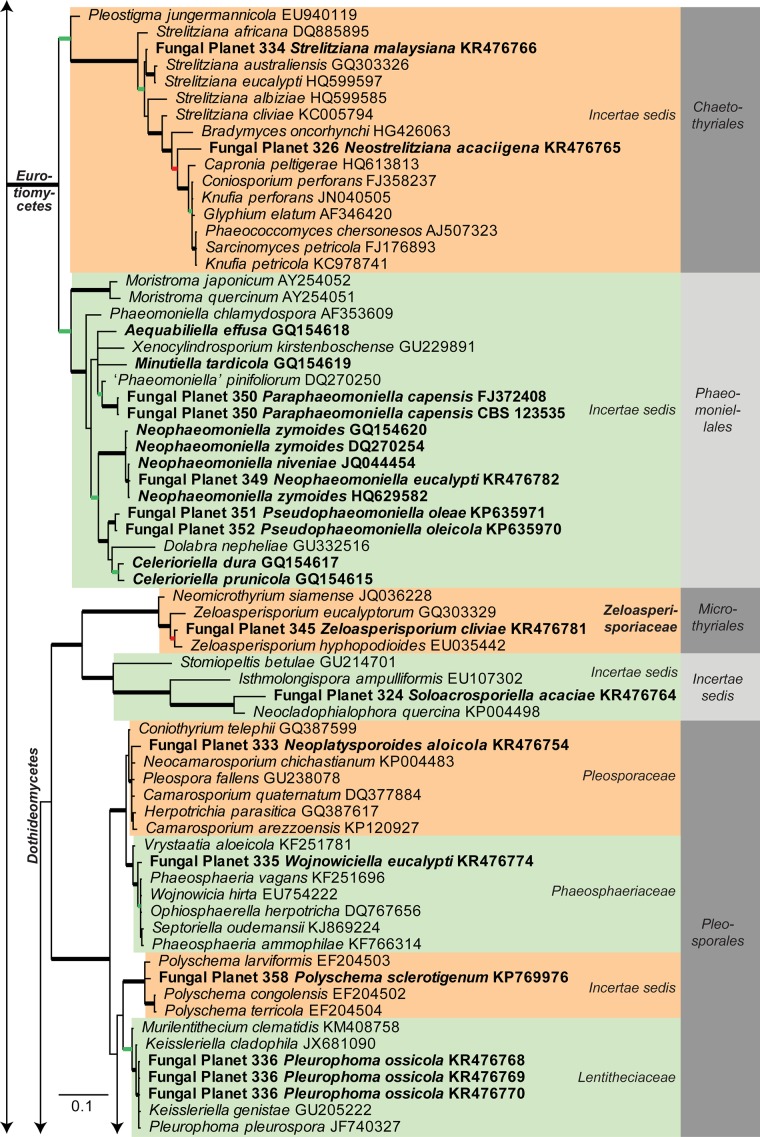
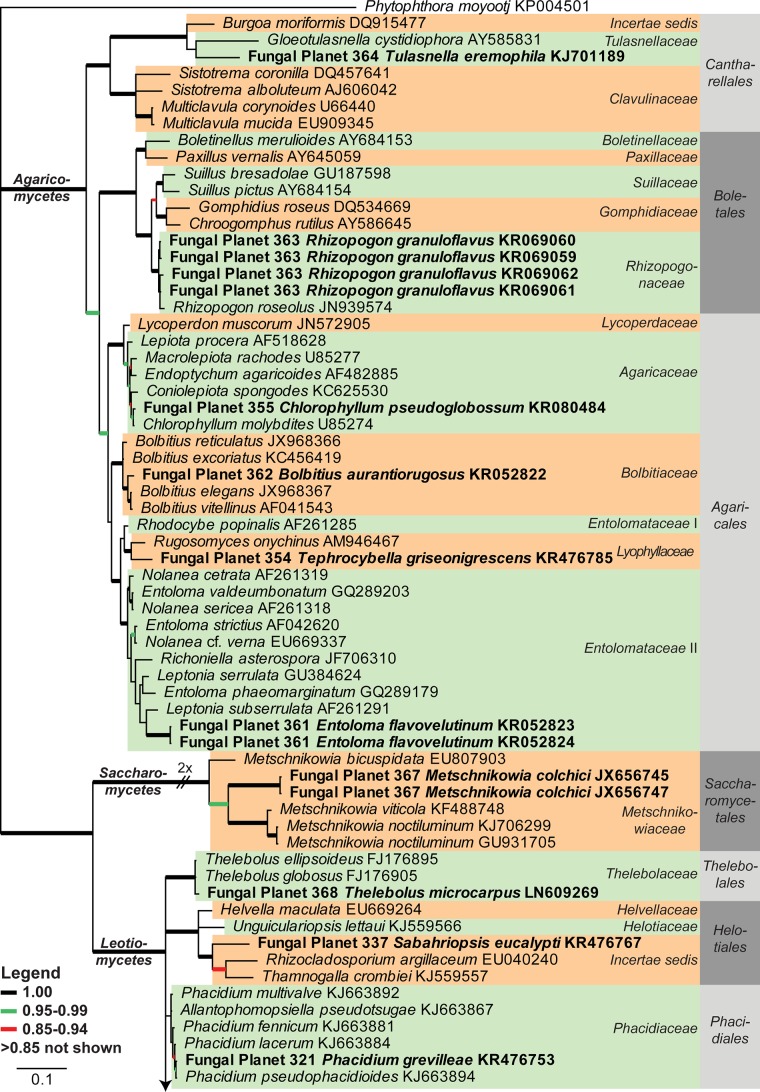
Consensus phylogram [part 1] (50 % majority rule) of 11 020 trees resulting from a Bayesian analysis of the LSU sequence alignment using MrBayes v. 3.2.1 (Ronquist et al. 2012). Bayesian posterior probabilities (PP) > 0.84 are indicated as colour-coded thickened lines and the scale bar represents the expected changes per site. Families and orders are indicated to the right of the tree and classes at the nodes to the left of the tree. Taxonomic novelties for which LSU sequences were available are shown in bold face. The alignment and tree were deposited in TreeBASE (Submission ID 17580). The tree was rooted to Phytophthora moyootj (GenBank KP004501).
None
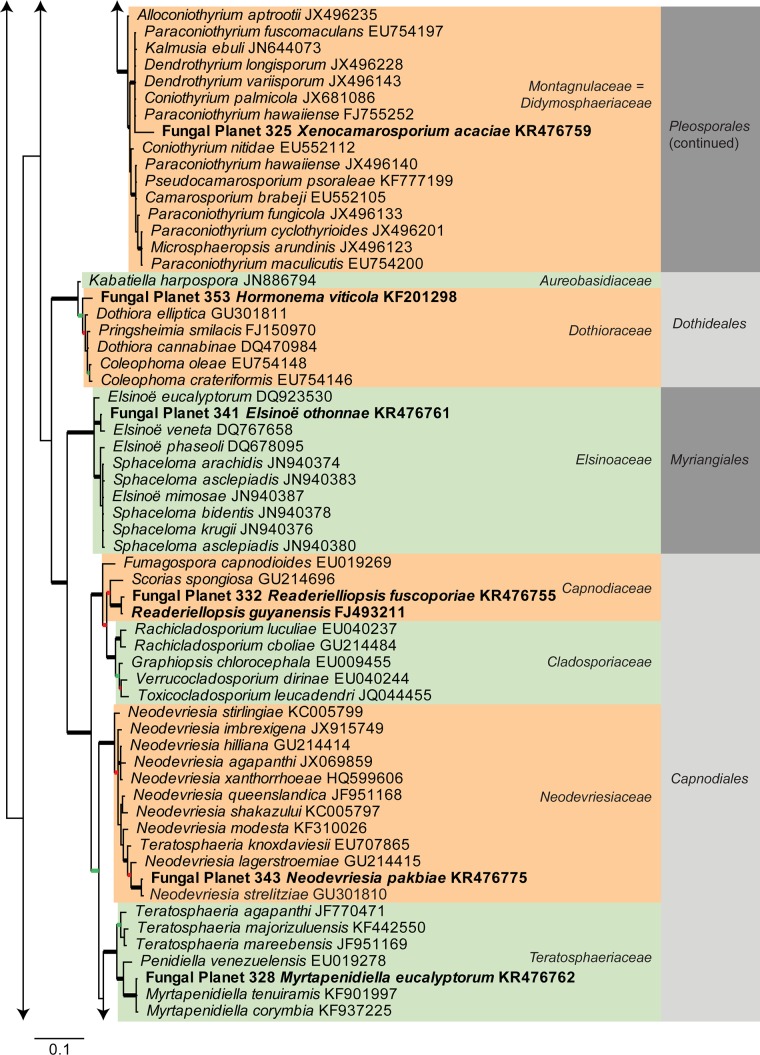
Consensus phylogram [part 1] (50 % majority rule) of 11 020 trees resulting from a Bayesian analysis of the LSU sequence alignment using MrBayes v. 3.2.1 (Ronquist et al. 2012). Bayesian posterior probabilities (PP) > 0.84 are indicated as colour-coded thickened lines and the scale bar represents the expected changes per site. Families and orders are indicated to the right of the tree and classes at the nodes to the left of the tree. Taxonomic novelties for which LSU sequences were available are shown in bold face. The alignment and tree were deposited in TreeBASE (Submission ID 17580). The tree was rooted to Phytophthora moyootj (GenBank KP004501).
None
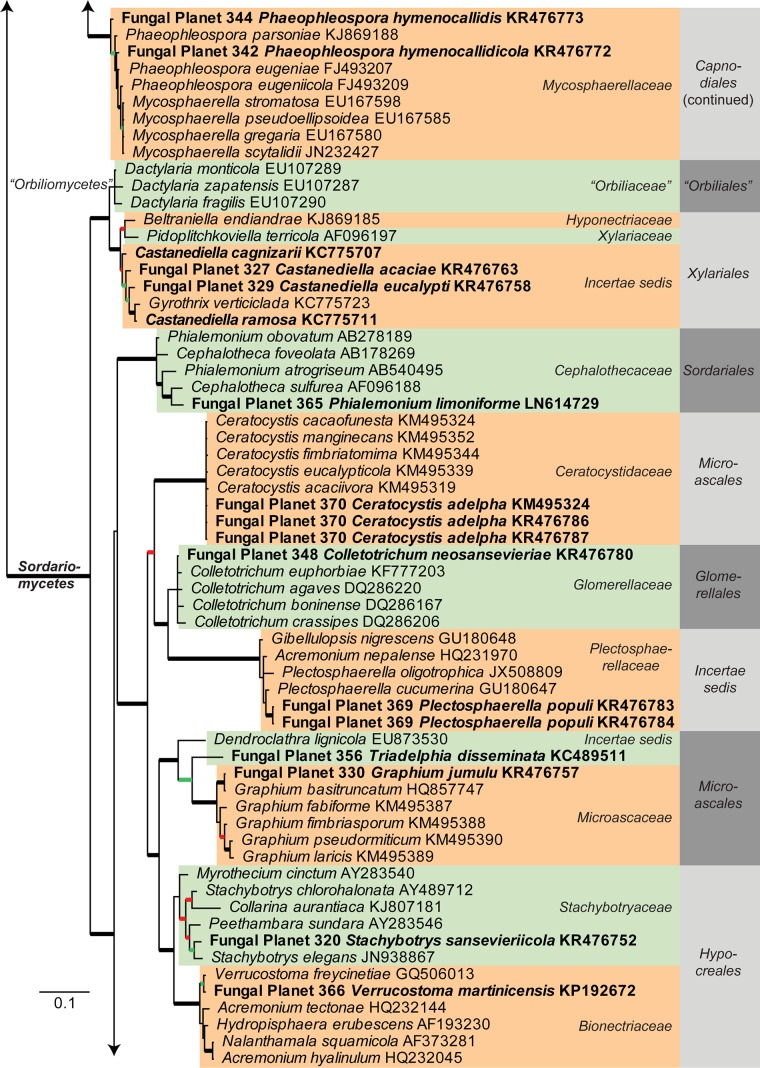
Consensus phylogram [part 1] (50 % majority rule) of 11 020 trees resulting from a Bayesian analysis of the LSU sequence alignment using MrBayes v. 3.2.1 (Ronquist et al. 2012). Bayesian posterior probabilities (PP) > 0.84 are indicated as colour-coded thickened lines and the scale bar represents the expected changes per site. Families and orders are indicated to the right of the tree and classes at the nodes to the left of the tree. Taxonomic novelties for which LSU sequences were available are shown in bold face. The alignment and tree were deposited in TreeBASE (Submission ID 17580). The tree was rooted to Phytophthora moyootj (GenBank KP004501).
None
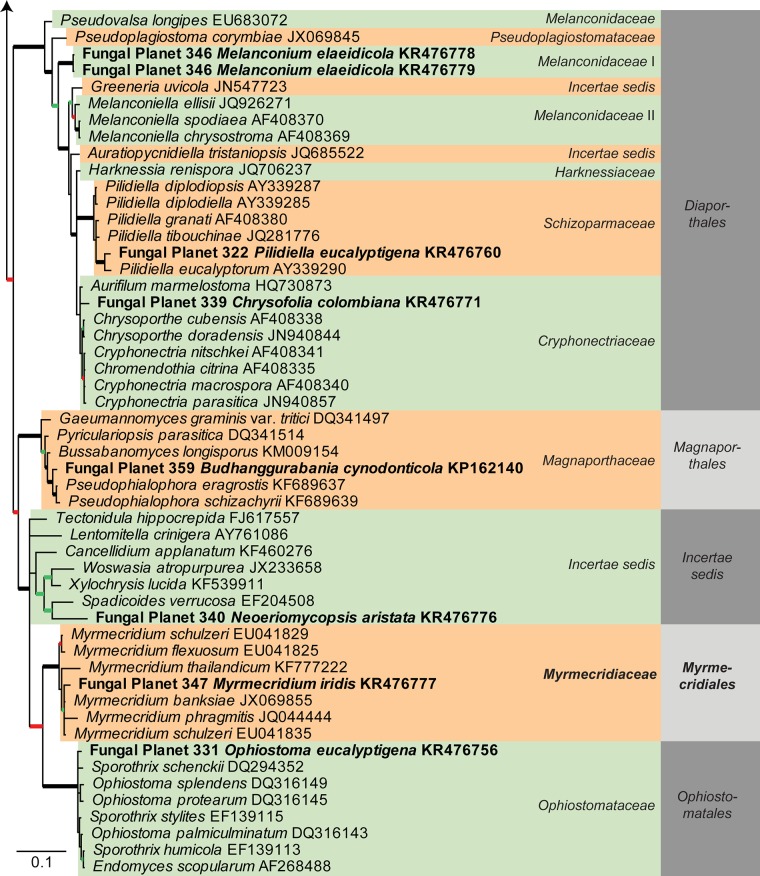
Consensus phylogram [part 1] (50 % majority rule) of 11 020 trees resulting from a Bayesian analysis of the LSU sequence alignment using MrBayes v. 3.2.1 (Ronquist et al. 2012). Bayesian posterior probabilities (PP) > 0.84 are indicated as colour-coded thickened lines and the scale bar represents the expected changes per site. Families and orders are indicated to the right of the tree and classes at the nodes to the left of the tree. Taxonomic novelties for which LSU sequences were available are shown in bold face. The alignment and tree were deposited in TreeBASE (Submission ID 17580). The tree was rooted to Phytophthora moyootj (GenBank KP004501).
None
Consensus phylogram [part 1] (50 % majority rule) of 11 020 trees resulting from a Bayesian analysis of the LSU sequence alignment using MrBayes v. 3.2.1 (Ronquist et al. 2012). Bayesian posterior probabilities (PP) > 0.84 are indicated as colour-coded thickened lines and the scale bar represents the expected changes per site. Families and orders are indicated to the right of the tree and classes at the nodes to the left of the tree. Taxonomic novelties for which LSU sequences were available are shown in bold face. The alignment and tree were deposited in TreeBASE (Submission ID 17580). The tree was rooted to Phytophthora moyootj (GenBank KP004501).
None
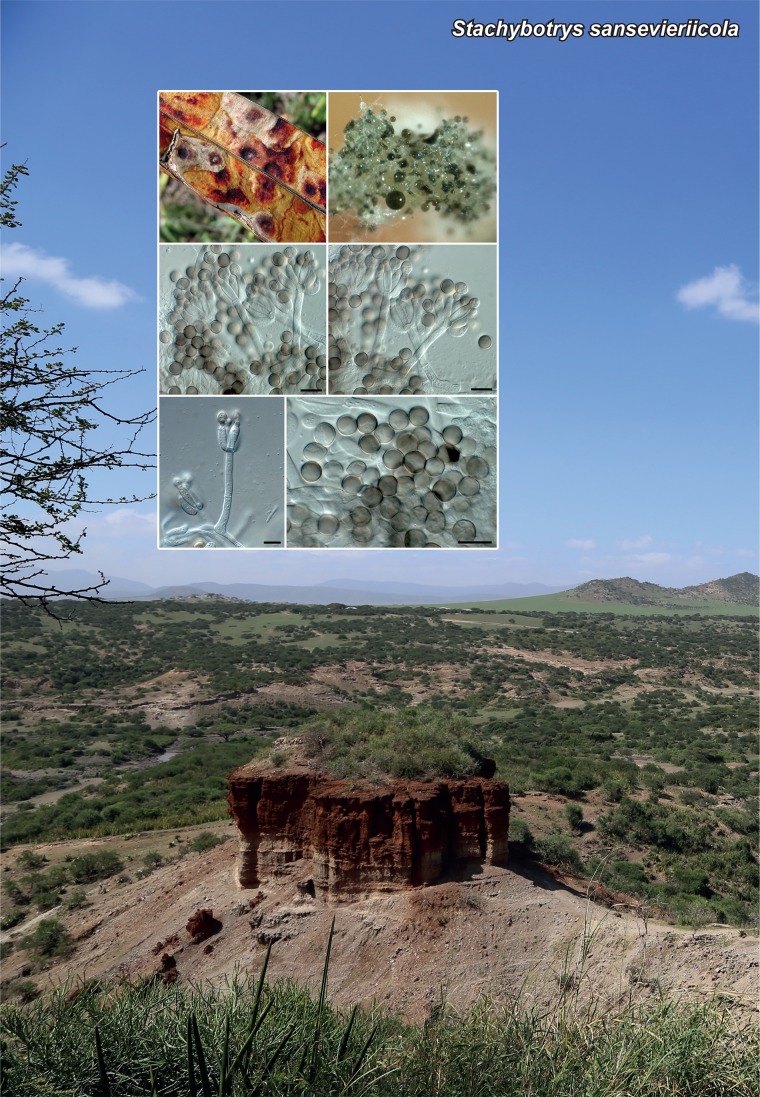
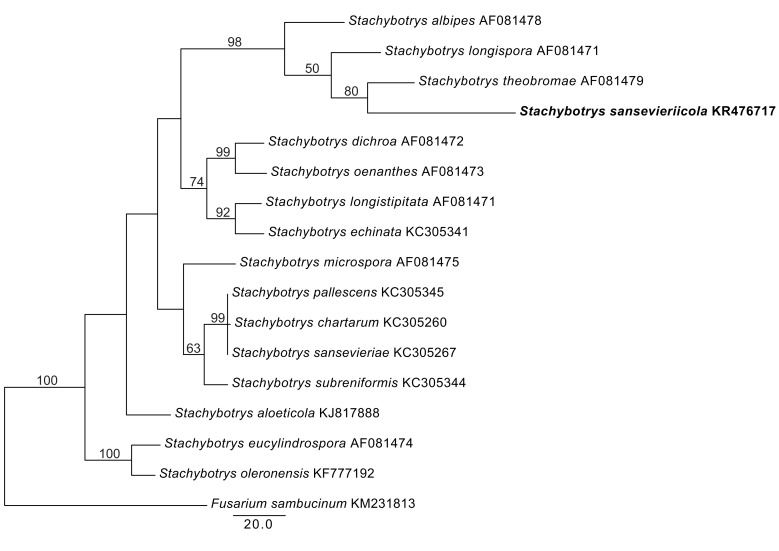
Stachybotrys sansevieriicola
None
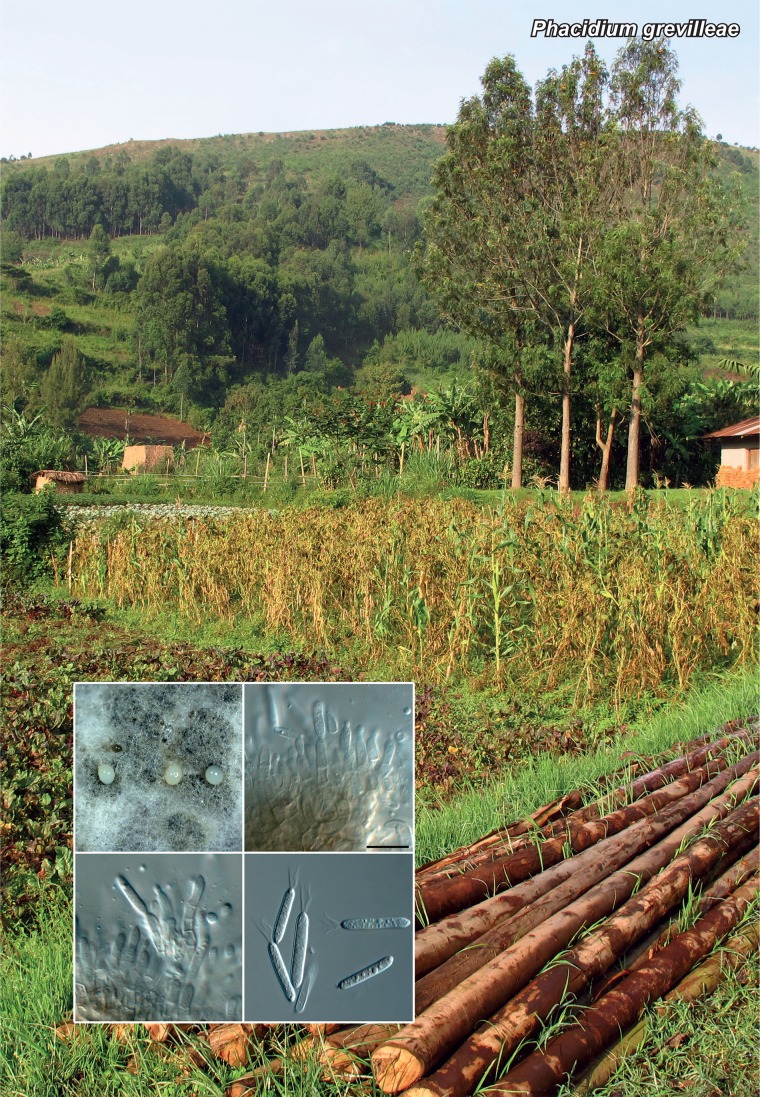
Phacidium grevilleae
None
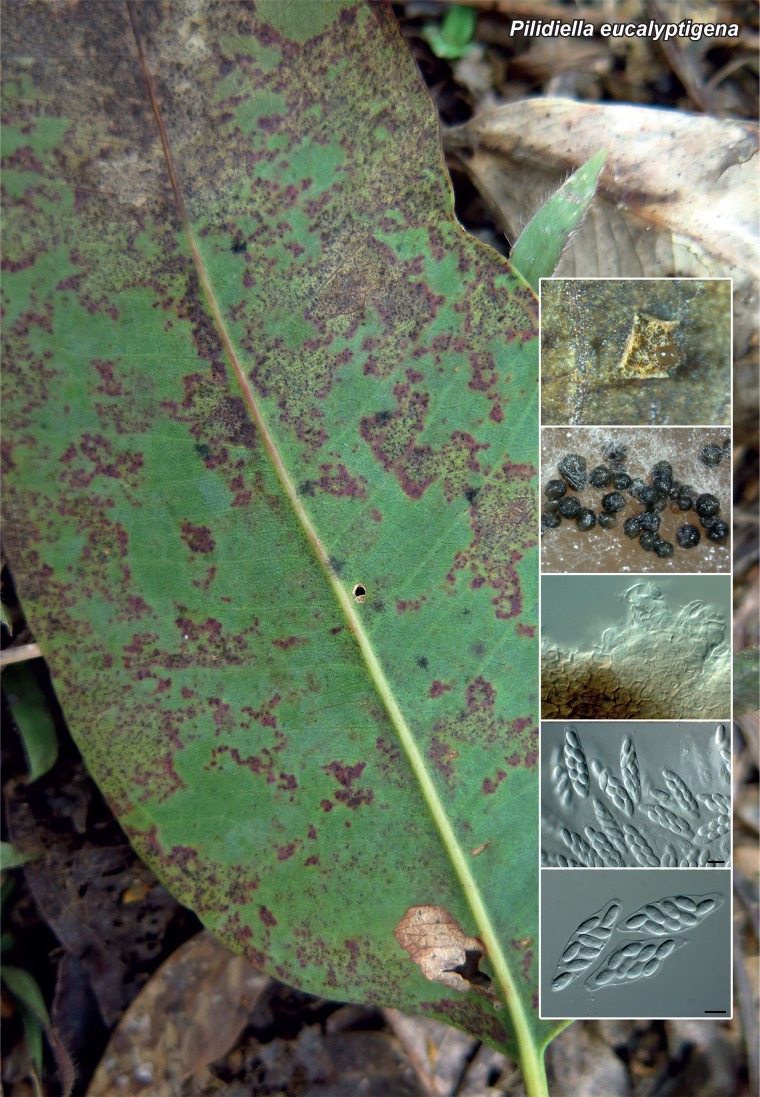
Pilidiella eucalyptigena
None
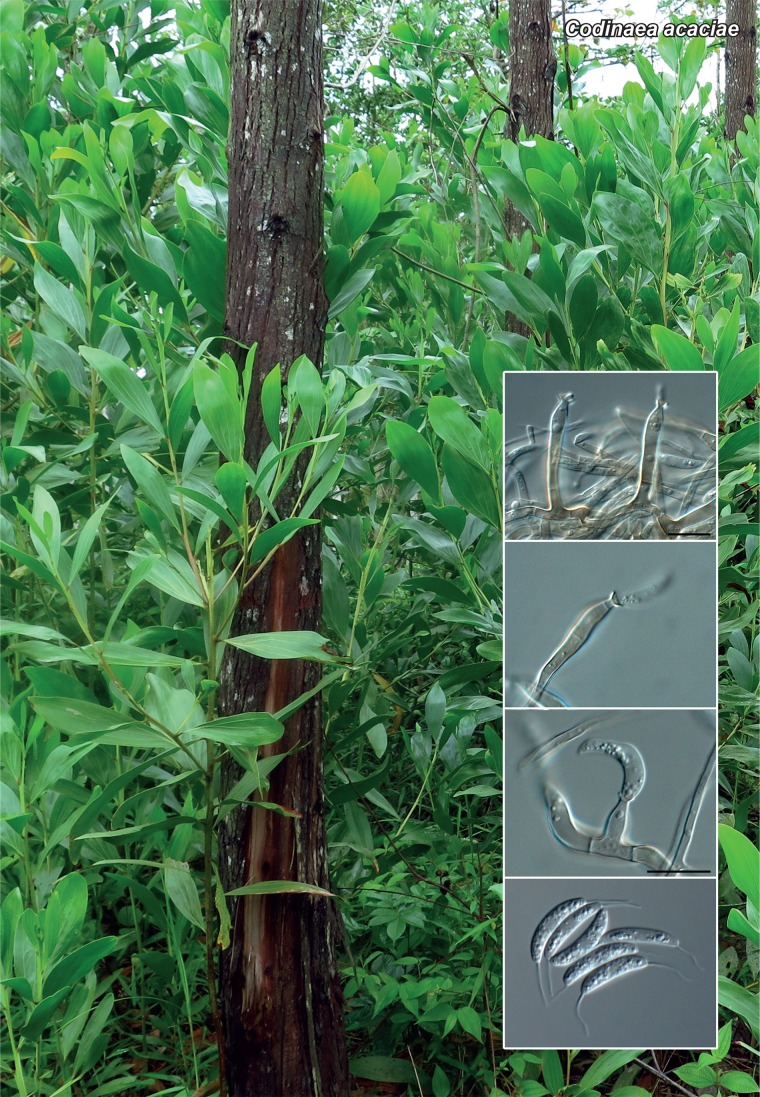
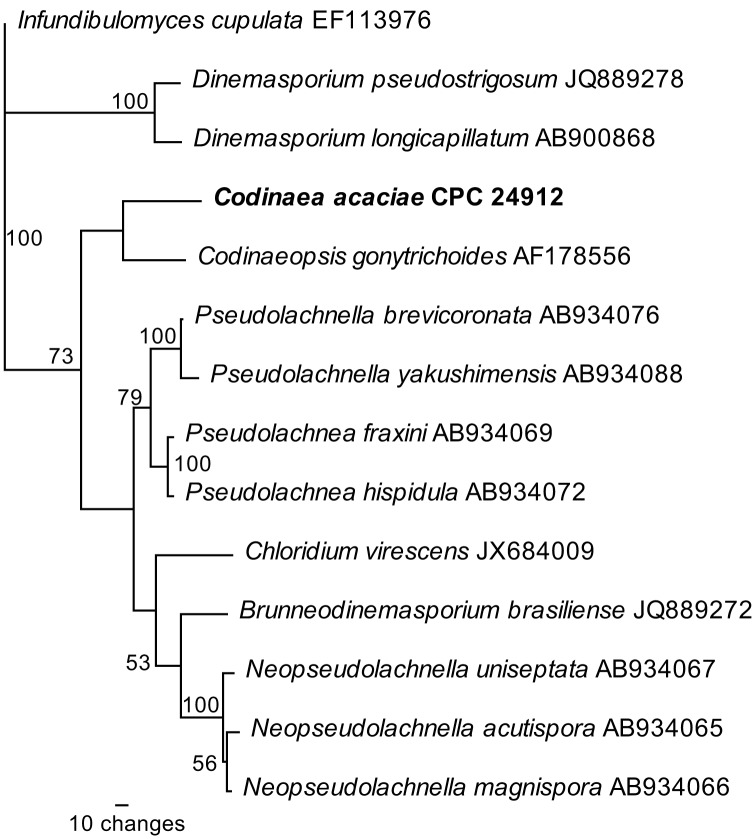
Codinaea acaciae
None
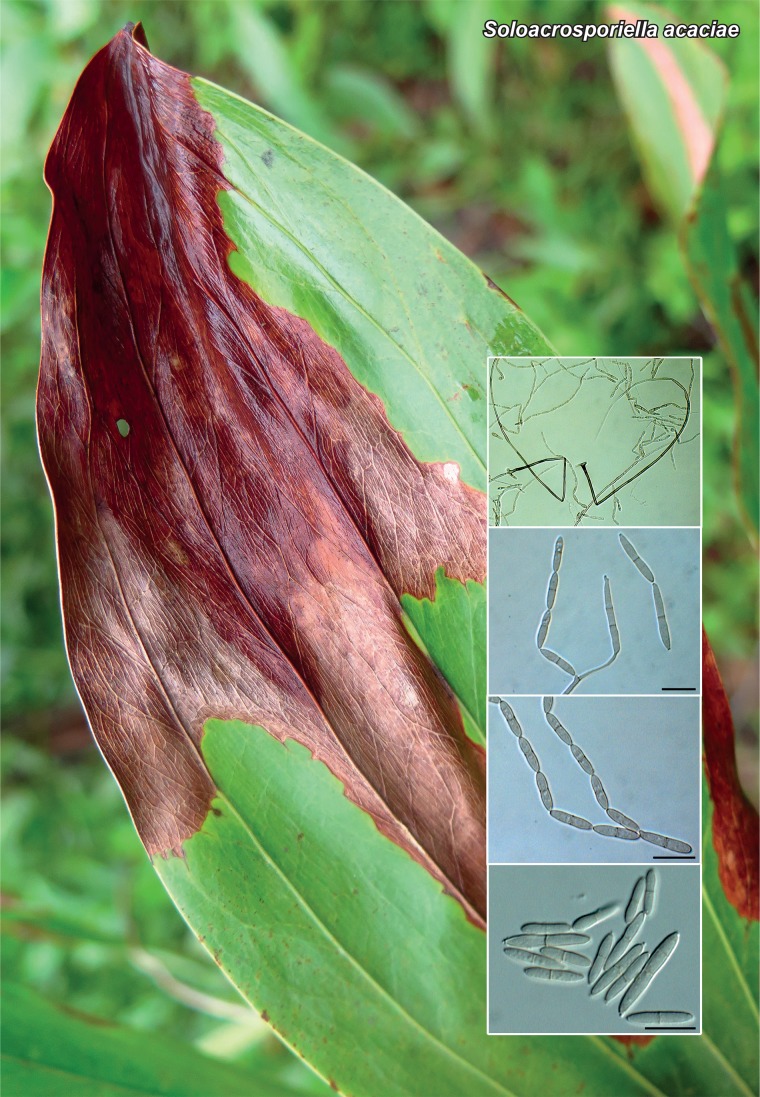
Soloacrosporiella acaciae
None
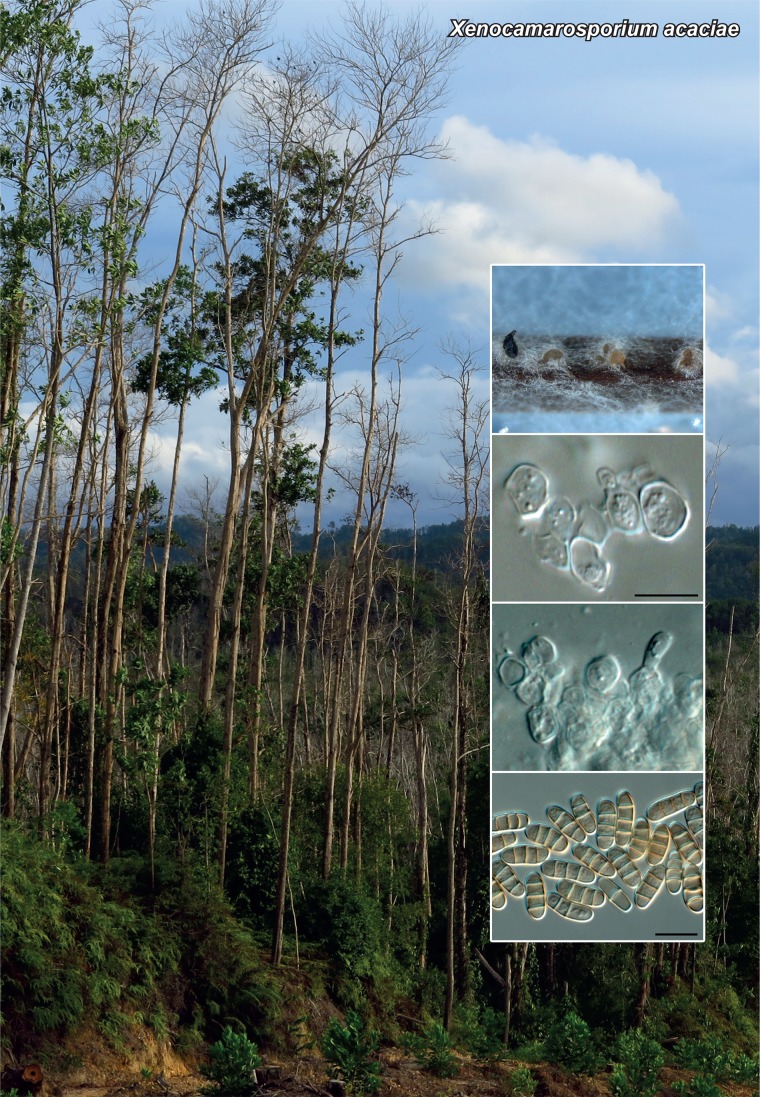
Xenocamarosporium acaciae
None
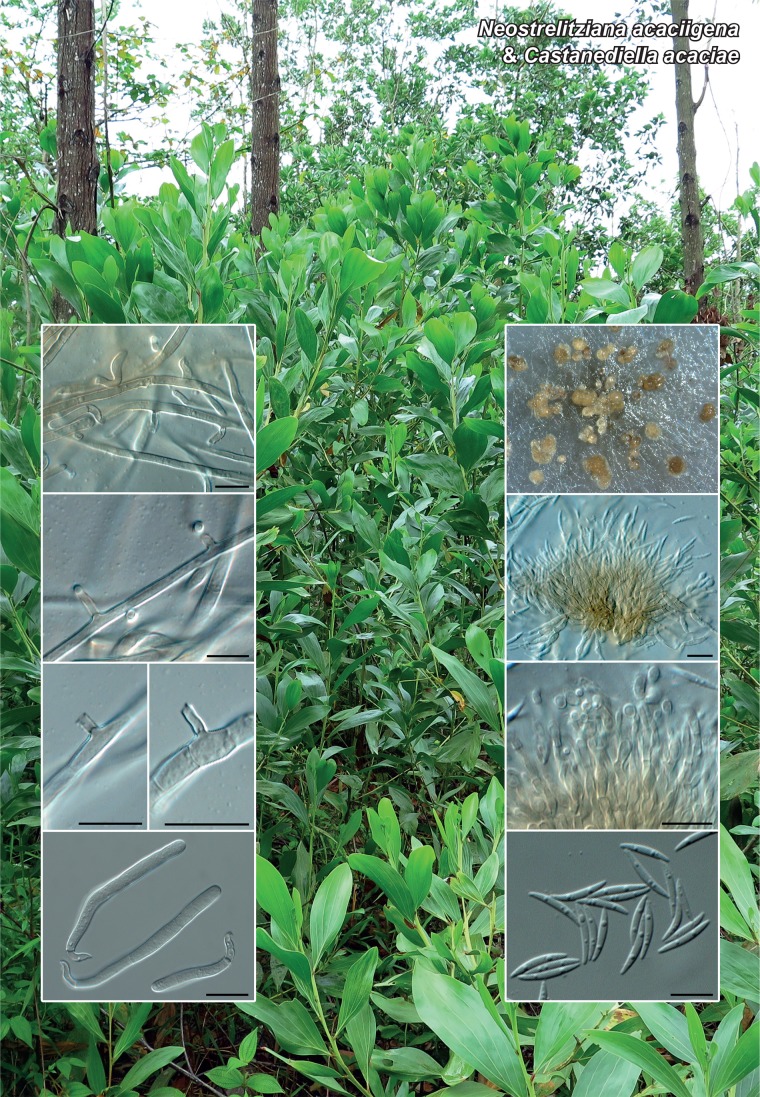
Neostrelitziana acaciigena & Castanediella acaciae
None
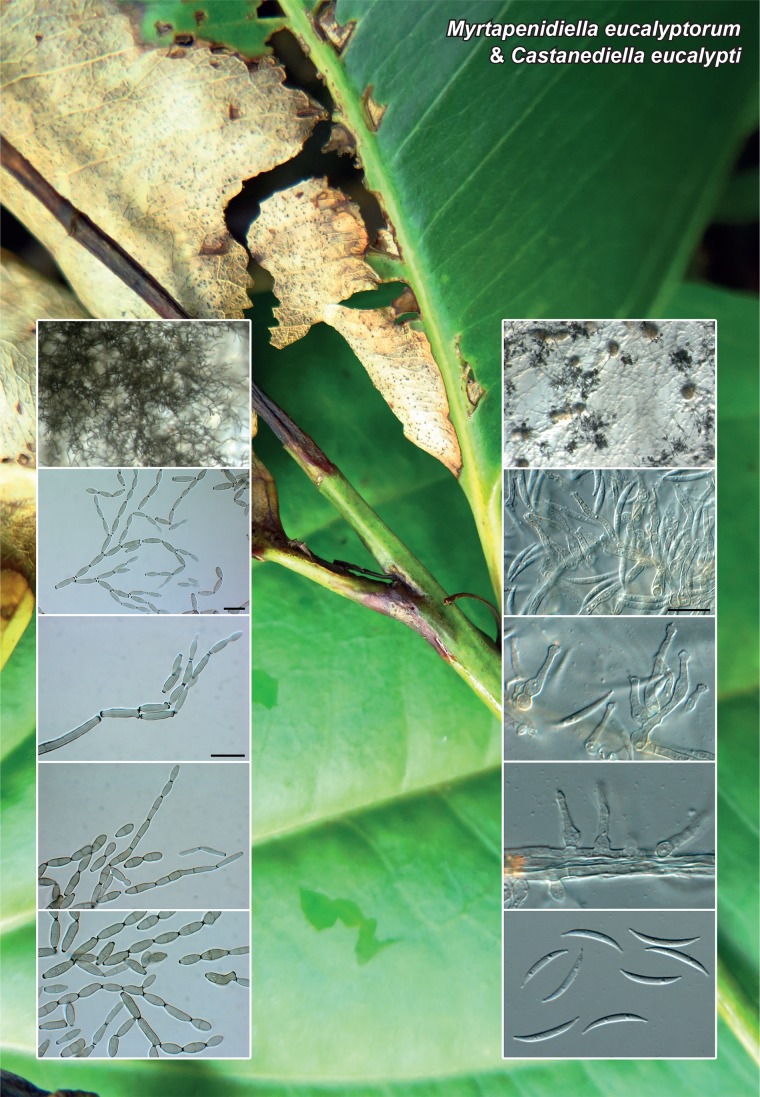
Myrtapenidiella eucalyptorum & Castanediella eucalypti
None
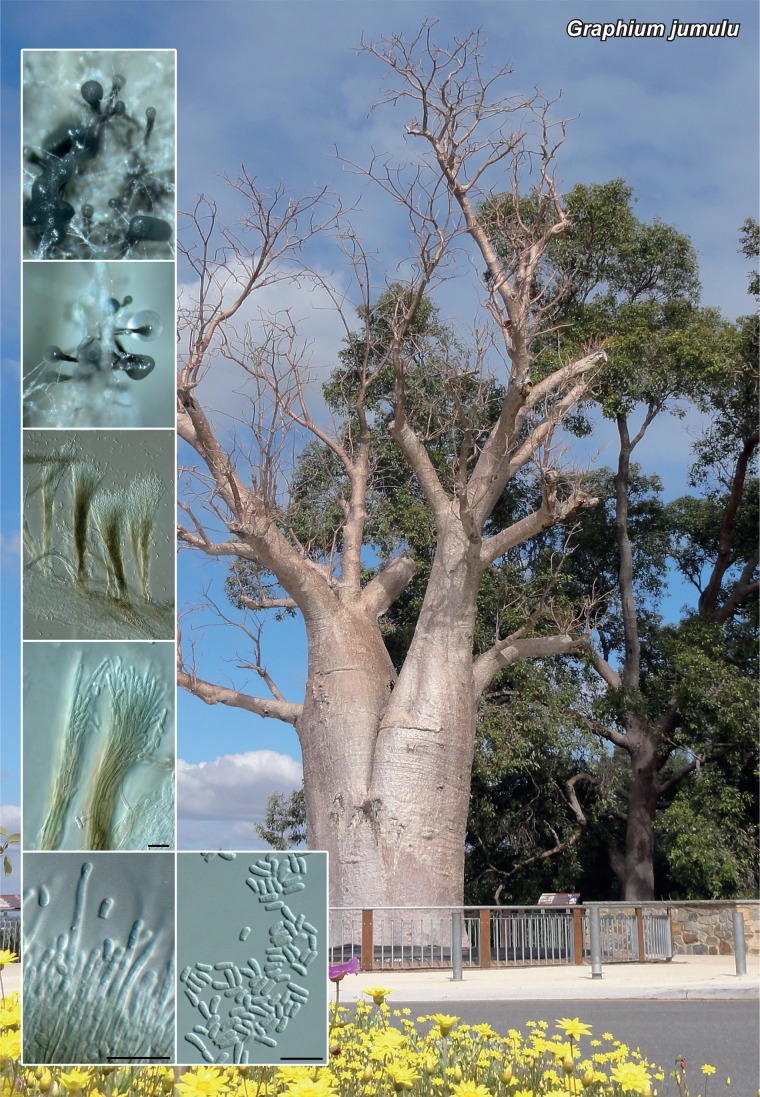
Graphium jumulu
None
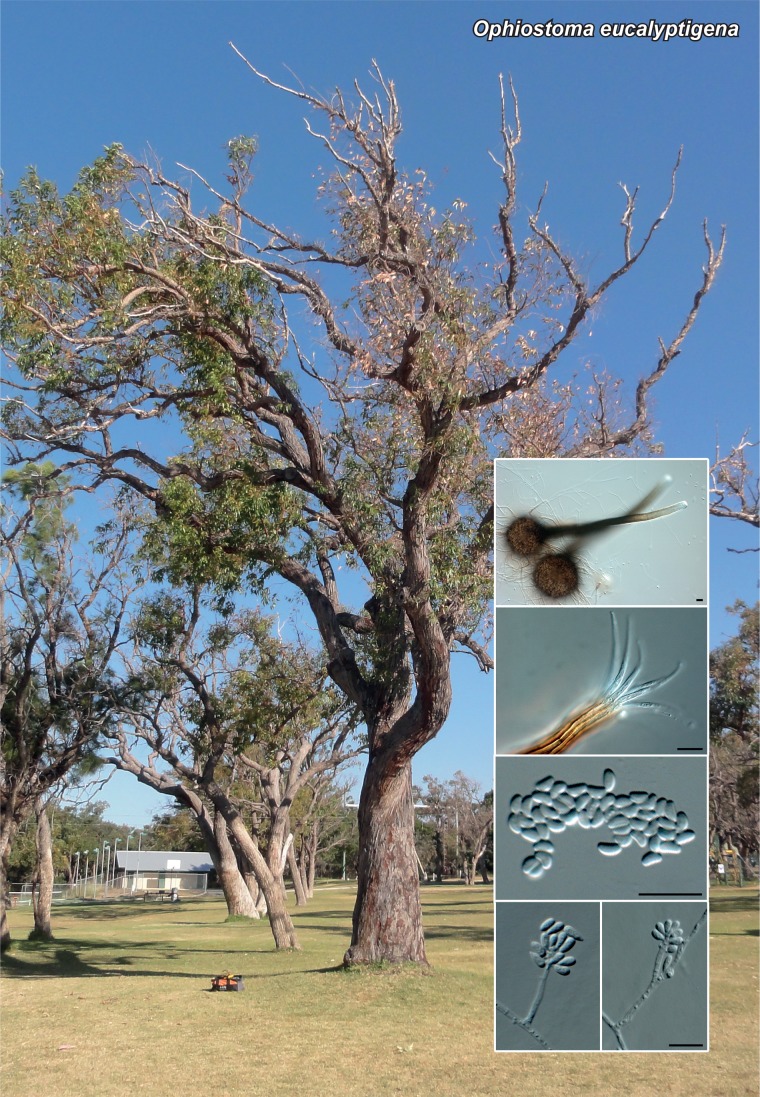
Ophiostoma eucalyptigena
None
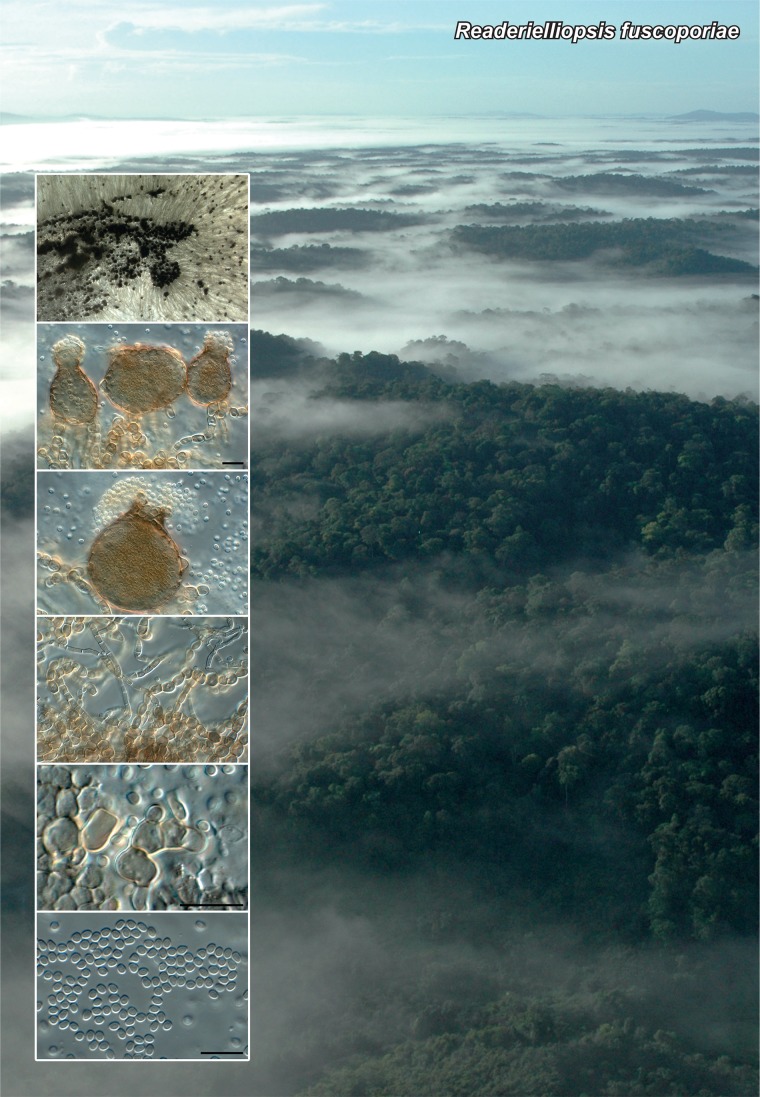
Readerielliopsis fuscoporiae
None
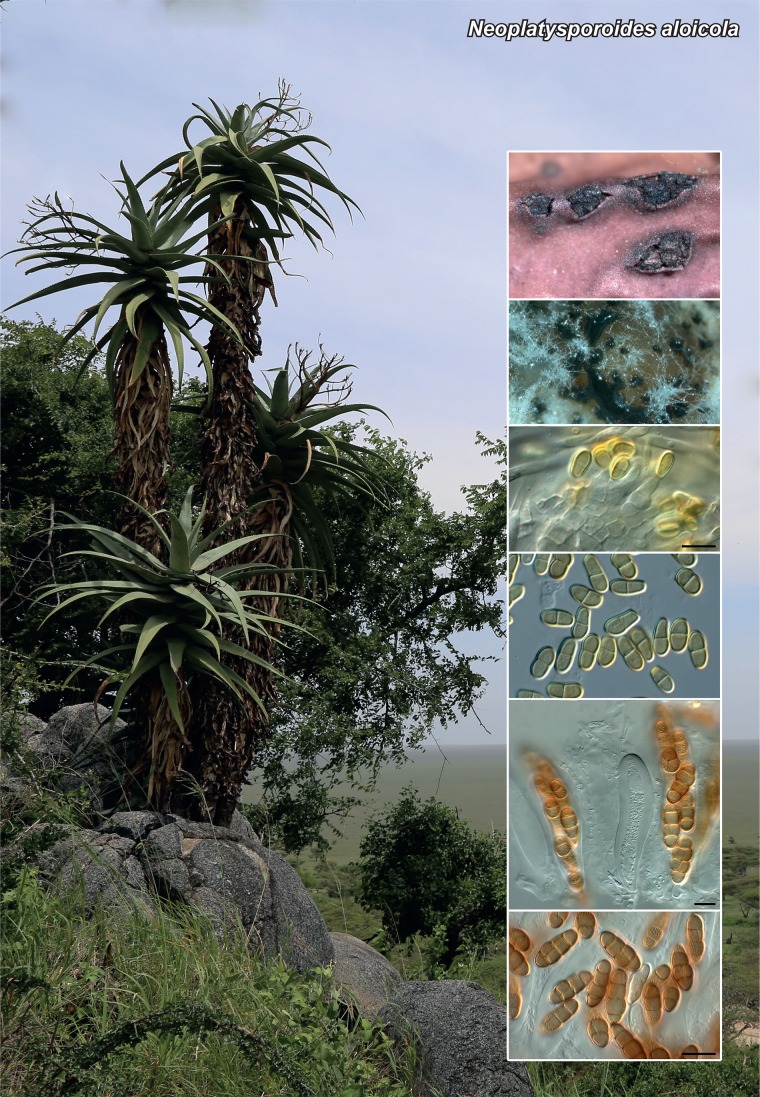
Neoplatysporoides aloicola
None
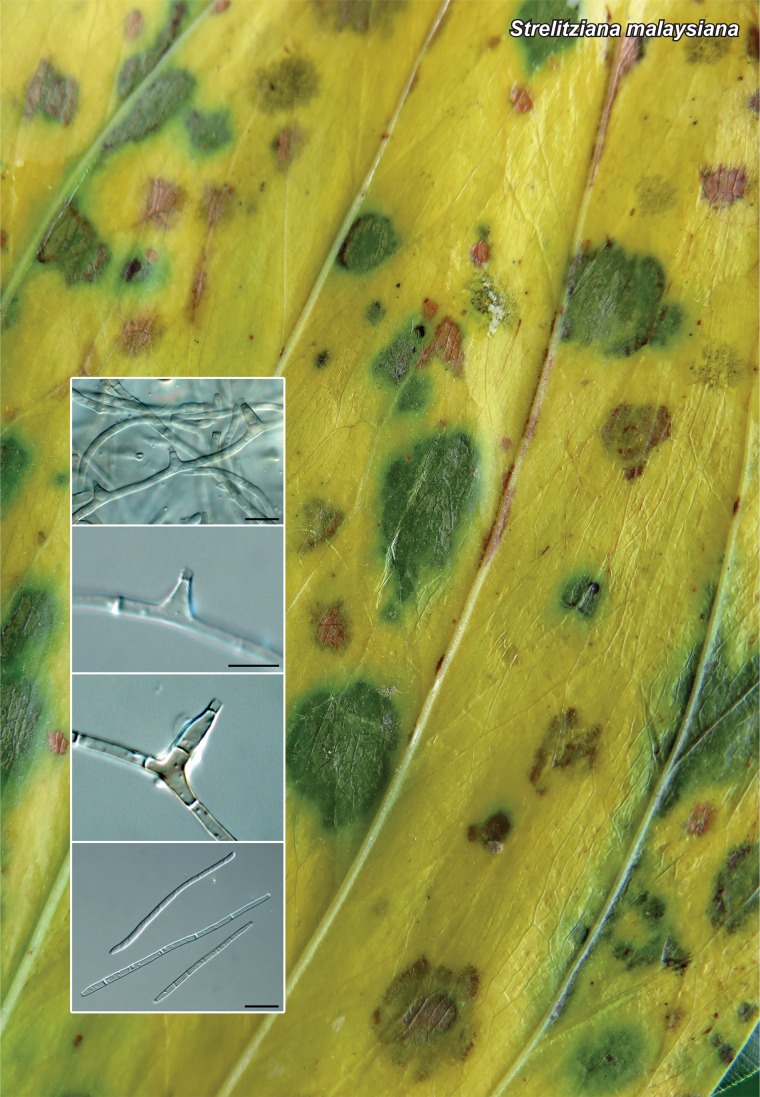
Strelitziana malaysiana
None
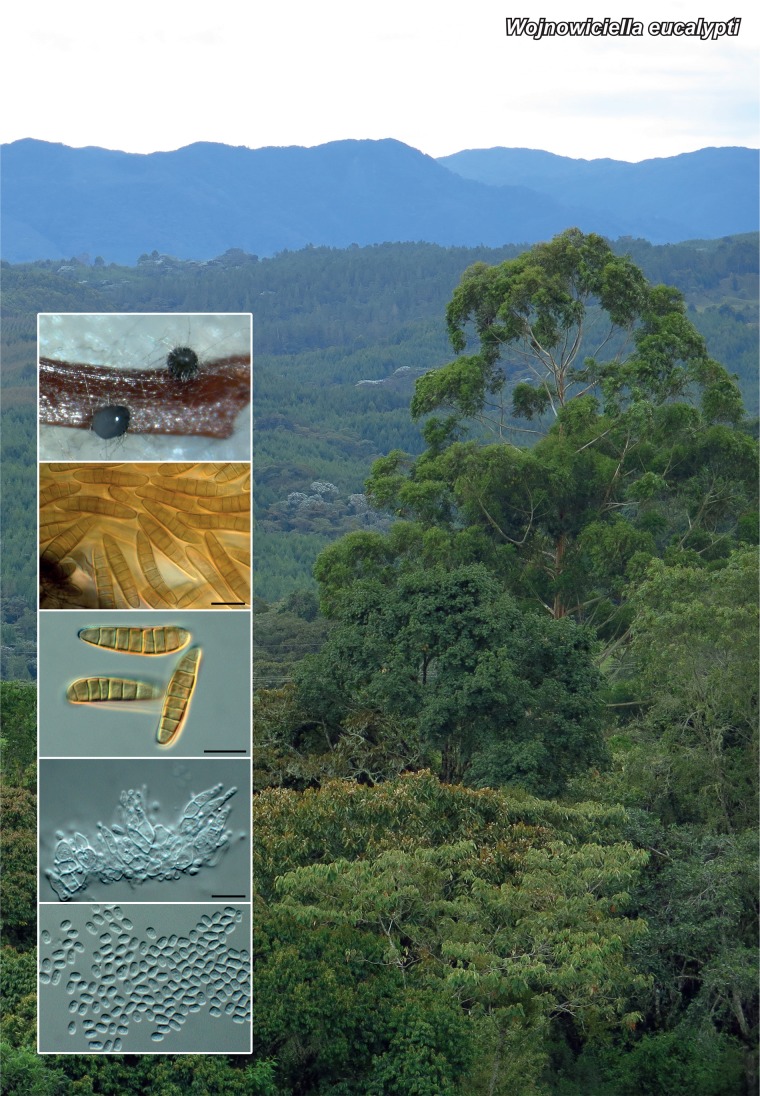
Wojnowiciella eucalypti
None
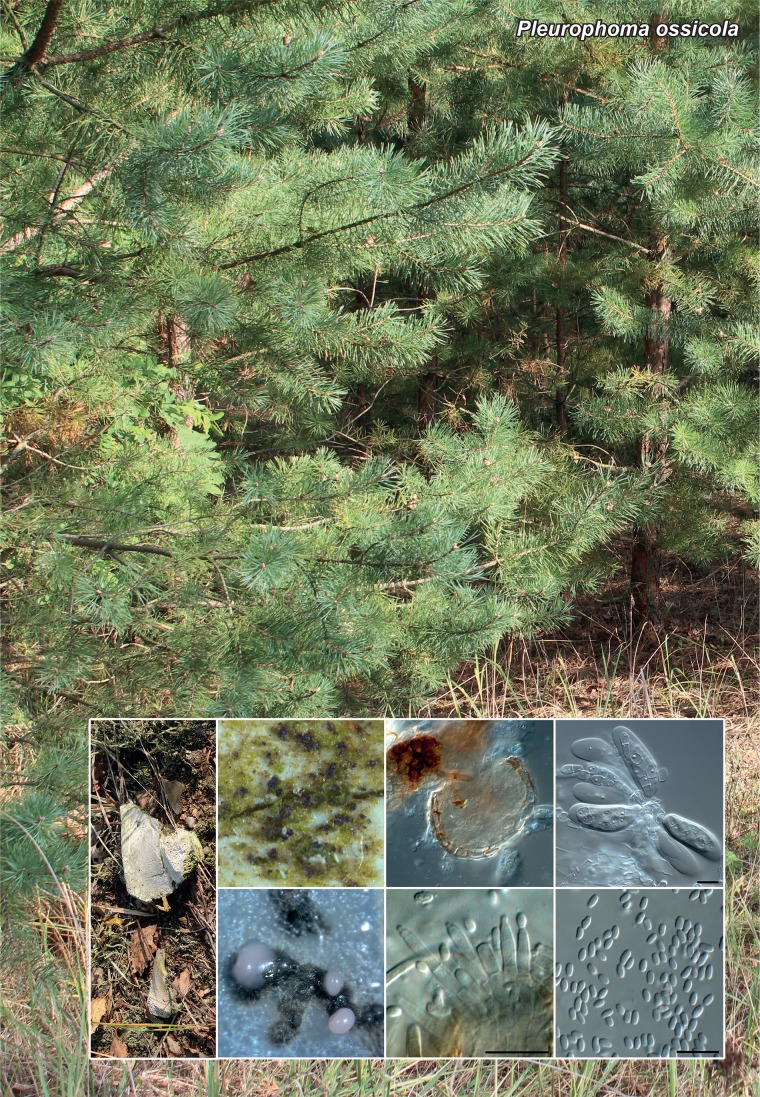
Pleurophoma ossicola
None
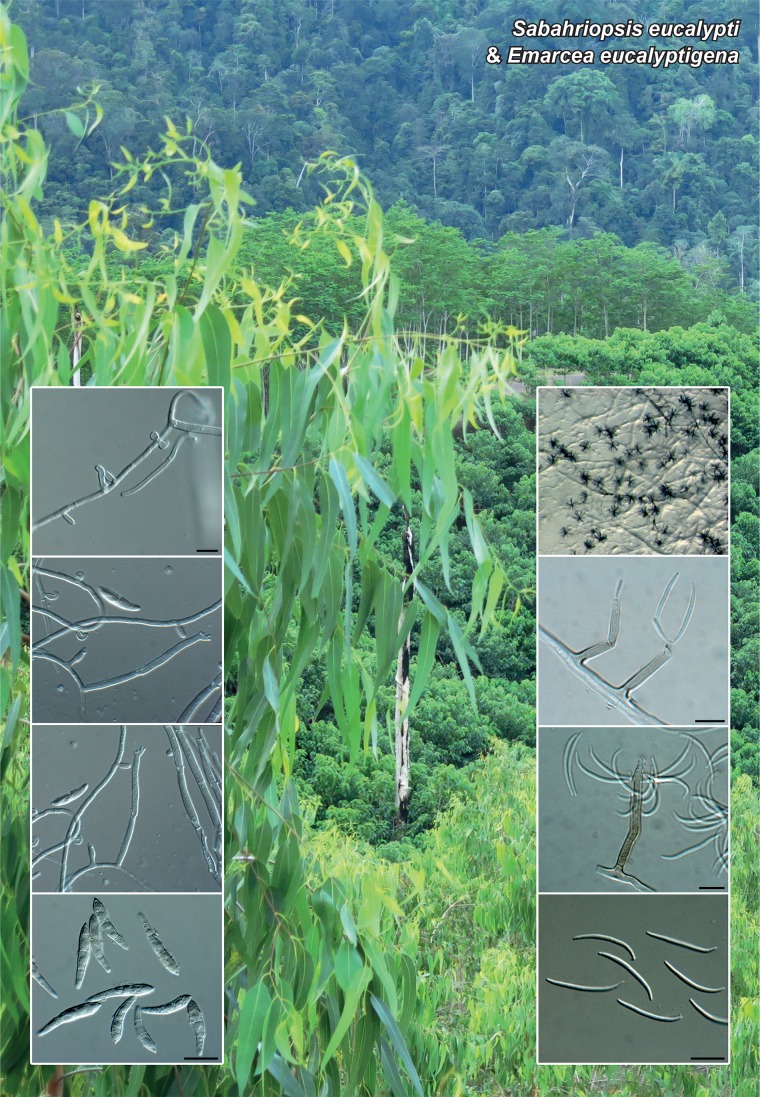
Sabahriopsis eucalypti & Emarcea eucalyptigena
None
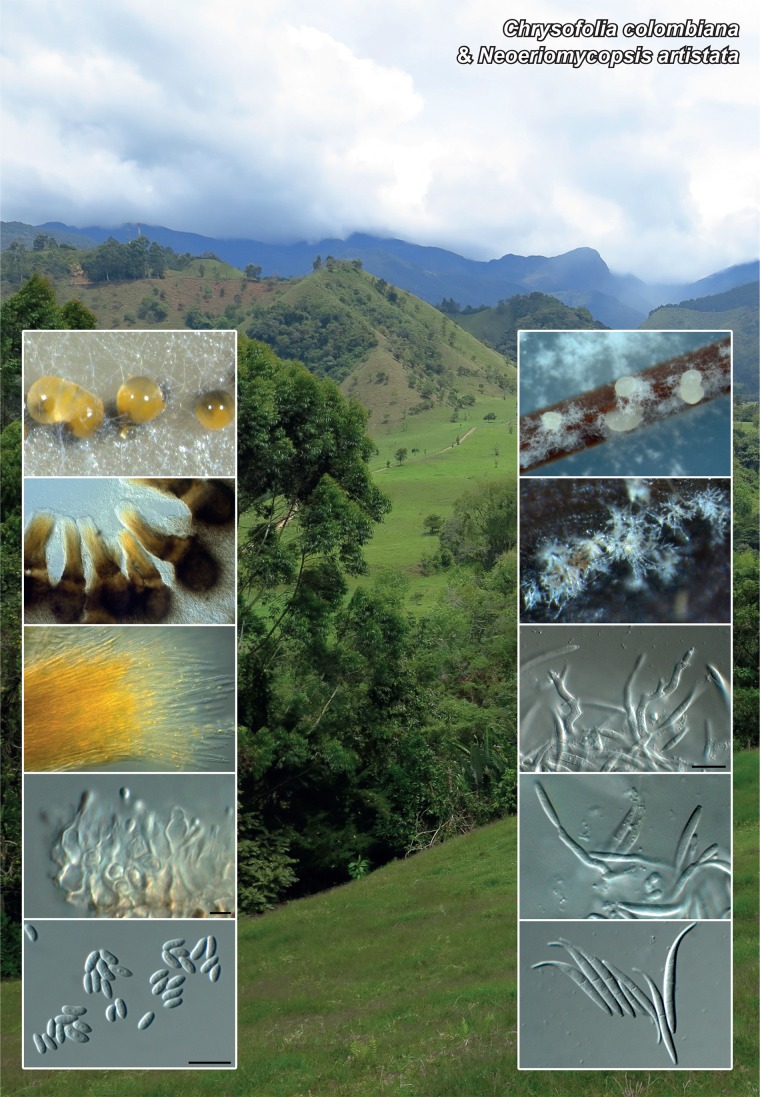
Chrysofolia colombiana & Neoeriomycopsis artistata
None
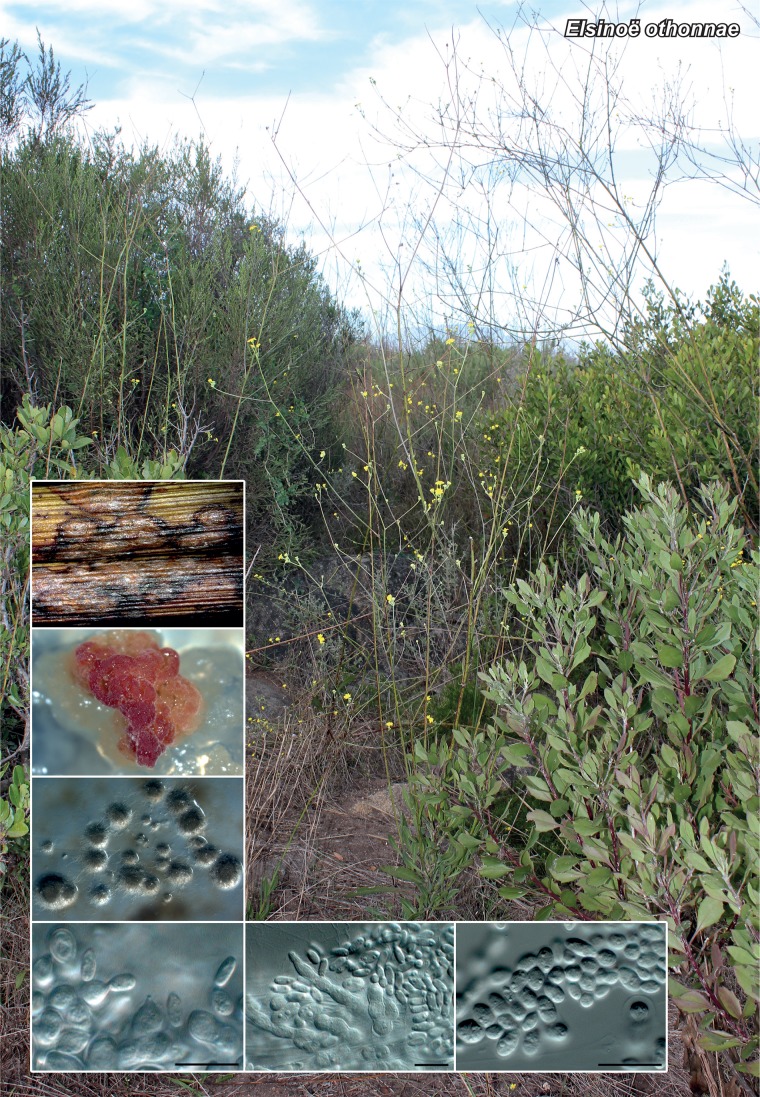
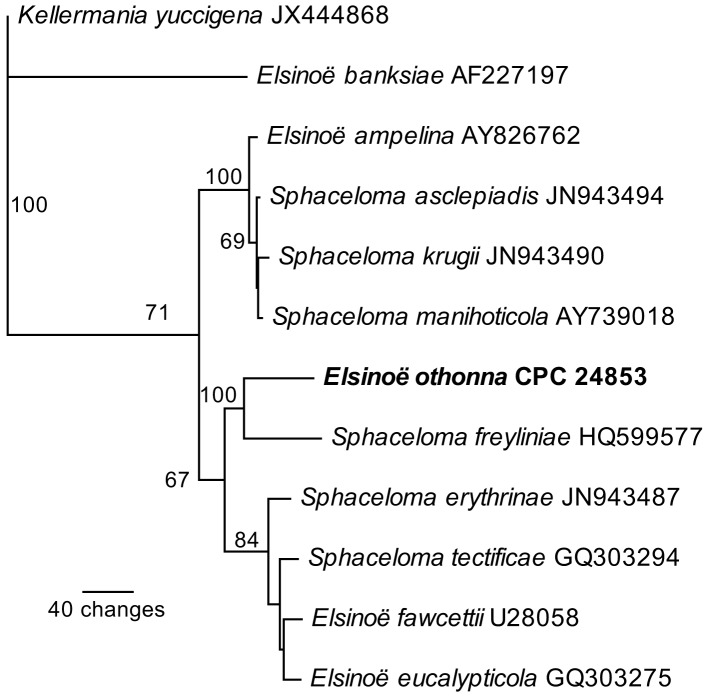
Elsinoë othonnae
None
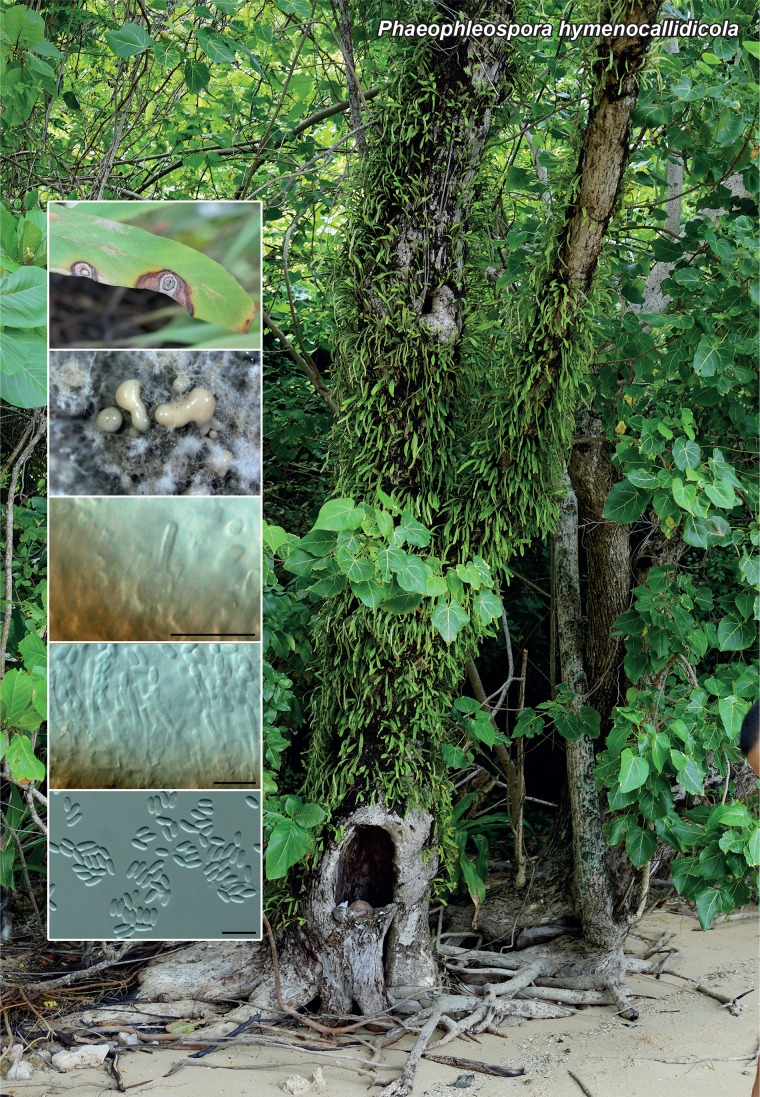
Phaeophleospora hymenocallidicola
None
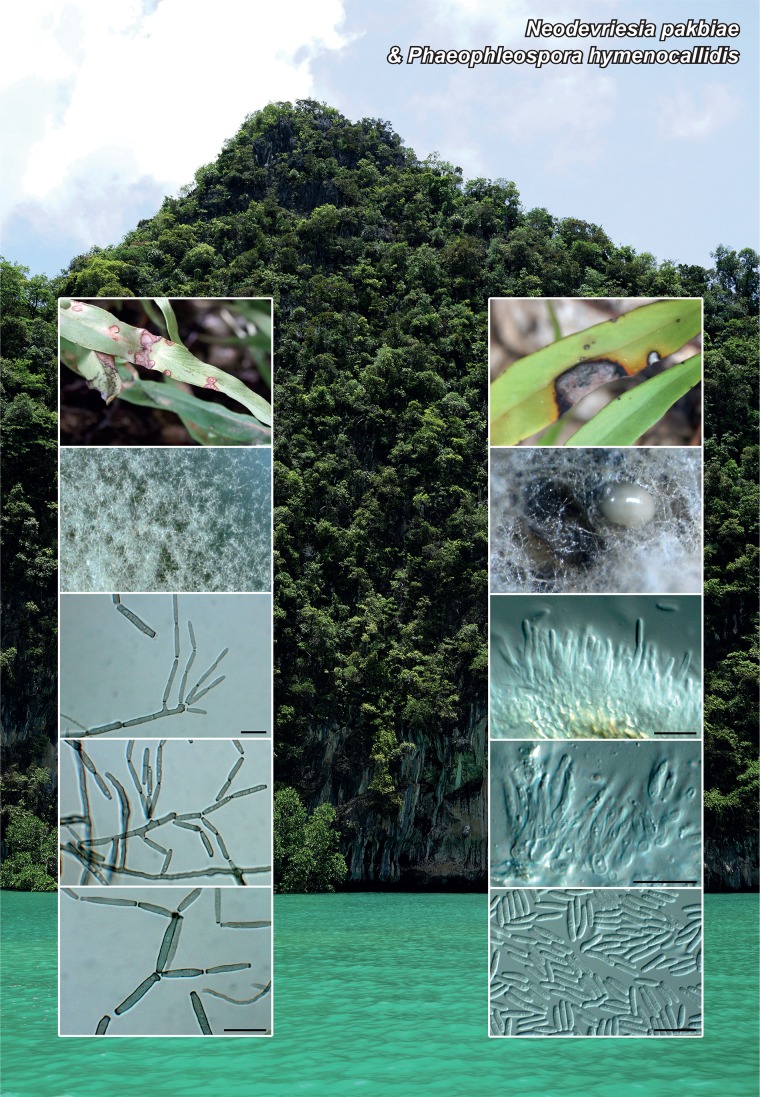
Neodevriesia pakbiae & Phaeophleospora hymenocallidis
None
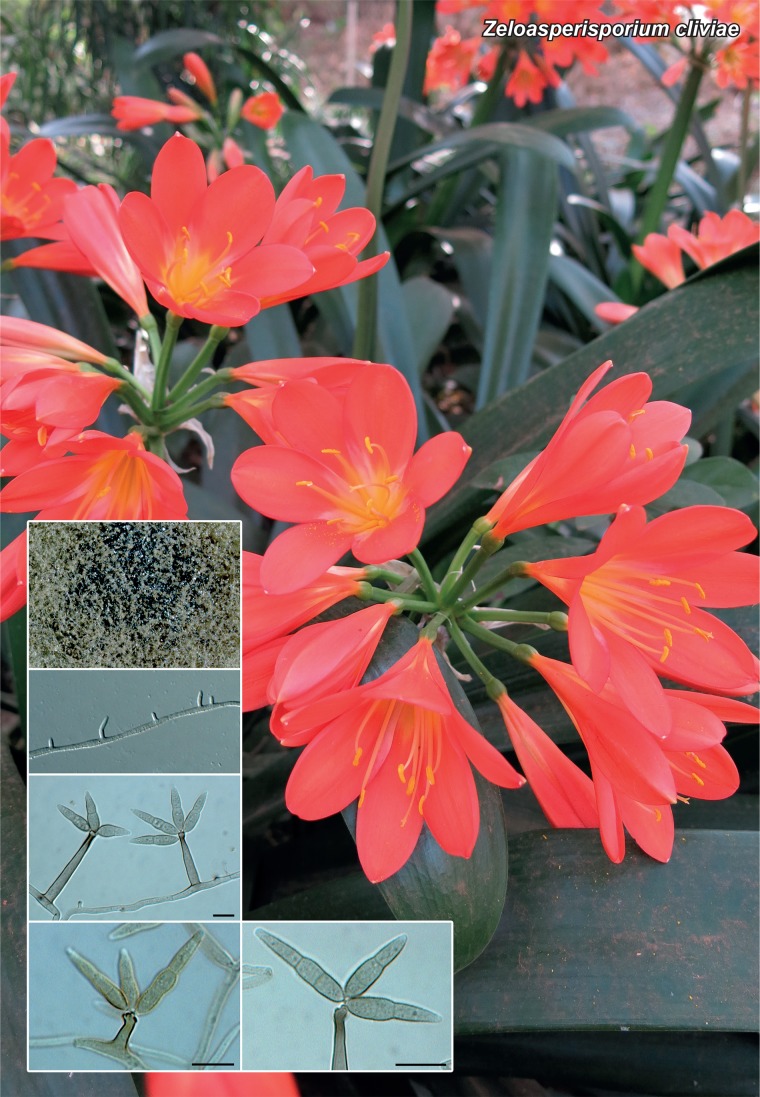
Zeloasperisporium cliviae
None
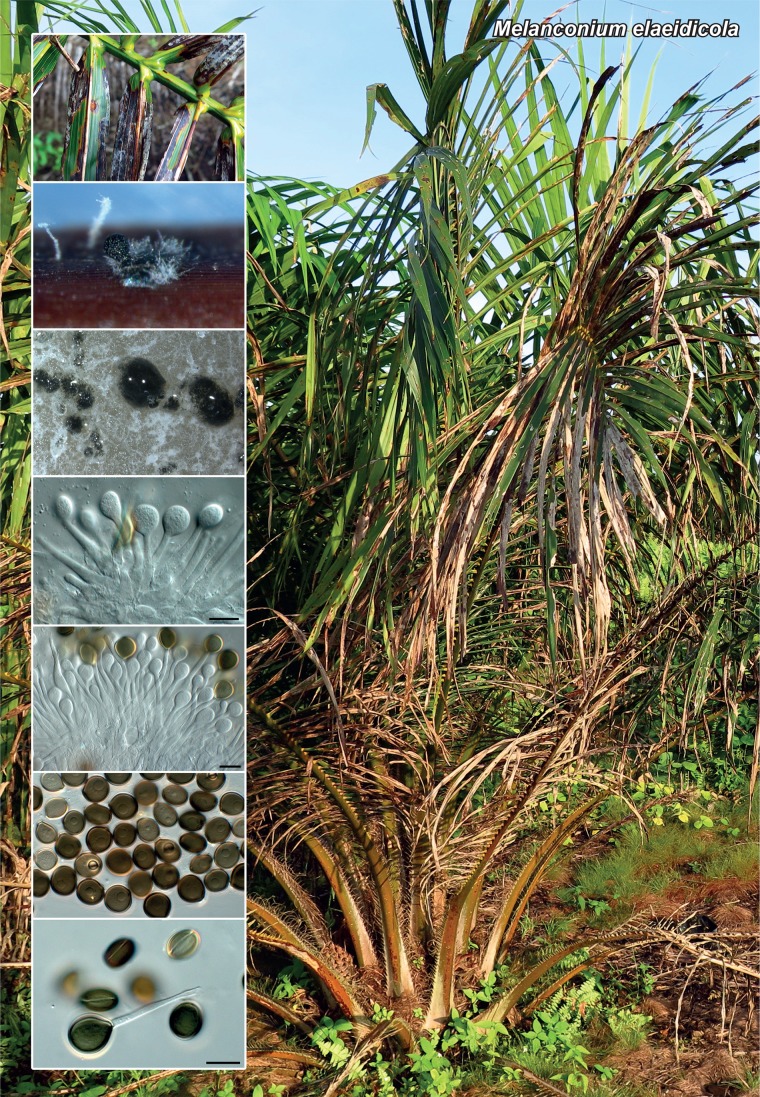
Melanconium elaeidicola
None
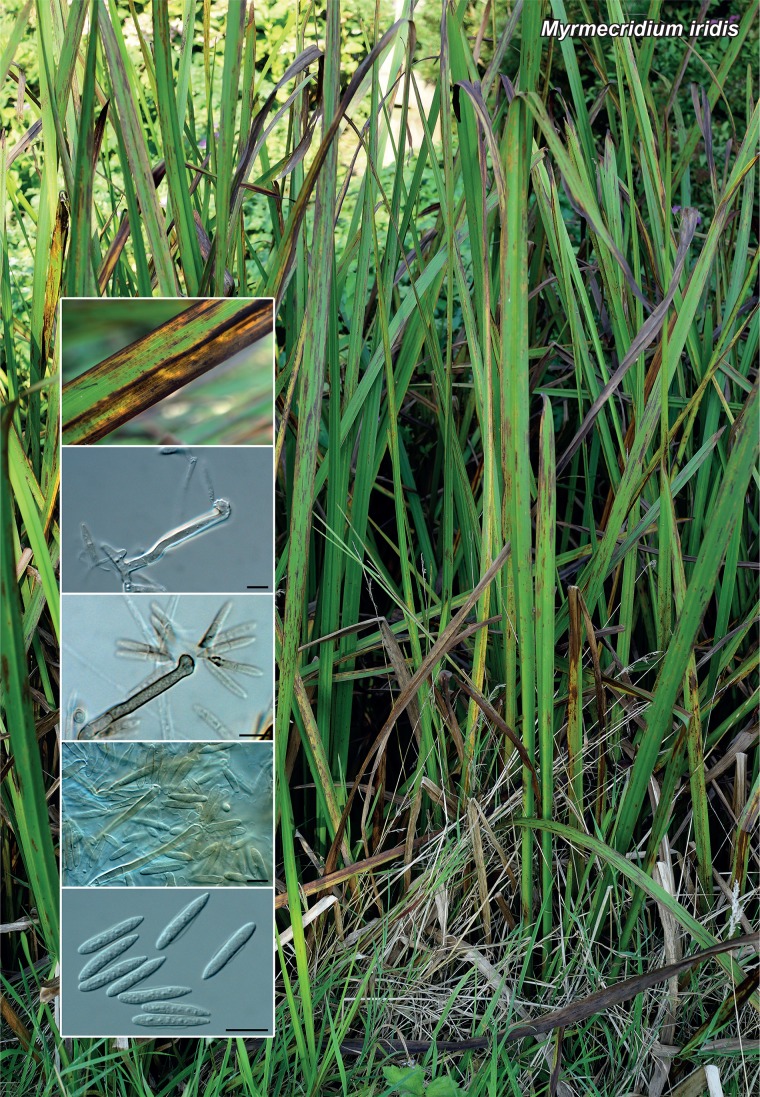
Myrmecridium iridis
None
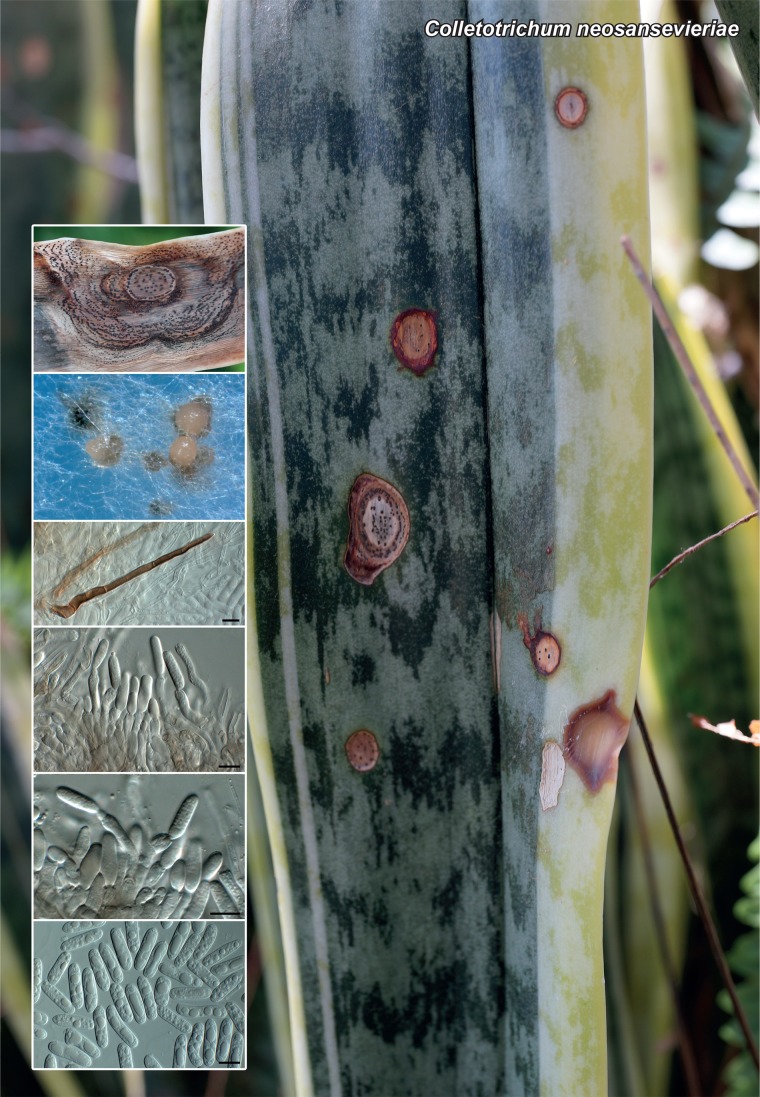
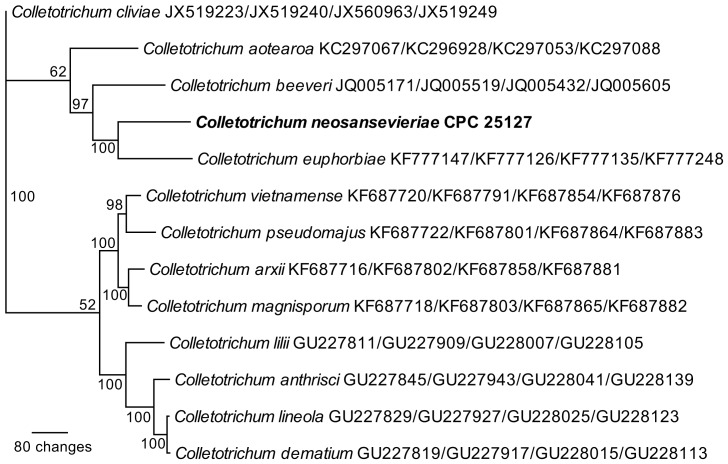
Colletotrichum neosansevieriae
None
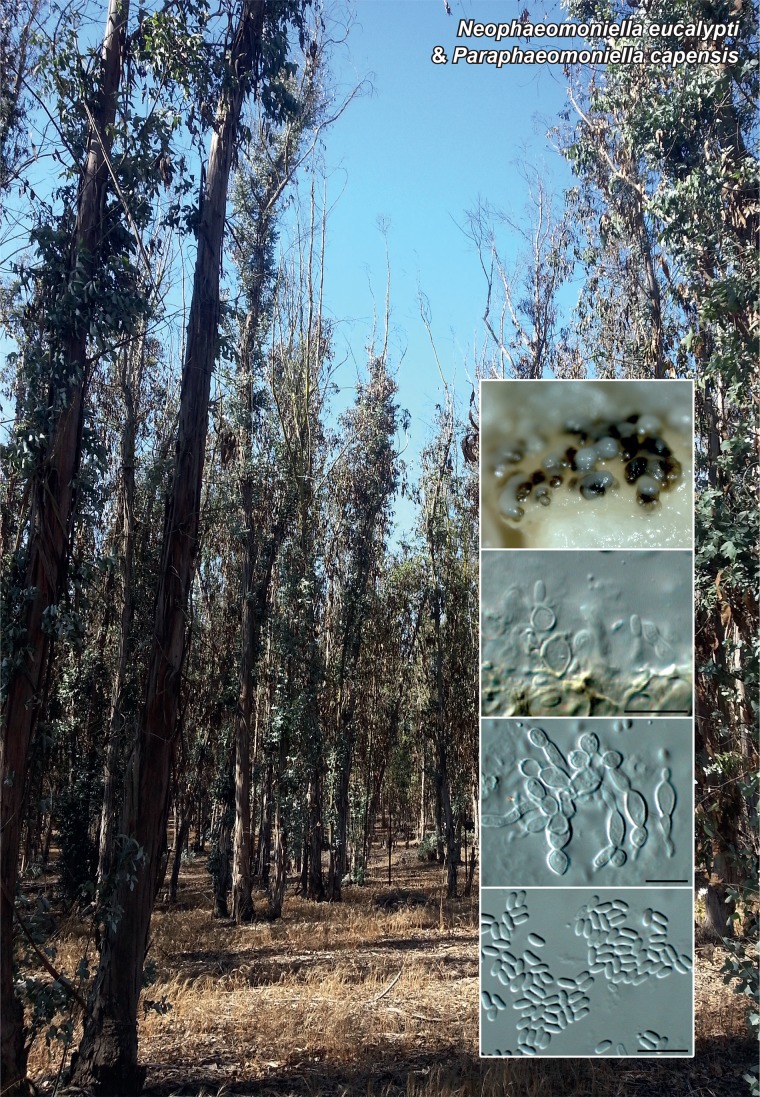
Neophaeomoniella eucalypti & Paraphaeomoniella capensis
None
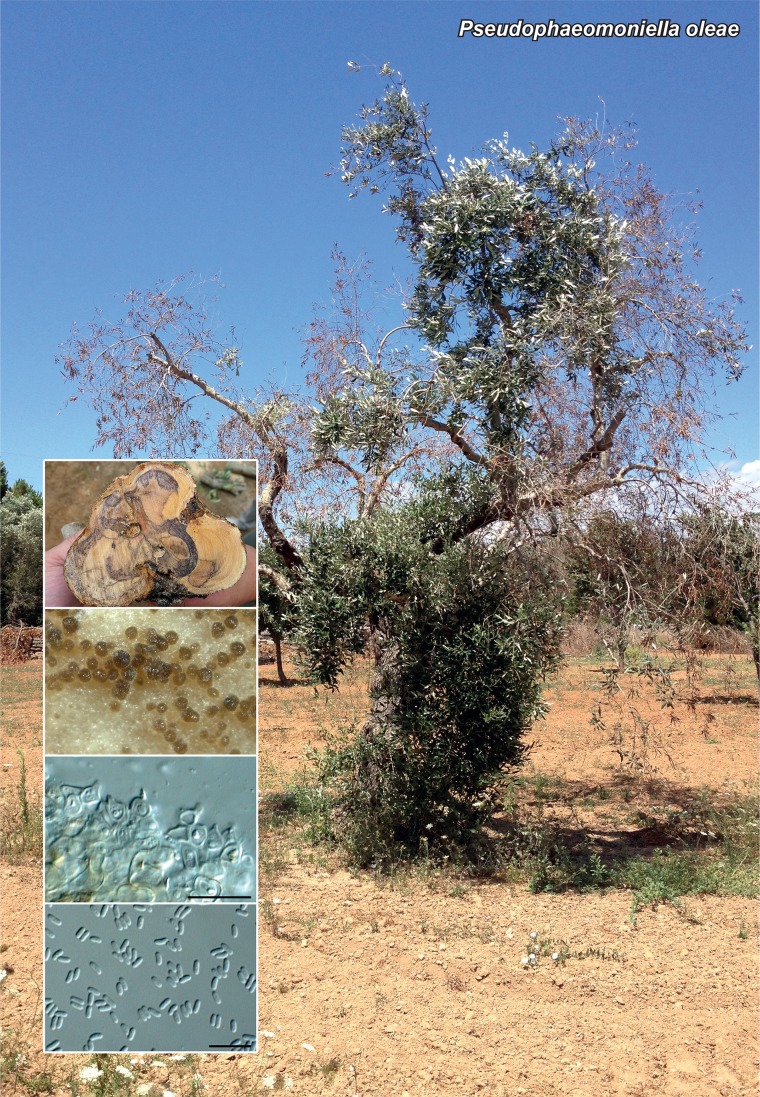
Pseudophaeomoniella oleae
None
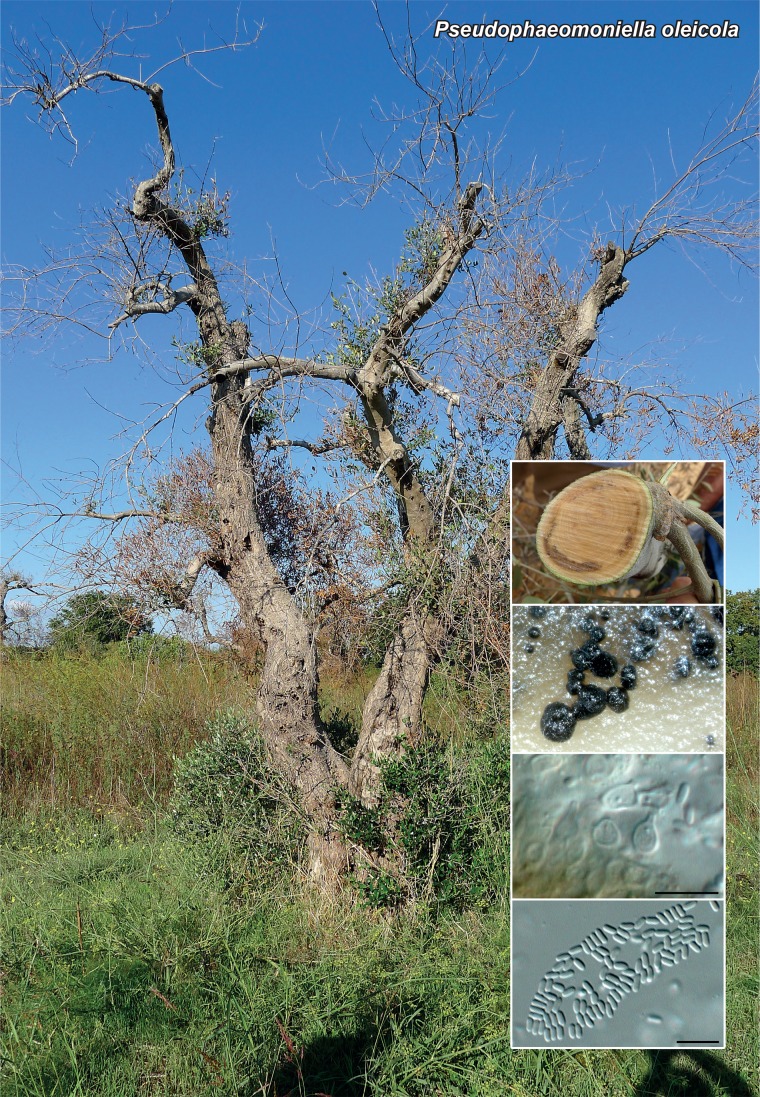
Pseudophaeomoniella oleicola
None
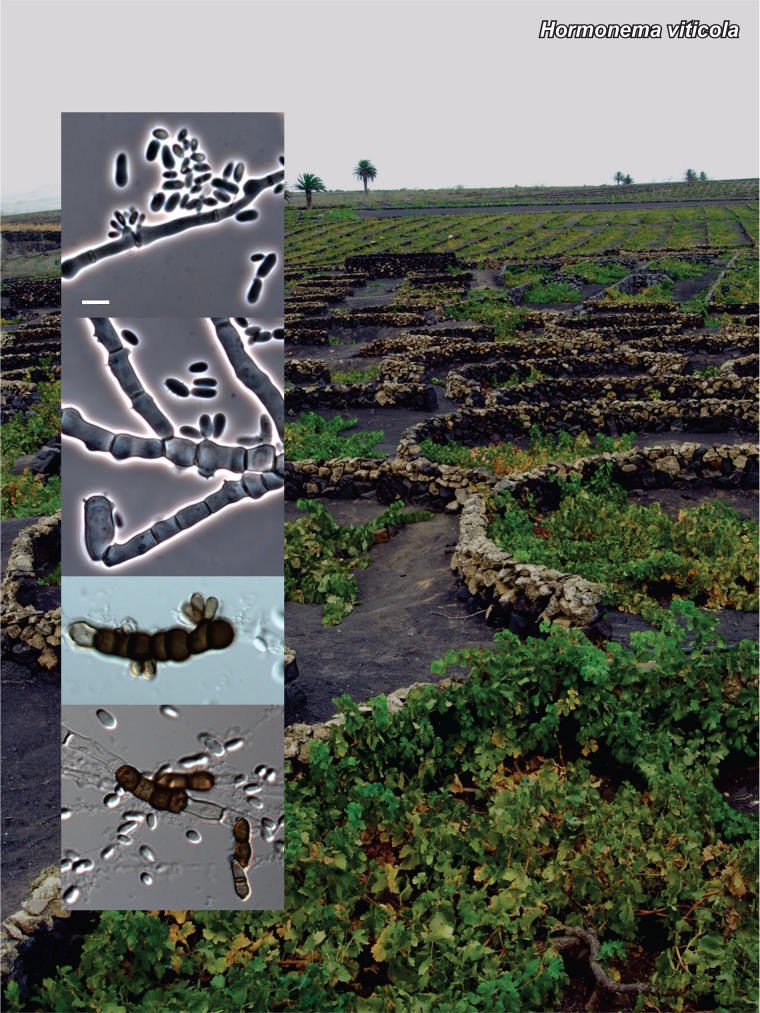
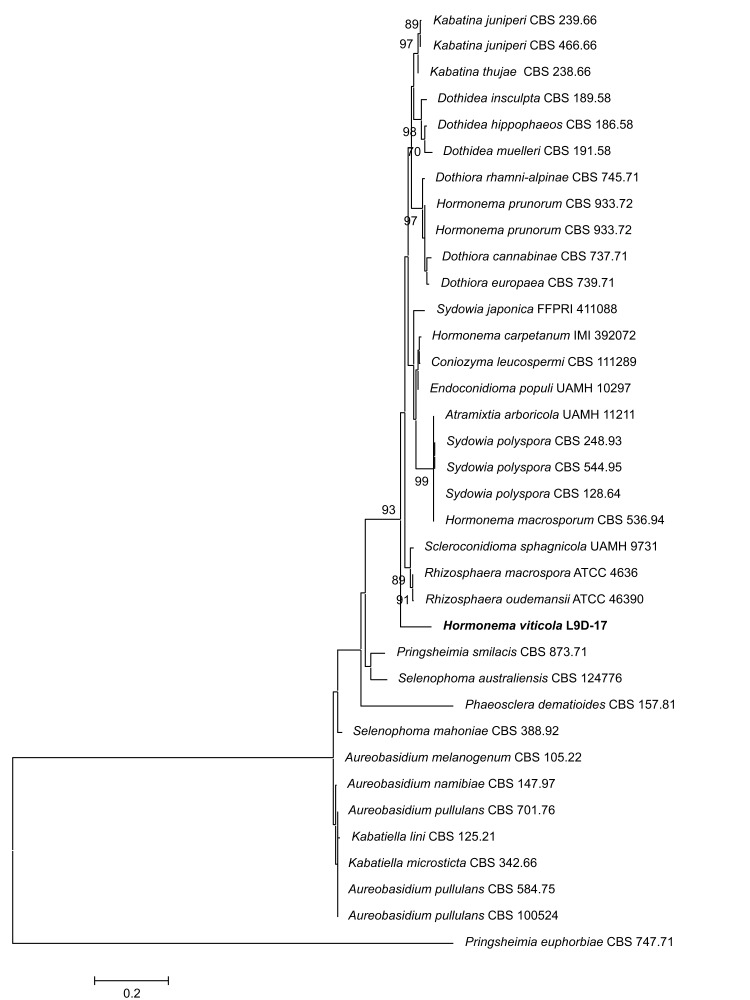
Hormonema viticola
None
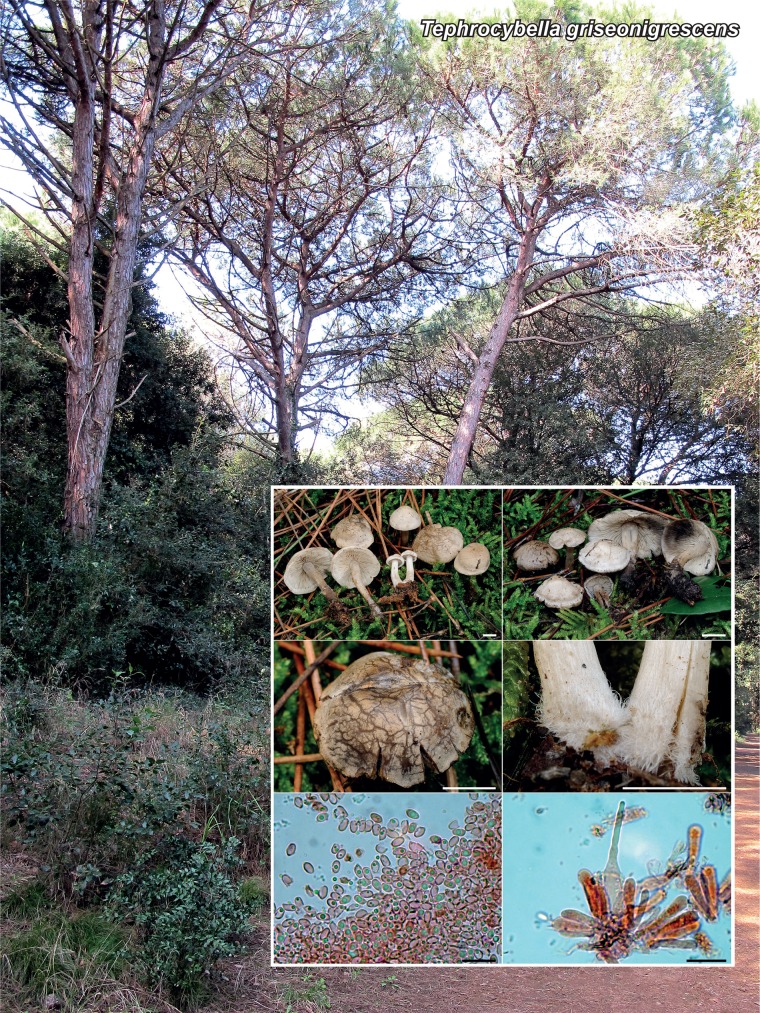
Tephrocybella griseonigrescens
None
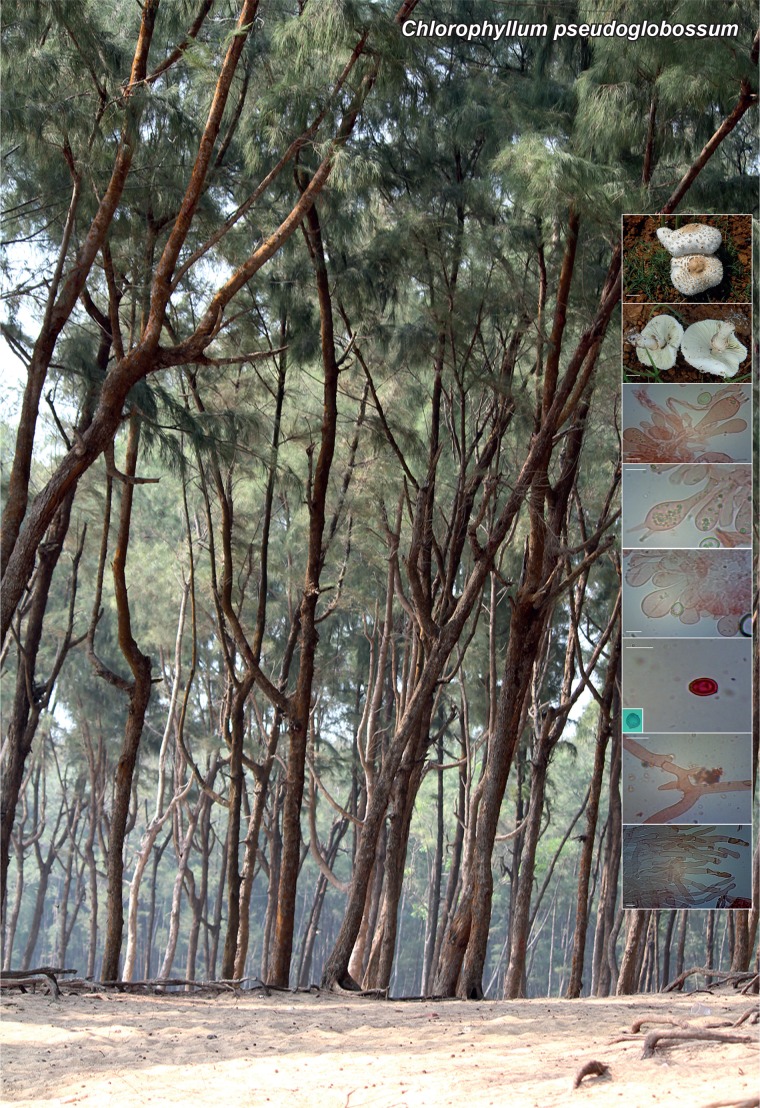
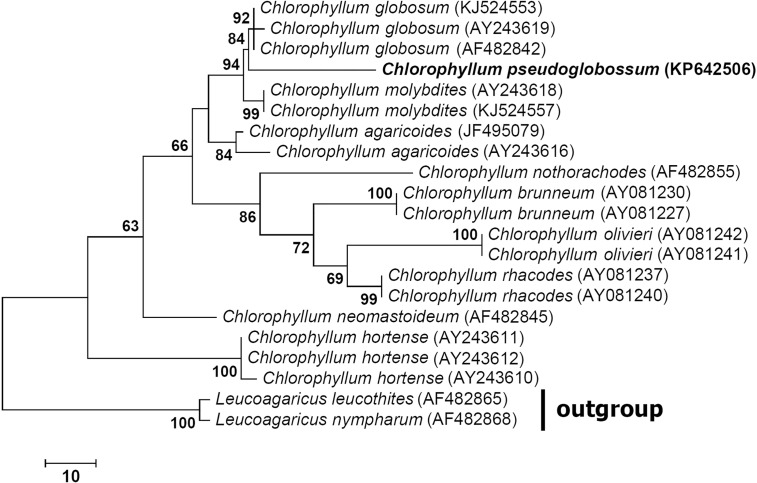
Chlorophyllum pseudoglobossum
None
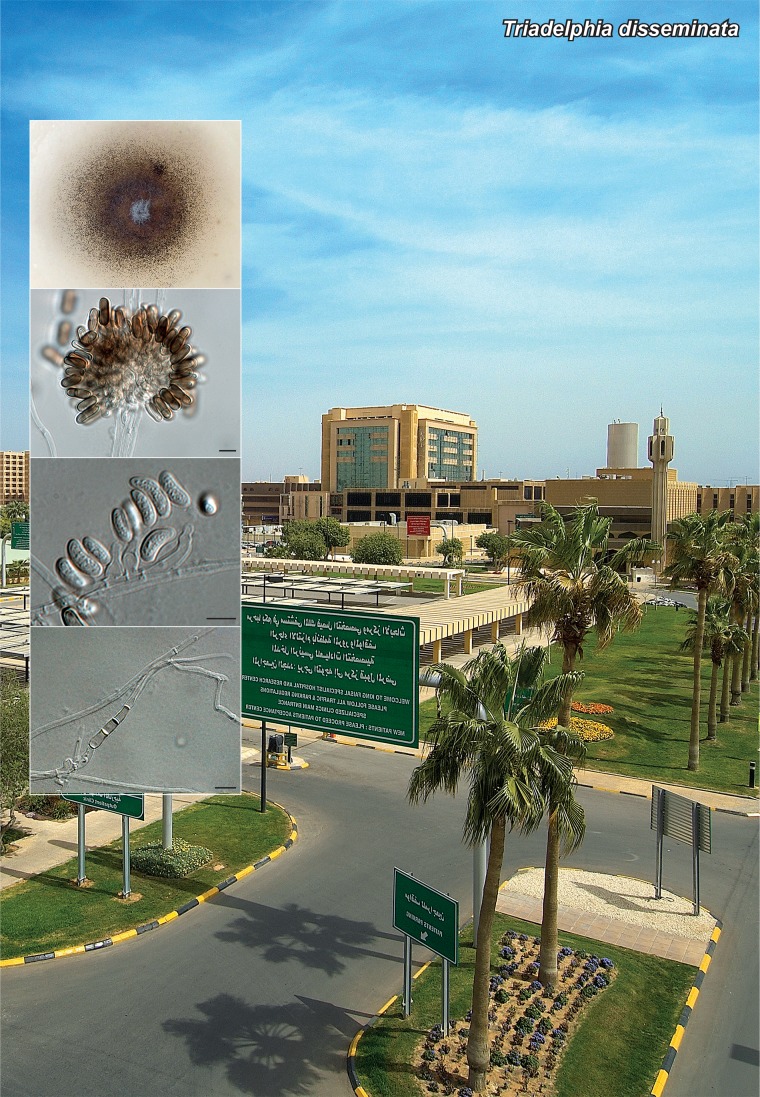
Triadelphia disseminata
None
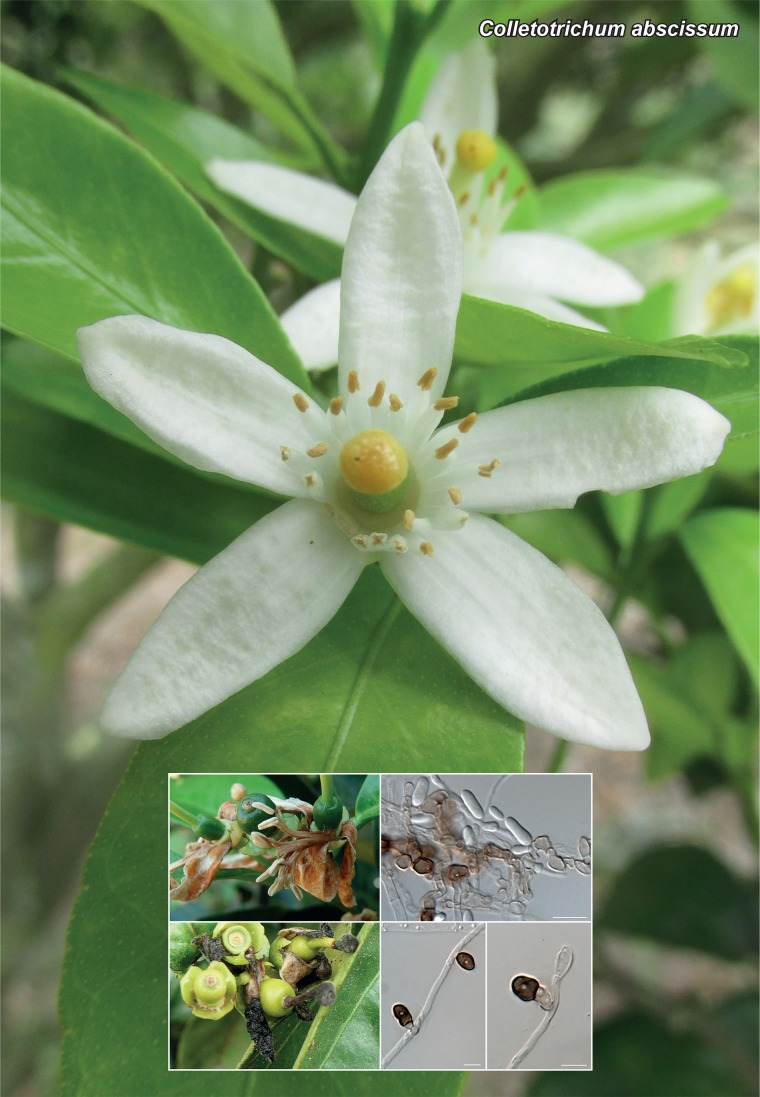
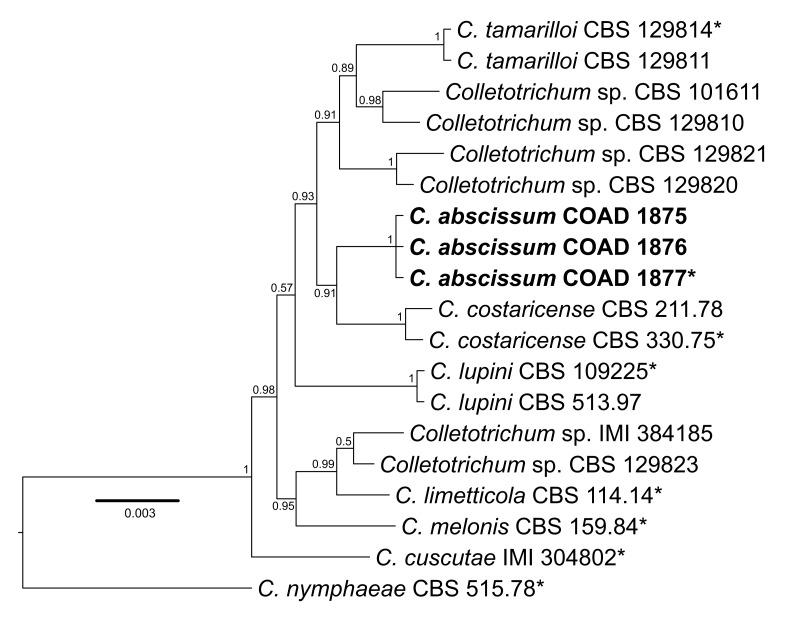
Colletotrichum abscissum
None
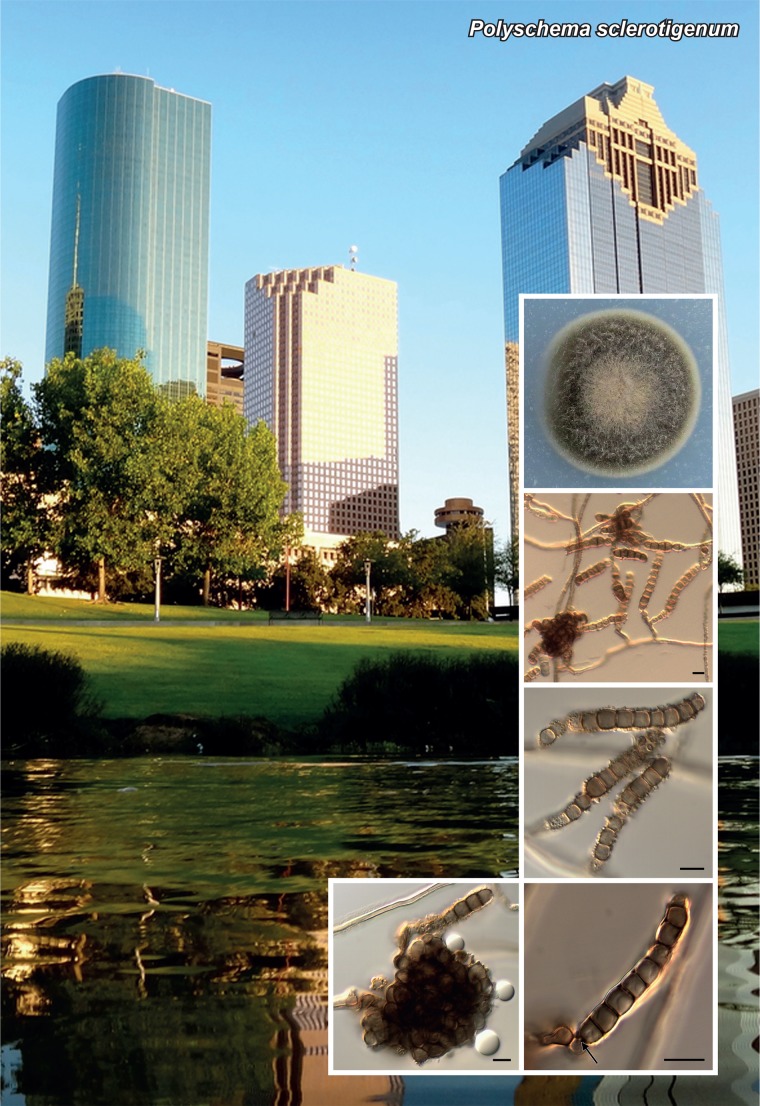
Polyschema sclerotigenum
None
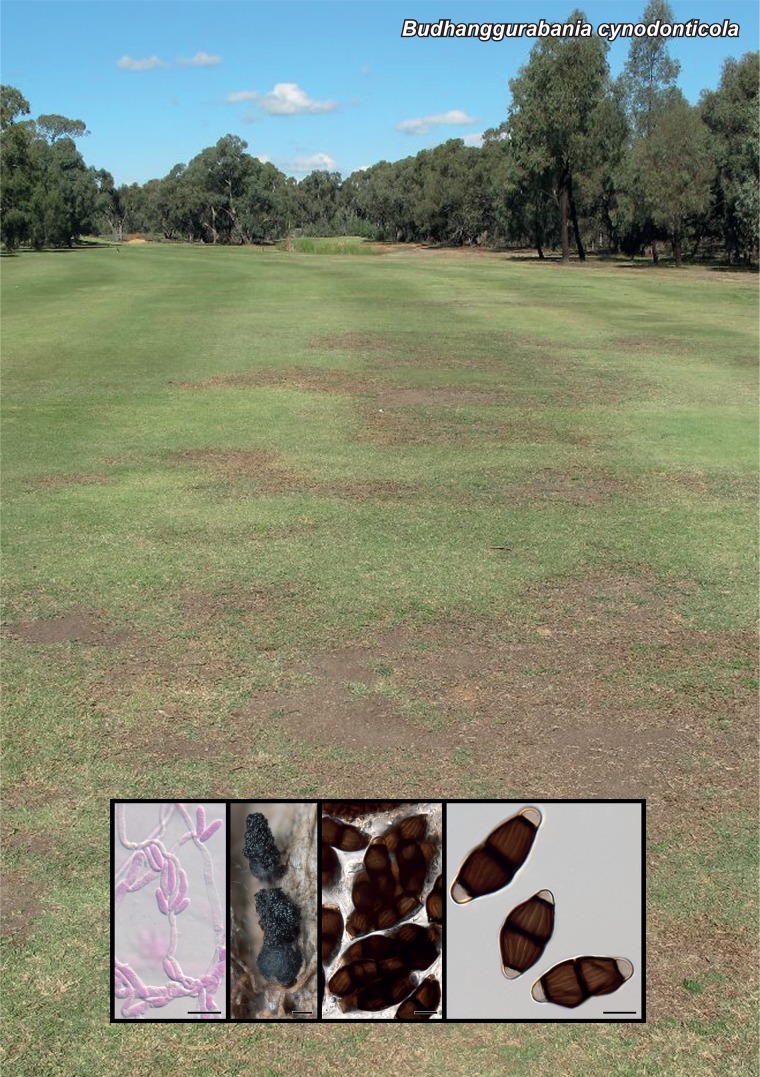
Budhanggurabania cynodonticola
None
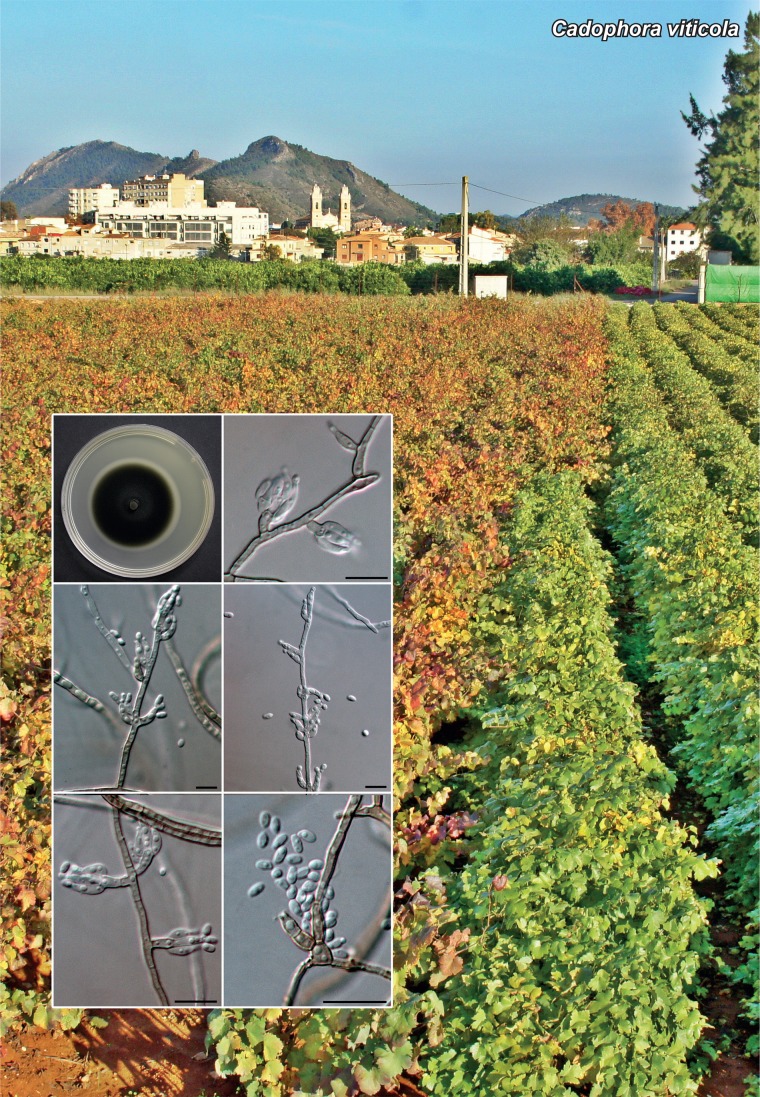
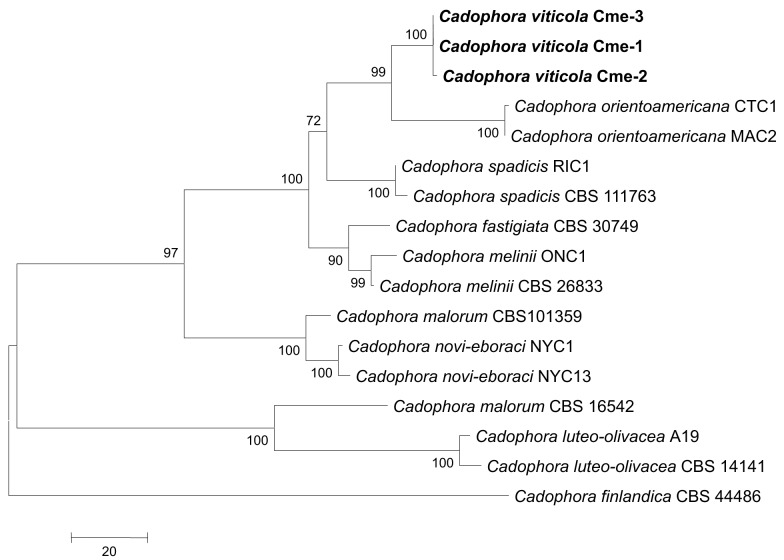
Cadophora viticola
None
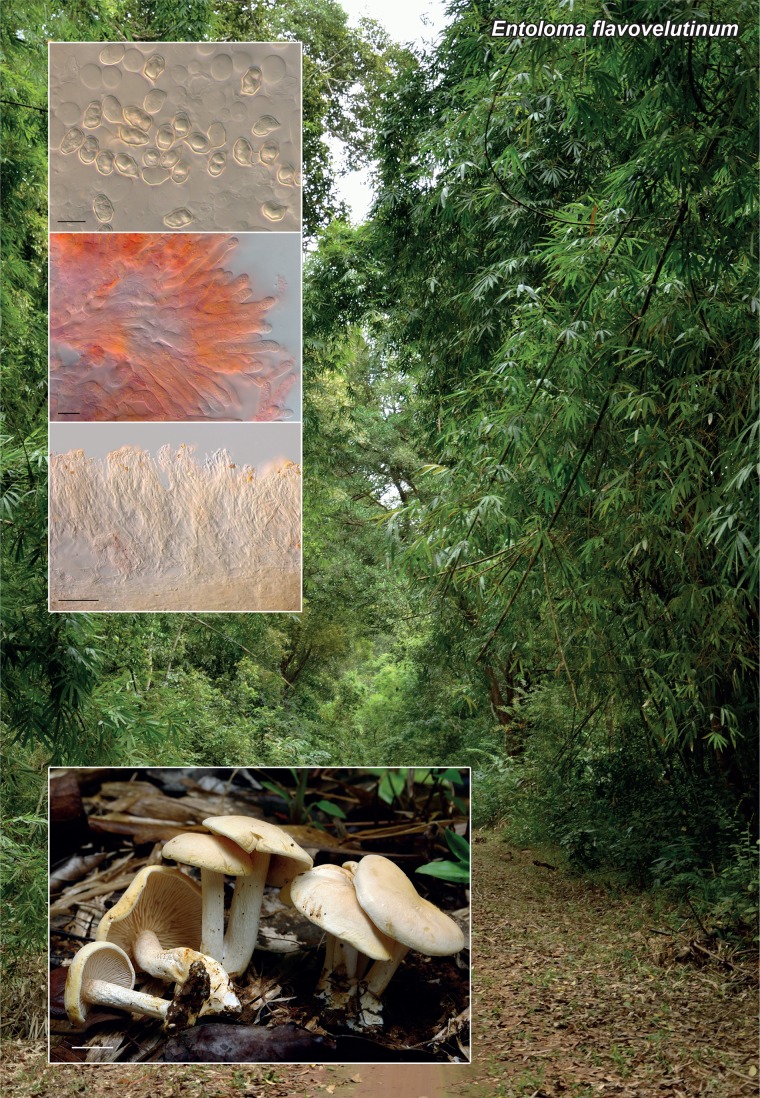
Entoloma flavovelutinum
None
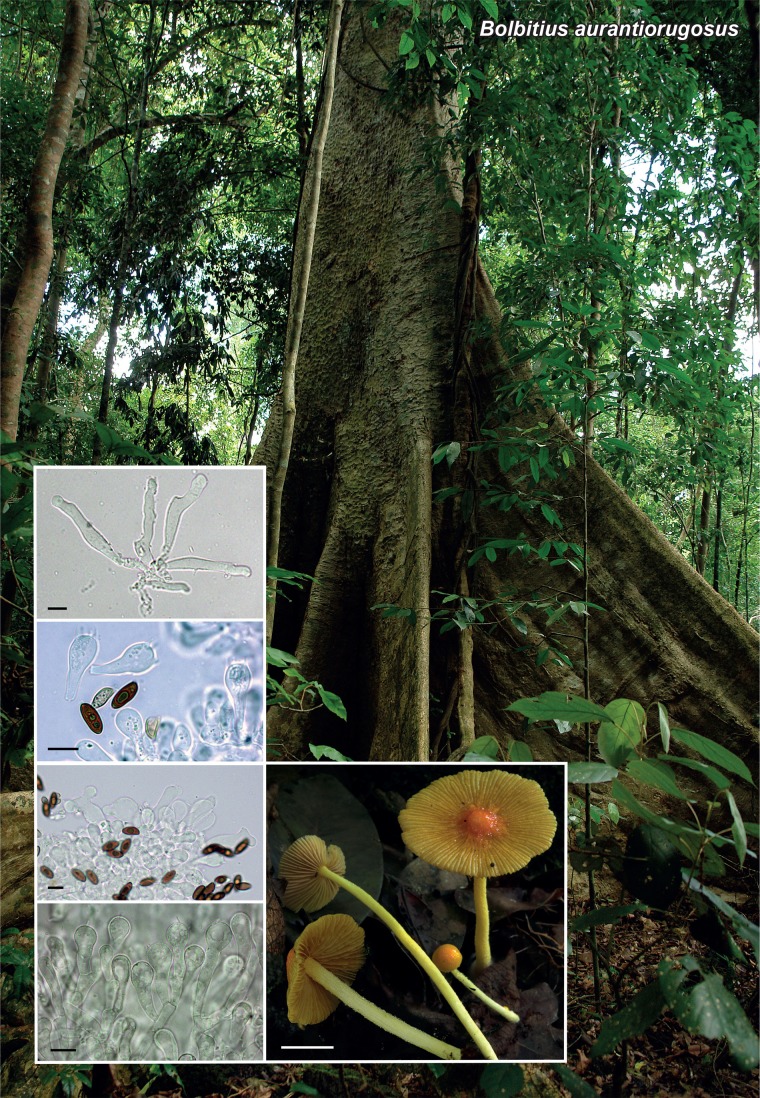
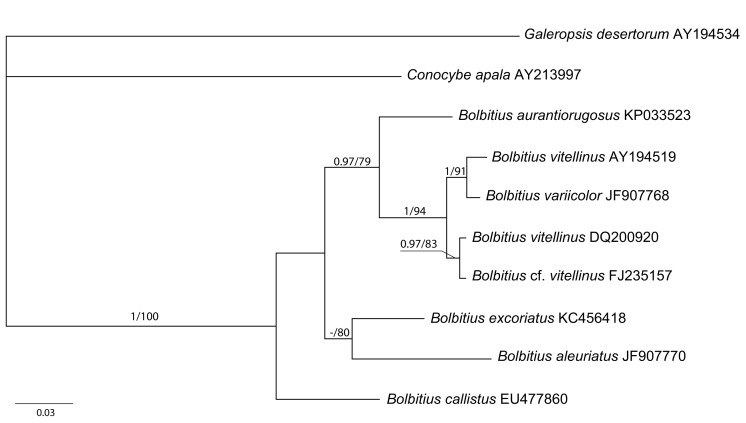
Bolbitius aurantiorugosus
None
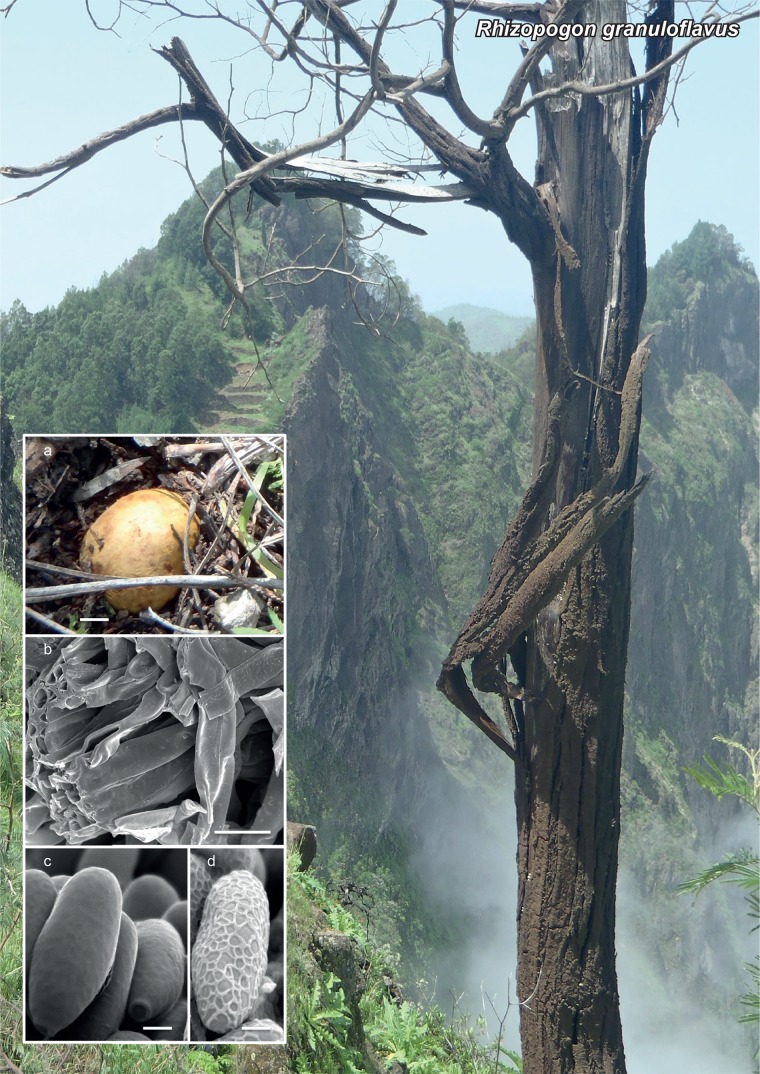
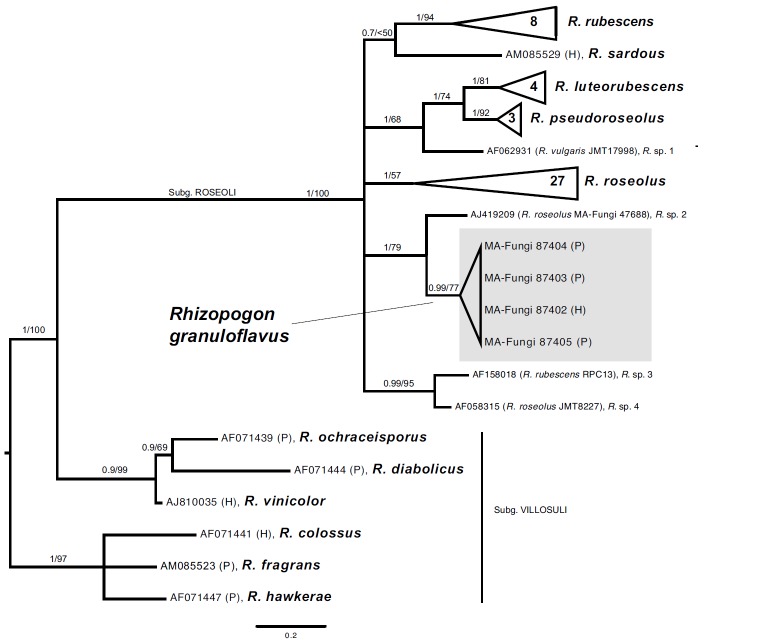
Rhizopogon granuloflavus
None
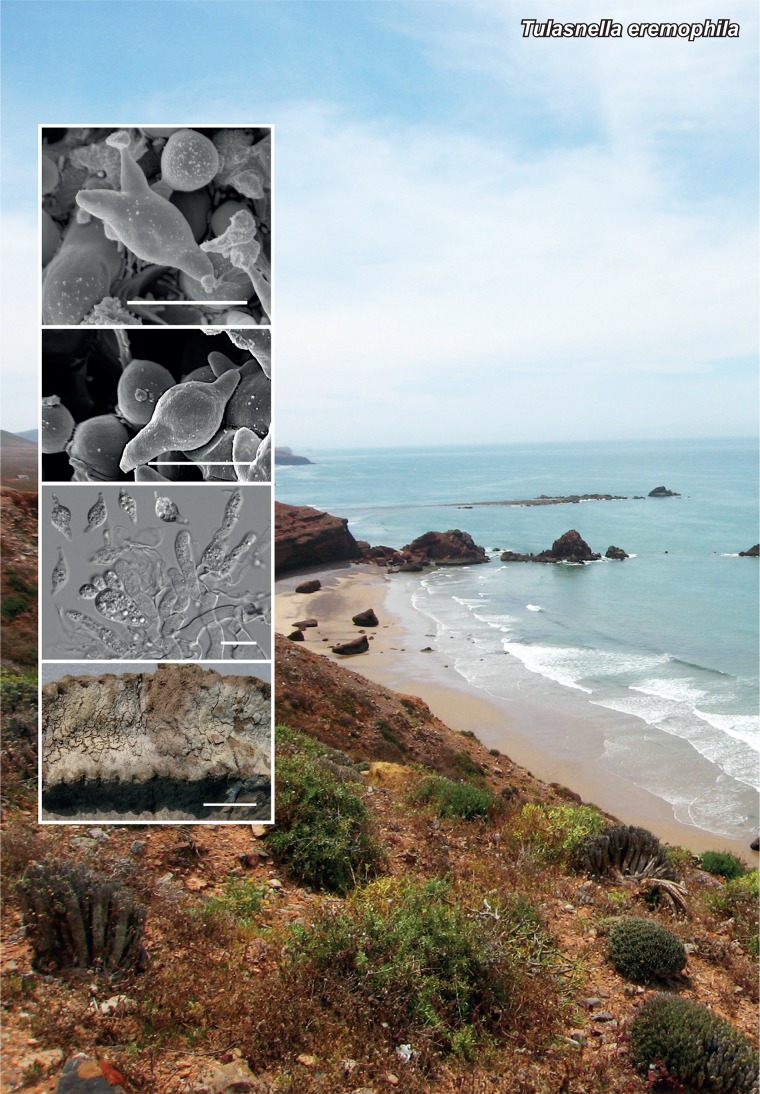
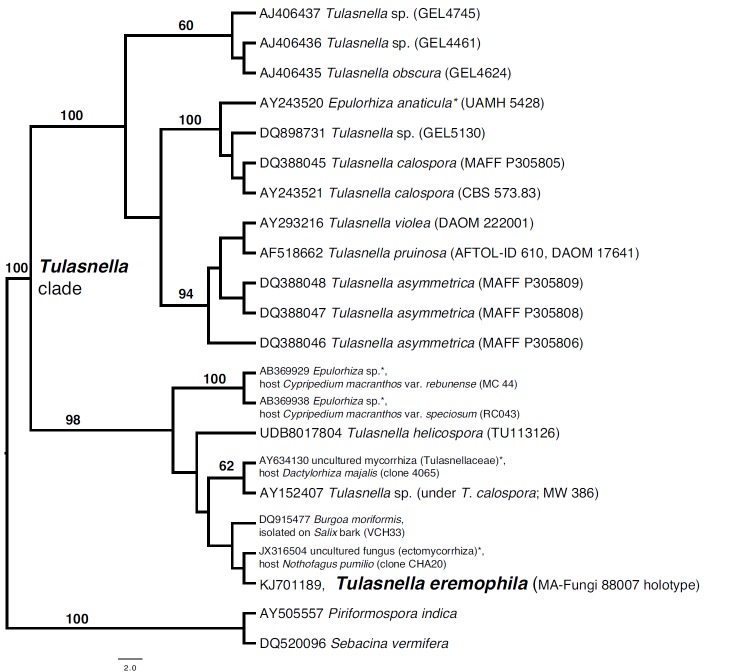
Tulasnella eremophila
None
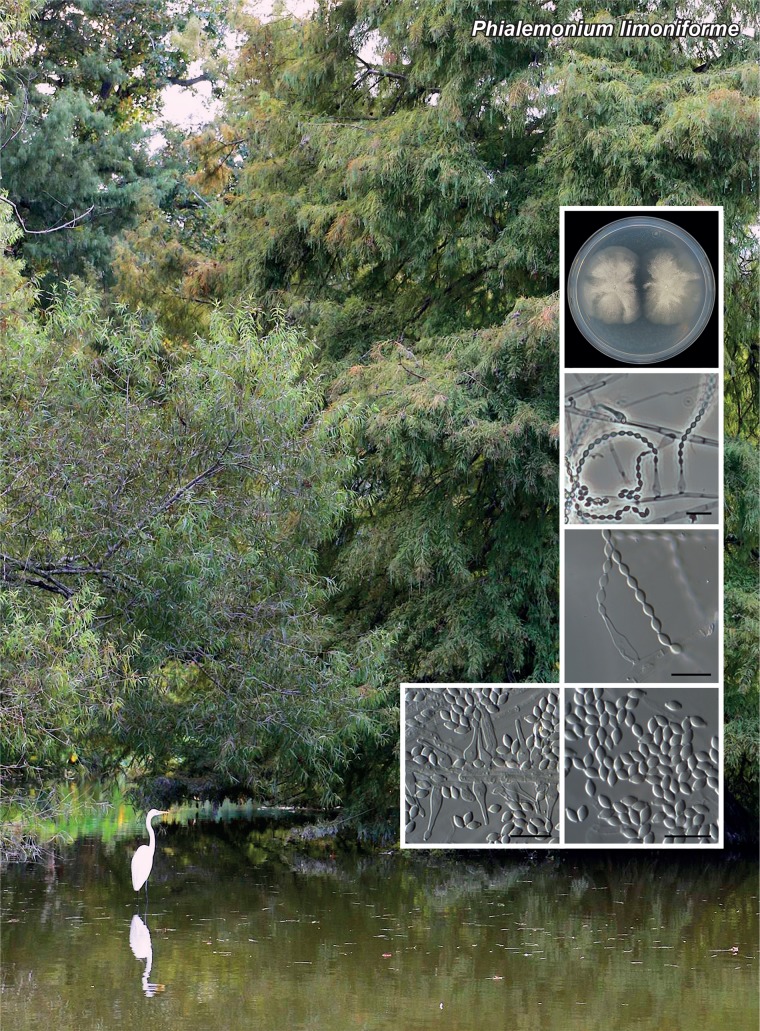
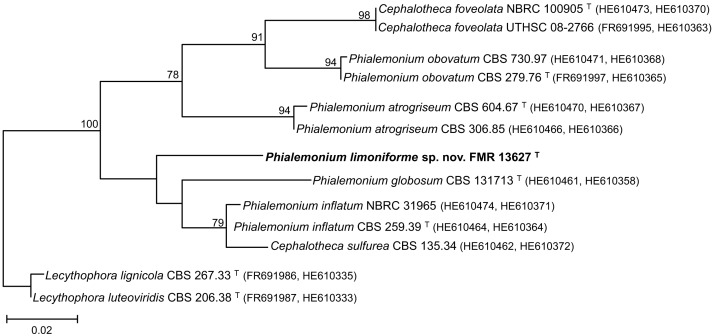
Phialemonium limoniforme
None
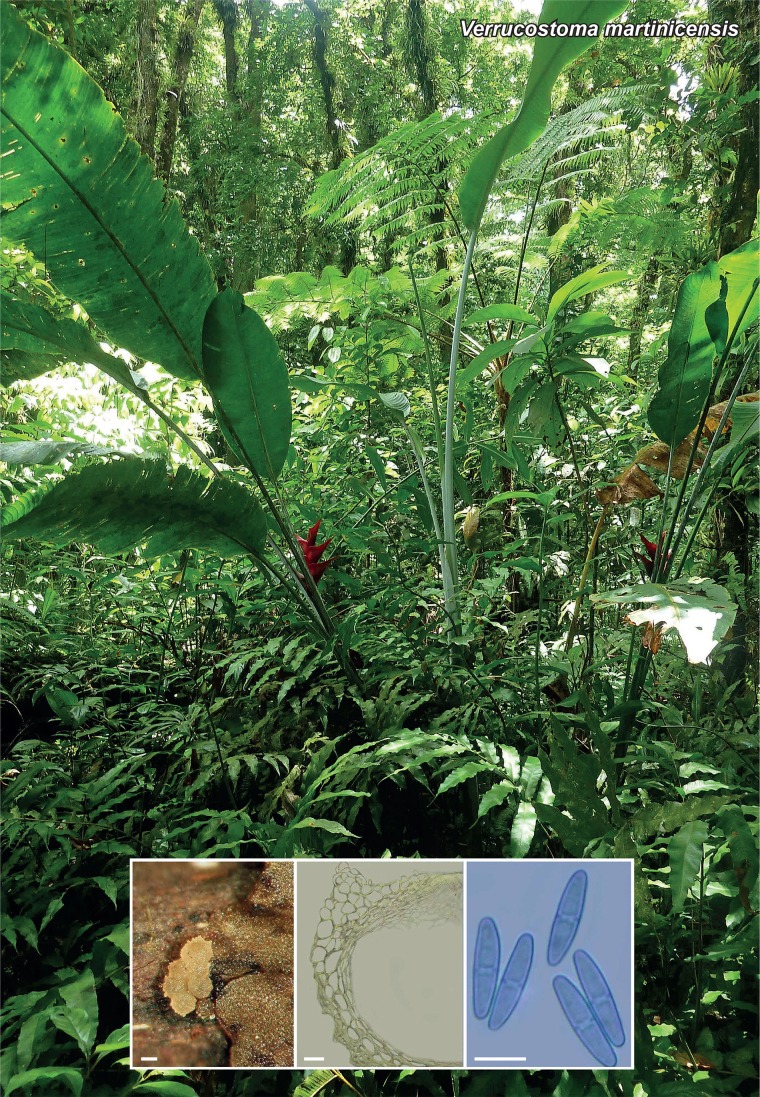
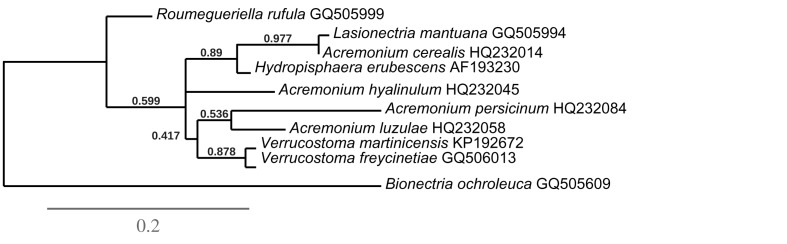
Verrucostoma martinicensis
None
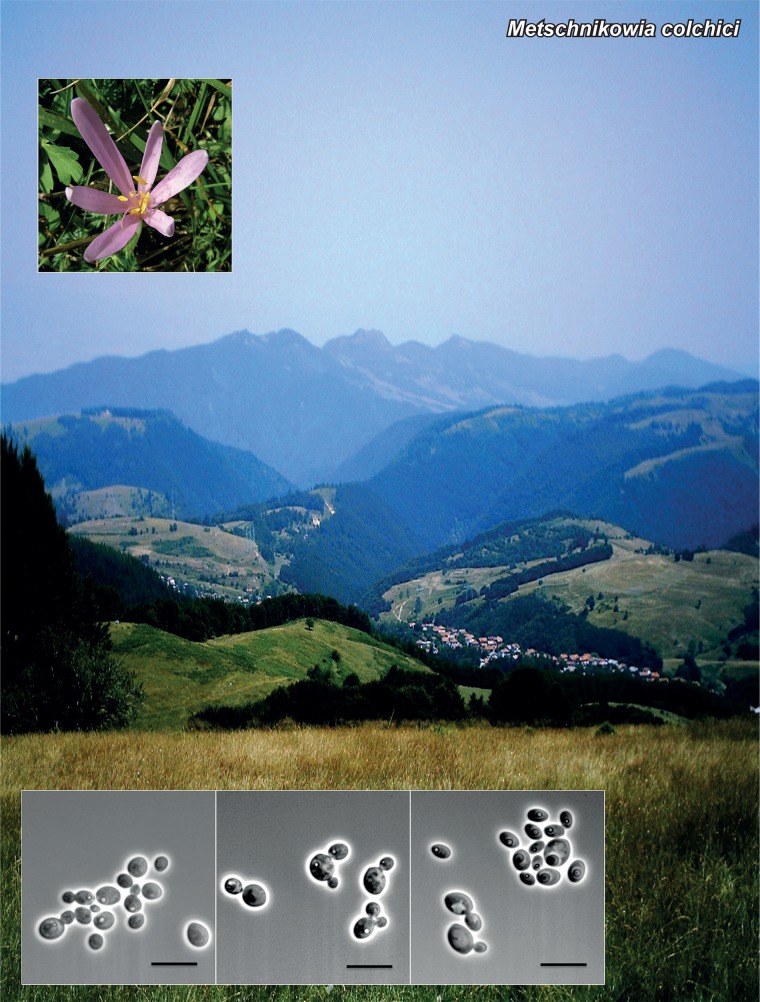
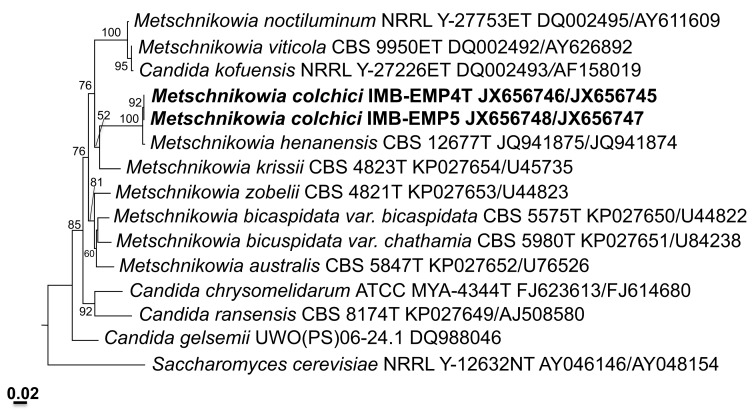
Metschnikowia colchici
None
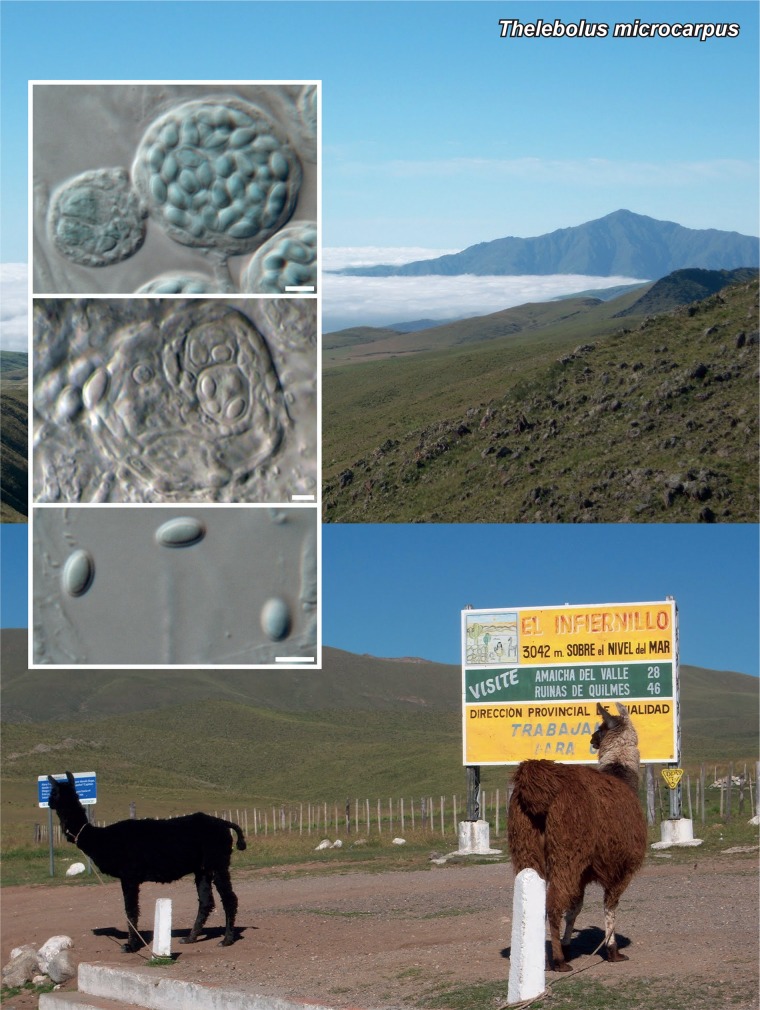
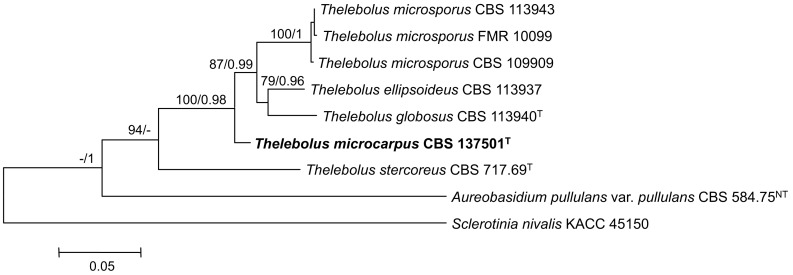
Thelebolus microcarpus
None
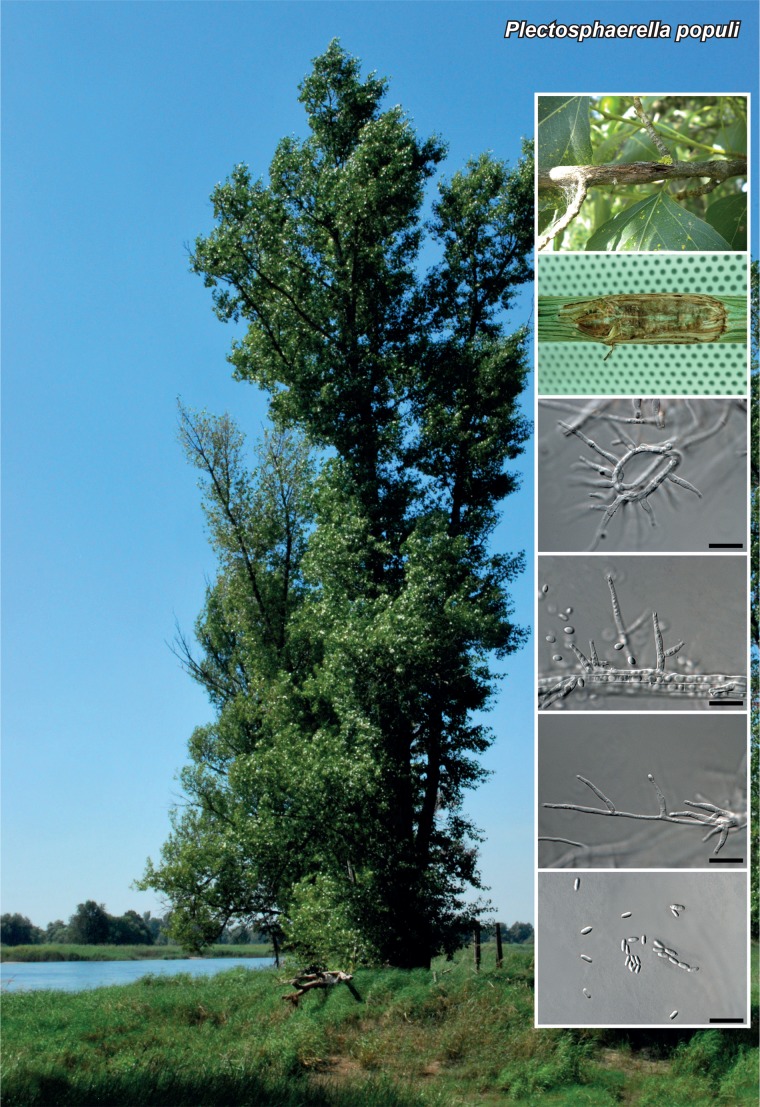
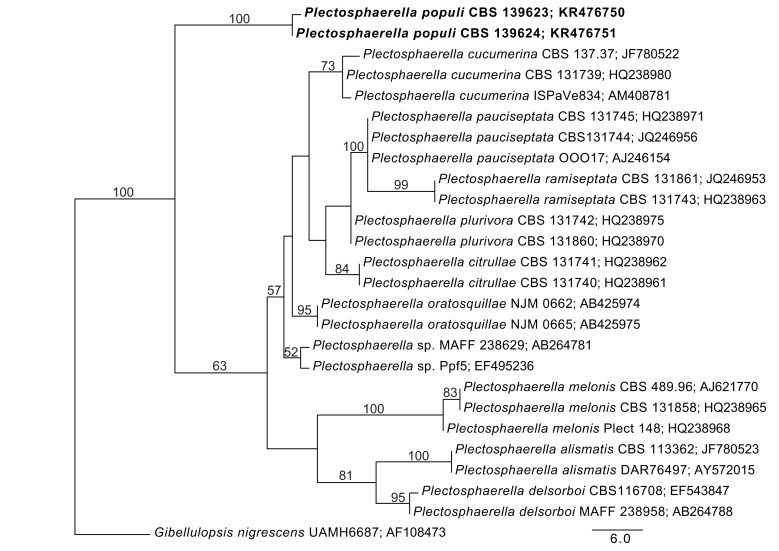
Plectosphaerella populi
None
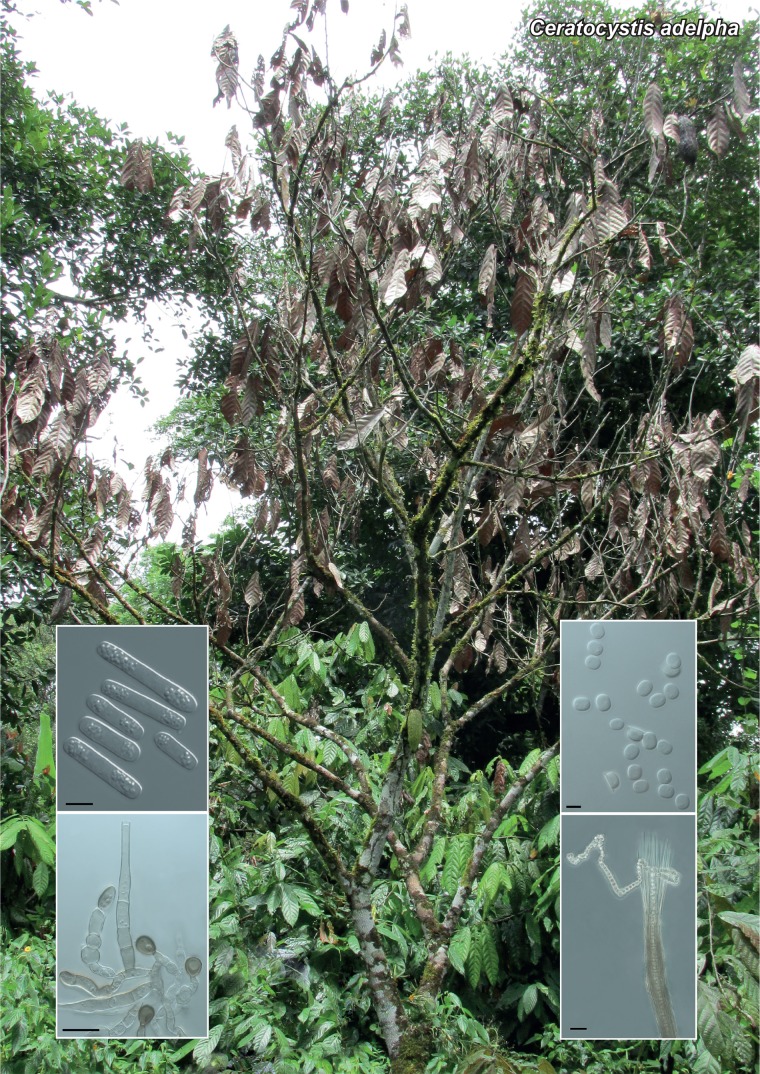
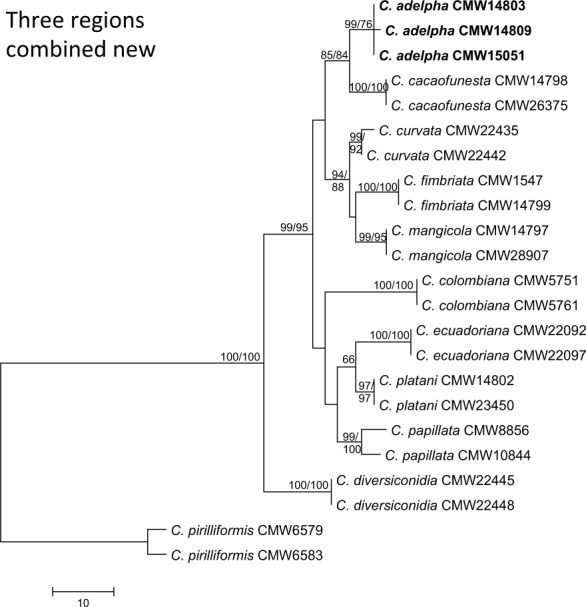
Ceratocystis adelpha
None
None
None
None
None
None
None
None
None
None
None
None
None
None
None
None
None

References

    1. Agustí-Brisach C, Gramaje D, García-Jiménez J, et al. 2013. Detection of black-foot and Petri disease pathogens in natural soils of grapevine nurseries and vineyards using bait plants. Plant and Soil 364: 5–13.
    1. Al-Hedaithy SSA. 2001. First report of human infection due to the fungus Triadelphia pulvinata. Journal of Clinical Microbiology 39: 3386–3389. - PMC - PubMed
    1. Al-Hedaithy SSA, Leathers CR. 1987. Country-wide search in Saudi Arabia for the etiologic agent of histoplasmosis. Proceedings of the Saudi Biological Society 10: 197–207.
    1. Arzanlou M, Crous PW. 2006. Strelitziana africana. Fungal Planet No. 8. CBS-KNAW Fungal Biodiversity Centre, Utrecht, The Netherlands.
    1. Arzanlou M, Groenewald JZ, Gams W, et al. 2007. Phylogenetic and morphotaxonomic revision of Ramichloridium and allied genera. Studies in Mycology 58: 57–93. - PMC - PubMed

LinkOut - more resources