. 2015 Aug 4;10(8):e0134484.
doi: 10.1371/journal.pone.0134484. eCollection 2015.

A Multiplex Label-Free Approach to Avian Influenza Surveillance and Serology

Affiliations

A Multiplex Label-Free Approach to Avian Influenza Surveillance and Serology

Joseph Bucukovski et al. PLoS One. .

Abstract

Influenza serology has traditionally relied on techniques such as hemagglutination inhibition, microneutralization, and ELISA. These assays are complex, challenging to implement in a format allowing detection of several types of antibody-analyte interactions at once (multiplex), and troublesome to implement in the field. As an alternative, we have developed a hemagglutinin microarray on the Arrayed Imaging Reflectometry (AIR) platform. AIR provides sensitive, rapid, and label-free multiplex detection of targets in complex analyte samples such as serum. In preliminary work, we demonstrated the application of this array to the testing of human samples from a vaccine trial. Here, we report the application of an expanded label-free hemagglutinin microarray to the analysis of avian serum samples. Samples from influenza virus challenge experiments in mallards yielded strong, selective detection of antibodies to the challenge antigen in most cases. Samples acquired in the field from mallards were also analyzed, and compared with viral hemagglutinin inhibition and microneutralization assays. We find that the AIR hemagglutinin microarray can provide a simple and robust alternative to standard methods, offering substantially greater information density from a simple workflow.


Conflict of interest statement

Competing Interests: The authors of this manuscript have the following competing interests: BLM is a named inventor on patents covering the AIR technology and the hemagglutinin AIR array: (1) US 8,486,619 July 16, 2013 Miller, B. L.; Mace, C. R.; Topham, D.; Mosmann, T. R. “Arrayed imaging reflectometry (AIR) sensor chip comprising influenza hemagglutinin (HA) polypeptides suitable for the detection of antiviral immune responses”; (2) US 7,292,349 November 6, 2007 Rothberg, L. J.; Miller, B. L. “Method for Biomolecular Sensing and System Thereof”. BLM is also a founder of Adarza BioSystems, Inc., a company commercializing the AIR technology. This does not alter the authors’ adherence to PLOS ONE policies on sharing data and materials.

Figures

Fig 1
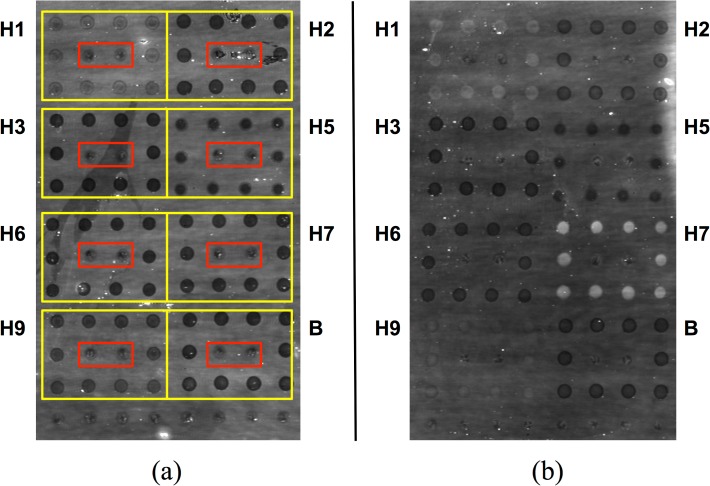
Fig 1. Strong responses to polyclonal anti-HA antiserum are readily observable on an AIR hemagglutinin microarray.
(a) 1% BSA control. (b) Anti-H7 polyclonal antiserum (A/Netherlands/219/2003, H7N7), 1:80 dilution (1.3%) in 1% BSA. Spots showing substantially increased brightness indicate binding to immobilized H7. In both cases, antigens were arrayed in square patterns as indicated by the yellow boxes in (a); a mouse IgG Fc domain was included as negative control (red boxes). Slight differences in spot intensity in the control (a) are due to differences in deposition efficiency for different antigens or controls. Specific antigens used in these experiments are indicated in Table 2.
Fig 2
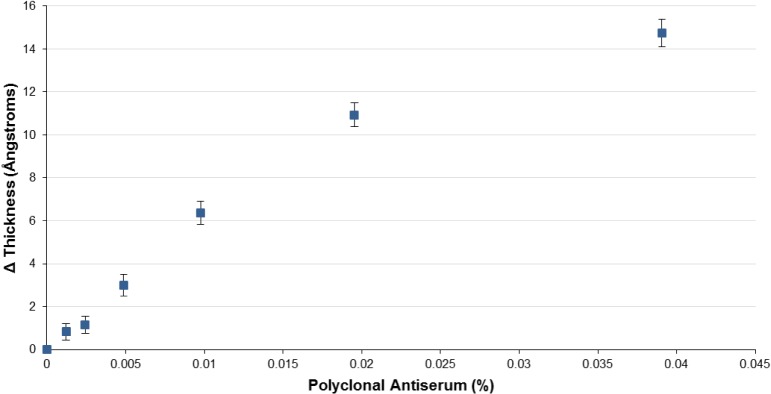
Fig 2. Representative array response to a dilution series of H7 polyclonal antiserum.
Cross-reactivity (non-H3 response) is shown only at the highest concentration tested, but was negligible throughout. Error on each point represents the square root of the sum of squares between the analyte and control group standard deviations for the HA isoforms; N = 1, n = 10.
Fig 3
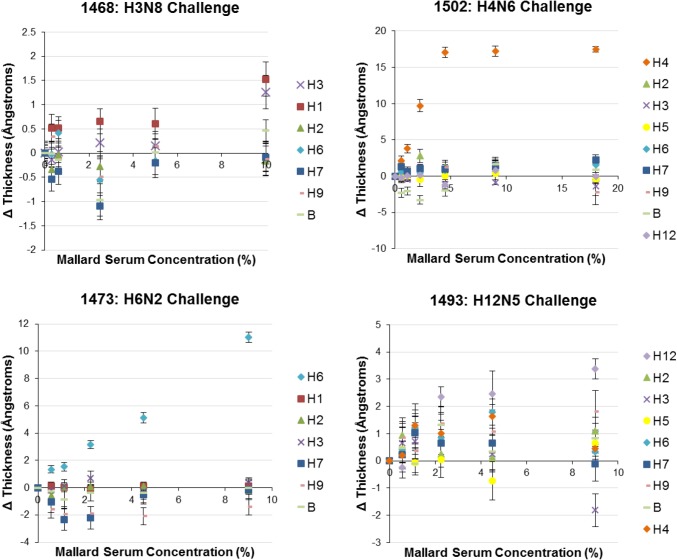
Fig 3. Titration plots for selected challenge samples.
Samples 1502 and 1473 demonstrated highly specific and robust responses to the challenge antigen on the microarray, while samples 1468 and 1493 produced weaker and less specific responses. Error on each point represents the square root of the sum of squares between the analyte and control group standard deviations for the HA isoforms; N = 1, n = 10.
Fig 4
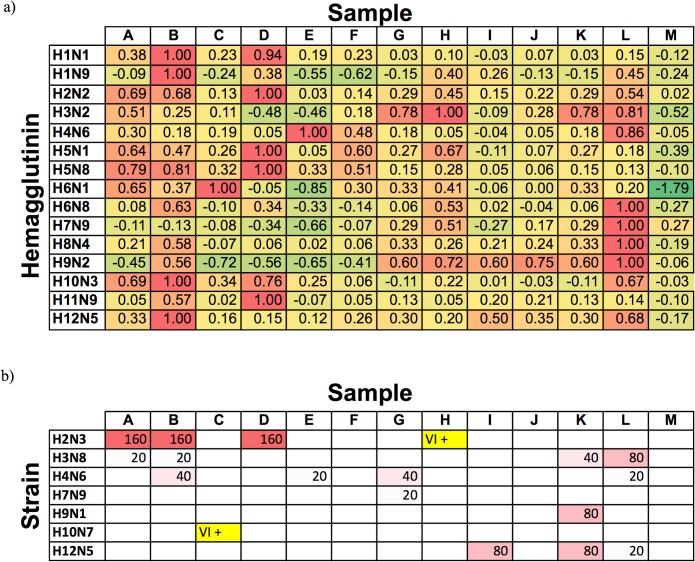
Fig 4. Comparison of HA microarray and selected microneutralization (MN) and virus isolation (VI) results for field samples (mallard).
a) AIR microarray data. Average differences in spot thickness (normalized relative to the strongest response for each antigen) for chips treated with 18% field serum are reported relative to control. Color coding (green = low to red = high) is scaled relative to this maximum response. b) MN results (numbers indicate antibody titer); two samples highlighted in yellow tested positive by VI. Empty cells indicate an antibody titer of < 20.

References

    1. Katz JM, Hancock K, Xu X. Serologic assays for influenza surveillance, diagnosis and vaccine evaluation. Expert Rev Anti Infect Ther. 2011;9:669–683. 10.1586/eri.11.51 - DOI - PubMed
    1. Lebarbenchon C, Brown JD, Luttrell MP, Stallknecht DE. Comparison of two commercial enzyme-linked immunosorbent assays for detection of Influenza A virus antibodies. J Vet Diagn Invest. 2012;24:161–165. 10.1177/1040638711416626 - DOI - PMC - PubMed
    1. Mace CR, Striemer CC, Miller BL. A theoretical and experimental analysis of Arrayed Imaging Reflectometry as a sensitive proteomics technique. Anal Chem. 2006;78:5578–5583. - PubMed
    1. (a) Mace CR, Striemer CC, Miller BL. Detection of Human Proteins using Arrayed Imaging Reflectometry. Biosens Bioelectron. 2008;24:334–337; (b) Mace CR, Yadav AS, Miller BL. Investigation of non-nucleophilic additives for reduction of morphological anomalies in protein arrays. Langmuir. 2008;24:12754–12757; (c) Carter JA, Mehta SD, Mungillo MV, Striemer CC, Miller BL. Multiplex analysis of inflammatory biomarkers by Arrayed Imaging Reflectometry. Biosens Bioelectron. 2011;26:3944–3948; (d) Yadav AR, Mace CR, Miller BL. Examining the Interactions of the Splicing Factor MBNL1 with Target RNA Sequences via a Label-Free, Multiplex Method. Anal Chem. 2014;86:1067–1075. 10.1016/j.bios.2008.05.003 - DOI - PMC - PubMed
    1. Mace CR, Topham DJ, Mosmann TR, Quataert S, Treanor J, Miller BL. Label-Free, Arrayed Sensing of Immune Response to Influenza Antigens. Talanta. 2011;83:1000–1005. 10.1016/j.talanta.2010.11.002 - DOI - PMC - PubMed

Publication types

MeSH terms

Substances