Stem Cells as Hormone Targets That Lead to Increased Cancer Susceptibility
- PMID: 26241068
- PMCID: PMC4588827
- DOI: 10.1210/en.2015-1357
Stem Cells as Hormone Targets That Lead to Increased Cancer Susceptibility
Abstract
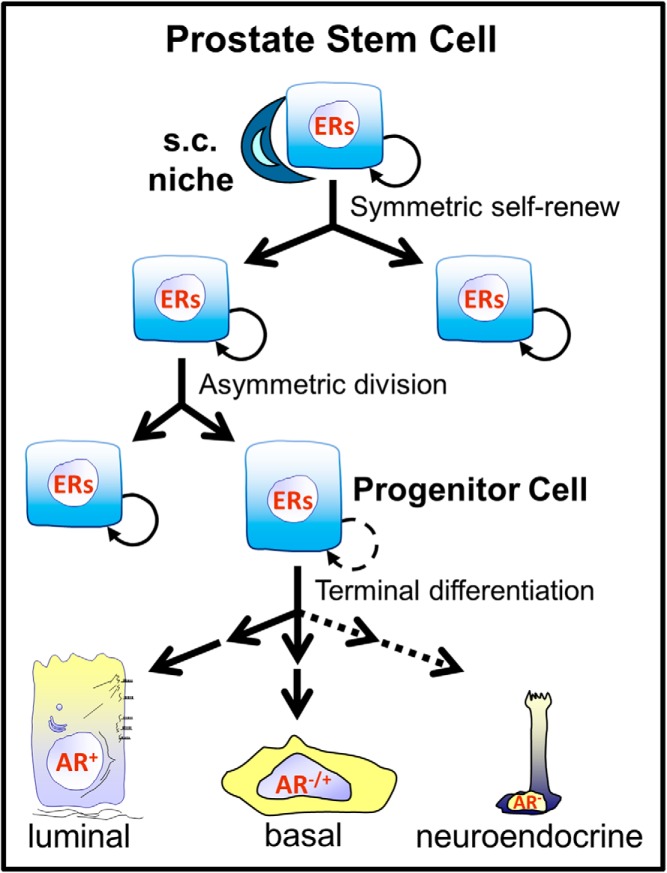
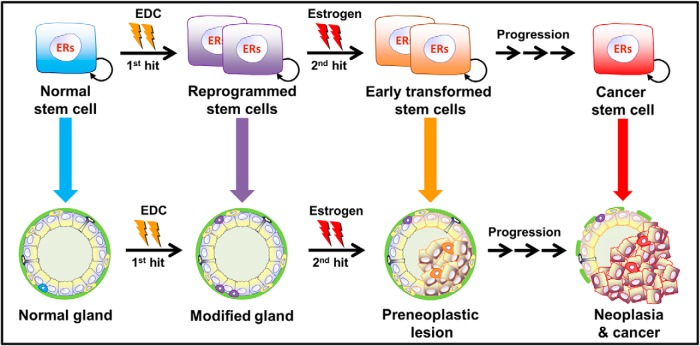
Major advances during the past decade have permitted a clearer understanding of processes that regulate stem cell self-renewal and lineage commitment toward differentiated progeny that populate all tissues. Considerable evidence has also accumulated to indicate that aberrations in the stem and progenitor cell populations can lead to increased cancer risk in specific organs systems. It is long recognized that environmental factors play a major role in cancer etiology, and emerging data suggest that endocrine-disrupting chemicals (EDCs) may contribute to an increased cancer risk. Using the prostate gland as a model system, the present review highlights recent data that find that estrogens and EDCs can reprogram prostate stem and progenitor cell populations, leading to increased cancer susceptibility. We propose that stem cell programming during early development in hormone-regulated tissues may lead to heightened sensitivity to early-life EDC exposures and that aberrant stem cell reprogramming by EDCs may contribute to the developmental basis of adult cancer risk.
Figures
References
-
- Weissman IL. Stem cells: units of development, units of regeneration, and units in evolution. Cell. 2000;100(1):157–168. - PubMed
-
- Wicha MS. Targeting breast cancer stem cells. Breast (Edinburgh, Scotland). 2009;18(suppl 3):S56–S58. - PubMed
-
- Clarke RB, Spence K, Anderson E, Howell A, Okano H, Potten CS. A putative human breast stem cell population is enriched for steroid receptor-positive cells. Dev Biol. 2005;277(2):443–456. - PubMed
Publication types
MeSH terms
Substances
Grants and funding
LinkOut - more resources
Full Text Sources
Other Literature Sources
Medical
Miscellaneous