


Understanding rice adaptation to varying agro-ecosystems: trait interactions and quantitative trait loci
- PMID: 26243626
- PMCID: PMC4526302
- DOI: 10.1186/s12863-015-0249-1
Understanding rice adaptation to varying agro-ecosystems: trait interactions and quantitative trait loci
Abstract
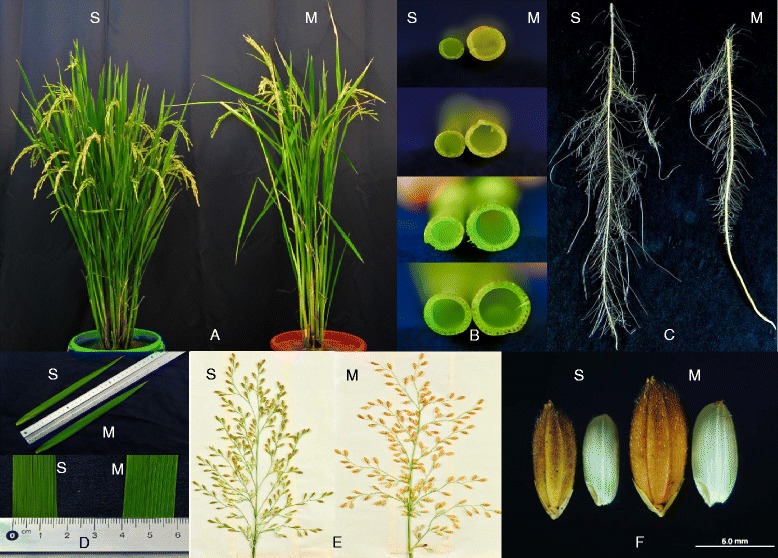
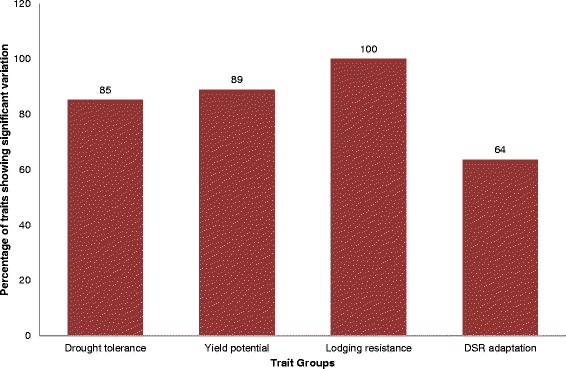
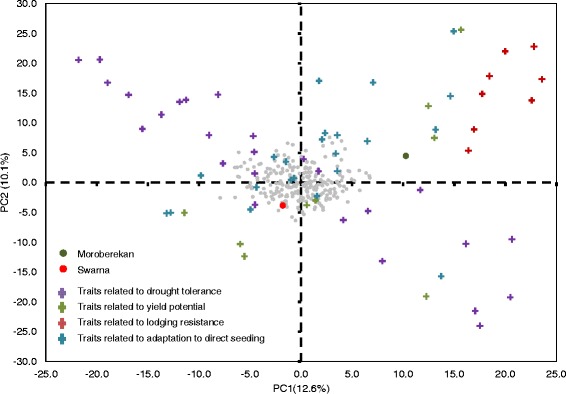
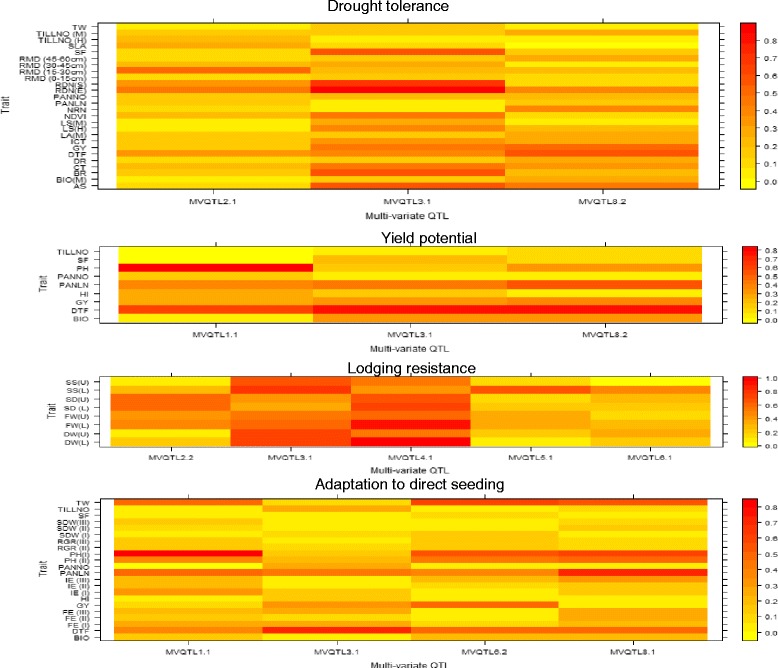
Background: Interaction and genetic control for traits influencing the adaptation of the rice crop to varying environments was studied in a mapping population derived from parents (Moroberekan and Swarna) contrasting for drought tolerance, yield potential, lodging resistance, and adaptation to dry direct seeding. A BC2F3-derived mapping population for traits related to these four trait groups was phenotyped to understand the interactions among traits and to map and align QTLs using composite interval mapping (CIM). The study also aimed to identify QTLs for the four trait groups as composite traits using multivariate least square interval mapping (MLSIM) to further understand the genetic control of these traits.
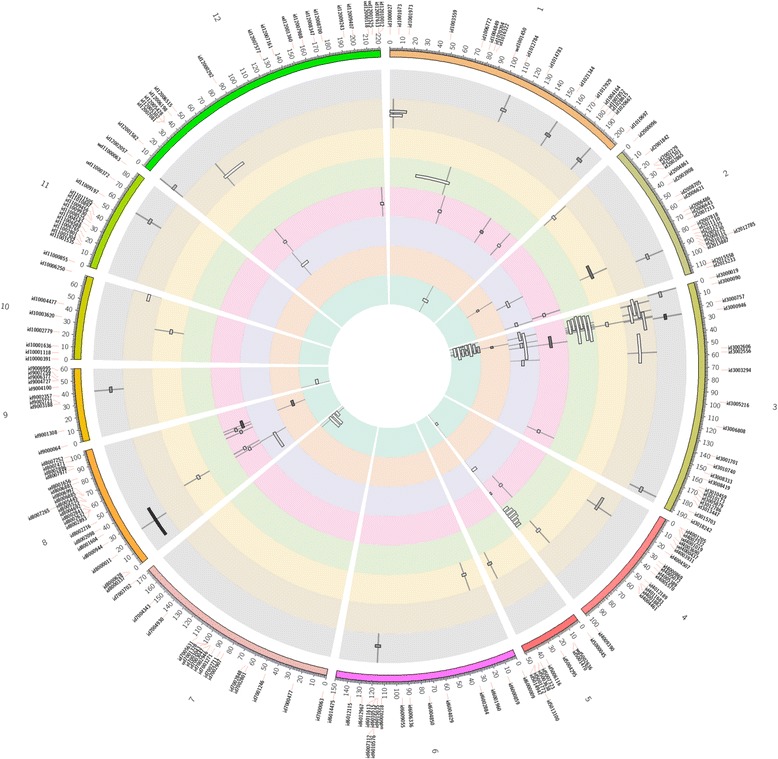
Results: Significant correlations between drought- and yield-related traits at seedling and reproductive stages respectively with traits for adaptation to dry direct-seeded conditions were observed. CIM and MLSIM methods were applied to identify QTLs for univariate and composite traits. QTL clusters showing alignment of QTLs for several traits within and across trait groups were detected at chromosomes 3, 4, and 7 through CIM. The largest number of QTLs related to traits belonging to all four trait groups were identified on chromosome 3 close to the qDTY 3.2 locus. These included QTLs for traits such as bleeding rate, shoot biomass, stem strength, and spikelet fertility. Multivariate QTLs were identified at loci supported by univariate QTLs such as on chromosomes 3 and 4 as well as at distinctly different loci on chromosome 8 which were undetected through CIM.
Conclusion: Rice requires better adaptation across a wide range of environments and cultivation practices to adjust to climate change. Understanding the genetics and trade-offs related to each of these environments and cultivation practices thus becomes highly important to develop varieties with stability of yield across them. This study provides a wider picture of the genetics and physiology of adaptation of rice to wide range of environments. With a complete understanding of the processes and relationships between traits and trait groups, marker-assisted breeding can be used more efficiently to develop plant types that can combine all or most of the beneficial traits and show high stability across environments, ecosystems, and cultivation practices.
Figures

References
-
- Molden D, Frenken K, Barker R, de Fraiture C, Mati B, Svendsen M, Sadoff C, Finlayson CM, Attapatu S, Giordano M, Inocencio A, Lannerstad M, Manning N, Molle F, Smedema B, Vallée D. Trends in water and agriculture development. In: Molden D, editor. In Water for food, water for life: A comprehensive assessment of water management in agriculture. International water management institute, London: Earthscan and Colombo; 2007. pp. 57–89.
-
- Kumar V, Ladha JK. Direct seeding of rice: recent developments and future research needs. Adv Agron. 2011;111:297–413. doi: 10.1016/B978-0-12-387689-8.00001-1. - DOI
-
- Pathak H, Tewari AN, Sankhyan S, Dubey DS, Mina U, Singh V, Jain N, Bhatia A. Direct-seeded rice: potential, performance and problems – A review. Current Advances in Agricultural Sciences. 2011;3(2):77–88.
-
- Bouman BAM, Tuong TP. Field water management to save water and increase its productivity in irrigated rice. Agric Water Manage. 2001;49(1):11–30. doi: 10.1016/S0378-3774(00)00128-1. - DOI
-
- Bouman BAM, Xiaoguang Y, Wang H, Wang Z, Zhao J, Chen B. Performance of aerobic rice varieties under irrigated conditions in North China. Field Crop Res. 2006;97(1):53–65. doi: 10.1016/j.fcr.2005.08.015. - DOI
Publication types
MeSH terms
Grants and funding
LinkOut - more resources
Full Text Sources
Other Literature Sources
