


Brief Intervention in the Emergency Department Among Mexican-Origin Young Adults at the US-Mexico Border: Outcomes of a Randomized Controlled Clinical Trial Using Promotores
- PMID: 26243733
- PMCID: PMC4755550
- DOI: 10.1093/alcalc/agv084
Brief Intervention in the Emergency Department Among Mexican-Origin Young Adults at the US-Mexico Border: Outcomes of a Randomized Controlled Clinical Trial Using Promotores
Abstract
Aims: A randomized controlled trial of brief intervention (BI), for drinking and related problems, using peer health promotion advocates (promotores), was conducted among at-risk and alcohol-dependent Mexican-origin young adult emergency department (ED) patients, aged 18-30.
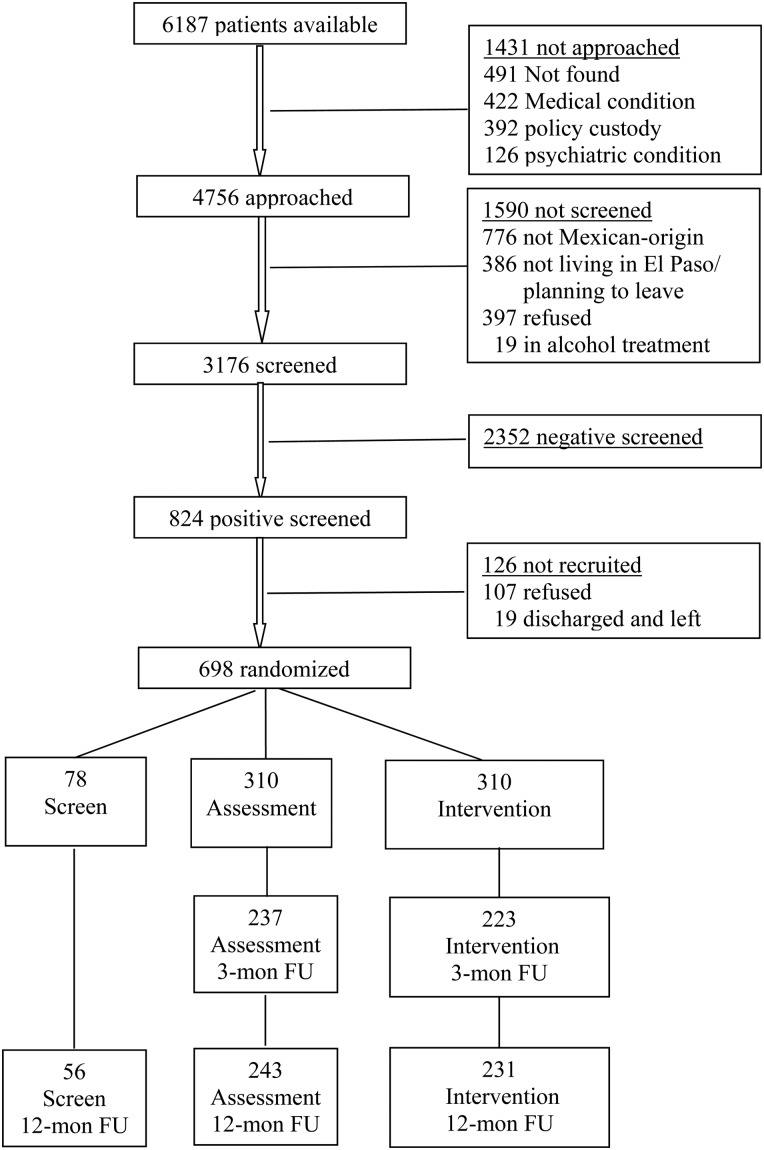
Methods: Six hundred and ninety-eight patients were randomized to: screened only (n = 78), assessed (n = 310) and intervention (n = 310). Primary outcomes were at-risk drinking and Rapid Alcohol Problems Screen (RAPS4) scores. Secondary outcomes were drinking days per week, drinks per drinking day, maximum drinks in a day and negative consequences of drinking.
Results: At 3- and 12-month follow-up the intervention condition showed significantly lower values or trends on all outcome variables compared to the assessed condition, with the exception of the RAPS4 score; e.g. at-risk drinking days dropped from 2.9 to 1.7 at 3 months for the assessed condition and from 3.2 to 1.2 for the intervention condition. Using random effects modeling controlling for demographics and baseline values, the intervention condition showed significantly greater improvement in all consumption measures at 12 months, but not in the RAPS4 or negative consequences of drinking. Improvements in outcomes were significantly more evident for non-injured patients, those reporting drinking prior to the event, and those lower on risk taking disposition.
Conclusions: At 12-month follow-up this study demonstrated significantly improved drinking outcomes for Mexican-origin young adults in the ED who received a BI delivered by promotores compared to those who did not.
Trial register: ClinicalTrials.gov.
Clinical trial registration number: NCT02056535.
© The Author 2015. Medical Council on Alcohol and Oxford University Press. All rights reserved.
Figures
References
-
- Academic ED SBIRT Research Collaborative. (2007) The impact of screening, brief intervention, and referral for treatment on Emergency Department patients’ alcohol use. Ann Emerg Med 50:699–710. - PubMed
-
- American Psychiatric Association. (1994) Diagnostic and Statistical Manual of Mental Disorders (DSM-IV). Washington, DC: American Psychiatric Association.
-
- Bernstein E, Bernstein J (2008) Effectiveness of alcohol screening and brief motivational intervention in the emergency department setting. Ann Emerg Med 51:751–4. - PubMed
-
- Bernstein E, Bernstein J, Levenson S (1997) Project ASSERT: an ED-based intervention to increase access to primary care, preventive services, and the substance abuse treatment system. Ann Emerg Med 30:181–9. - PubMed
Publication types
MeSH terms
Associated data
Grants and funding
LinkOut - more resources
Full Text Sources
Other Literature Sources
Medical
