. 2015 Aug 4;9(5):1006-15.
doi: 10.1177/1932296815590154.

Time Delay of CGM Sensors: Relevance, Causes, and Countermeasures

Affiliations

Time Delay of CGM Sensors: Relevance, Causes, and Countermeasures

Günther Schmelzeisen-Redeker et al. J Diabetes Sci Technol. .

Abstract

Background: Continuous glucose monitoring (CGM) is a powerful tool to support the optimization of glucose control of patients with diabetes. However, CGM systems measure glucose in interstitial fluid but not in blood. Rapid changes in one compartment are not accompanied by similar changes in the other, but follow with some delay. Such time delays hamper detection of, for example, hypoglycemic events. Our aim is to discuss the causes and extent of time delays and approaches to compensate for these.

Methods: CGM data were obtained in a clinical study with 37 patients with a prototype glucose sensor. The study was divided into 5 phases over 2 years. In all, 8 patients participated in 2 phases separated by 8 months. A total number of 108 CGM data sets including raw signals were used for data analysis and were processed by statistical methods to obtain estimates of the time delay.

Results: Overall mean (SD) time delay of the raw signals with respect to blood glucose was 9.5 (3.7) min, median was 9 min (interquartile range 4 min). Analysis of time delays observed in the same patients separated by 8 months suggests a patient dependent delay. No significant correlation was observed between delay and anamnestic or anthropometric data. The use of a prediction algorithm reduced the delay by 4 minutes on average.

Conclusions: Prediction algorithms should be used to provide real-time CGM readings more consistent with simultaneous measurements by SMBG. Patient specificity may play an important role in improving prediction quality.

Keywords: CGM; MARD; accuracy; continuous glucose monitoring; performance comparison; performance evaluation; precision; time delay.


Conflict of interest statement

Declaration of Conflicting Interests: The author(s) declared the following potential conflicts of interest with respect to the research, authorship, and/or publication of this article: GS and MS are full-time employees of Roche Diagnostics. GF is general manager of Institut für Diabetes-Technologie Forschungs- und Entwicklungsgesellschaft mbH an der Universität Ulm, Ulm, Germany, which carries out studies evaluating BG meters and medical devices for diabetes therapy on behalf of various companies, and received speakers’ honoraria or consulting fees from Abbott, Bayer, Berlin-Chemie, Becton-Dickinson, Dexcom, Menarini Diagnostics, Roche Diagnostics, Sanofi, and Ypsomed. LH is a consultant for a number of companies developing new diagnostic and therapeutic options for diabetes treatment and is a member of a Sanofi advisory board for biosimilar insulins. He is a partner of Profil Institute for Clinical Research, US and Profil Institut für Stoffwechselkrankheiten, Germany.

Figures

Figure 1.
Figure 1.
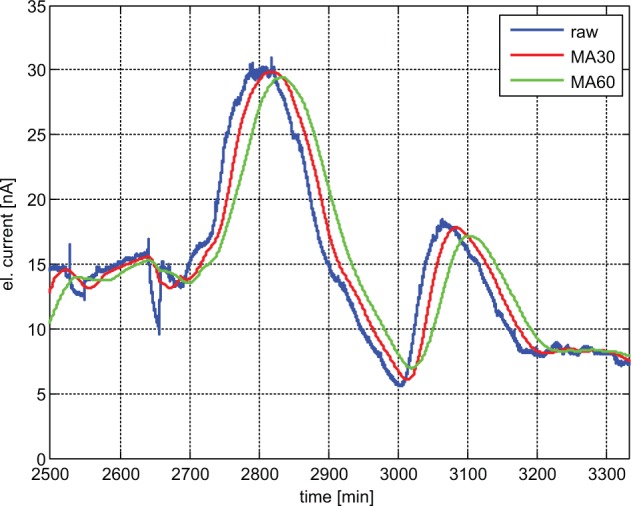
Raw CGM signal (blue) filtered using a 30-minute (red) and 60-minute (green) moving average filter.
Figure 2.
Figure 2.
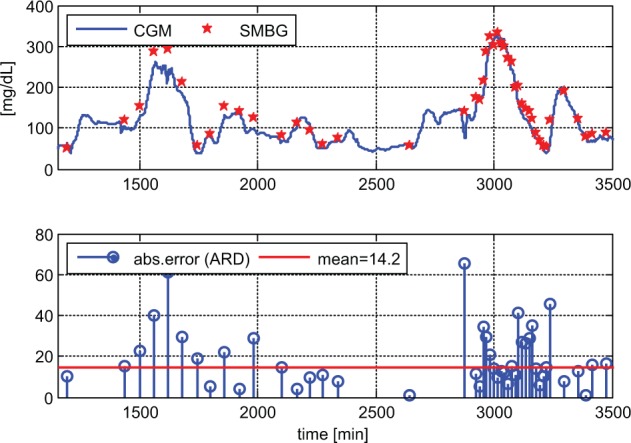
CGM recordings and results of glucose measurements in capillary blood (SMBG) (upper panel). Absolute relative difference between CGM and SMBG values and the mean thereof (lower panel).
Figure 3.
Figure 3.
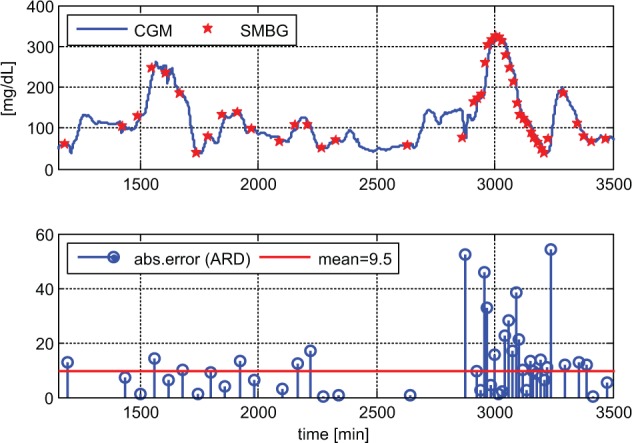
Absolute relative difference and mean value thereof when assuming no analytical error, only an overall time delay between CGM and SMBG, using the same data as presented in Figure 2.
Figure 4.
Figure 4.
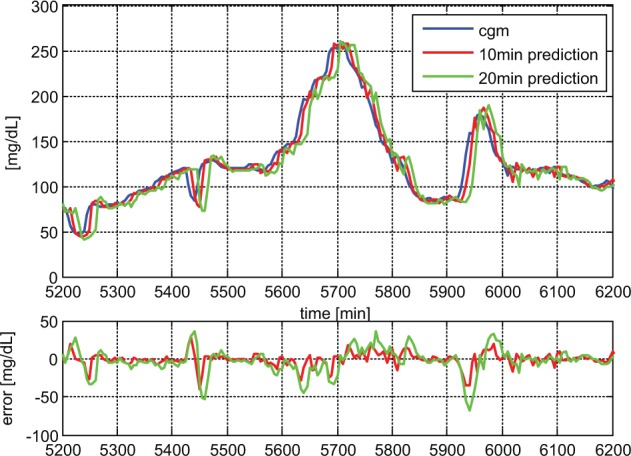
CGM data and 10-, 20- minute prediction of an autoregressive model of fifth order (top plot) and the prediction errors (bottom plot). Figure shows validation data; the model was trained on the first 2 days of the data set.
Figure 5.
Figure 5.
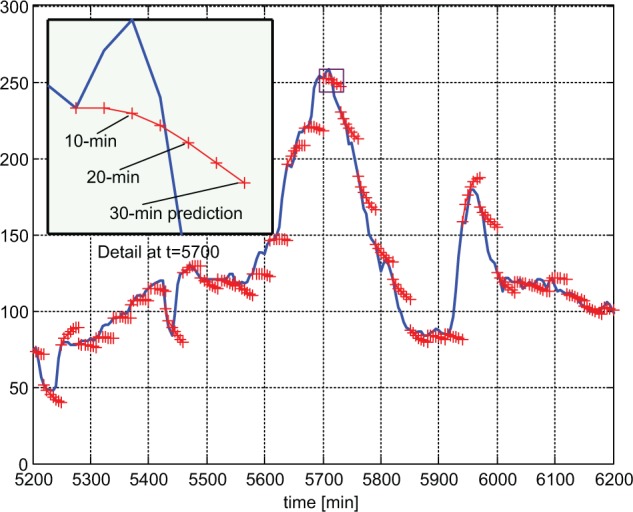
Predicted traces shown at some selected points in time for the same data as in Figure 4. For a given point, the red lines/crosses indicate the future values expected after 10/20/30 minutes using the information available until then.
Figure 6.
Figure 6.
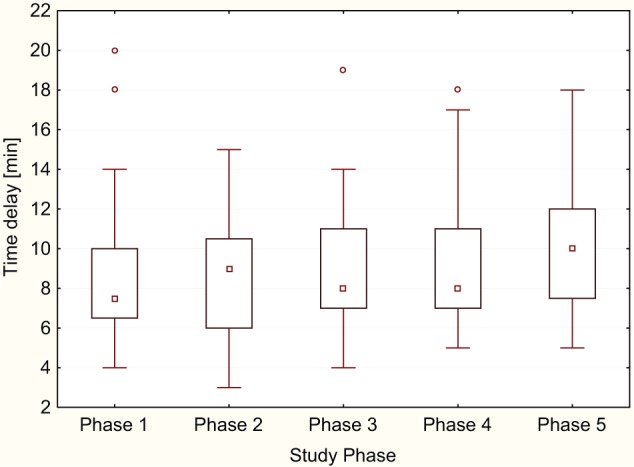
Box plot of overall time delay distribution during different phases of the clinical study. Squares: medians; rectangles: 25% and 75% quantiles; extensions from rectangles: minimums and maximums; circles: outliers.
Figure 7.
Figure 7.
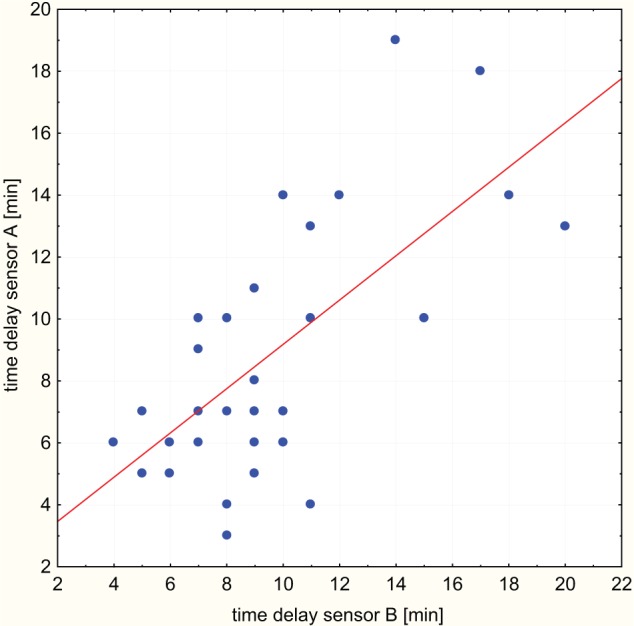
Correlation of the time delays observed in 2 simultaneously worn CGM sensors in the same patient (sensors A and B); red line: linear regression line; each circle represents data from 1 patient.
Figure 8.
Figure 8.
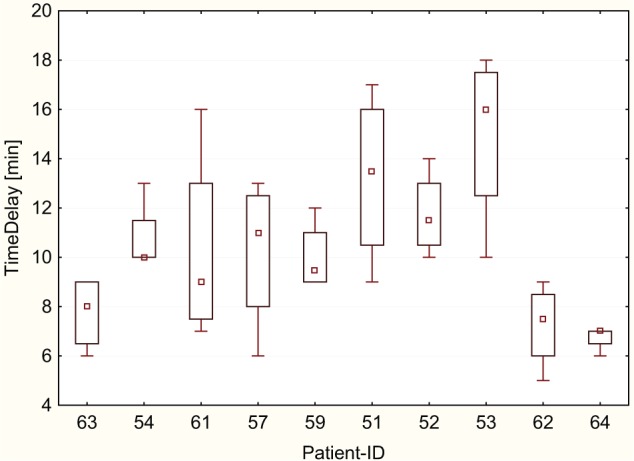
Box plot of time delay distribution of CGM sensors for 10 patients wearing 4 sensors simultaneously. Squares: medians; rectangles: 25% and 75% quantiles; extensions from rectangles: minimums and maximums; circles: outliers.
Figure 9.
Figure 9.
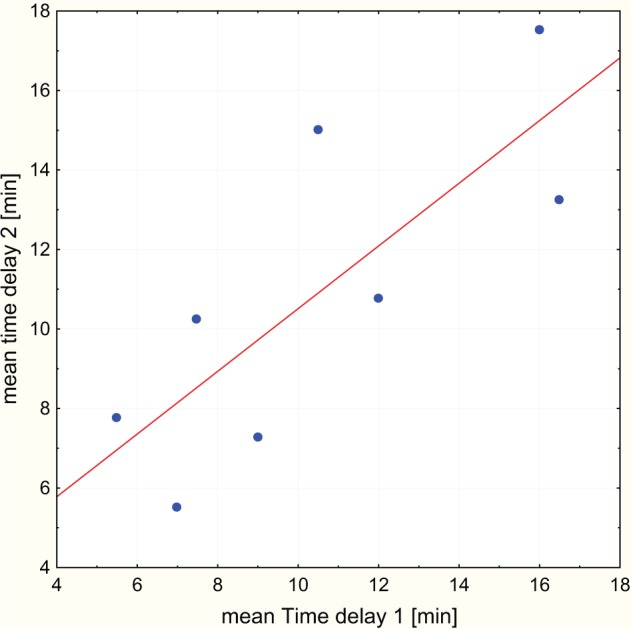
Correlation of mean time delays of the CGM sensors of patients participating in 2 different study phases (mean time delay 1 and 2); time between study phases was 8 to 12 months.
Figure 10.
Figure 10.
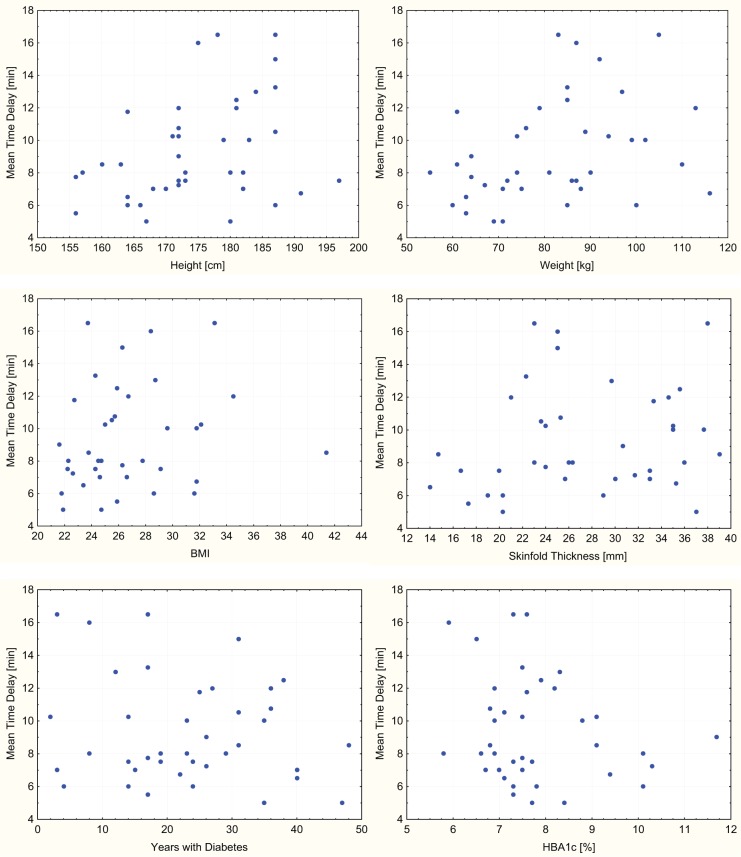
Correlation of mean time delay including patient height (a), weight (b), BMI (c), skinfold thickness (d), duration of diabetes (e), and HbA1c (f).

References

    1. Palerm CC, Bequette BW. Hypoglycemia detection and prediction using continuous glucose monitoring—a study on hypoglycemic clamp data. J Diabetes Sci Technol. 2007;1:624-629. - PMC - PubMed
    1. Vashist SK. Continuous glucose monitoring systems: a review. Diagnostics. 2013;3:385-412. - PMC - PubMed
    1. Kulcu E, Tamada JA, Reach G, Potts RO, Lesho MJ. Physiological differences between interstitial glucose and blood glucose measured in human subjects. Diabetes Care. 2003;26:2405-2419. - PubMed
    1. Ward WK, Engle JM, Branigan D, Youssef JE, Massoud RG, Castle JR. The effect of rising vs. falling glucose level on amperometric glucose sensor lag and accuracy in type 1 diabetes. Diabet Med. 2012;29:1067-1073. - PMC - PubMed
    1. Wentholt IME, Hart AAM, Hoekstra JBL, Devries JH. Relationship between interstitial and blood glucose in type 1 diabetes patients: delay and the push-pull phenomenon revisited. Diabetes Technol Ther. 2007;9:169-175. - PubMed

Publication types