A pilot survey of junior doctors' attitudes and awareness around medication review: time to change our educational approach?
- PMID: 26246893
- PMCID: PMC4516007
- DOI: 10.1136/ejhpharm-2015-000664
A pilot survey of junior doctors' attitudes and awareness around medication review: time to change our educational approach?
Abstract
Objectives: Our aim was to explore junior doctors' attitudes and awareness around concepts related to medication review, in order to find ways to change the culture for reviewing, altering and stopping inappropriate or unnecessary medicines. Having already demonstrated the value of team working with senior doctors and pharmacists and the use of a medication review tool, we are now looking to engage first year clinicians and undergraduates in the process.
Method: An online survey about medication review was distributed among all 42 foundation year one (FY1) doctors at the Chelsea and Westminster Hospital NHS Foundation Trust in November 2014. Descriptive statistics were used for analysis.
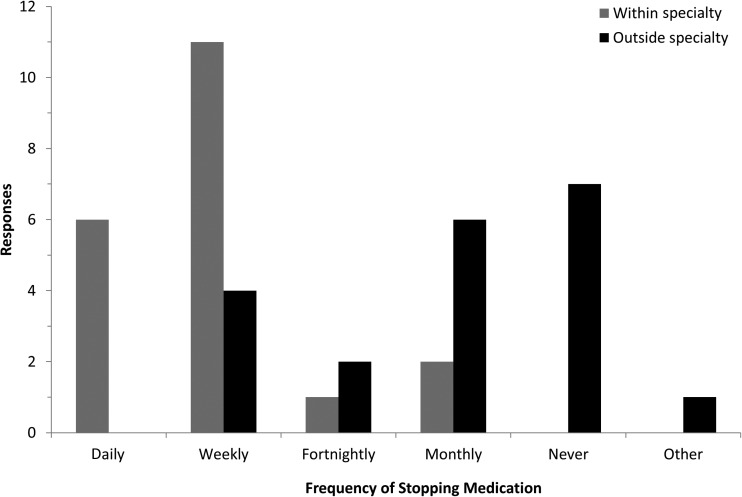
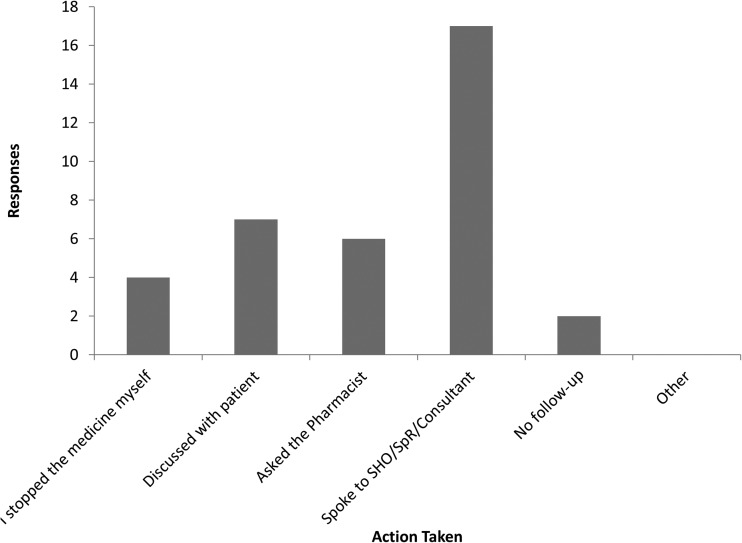
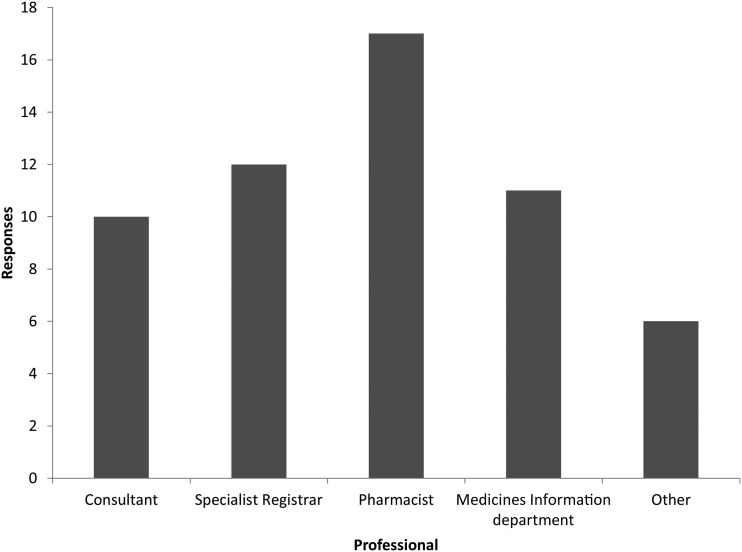
Results: Twenty doctors completed the survey (48%). Of those, 17 believed that it was the pharmacist's duty to review medicines; and 15 of 20 stated the general practitioner (GP). Sixteen of 20 stated that they would consult a senior doctor first before stopping medication. Eighteen of 20 considered the GP and consultant to be responsible for alterations, rather than themselves. Sixteen of 20 respondents were not aware of the availability of a medication review tool. Seventeen of 20 felt that more support from senior staff would help them become involved with medication review.
Conclusions: Junior doctors report feeling uncomfortable altering mediations without consulting a senior first. They appear to be building confidence with prescribing in their first year but not about the medication review process or questioning the drugs already prescribed. Consideration should be given to what we have termed a 'bottom-up' educational approach to provide early experience of and change the culture around medication review, to include the education of undergraduate and foundation doctors and pharmacists.
Keywords: Deprescribing; junior doctors; medication review; stopping medicines.
Figures
References
-
- Department of Health Publications, Policy and Guidance. http://webarchive.nationalarchives.gov.uk/+/www.dh.gov.uk/en/publication... (accessed 7 Apr 15).
-
- Royal Pharmaceutical Society: Professional Standards for Hospital pharmacy Services: Optimising Patient outcomes from Medicines v 2 July 2014. http://www.rpharms.com/unsecure-support-resources/professional-standards... (accessed 7 Apr 15).
LinkOut - more resources
Full Text Sources
Other Literature Sources