


Global epidemiology of Familial Mediterranean fever mutations using population exome sequences
- PMID: 26247045
- PMCID: PMC4521964
- DOI: 10.1002/mgg3.140
Global epidemiology of Familial Mediterranean fever mutations using population exome sequences
Abstract
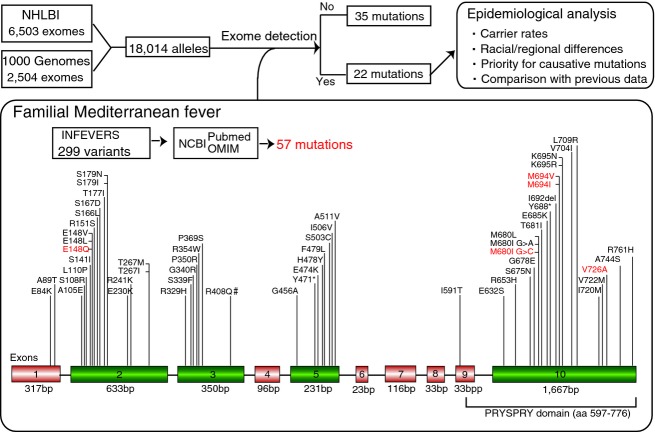
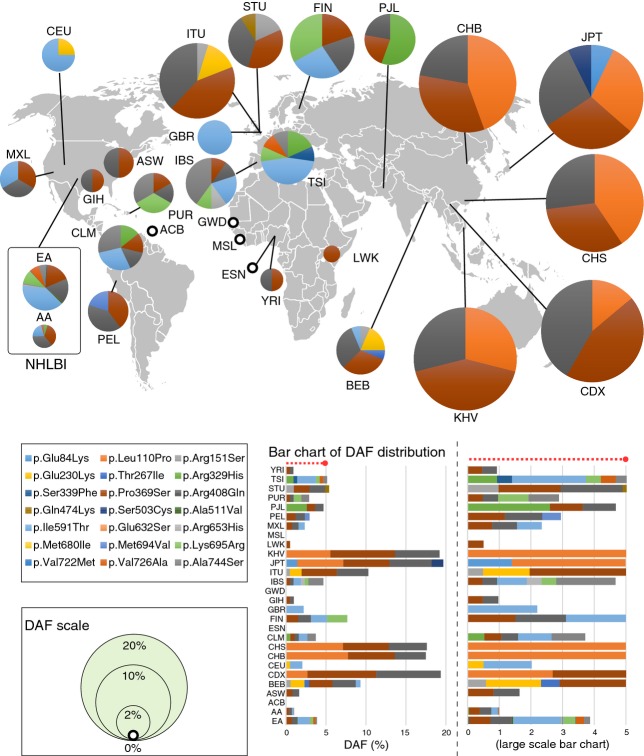
Familial Mediterranean fever (FMF) is an inherited disorder characterized by recurrent episodes of fever accompanied by sterile peritonitis, arthritis, and pleuritis. Many mutations in the MEFV gene have been identified as causing FMF. However, accompanying epidemiological information remains quite scarce except in some Mediterranean countries, and the degree of penetrance has been a subject of controversy. Here, I established a genetic epidemiology of full FMF mutations using two population exome studies. Of 57 mutations associated with FMF, 22 were detected in a total of 9007 individuals from two exome sequences. Exome-based epidemiology revealed the carrier rates of FMF in 28 populations in 19 countries by individual mutation and showed strong population specificity for the MEFV mutations. Unexpectedly high carrier rates suggested that some mutations are benign variants with no pathological significance and highlighted the need for caution in analyzing MEFV mutations. Similar approach could be used to uncover the incomplete or no penetrance of mutations in most inherited disorders.
Keywords: Allele frequency; Familial Mediterranean fever; epidemiology; exome; genetic diagnosis.
Figures
References
-
- Ben-Chetrit E. Levy M. Familial mediterranean fever. Lancet. 1998;351:659–664. - PubMed
-
- Cazeneuve C, Sarkisian T, Pêcheux C, Dervichian M, Nédelec B, Reinert P, et al. MEFV-gene analysis in armenian patients with familial mediterranean fever: diagnostic value and unfavorable renal prognosis of the M694V homozygous genotype-genetic and therapeutic implications. Am. J. Hum. Genet. 1999;65:88–97. - PMC - PubMed
LinkOut - more resources
Full Text Sources
Other Literature Sources
