. 2015 Aug 6;10(8):e0134478.
doi: 10.1371/journal.pone.0134478. eCollection 2015.

Production of a Shigella sonnei Vaccine Based on Generalized Modules for Membrane Antigens (GMMA), 1790GAHB

Affiliations

Production of a Shigella sonnei Vaccine Based on Generalized Modules for Membrane Antigens (GMMA), 1790GAHB

Christiane Gerke et al. PLoS One. .

Abstract

Recently, we developed a high yield production process for outer membrane particles from genetically modified bacteria, called Generalized Modules of Membrane Antigens (GMMA), and the corresponding simple two step filtration purification, enabling economic manufacture of these particles for use as vaccines. Using a Shigella sonnei strain that was genetically modified to produce penta-acylated lipopolysaccharide (LPS) with reduced endotoxicity and to maintain the virulence plasmid encoding for the immunodominant O antigen component of the LPS, scale up of the process to GMP pilot scale was straightforward and gave high yields of GMMA with required purity and consistent results. GMMA were formulated with Alhydrogel and were highly immunogenic in mice and rabbits. In mice, a single immunization containing 29 ng protein and 1.75 ng of O antigen elicited substantial anti-LPS antibody levels. As GMMA contain LPS and lipoproteins, assessing potential reactogenicity was a key aspect of vaccine development. In an in vitro monocyte activation test, GMMA from the production strain showed a 600-fold lower stimulatory activity than GMMA with unmodified LPS. Two in vivo tests confirmed the low potential for reactogenicity. We established a modified rabbit pyrogenicity test based on the European Pharmacopoeia pyrogens method but using intramuscular administration of the full human dose (100 μg of protein). The vaccine elicited an average temperature rise of 0.5°C within four hours after administration, which was considered acceptable and showed that the test is able to detect a pyrogenic response. Furthermore, a repeat dose toxicology study in rabbits using intramuscular (100 μg/dose), intranasal (80 μg/dose), and intradermal (10 μg/dose) administration routes showed good tolerability of the vaccine by all routes and supported its suitability for use in humans. The S. sonnei GMMA vaccine is now in Phase 1 dose-escalation clinical trials.


Conflict of interest statement

Competing Interests: The authors have read the journal's policy and have the following competing interests: This work was supported by Novartis. CGe, AMC, CGi, SS, LS, LBM, JA, VDC, and AS are employees of Sclavo Behring Vaccines Institute for Global Health S.r.l., a GSK company, Siena, Italy. CGV is an employee of Novartis Vaccines and Diagnostics S.r.l., a GSK company, Siena, Italy. The submitted work is included in the patent applications ‘Hyperblebbing Shigella strains’ WO/2011/036564 and ‘Purification of bacterial vesicles’ WO/2011/036562 which have been transferred to GSK. This did not alter the authors' adherence to PLOS ONE policies on sharing data and materials.

Figures

Fig 1
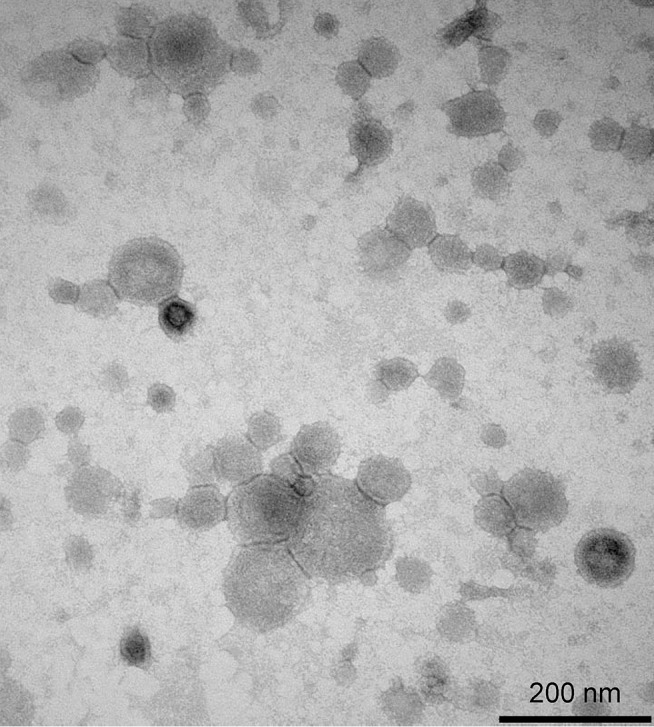
Fig 1. Transmission electron micrograph of purified 1790-GMMA from the GMP batch.
The length of the bar in the micrographs is 200 nm.
Fig 2
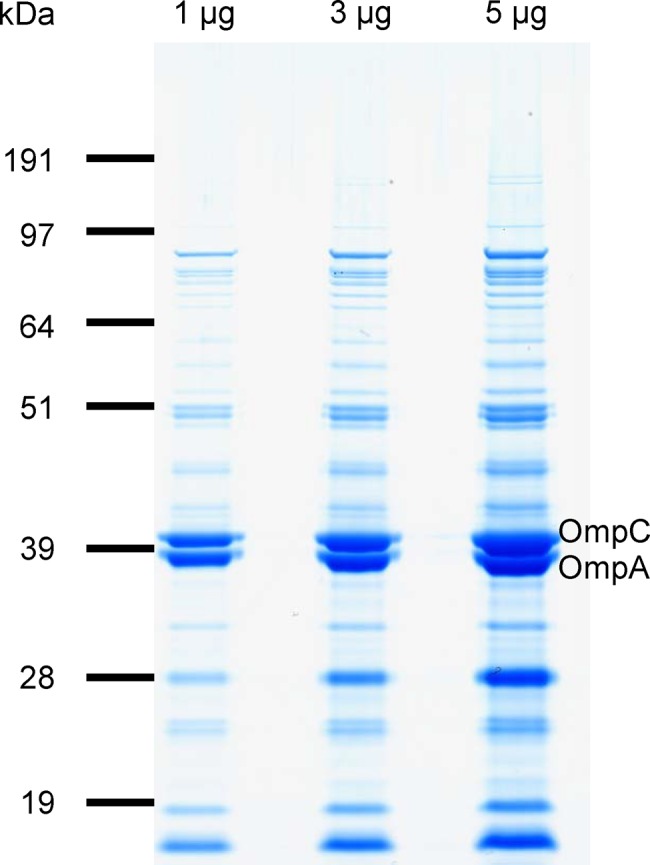
Fig 2. Coomassie Blue stained SDS-PAGE of 1, 3 and 5 μg protein of 1790-GMMA from the reference batch.
Fig 3
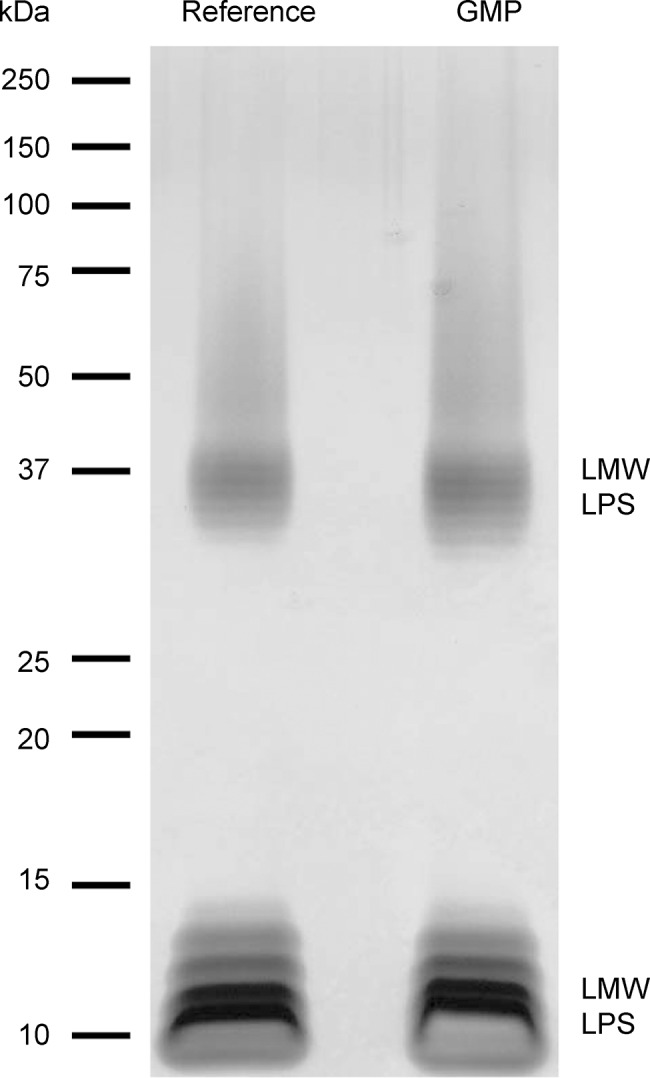
Fig 3. Silver stained SDS-PAGE gel of LPS extracted from 1790-GMMA reference and GMP batches.
Fig 4
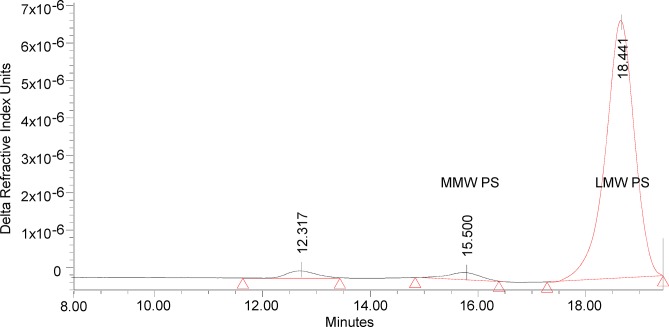
Fig 4. Separation of extracted O antigen from the 1790-GMMA reference batch by HPLC gel permeation chromatograph.
Fig 5
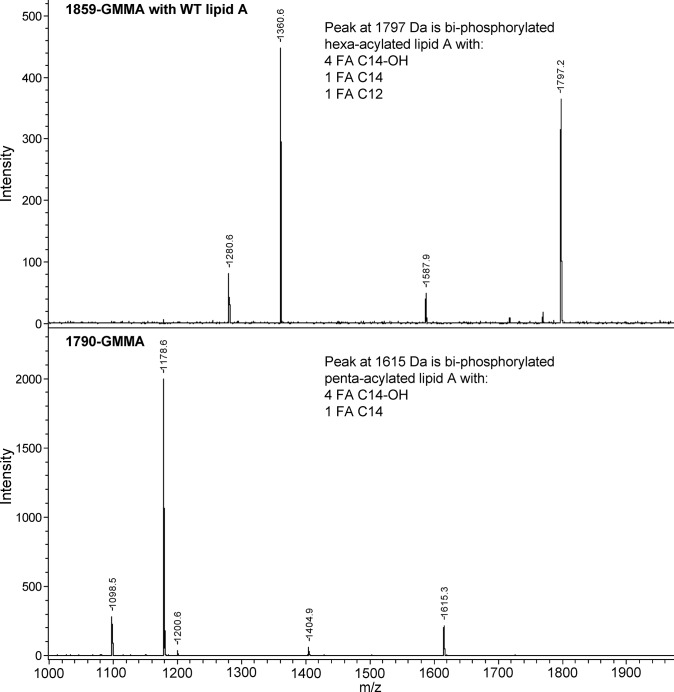
Fig 5. Mass spectra of lipid A extracted from 1859-GMMA (top panel) and 1790-GMMA (lower panel).
The peak with the biggest m/z from the 1859-GMMA sample is the size expected for a hexa-acylated lipid A. No hexa-acyl lipid A was detected in the 1790-GMMA. The peak with the highest m/z in the 1790-GMMA lipid A sample has the mass expected for penta-acylated lipid A consistent with the ΔhtrB mutation
Fig 6
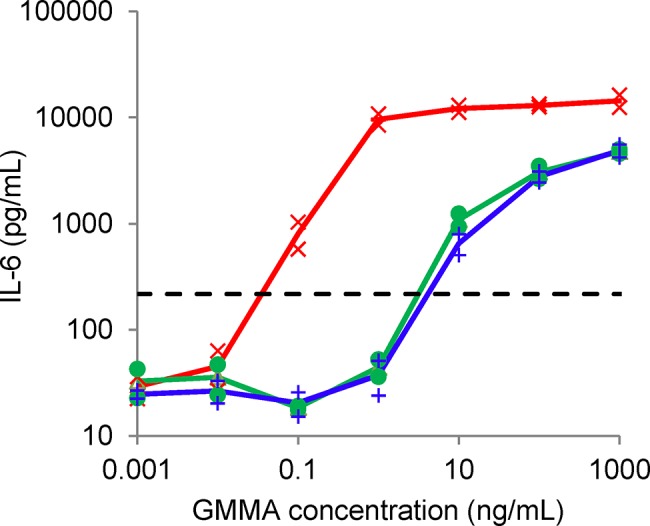
Fig 6. Monocyte activation test of 1859-GMMA (red X) and reference (green •) and GMP batches of 1790-GMMA (blue +) measured by the IL-6 production from human PBMC.
Each sample was measured in duplicate. The horizontal dashed line is the IL-6 level ten times background. At this level, 1790-GMMA required 600x times the concentration of 1859-GMMA to give the same level of IL-6 release.
Fig 7
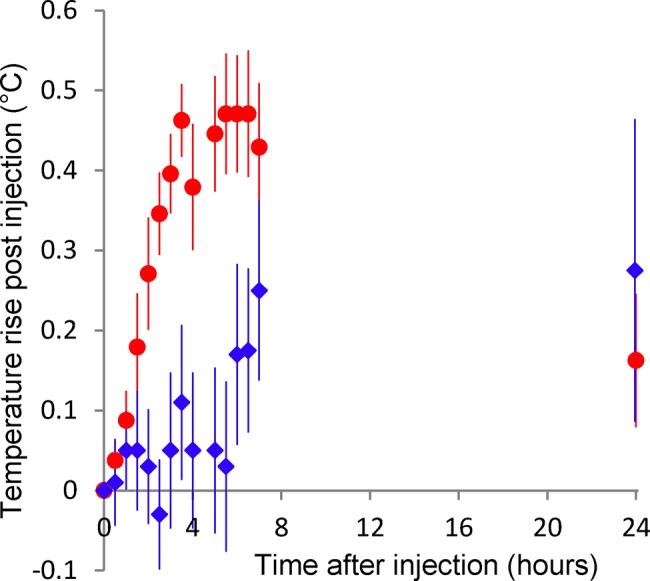
Fig 7. Mean temperature rise (mean of post vaccination–pre-vaccination temperature) in rabbits after an IM injection of 100 μg protein containing dose of 1790GAHB (red circles) or equivalent volume of physiological saline (blue diamonds).
The vertical bars show the standard error of the mean. N = 12 for the 1790GAHB and 6 for the saline injected rabbits.
Fig 8
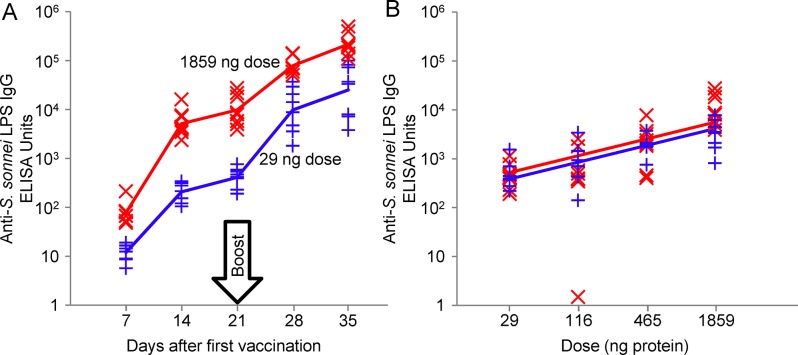
Fig 8. Antibody responses in mice.
A: vaccinated at 3 week intervals with 1790GAHB containing 29 ng or 1859 ng protein. B: at day 21 following a single injection of 1790GAHB containing 29, 116, 465 or 1859 ng protein. This is the result from a potency study; half the mice were vaccinated with the appropriate doses of a formulation of 1790GAHB prepared from the reference batch of 1790-GMMA stored at -80°C (blue, +) and formulated 2 days before vaccination. The other mice were vaccinated with appropriate doses of the NVGH 1790GAHB vaccine stability batch (red, X). All doses contained the same amount of Alhydrogel in 0.5 mL buffered saline.
Fig 9
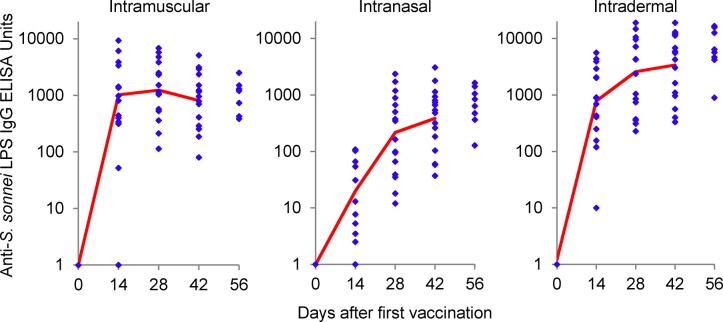
Fig 9. Antibody levels in rabbits vaccinated with 100 μg IM, 80 μg IN, or10 μg ID in the toxicology study.
Antibody levels for each of the 12 rabbits per group are shown (dots) and group geometric mean for days 0 to 42 (line). Half of the rabbits were sacrificed at day 44 for assessment of immediate adverse effects. The antibody levels at day 56 reflect the levels in the remaining 6 animals in each group.

References

    1. Murray CJ, Vos T, Lozano R, Naghavi M, Flaxman AD, Michaud C, et al. Disability-adjusted life years (DALYs) for 291 diseases and injuries in 21 regions, 1990–2010: a systematic analysis for the Global Burden of Disease Study 2010. Lancet. 2012;380: 2197–2223. 10.1016/S0140-6736(12)61689-4 - DOI - PubMed
    1. Lozano R, Naghavi M, Foreman K, Lim S, Shibuya K, Aboyans V, et al. Global and regional mortality from 235 causes of death for 20 age groups in 1990 and 2010: a systematic analysis for the Global Burden of Disease Study 2010. Lancet. 2012;380: 2095–2128. 10.1016/S0140-6736(12)61728-0 - DOI - PMC - PubMed
    1. Kotloff KL, Nataro JP, Blackwelder WC, Nasrin D, Farag TH, Panchalingam S, et al. Burden and aetiology of diarrhoeal disease in infants and young children in developing countries (the Global Enteric Multicenter Study, GEMS): a prospective, case-control study. Lancet. 2013;382: 209–222. 10.1016/S0140-6736(13)60844-2 - DOI - PubMed
    1. Livio S, Strockbine NA, Panchalingam S, Tennant SM, Barry EM, Marohn ME, et al. Shigella isolates from the global enteric multicenter study inform vaccine development. Clin Infect Dis. 2014;59: 933–941. 10.1093/cid/ciu468 - DOI - PMC - PubMed
    1. Levine MM, Kotloff KL, Barry EM, Pasetti MF, Sztein MB. Clinical trials of Shigella vaccines: two steps forward and one step back on a long, hard road. Nat Rev Microbiol. 2007;5: 540–553. - PMC - PubMed

Publication types

MeSH terms