


Multicenter, Double-Blind, Randomized, Phase 2 Study Evaluating the Novel Antibiotic Cadazolid in Patients with Clostridium difficile Infection
- PMID: 26248357
- PMCID: PMC4576054
- DOI: 10.1128/AAC.00504-15
Multicenter, Double-Blind, Randomized, Phase 2 Study Evaluating the Novel Antibiotic Cadazolid in Patients with Clostridium difficile Infection
Abstract
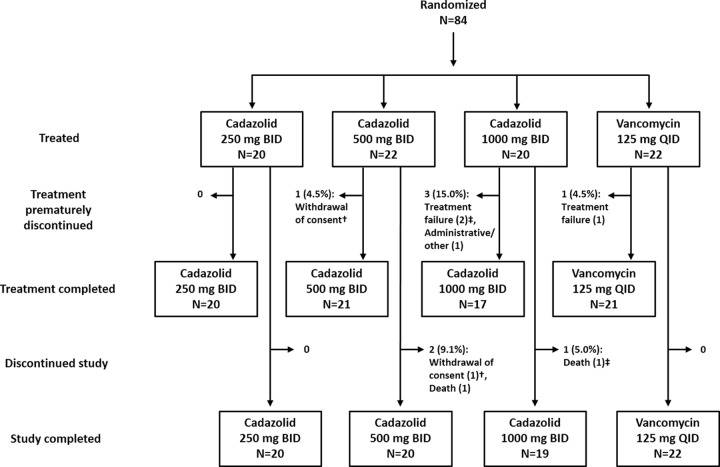
Cadazolid, a novel fluoroquinolone-oxazolidinone antibiotic, exhibits potent in vitro activity against Clostridium difficile, including the epidemic BI/NAP1/027 strain. This multicenter, randomized, double-blind, active reference group, phase 2 study evaluated the efficacy and safety of oral cadazolid in treatment of adult patients with C. difficile infection (CDI). Eligible patients with first occurrence/first recurrence of CDI were randomized 1:1:1:1 to 250, 500, or 1,000 mg cadazolid twice daily (BID) or oral 125 mg vancomycin four times daily (QID) for 10 days. The primary endpoint was clinical cure at test of cure (48 ± 24 h after the end of treatment; modified intent-to-treat population), defined as resolution of diarrhea with no further CDI treatment required. Secondary endpoints included recurrence rate, sustained clinical response (clinical cure without recurrence), and time to diarrhea resolution. Of 84 patients enrolled, 20, 22, 20, and 22 received 250, 500, or 1,000 mg cadazolid BID or 125 mg vancomycin QID, respectively. The primary endpoint was achieved in 76.5% (80% confidence interval [CI], 58.4, 89.3), 80.0% (63.9, 91.0), 68.4% (51.1, 82.5), and 68.2% (52.3, 81.3) of patients, respectively. There was no evidence of a cadazolid dosage-dependent response. Each dosage of cadazolid resulted in a lower recurrence rate than with vancomycin (18.2 to 25.0% versus 50%). Consequently, higher sustained clinical response rates were observed with cadazolid (46.7 to 60.0%) than with vancomycin (33.3%). The times to diarrhea resolution were similar for cadazolid and vancomycin. Cadazolid was well tolerated, with no safety signal observed. The results of this phase 2 study support further clinical development of cadazolid. (This study has been registered in the United States at ClinicalTrials.gov under registration no. NCT01222702 and in Europe with the European Medicines Agency under registration no. EUDRA-CT 2010-020941-29.).
Copyright © 2015, American Society for Microbiology. All Rights Reserved.
Figures
References
-
- Kuijper EJ, van Dissel JT, Wilcox MH. 2007. Clostridium difficile: changing epidemiology and new treatment options. Curr Opin Infect Dis 20:376–383. - PubMed
Publication types
MeSH terms
Substances
Associated data
LinkOut - more resources
Full Text Sources
Medical
