


Interventions for idiopathic intracranial hypertension
- PMID: 26250102
- PMCID: PMC7173709
- DOI: 10.1002/14651858.CD003434.pub3
Interventions for idiopathic intracranial hypertension
Abstract
Background: Idiopathic intracranial hypertension (IIH) has an estimated incidence of one to three people per 100,000 people per year, and occurs most commonly in obese, young women. IIH is associated with severe morbidity, notably due to a significant threat to sight and severe headache. Several different management options have been proposed. Conservative measures centre on weight loss. Pharmacological therapy includes use of diuretics. Refractory and sight-threatening cases demand surgical intervention, most often in the form of cerebrospinal fluid (CSF) diversion or optic nerve sheath fenestration. Other treatments include venous sinus stenting and bariatric surgery.
Objectives: To assess the effects of any intervention for IIH in any patient group.
Search methods: We searched CENTRAL (which contains the Cochrane Eyes and Vision Group Trials Register) (2015 Issue 6), Ovid MEDLINE, Ovid MEDLINE In-Process and Other Non-Indexed Citations, Ovid MEDLINE Daily, Ovid OLDMEDLINE (January 1946 to July 2015), EMBASE (January 1980 to July 2015), the ISRCTN registry (www.isrctn.com/editAdvancedSearch), ClinicalTrials.gov (www.clinicaltrials.gov) and the World Health Organization (WHO) International Clinical Trials Registry Platform (ICTRP) (www.who.int/ictrp/search/en). We did not use any date or language restrictions in the electronic searches for trials. We last searched the electronic databases on 22 July 2015.
Selection criteria: We included only randomised controlled trials (RCTs) in which any intervention was compared to placebo, or to another form of treatment, for people with a clinical diagnosis of IIH.
Data collection and analysis: Two review authors independently assessed the search results for trials to be included in the review. We resolved any discrepancies by third party decision.
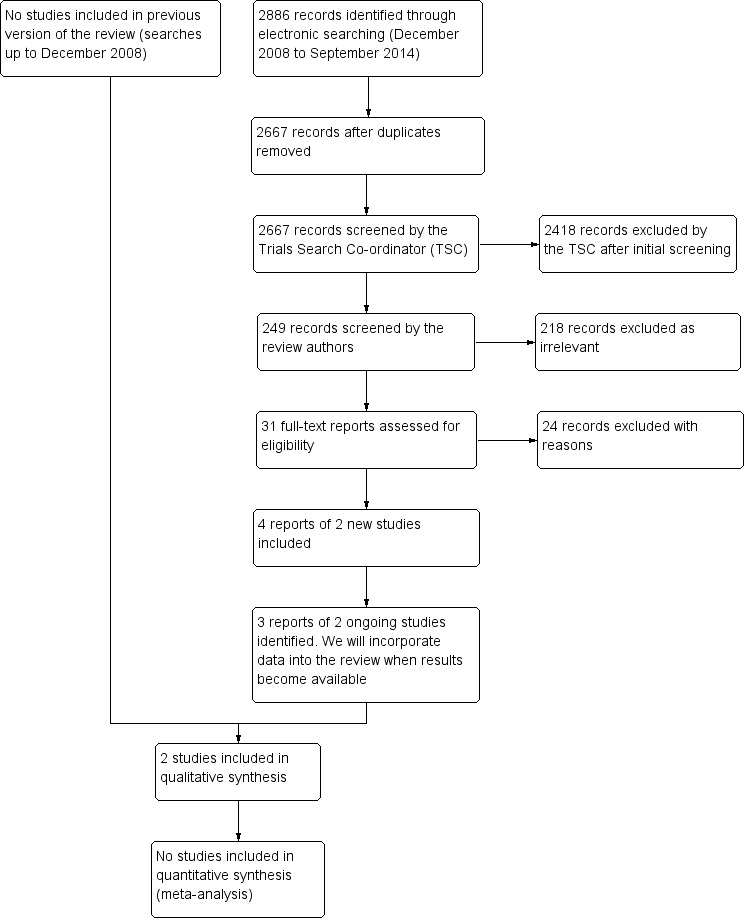
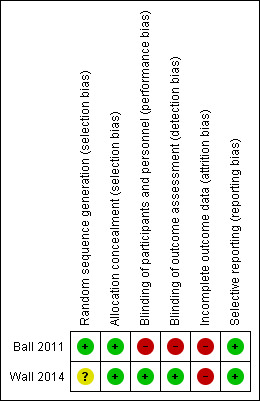
Main results: We identified two completed RCTs (enrolling a total of 211 participants and conducted in the UK and US) and two ongoing trials that met the inclusion criteria. Both completed trials compared acetazolamide to placebo, in conjunction with a weight loss intervention in both groups. Attrition bias was a problem in both trials with high loss to follow-up, in one study this loss to follow-up occurred particularly in the acetazolamide arm. One trial was unmasked and we judged it to be at risk of performance and detection bias.In these studies, change in visual acuity was similar in the treatment and control groups as measured by logMAR acuity. In one study people in the acetalomazide group had a similar change in logMAR acuity compared to the placebo group between baseline and 12 months in the right eye (MD 0.04 logMAR, 95% CI -0.08 to 0.16) and left eye (MD 0.03 logMAR, 95% CI -0.09 to 0.15). In the other study people in the acetalomazide group had a similar change in vision over six months compared with people in the placebo group (mean difference in change in letters read was 0.01 (95% CI -1.45 to 1.46). One study reported no cases of visual loss in 21 people treated with acetalomazide compared to 2/20 cases in the placebo group (odds ratio 0.17, 95% CI 0.01, 3.82).The prespecified outcome for this review was reduction in CSF pressure to normal levels which was not reported by the two trials. One trial reported that, in a subsample of 85 participants who agreed to lumbar puncture at 6 months, people in the acetalomazide group on average had a greater reduction in CSF pressure (MD -59.9 mmH(2)O, 95% CI -96.4, -23.4).In one study, people in the acetalozamide group on average experienced a greater reduction in papilloedema as assessed by fundus photographs MD -0.70 (95% CI -1.00 to -0.40) and by clinical grading MD -0.91 (95% CI -1.27 to -0.54) between baseline and six months in the study eye.Headache was recorded as present/absent in one study at 12 months (OR 0.42, 95% CI 0.12,1.41, 41 participants). Both studies reported headache on visual analogue scales (different ones) but results were inconclusive (MD for change in headache score measured on 10-point visual analogue scale at 12 months was 1.0 (-1.80, 3.70, 41 participants) and MD for change in headache score on a 6 point scale measured at 6 months was -0.45 (-3.5,2.6, number of participants unclear).In one study, a similar proportion of people in the acetalomazide group were in remission (however, the trial authors did not state their definition of this term) at 12 months compared to the placebo group. However, the 95% CIs were wide and there is considerable uncertainty as to the effect (OR 1.13 (95% CI 0.32 to 3.90, 41 participants).In one study of 185 participants, people in the acetalomazide group had an increased risk of decreased CO2, diarrhoea, dysgeusia, fatigue, nausea, paresthesia, tinnitus and vomiting compared to people in the placebo group. In general, the estimates of effect were uncertain with wide 95% CIs. Adverse effects were not reported in the other study.One study reported that quality of life was better in acetazolamide-treated patients based on the visual quality of life (VFQ-25) (MD 6.35, 95% CI 2.22 to 10.47) and the physical (MD 3.02, 95% CI 0.34 to 5.70) and mental (MD 3.45, 95% CI 0.35 to 6.55) components of the 36-Item Short Form Health Survey tool at six months. Costs were not reported in either study.We judged the evidence to be low certainty (GRADE) downgrading for imprecision and risk of bias.
Authors' conclusions: Although the two included RCTs showed modest benefits for acetazolamide for some outcomes, there is insufficient evidence to recommend or reject the efficacy of this intervention, or any other treatments currently available, for treating people with IIH. Further high-quality RCTs are required in order to adequately assess the effect of acetazolamide therapy in people with IIH.
Conflict of interest statement
RJP, AMHY, AABJ, AVK, MAH, IPF: none known.
Figures
Update of
-
Interventions for idiopathic intracranial hypertension.Cochrane Database Syst Rev. 2005 Jul 20;(3):CD003434. doi: 10.1002/14651858.CD003434.pub2. Cochrane Database Syst Rev. 2005. Update in: Cochrane Database Syst Rev. 2015 Aug 07;(8):CD003434. doi: 10.1002/14651858.CD003434.pub3. PMID: 16034899 Updated.
References
References to studies included in this review
Ball 2011 {published data only}
-
- Ball AK, Howman A, Wheatley K, Burdon MA, Matthews T, Jacks AS, et al. A randomised controlled trial of treatment for idiopathic intracranial hypertension. Journal of Neurology 2011;258(5):874‐81. - PubMed
Wall 2014 {published data only}
-
- Lam B, Falardeau J, Fletcher W, Granadier R, Longmuir R, Patel A, et al. Risk factors for poor visual outcome in idiopathic intracranial hypertension patients with mild visual loss. 67th American Academy of Neurology Annual Meeting; 2015 April 18‐25, Washington DC.
-
- NORDIC Idiopathic Intracranial Hypertension Study Group Writing Committee, Wall M, McDermott MP, Kieburtz KD, Corbett JJ, Feldon SE, et al. Effect of acetazolamide on visual function in patients with idiopathic intracranial hypertension and mild visual loss: the idiopathic intracranial hypertension treatment trial. JAMA 2014;311(16):1641‐51. - PMC - PubMed
References to studies excluded from this review
Abubaker 2011 {published data only}
-
- Abubaker K, Ali Z, Raza K, Bolger C, Rawluk D, O'Brien D. Idiopathic intracranial hypertension: lumboperitoneal shunts versus ventriculoperitoneal shunts ‐ case series and literature review. British Journal of Neurosurgery 2011;25(1):94‐9. - PubMed
Aguilar Perez 2013 {published data only}
-
- Aguilar Perez M, Kurre K, Fischer S, Horward‐Rizea D, Unsold R, Bazner H, et al. [Endovascular treatment in "Bening" intracranial hypertension. Clinical result and long‐term follow‐up]. Neuroradiology. 37th European Society of Neuroradiology Annual Meeting; 2013 28 Sept‐1 Oct; Frankfurt. 2013.
Ahmed 2011 {published data only}
Ahmed 2014 {published data only}
Albuquerque 2011 {published data only}
-
- Albuquerque FC, Dashti SR, Hu YC, Newman CB, Teleb M, McDougall CG, et al. Intracranial venous sinus stenting for benign intracranial hypertension: clinical indications, technique, and preliminary results. World Neurosurgery 2011;75(5‐6):648‐52. - PubMed
Alsuhaibani 2011 {published data only}
-
- Alsuhaibani AH, Carter KD, Nerad JA, Lee AG. Effect of optic nerve sheath fenestration on papilledema of the operated and the contralateral nonoperated eyes in idiopathic intracranial hypertension. Ophthalmology 2011;118(2):412‐4. - PubMed
Bussière 2010 {published data only}
Bynke 2004 {published data only}
-
- Bynke G, Zemack G, Bynke H, Romner B. Ventriculoperitoneal shunting for idiopathic intracranial hypertension. Neurology 2004;63(7):1314‐6. - PubMed
Çelebisoy 2007 {published data only}
-
- Çelebisoy N, Gökçay F, Sirin H, Akyürekli O. Treatment of idiopathic intracranial hypertension: topiramate vs acetazolamide, an open‐label study. Acta Neurologica Scandinavica 2007;116(5):322‐7. - PubMed
Egan 2011 {published data only}
-
- Egan RJ, Meredith HE, Coulston JE, Bennetto L, Morgan JD, Norton SA. The effects of laparoscopic adjustable gastric banding on idiopathic intracranial hypertension. Obesity Surgery 2011;21(2):161‐6. - PubMed
Fonseca 2014 {published data only}
-
- Fonseca PL, Rigamonti D, Miller NR, Subramanian PS. Visual outcomes of surgical intervention for pseudotumour cerebri: optic nerve sheath fenestration versus cerebrospinal fluid diversion. British Journal of Ophthalmology 2014;90(10):1360‐3. - PubMed
Gates 2013 {published data only}
-
- Gates P, Christensen J. Immediate resolution of idiopathic intracranial hypertension with drainage of CSF at low pressure. www.neurology.org/cgi/content/meeting_abstract/80/1_MeetingAbstracts/P02... (accessed 5 April 2014).
Halmagyi 2010 {published data only}
-
- Halmagyi M, Parker G, Thurtell M, Macdonald J, Ahmed R, Wilkinson M, et al. Management of idiopathic intracranial hypertension with transverse sinus stenting. Journal of Neurology; Conference: 20th Meeting of the European Neurological Society; 2010 June 19‐23; Berlin. 2010.
Herzau 1998 {published data only}
-
- Herzau V, Baykal HE. Long‐term results of optic nerve sheath fenestration in pseudotumor cerebri [Langzeitergebnisse nach optikusscheidenfensterung bei pseudotumor cerebri]. Klinische Monatsblätter für Augenheilkunde 1998;213(3):154‐60. - PubMed
Heyman 2013 {published data only}
-
- Heyman J, Amato‐Watkins A, Water Naude J, Gibbon F, Leach P. Frameless stereotactic navigation for ventriculoperitoneal shunt insertion for the treatment of idiopathic intracranial hypertension in children. 2013 Spring Meeting of the Society of British Neurological Surgeons; 2013 May 22‐24; Sheffield. 2013.
Johnson 1998 {published data only}
-
- Johnson LN, Krohel GB, Madsen RW, March GA Jr. The role of weight loss and acetazolamide in the treatment of idiopathic intracranial hypertension (pseudotumor cerebri). Ophthalmology 1998;105(12):2313‐7. - PubMed
Kandasamy 2011 {published data only}
-
- Kandasamy J, Hayhurst C, Clark S, Jenkinson MD, Byrne P, Karabatsou K, et al. Electromagnetic stereotactic ventriculoperitoneal CSF shunting for idiopathic intracranial hypertension: a successful step forward?. World Neurosurgery 2011;75(1):155‐60. - PubMed
Lin 2012 {published data only}
-
- Lin J, Cole D, Flatt M, Kroeter B, Warren S, Morris M. Design and testing of a 'Bi‐corporal' pump for the treatment of hydrocephalus and idiopathic intracranial hypertension. Journal of Neurosurgery: Pediatrics; Conference: 35th Annual Meeting of the American Society of Pediatric Neurosurgeons; 2012 Jan 31‐Feb 3; Rio Grande. 2012.
NCT01407809 {published data only}
-
- NCT01407809. Venous sinus stenting for idiopathic intracranial hypertension refractory to medical therapy (VSSIIH). clinicaltrials.gov/ct2/show/NCT01407809 (accessed 14 January 2015).
NCT02143258 {published data only}
-
- NCT02143258. Stenting of venous sinus stenosis for medically refractory idiopathic intracranial hypertension. clinicaltrials.gov/ct2/show/NCT02143258 (accessed 15 January 2015).
Nemeth 1995 {published data only}
-
- Nemeth GG, McHenry JG, Tinoosh F, Spoor TC, Blum LR. Comparison of acetazolamide, shunts, and refenestration for failed decompressions for pseudotumor cerebri. American Academy of Ophthalmology. 1995:140.
Nithyanandam 2008 {published data only}
Owler 2003 {published data only}
-
- Owler BK, Parker G, Halmagyi GM, Dunne VG, Grinnell V, McDowell D, et al. Pseudotumor cerebri syndrome: Venous sinus obstruction and its treatment with stent placement. Journal of Neurosurgery 2003;98(5):1045‐5. - PubMed
Raoof 2010 {published data only}
-
- Raoof N, Panesar H, McMullan J, Sharrack B, Pepper IM, Hickman SJ. Outcome from CSF diversion surgery for idiopathic intracranial hypertension. Neuro‐Ophthalmology. Conference: 18th International Neuro‐Ophthalmology Society; 2010 June 19‐22; Lyon. 2010.
Salman 2001 {published data only}
-
- Salman MS, Kirkham FJ, MacGregor DL. Idiopathic "benign" intracranial hypertension: case series and review. Journal of Child Neurology 2001;16(7):465‐70. - PubMed
Sesenna 1996 {published data only}
-
- Sesenna E, Monteverdi R, Gandolfi S, Nizzoli V. Optic nerve sheath decompression (perioptic meningectomy) through a lateral orbitotomy approach: Indications and technique. Rivista di Neurobiologia 1996;42(4):313‐21.
Sinclair 2010 {published data only}
Sinclair 2014 {published data only}
Sugerman 1999 {published data only}
Sugerman 2001 {published data only}
-
- Sugerman HJ, Felton III WL 3rd, Sismanis A, Saggi BH, Doty JM, Blocher C, et al. Continuous negative abdominal pressure device to treat pseudotumor cerebri. International Journal of Obesity and Related Metabolic Disorders 2001;25(4):486‐90. - PubMed
Tacke 2012 {published data only}
-
- Tacke U, Budde J, Korinthenberg R. Pseudotumor cerebri under prednisolone treatment for infantile spasms. Neuropediatrics. Conference: 38th Annual Meeting of the Society of Neuropediatrics; 2012 Apr 19‐22; Munster. 2012.
Tarnaris 2011 {published data only}
-
- Tarnaris A, Toma AK, Watkins LD, Kitchen ND. Is there a difference in outcomes of patients with idiopathic intracranial hypertension with the choice of cerebrospinal fluid diversion site: a single centre experience. Clinical Neurology and Neurosurgery 2011;113(6):477‐9. - PubMed
Teleb 2015 {published data only}
-
- Teleb MS, Cziep ME, Issa M, Lazzaro M, Asif K, Hun Hong S, et al. Stenting and angioplasty for idiopathic intracranial hypertension: a case series with clinical, angiographic, ophthalmological, complication, and pressure reporting. Journal of Neuroimaging 2015;25(1):72‐80. - PubMed
Warman 2000 {published data only}
-
- Warman R. Management of pseudotumor cerebri in children. International Pediatrics 2000;15(3):147‐50.
References to ongoing studies
NCT02017444 {published data only}
-
- NCT02017444. Lowering intracranial pressure in idiopathic intracranial hypertension: assessing the therapeutic efficacy and safety of an 11β‐hydroxysteroid dehydrogenase type 1 inhibitor (AZD4017). Phase II study. clinicaltrials.gov/ct2/show/NCT02017444 (accessed 16 January 2015).
NCT02124486 {published data only}
-
- ISRCTN40152829. Bariatric surgery versus a community weight loss programme for the sustained treatment of Idiopathic Intracranial Hypertension. www.isrctn.com/ISRCTN40152829 (accessed 23 July 2015).
-
- NCT02124486. A randomised controlled trial of bariatric surgery versus a community weight loss programme for the sustained treatment of idiopathic intracranial hypertension: the IIH:WT trial. clinicaltrials.gov/ct2/show/NCT02124486 (accessed 16 January 2015).
Additional references
Corbett 1982
-
- Corbett JJ, Savino PJ, Thompson HS, Kansu T, Schatz NJ, Orr LS, et al. Visual loss in pseudotumor cerebri. Follow‐up of 57 patients from five to 41 years and a profile of 14 patients with permanent severe visual loss. Archives of Neurology 1982;39(8):461‐74. - PubMed
Donahue 2000
-
- Donahue SP. Recurrence of idiopathic intracranial hypertension after weight loss: the carrot craver. American Journal of Ophthalmology 2000;130(6):850‐1. - PubMed
Durcan 1988
-
- Durcan FJ, Corbett JJ, Wall M. The incidence of pseudotumor cerebri. Population studies in Iowa and Louisiana. Archives of Neurology 1988;45(8):875‐7. - PubMed
Friedman 2002
-
- Friedman DI, Jacobson DM. Diagnostic criteria for idiopathic intracranial hypertension. Neurology 2002;59(10):1492‐5. - PubMed
Galgano 2013
-
- Galgano MA, Deshaies EM. An update on the management of pseudotumor cerebri. Clinical Neurology and Neurosurgery 2013;115(3):252‐9. - PubMed
Giuseffi 1991
-
- Giuseffi V, Wall M, Siegel PZ, Rojas PB. Symptoms and disease associations in idiopathic intracranial hypertension (pseudotumor cerebri): a case‐control study. Neurology 1991;41(2 Pt 1):239‐44. - PubMed
Glanville 2006
GRADEpro 2014 [Computer program]
-
- Macmasters University. Computer program on www.gradepro.org. 2014: Macmasters University, (accessed 20 March 2015).
Higgins 2011
-
- Higgins JPT, Altman DG, Sterne JAC (editors). Chapter 8: Assessing risk of bias in included studies. In: Higgins JPT, Green S (editors). Cochrane Handbook for Systematic Reviews of Interventions Version 5.1.0 (updated March 2011). The Cochrane Collaboration, 2011. Available from www.cochrane‐handbook.org.
Ireland 1990
-
- Ireland B, Corbett JJ, Wallace RB. The search for causes of idiopathic intracranial hypertension. A preliminary case‐control study. Archives of Neurology 1990;47(3):315‐20. - PubMed
Johnston 1974a
-
- Johnston I, Paterson A. Benign intracranial hypertension. I. Diagnosis and prognosis. Brain 1974;97(2):289‐300. - PubMed
Johnston 1974b
-
- Johnston I, Paterson A. Benign intracranial hypertension. II. CSF pressure and circulation. Brain 1974;97(2):301‐12. - PubMed
Karahalios 1996
-
- Karahalios DG, Rekate HL, Khayata MH, Apostolides PJ. Elevated intracranial venous pressure as a universal mechanism in pseudotumor cerebri of varying etiologies. Neurology 1996;46(1):198‐202. - PubMed
Klein 2013
-
- Klein A, Stern N, Osher E, Kliper E, Kesler A. Hyperandrogenism is associated with earlier age of onset of idiopathic intracranial hypertension in women. Current Eye Research 2013;38(9):972‐6. - PubMed
Lipton 1972
-
- Lipton HL, Michelson PE. Pseudotumor cerebri syndrome without papilledema. JAMA 1972;220(12):1591‐2. - PubMed
Lochhead 2003
Mathew 1996
-
- Mathew NT, Ravishankar K, Sanin LC. Coexistence of migraine and idiopathic intracranial hypertension without papilloedema. Neurology 1996;46(5):1226–30. - PubMed
Maxner 1987
-
- Maxner CE, Freedman MI, Corbett JJ. Asymmetric papilledema and visual loss in pseudotumour cerebri. Canadian Journal of Neurological Sciences 1987;14(4):593‐6. - PubMed
Phillips 2012
-
- Phillips PH. Pediatric pseudotumor cerebri. International Ophthalmology Clinics 2012;52(3):51‐9, xii. - PubMed
Quincke 1896
-
- Quincke H. Über Meningitis serosa und verwandte Zustände [German]. Deutsche Zeitschrift für Nervenheilkunde 1896;9(3‐4):149‐68.
Radhakrishnan 1993a
-
- Radhakrishnan K, Ahlskog JE, Cross SA, Kurland LT, O'Fallon WM. Idiopathic intracranial hypertension (pseudotumor cerebri). Descriptive epidemiology in Rochester, Minnesota, 1976 to 1990. Archives of Neurology 1993;50(1):78‐80. - PubMed
Radhakrishnan 1993b
-
- Radhakrishnan K, Thacker AK, Bohlaga NH, Maloo JC, Gerryo SE. Epidemiology of idiopathic intracranial hypertension: a prospective and case‐control study. Journal of the Neurological Sciences 1993;116(1):18‐28. - PubMed
Radhakrishnan 1994
-
- Radhakrishnan K, Ahlskog JE, Garrity JA, Kurland LT. Idiopathic intracranial hypertension. Mayo Clinic Proceedings 1994;69(2):169‐80. - PubMed
RevMan 2014 [Computer program]
-
- The Nordic Cochrane Centre, The Cochrane Collaboration. Review Manager (RevMan). Version 5.3. Copenhagen: The Nordic Cochrane Centre, The Cochrane Collaboration, 2014.
Rowe 1998
-
- Rowe FJ, Sarkies NJ. Assessment of visual function in idiopathic intracranial hypertension: a prospective study. Eye 1998;12(Pt 1):111‐8. - PubMed
Sher 1983
-
- Sher NA, Wirtschafter J, Shapiro SK, See C, Shapiro I. Unilateral papilledema in 'benign' intracranial hypertension (pseudotumor cerebri). JAMA 1983;250(17):2346‐7. - PubMed
Sugerman 1997
-
- Sugerman HJ, DeMaria EJ, Felton WL 3rd, Nakatsuka M, Sismanis A. Increased intra‐abdominal pressure and cardiac filling pressures in obesity‐associated pseudotumor cerebri. Neurology 1997;49(2):507‐11. - PubMed
Tabassi 2005
-
- Tabassi A, Salmasi AH, Jalali M. Serum and CSF vitamin A concentrations in idiopathic intracranial hypertension. Neurology 2005;64(11):1893‐6. - PubMed
Wall 1991
-
- Wall M, George D. Idiopathic intracranial hypertension. A prospective study of 50 patients. Brain 1991;114(Pt 1A):155‐80. - PubMed
Warner 2002
-
- Warner JE, Bernstein PS, Yemelyanov A, Alder SC, Farnsworth ST, Digre KB. Vitamin A in the cerebrospinal fluid of patients with and without idiopathic intracranial hypertension. Annals of Neurology 2002;52(5):647‐50. - PubMed
Warner 2007
-
- Warner JE, Larson AJ, Bhosale P, Digre KB, Henley C, Alder SC, et al. Retinol‐binding protein and retinol analysis in cerebrospinal fluid and serum of patients with and without idiopathic intracranial hypertension. Journal of Neuro‐Ophthalmology 2007;27(4):258‐62. - PubMed
Weisberg 1975
-
- Weisberg LA. Benign intracranial hypertension. Medicine 1975;54(3):197‐207. - PubMed
References to other published versions of this review
Lueck 2002
Publication types
MeSH terms
Substances
LinkOut - more resources
Full Text Sources
Medical
Research Materials
Miscellaneous
