


Hyperdynamic left ventricular ejection fraction in the intensive care unit
- PMID: 26250903
- PMCID: PMC4528812
- DOI: 10.1186/s13054-015-1012-8
Hyperdynamic left ventricular ejection fraction in the intensive care unit
Abstract
Introduction: Limited information exists on the etiology, prevalence, and significance of hyperdynamic left ventricular ejection fraction (HDLVEF) in the intensive care unit (ICU). Our aim in the present study was to compare characteristics and outcomes of patients with HDLVEF with those of patients with normal left ventricular ejection fraction in the ICU using a large, public, deidentified critical care database.
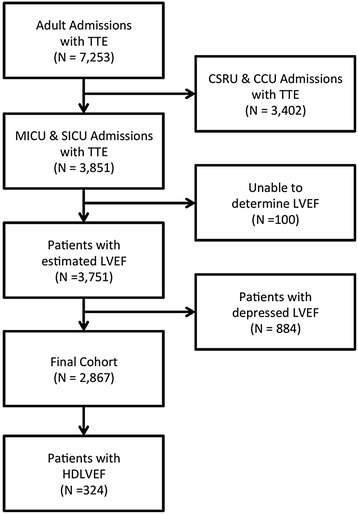
Methods: We conducted a longitudinal, single-center, retrospective cohort study of adult patients who underwent echocardiography during a medical or surgical ICU admission at the Beth Israel Deaconess Medical Center using the Multiparameter Intelligent Monitoring in Intensive Care II database. The final cohort had 2867 patients, of whom 324 had HDLVEF, defined as an ejection fraction >70%. Patients with an ejection fraction <55% were excluded.
Results: Compared with critically ill patients with normal left ventricular ejection fraction, the finding of HDLVEF in critically ill patients was associated with female sex, increased age, and the diagnoses of hypertension and cancer. Patients with HDLVEF had increased 28-day mortality compared with those with normal ejection fraction in multivariate logistic regression analysis adjusted for age, sex, Sequential Organ Failure Assessment score, Elixhauser score for comorbidities, vasopressor use, and mechanical ventilation use (odds ratio 1.38, 95% confidence interval 1.039-1.842, p =0.02).
Conclusions: The presence of HDLVEF portended increased 28-day mortality, and may be helpful as a gravity marker for prognosis in patients admitted to the ICU. Further research is warranted to gain a better understanding of how these patients respond to common interventions in the ICU and to determine if pharmacologic modulation of HDLVEF improves outcomes.
Figures
References
-
- American College of Cardiology. Left ventricular ejection fraction LVEF assessment. http://www.acc.org/tools-and-practice-support/clinical-toolkits/heart-fa.... Accessed 2 August 2015.
Publication types
MeSH terms
Substances
Grants and funding
LinkOut - more resources
Full Text Sources
Other Literature Sources
