


Heparin Saline Versus Normal Saline for Flushing and Locking Peripheral Venous Catheters in Decompensated Liver Cirrhosis Patients: A Randomized Controlled Trial
- PMID: 26252305
- PMCID: PMC4616592
- DOI: 10.1097/MD.0000000000001292
Heparin Saline Versus Normal Saline for Flushing and Locking Peripheral Venous Catheters in Decompensated Liver Cirrhosis Patients: A Randomized Controlled Trial
Abstract
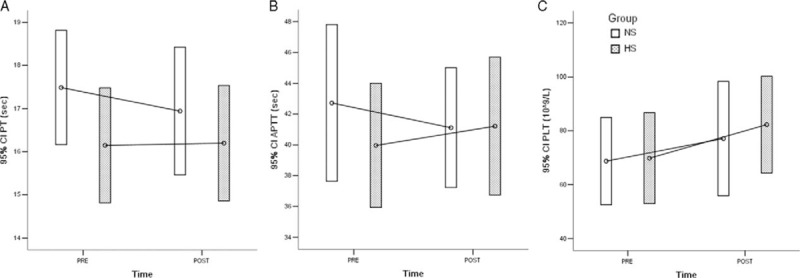
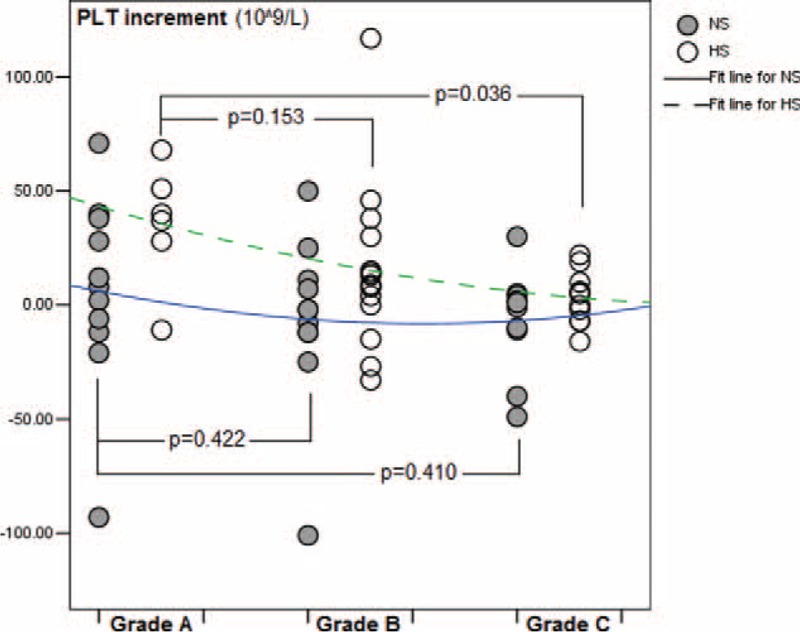
A prospective randomized, controlled, single-blinded trial to compare the effectiveness and safety of heparin saline (HS) to those of normal saline (NS) as flushing and locking solutions for peripheral venous catheter (PVC) in decompensated liver cirrhosis (DLC) patients.Patients with DLC at our institution between April 2012 and March 2013 were enrolled after obtaining informed consent. The patients were randomly allocated into 2 groups: the NS group received preservative-free 0.9% sodium chloride as the flushing and locking solution, while the HS group received HS (50 U/mL). PVC-related events and the duration of PVC maintenance were compared between the 2 groups. Moreover, the preinfusion and postinfusion levels of prothrombin time (PT), activated partial thromboplastin time (APTT), and platelet (PLT) were also compared.A total of 32 and 36 DLC patients in the NS (125 PVCs) and HS (65 PVCs) groups, respectively, were analyzed. Baseline characteristics, including gender, age, Child-Pugh grade, PVC type and administration of anticoagulant, and irritant agents, were comparable between the 2 groups (P > 0.05). The maintenance times of the HS and NS groups were 80.27 ± 26.47 and 84.19 ± 29.32 hours, respectively (P = 0.397). Removal of PVC for abnormal reasons occurred in 30.7% and 22.4% of patients in the HS and NS groups (P = 0.208). The PVC occlusion rates were 6.2% and 5.6% in the HS and NS groups, respectively (OR = 1.11, 95% CI 0.31-3.92). The PT, APTT, and PLT levels were comparable between the 2 groups both before and after infusion (P > 0.05). Incremental analyses showed that Child-Pugh grade C might be a risk factor for the suppression of PLT in the HS group.We consider NS to be as effective as and safer than conventional HS for flushing and locking PVC in decompensated liver cirrhosis patients.
Conflict of interest statement
The authors have no conflicts of interest to disclose.
Figures

References
-
- Fernandez RS, Griffiths RD, Murie P. Peripheral venous catheters: a review of current practices. J Infus Nurs 2003; 26:388–392. - PubMed
-
- Myrianthefs P, Sifaki M, Samara I, et al. The epidemiology of peripheral vein complications: evaluation of the efficiency of differing methods for the maintenance of catheter patency and thrombophlebitis prevention. J Eval Clin Pract 2005; 11:85–89. - PubMed
-
- Wang R, Luo O, He L, et al. Preservative-free 0.9% sodium chloride for flushing and locking peripheral intravenous access device: a prospective controlled trial. J Evid Based Med 2012; 5:205–208. - PubMed
-
- Muslimani AA, Ricaurte B, Daw HA. Immune heparin-induced thrombocytopenia resulting from preceding exposure to heparin catheter flushes. Am J Hematol 2007; 82:652–655. - PubMed
-
- Ranze O, Rakow A, Ranze P, et al. Low-dose danaparoid sodium catheter flushes in an intensive care infant suffering from heparin-induced thrombocytopenia. Pediatr Crit Care Med 2001; 2:175–177. - PubMed
Publication types
MeSH terms
Substances
LinkOut - more resources
Full Text Sources
Medical
Miscellaneous
