


Development of the Parkland-UT Southwestern Colonoscopy Reporting System (CoRS) for evidence-based colon cancer surveillance recommendations
- PMID: 26254481
- PMCID: PMC5009919
- DOI: 10.1093/jamia/ocv081
Development of the Parkland-UT Southwestern Colonoscopy Reporting System (CoRS) for evidence-based colon cancer surveillance recommendations
Abstract
Objective: Through colonoscopy, polyps can be identified and removed to reduce colorectal cancer incidence and mortality. Appropriate use of surveillance colonoscopy, post polypectomy, is a focus of healthcare reform.
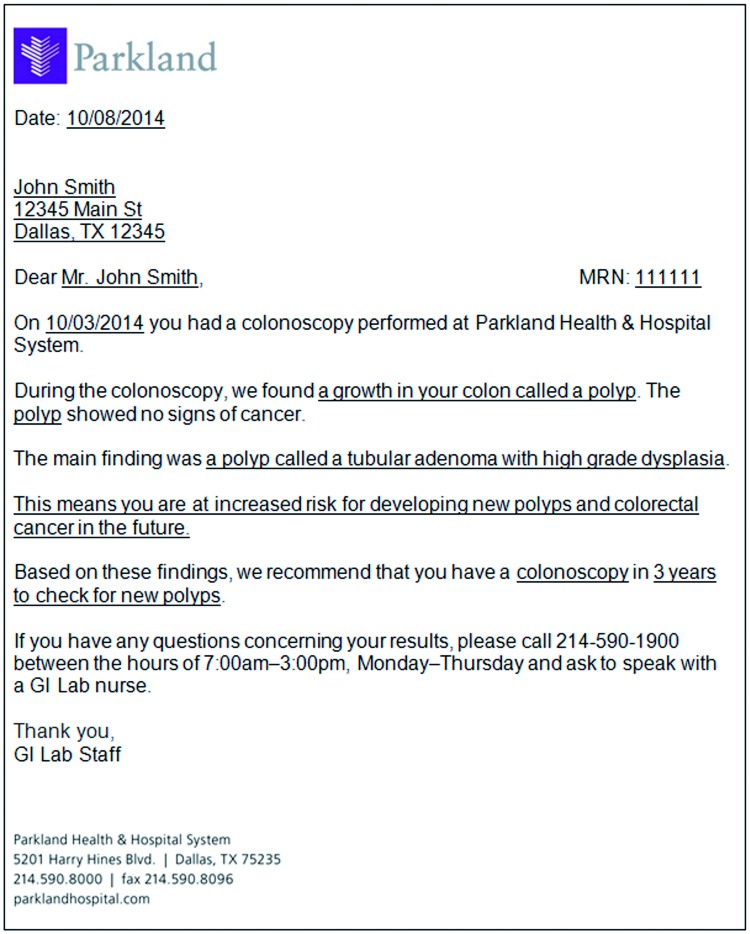
Materials and methods: The authors developed and implemented the first electronic medical record-based colonoscopy reporting system (CoRS) that matches endoscopic findings with guideline-consistent surveillance recommendations and generates tailored results and recommendation letters for patients and providers.
Results: In its first year, CoRS was used in 98.6% of indicated cases. Via a survey, colonoscopists agreed/strongly agreed it is easy to use (83%), provides guideline-based recommendations (89%), improves quality of Spanish letters (94%), they would recommend it for other institutions (78%), and it made their work easier (61%), and led to improved practice (56%).
Discussion: CoRS' widespread adoption and acceptance likely resulted from stakeholder engagement throughout the development and implementation process.
Conclusion: CoRS is well-accepted by clinicians and provides guideline-based recommendations and results communications to patients and providers.
Keywords: colonoscopy; decision support; surveillance; tailored intervention.
© The Author 2015. Published by Oxford University Press on behalf of the American Medical Informatics Association. All rights reserved. For Permissions, please email: journals.permissions@oup.com.
Figures


References
-
- American Cancer Society. Cancer Facts & Figures 2013. Atlanta, GA: American Cancer Society; 2013.
Publication types
MeSH terms
Grants and funding
LinkOut - more resources
Full Text Sources
Other Literature Sources
Medical
