


Viruses and Gram-negative bacilli dominate the etiology of community-acquired pneumonia in Indonesia, a cohort study
- PMID: 26255889
- PMCID: PMC7110756
- DOI: 10.1016/j.ijid.2015.07.023
Viruses and Gram-negative bacilli dominate the etiology of community-acquired pneumonia in Indonesia, a cohort study
Abstract
Objective: Knowledge about the etiology of community-acquired pneumonia (CAP) is essential for adequate management. Presently, few studies about CAP are available from Southeast Asia. This study aimed to investigate the etiology, severity, and outcome of CAP in the most populous Southeast Asia country, Indonesia.
Methods: From October 2007 to April 2009, adult patients admitted with CAP to two hospitals in Semarang, Indonesia, were included to detect the etiology of CAP using a full range of diagnostic methods. The severity of disease was classified according to the Pneumonia Severity Index (PSI). The outcome was assessed as 30-day mortality.
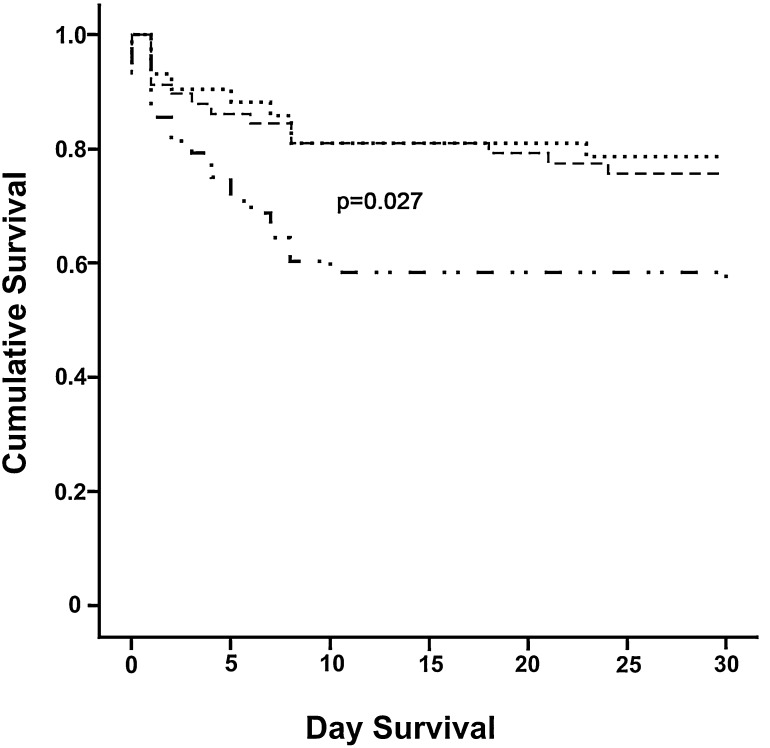
Results: In total, 148 consecutive patients with CAP were included. Influenza virus (18%), Klebsiella pneumoniae (14%), and Streptococcus pneumoniae (13%) were the most common agents identified. Other Gram-negative bacilli, Mycobacterium tuberculosis, Chlamydia pneumoniae each accounted for 5%. The bacteria presented wild type antibiotic susceptibility profiles. Forty-four percent of subjects were high-risk patients (PSI class IV-V). The mortality rate (30%) was significantly associated with disease severity score (P<0.001), and with failure to establish an etiological diagnosis (P=0.027). No associations were found between etiology and underlying diseases, PSI class, nor mortality.
Conclusions: Viruses and Gram-negative bacilli are dominant causes of CAP in this region, more so than S. pneumoniae. Most of the bacteria have wild type susceptibility to antimicrobial agents. Patients with severe disease and those with unknown etiology have a higher mortality risk.
Keywords: Asia; Community-aquired pneumonia; Etiology; Gram-negative bacilli; Tuberculosis; Virus.
Copyright © 2015 The Authors. Published by Elsevier Ltd.. All rights reserved.
Figures
References
-
- Charles P.G.P., Whitby M., Fuller A.J., Stirling R., Wright A.A., Korman T.M. The etiology of community-acquired pneumonia in Australia: Why penicillin plus doxycycline or a macrolide is the most appropriate therapy. Clin Infect Dis. 2008;46:1513–1521. - PubMed
-
- Hara K., Yahara K., Gotoh K., Nakazono Y., Kashiwagi T., Imamura Y. Clinical study concerning the relationship between community-acquired pneumonia and viral infection in northern Thailand. Intern Med. 2011;50:991–998. - PubMed
-
- Mustafa M.I.A., Al-Marzooq F., How S.H., Kuan Y.C., Ng T.H. The use of multiplex real-time PCR improves the detection of the bacterial etiology of community acquired pneumonia. Tropical Biomedicine. 2011;28:531–544. - PubMed
-
- Song J.-H., Oh W.S., Kang C.-I., Chung D.R., Peck K.R., Ko K.S. Epidemiology and clinical outcomes of community-acquired pneumonia in adult patients in Asian countries: a prospective study by the Asian network for surveillance of resistant pathogens. Intl J Antimicrob Agents. 2008;31:107–114. - PMC - PubMed
-
- Apisarnthanarak A., Puthavathana P., Mundy L.M. Risk factors and outcomes of influenza A (H3N2) pneumonia in an area where avian influenza (H5N1) is endemic. Infect Control Hosp Epidemiol. 2007;28:479–482. - PubMed
Publication types
MeSH terms
LinkOut - more resources
Full Text Sources
Other Literature Sources
Miscellaneous
