The effect of massage therapy on occupational stress of Intensive Care Unit nurses
- PMID: 26257809
- PMCID: PMC4525352
- DOI: 10.4103/1735-9066.161001
The effect of massage therapy on occupational stress of Intensive Care Unit nurses
Abstract
Background: One of the main causes of stress in the lives of people is their jobs. Occupational stress is causing a wide range of significant issues in health and community services. Nursing is the most stressful profession in the health services. Massage therapy is one way of coping with stress. This study was conducted to determine the effect of massage therapy on stress in nurses.
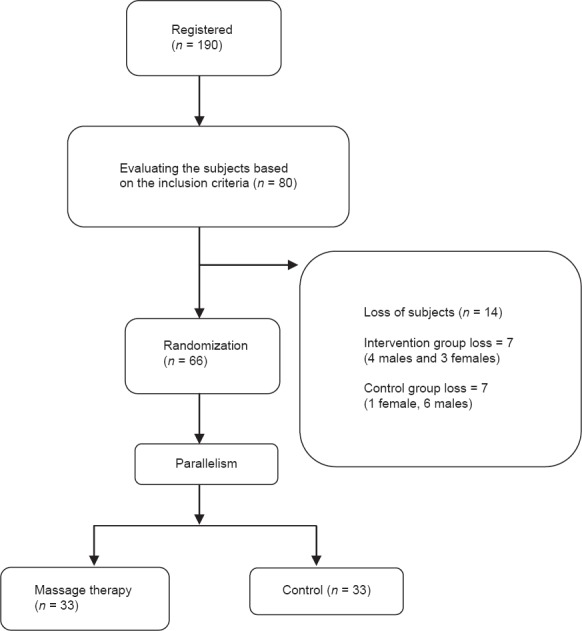
Materials and methods: This study was a clinical trial on 66 male and female nurses working in intensive care units (dialysis, ICU, and CCU) of Isfahan University of Medical Sciences, Iran, in 2013. Participants were selected according to the aims and inclusion criteria of the study. Then, they were randomly divided into experimental and control groups. The Occupational Stress Inventory (OSI) (Osipow and Spokane, 1987) was completed by participants of the two groups before, immediately after, and 2 weeks after the intervention. General Swedish massage was performed on participants of the experimental group for 25 min in each session, twice a week for 4 weeks. Data were analyzed by descriptive and inferential statistics [Chi-square, t-test, and repeated measures analysis of variance (ANOVA)] using SPSS software.
Results: Results showed that the difference in overall mean occupation stress scores between experimental and control groups 2 weeks after the intervention was significant (P < 0.001).
Conclusions: According to the results, it is recommended that massage, as a valuable noninvasive method, be used for nurses in intensive care units to reduce their stress, promote mental health, and prevent the decrease in quality of nursing work life.
Keywords: Intensive care unit; massage therapy; nursing; occupational stress.
Conflict of interest statement
References
-
- Vali L, Ravangard R. Study of effective factors on nurses job motivation in Kerman University of Medical Sciences teaching hospitals in 2007. Hospital. 2009;8:24–9.
-
- Khaghanizadeh M, Ebadi A, Cirati Nair M, Rahmani M. The study of relationship between job stress and quality of work life of nurses in military hospitals. J Mil Med. 2008;10:175–84.
-
- Kazemi S, Javidi H, Aram M. The Effect of Communication Skills Training on Job related Stress of the Experts. Quarterly J New Approaches Educ Administration. 2011;1:63–79.
-
- Rahmani F, Behshid M, Zamanzadeh V, Rahmani F. Relationship between general health, occupational stress and burnout in critical care nurses of Tabriz teaching hospitals. Iran J Nurs. 2010;23:54–63.
-
- Doppia MA, Estryn-Béhar M, Fry C, Guetarni K, Lieutaud T. Survey Steering Committee SESMAT. Burnout in French doctors: A comparative study among anaesthesiologists and other specialists in French hospitals (SESMAT study)] Ann Fr Anesth Reanim. 2011;30:782–94. - PubMed
LinkOut - more resources
Full Text Sources
Other Literature Sources