


A scalable and operationally simple radical trifluoromethylation
- PMID: 26258541
- PMCID: PMC4533119
- DOI: 10.1038/ncomms8919
A scalable and operationally simple radical trifluoromethylation
Abstract
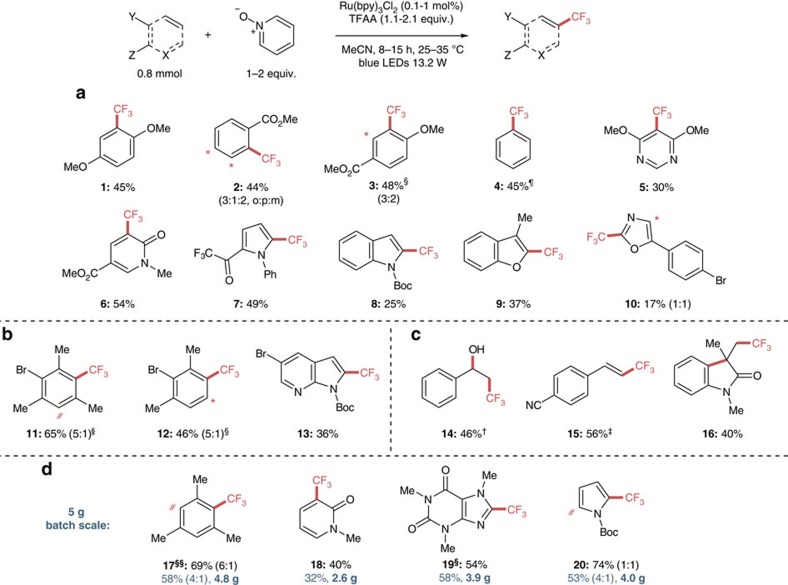
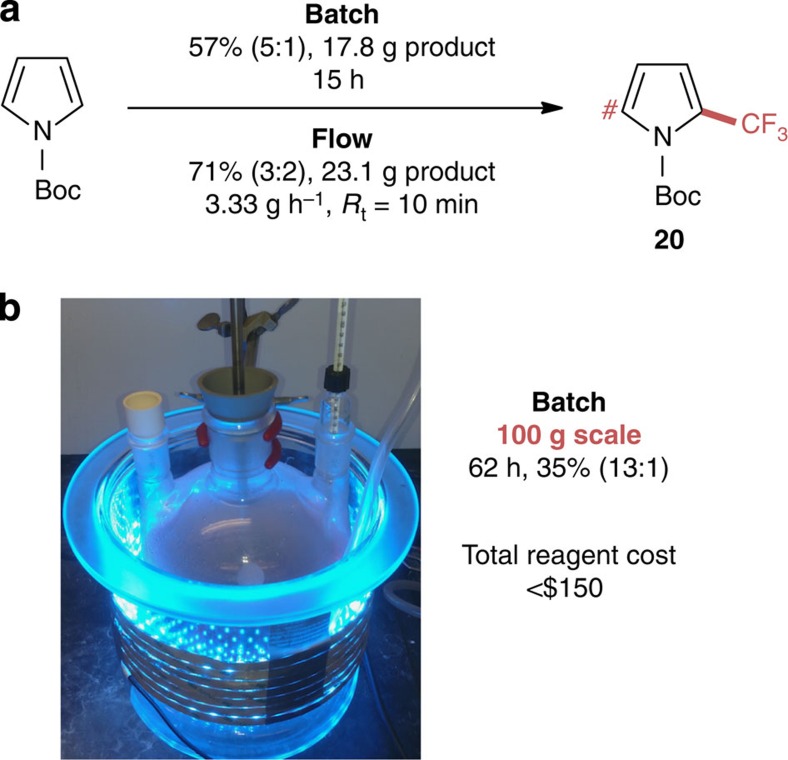
The large number of reagents that have been developed for the synthesis of trifluoromethylated compounds is a testament to the importance of the CF3 group as well as the associated synthetic challenge. Current state-of-the-art reagents for appending the CF3 functionality directly are highly effective; however, their use on preparative scale has minimal precedent because they require multistep synthesis for their preparation, and/or are prohibitively expensive for large-scale application. For a scalable trifluoromethylation methodology, trifluoroacetic acid and its anhydride represent an attractive solution in terms of cost and availability; however, because of the exceedingly high oxidation potential of trifluoroacetate, previous endeavours to use this material as a CF3 source have required the use of highly forcing conditions. Here we report a strategy for the use of trifluoroacetic anhydride for a scalable and operationally simple trifluoromethylation reaction using pyridine N-oxide and photoredox catalysis to affect a facile decarboxylation to the CF3 radical.
Figures


References
-
- Müller K., Faeh C. & Diedrich F. Fluorine in pharmaceuticals: looking beyond intuition. Science 317, 1881–1886 (2007). - PubMed
-
- Hagmann W. K. The many roles for fluorine in medicinal chemistry. J. Med. Chem. 51, 4359–4369 (2008). - PubMed
-
- Alonso C., De Marigorta E. M., Rubiales G. & Palacios F. Carbon trifluoromethylation reactions of hydrocarbon derivatives and heteroarenes. Chem. Rev. 115, 1847–1935 (2015). - PubMed
-
- Liang T., Neumann C. N. & Ritter T. Introduction of fluorine and fluorine-containing functional groups. Angew. Chem. Int. Ed. 52, 8214–8264 (2013). - PubMed
Publication types
MeSH terms
Substances
Grants and funding
LinkOut - more resources
Full Text Sources
Other Literature Sources
