. 2015 Aug;8(2):75-92.
doi: 10.1007/s12307-015-0170-1. Epub 2015 Aug 11.

Anakoinosis: Communicative Reprogramming of Tumor Systems - for Rescuing from Chemorefractory Neoplasia

Affiliations

Anakoinosis: Communicative Reprogramming of Tumor Systems - for Rescuing from Chemorefractory Neoplasia

Christina Hart et al. Cancer Microenviron. 2015 Aug.

Abstract

Disruptive technologies, such as communicative reprogramming (anakoinosis) with cellular therapies in situ for treating refractory metastatic cancer allow patient care to accelerate along a totally new trajectory and highlight what may well become the next sea change in the care of patients with many types of advanced neoplasia. Cellular therapy in situ consisted of repurposed drugs, pioglitazone plus all-trans retinoic acid or dexamethasone or interferon-alpha (dual transcriptional modulation) combined with metronomic low-dose chemotherapy or low-dose 5-azacytidine, plus/minus classic targeted therapy. The novel therapeutic tools for specifically designing communication processes within tumor diseases focus on redirecting (1) rationalizations of cancer hallmarks (constitution of single cancer hallmarks), (2) modular events, (3) the 'metabolism' of evolutionary processes (the sum of therapeutically and intrinsically inducible evolutionary processes) and (4) the holistic communicative context, which determines validity and denotation of tumor promoting communication lines. Published data on cellular therapies in situ (6 histologic tumor types, 144 patients, age 0.9-83 years) in castration-resistant prostate cancer, pretreated renal clear cell carcinoma, chemorefractory acute myelocytic leukemia, multiple myeloma > second-line, chemorefractory Hodgkin lymphoma or multivisceral Langerhans cell histiocytosis, outline the possibility for treating refractory metastatic cancer with the hope that this type of reprogrammed communication will be scalable with minimal toxicity. Accessibility to anakoinosis is a tumor inherent feature, and cellular therapy in situ addresses extrinsic and intrinsic drug resistance, by redirecting convergent organized communication tools, while been supported by quite different pattern of (molecular-)genetic aberrations.


Figures
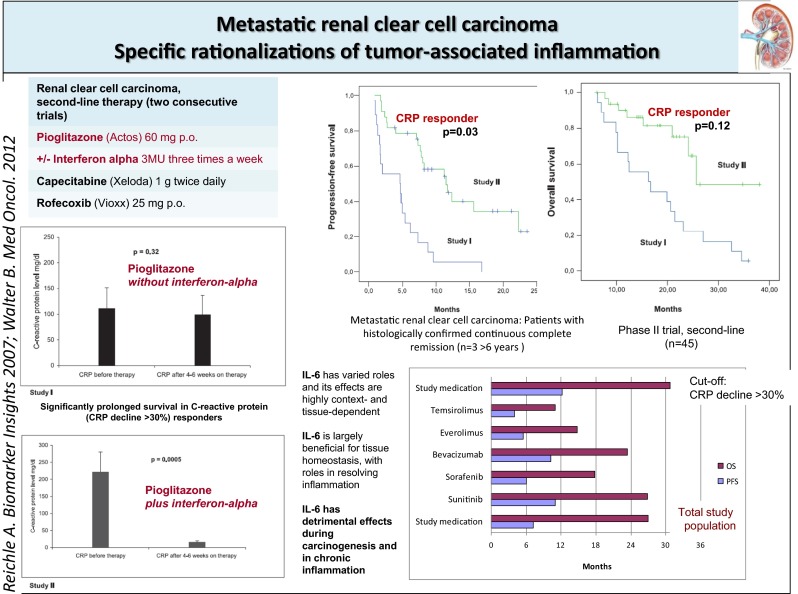
Fig. 1
Fig. 1
The addition of interferon-alpha to pioglitazone in pretreated renal clear cell carcinoma is associated with inflammation control, improved PFS and OS in comparison with a historical control. PFS and OS data compare with those achieved in first-line with standard therapies
Fig. 2
Fig. 2
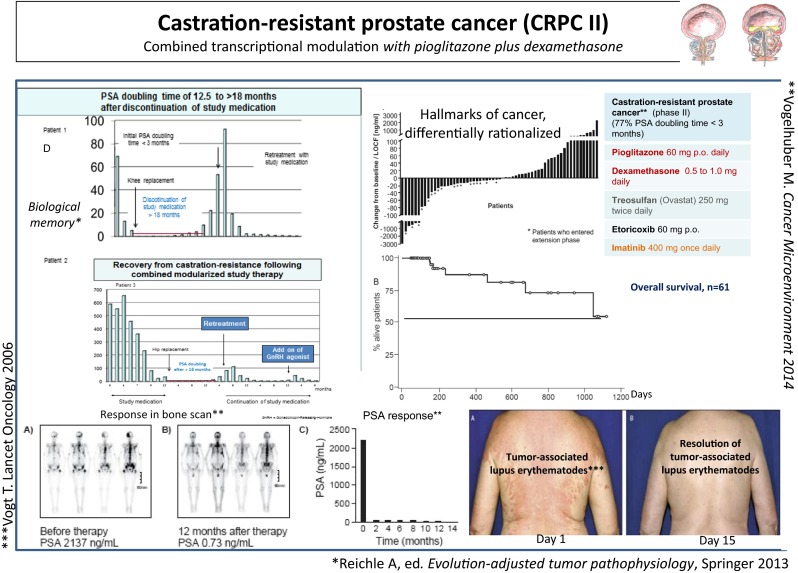
A In the CRPC II trial, median OS has not been achieved after 3 years, although 39 % of the patients did not show objective response (>50 % PSA response) to cellular therapy in situ. B Response in bone scan was observed in six of six patients. C Control of paraneoplastic lupus erythematosus was associated with objective tumor response. D Therapy response was on-going in six patients beyond stop of study medication (5 to 18 months) due to non-oncologic surgery. Following resistance to cellular therapy in situ, 60 % of the studied patients regained responsiveness against gonadotropin-releasing hormone (GnRH) agonists
Fig. 3
Fig. 3
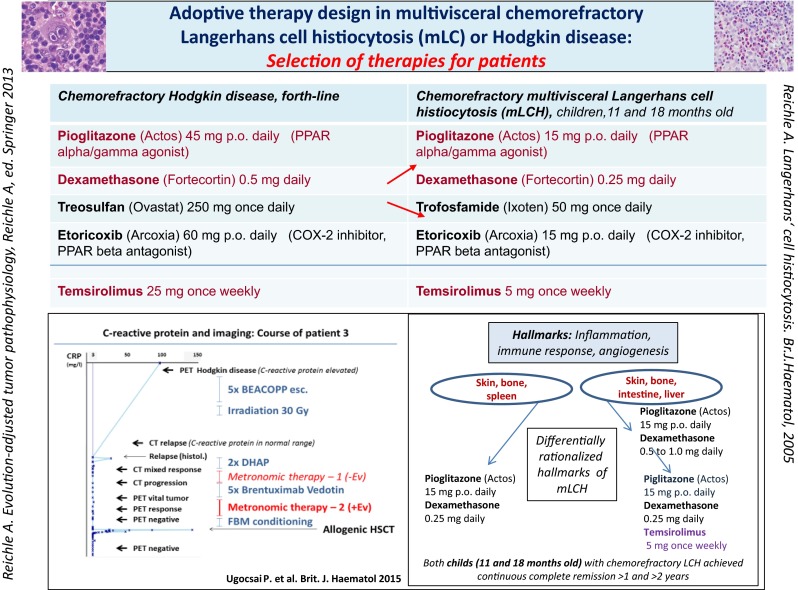
Left site showing C-reactive protein (CRP) follow-up during chemo- and brentuximab-vedotin refractory cHL. The add-on of everolimus to combined transcriptional modulation with pioglitazone and dexamethasone plus metronomic low-dose chemotherapy led to PET negativity and continuous CR following allogeneic blood stem cell transplantation. The right site indicates that chemorefractory mLCH may respond with cCR following cHL-therapy without everolimus. But patient two with chemorefractory mLCH needed the add-on of temsirolimus to achieve cCR
Fig. 4
Fig. 4
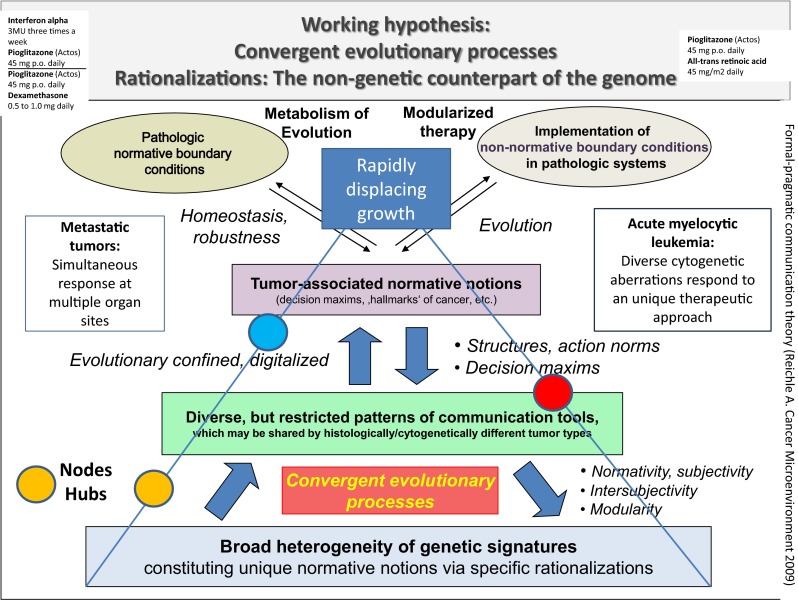
Simultaneous tumor response at multiple metastatic tumor sites and response of cytogenetically heterogeneous AMLs to a unique therapeutic approach indicates that restricted pattern of communication tools, particularly rationalizations of hallmarks of cancer, are uniquely accessible with cellular therapies in situ
Fig. 5
Fig. 5
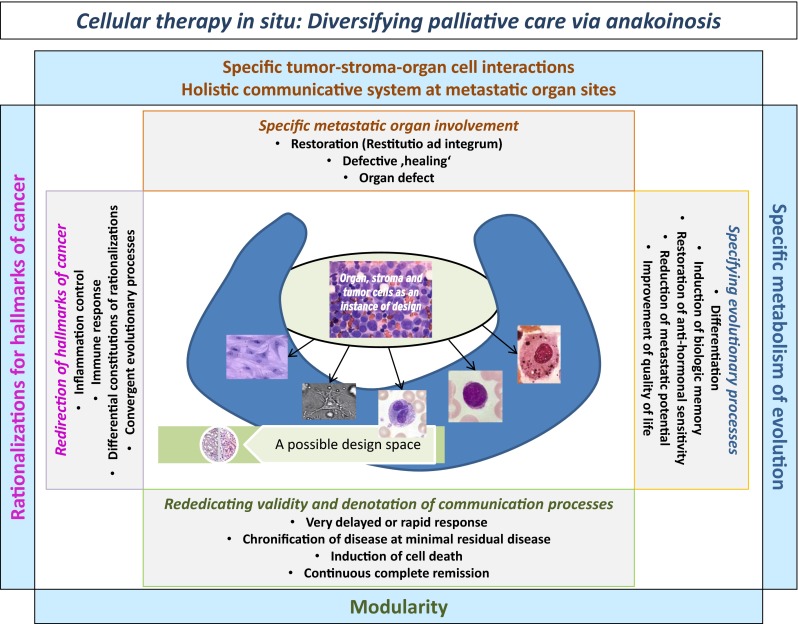
Cellular therapies in situ get access to the tumor’s design space via anakoinosis
Fig. 6
Fig. 6
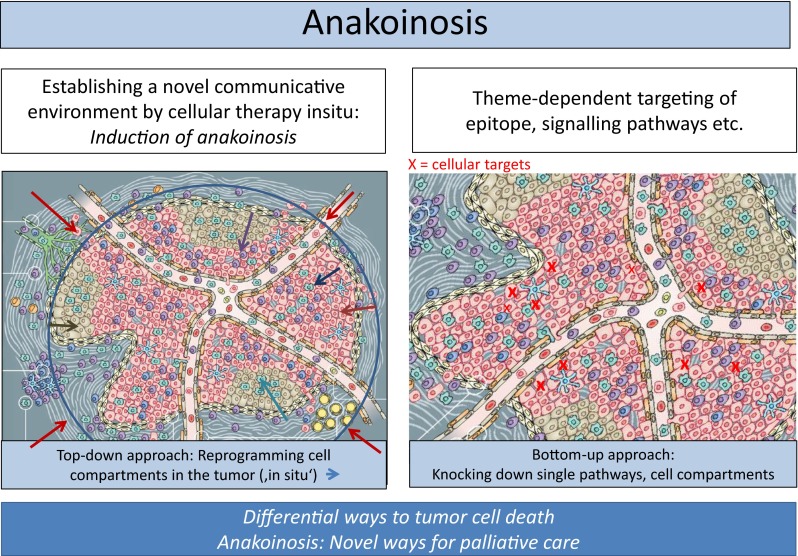
Bottom-up and top-down strategies both redirect and modulate rationalizations constituting hallmarks of cancer, but are using separate techniques, either theme-dependent targets or communicative reprogramming, i.e., anakoinosis
Fig. 7
Fig. 7
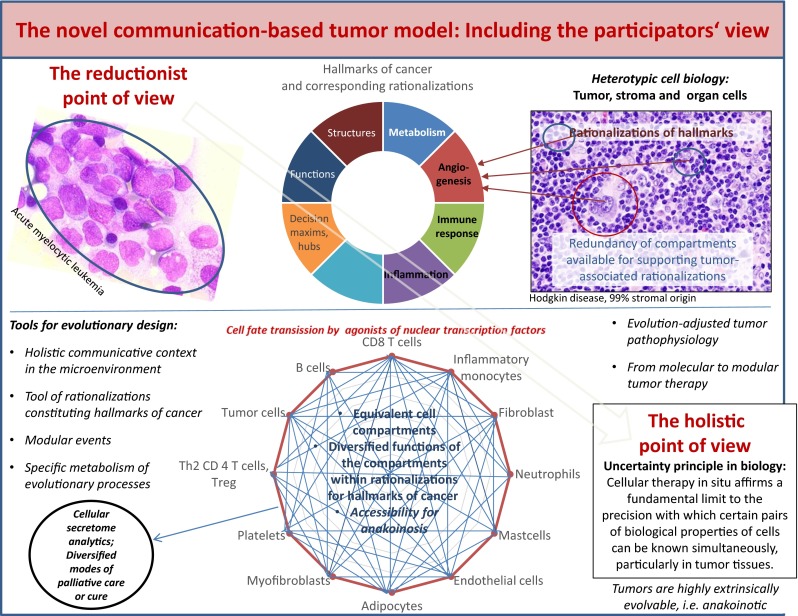
Anakoinosis inducing regimen may rescue refractory malignancies regardless of whether tumors are predominantly consisting of non-tumor cells, like in cHL, or of tumor cells, like in case of AML. Traditionally, reductionist tumor models are focusing separately on tumor and/or stroma cells (‘seed and soil’). Holistic models are aiming at the communicative system, equivalently constituted by tumor and stroma cells. The heterogeneous activity profiles of anakoinosis, even within a single tumor disease, now figures out fundamental limits to the precision with which certain pairs of biological properties in the cell compartments can be predicted simultaneously, particularly in tumor tissues. Comprehending and monitoring cell identities and functions during various systems stages of tumors will be of major interest in future for establishing anakoinosis and should stimulate intensified research in the field of cellular secretome analytics in blood serum or plasma

References

    1. Paterlini-Bréchot P. About seed and soil. Cancer Microenviron. 2014;7:91–93. doi: 10.1007/s12307-014-0163-5. - DOI - PMC - PubMed
    1. Remon J, Majem M. EGFR mutation heterogeneity and mixed response to EGFR tyrosine kinase inhibitors of non-small cell lung cancer: a clue to overcoming resistance. Trans Lung Cancer Res. 2013;2:445–448. - PMC - PubMed
    1. Imielinski M, Berger AH, Hammerman PS, et al. Mapping the hallmarks of lung adenocarcinoma with massively parallel sequencing. Cell. 2012;150:1107–1120. doi: 10.1016/j.cell.2012.08.029. - DOI - PMC - PubMed
    1. Faber K, Bullinger L, Ragu C, et al. CDX2-driven leukemogenesis involves KLF4 repression and deregulated PPARγ signaling. J Clin Invest. 2013;123:299–314. doi: 10.1172/JCI64745. - DOI - PMC - PubMed
    1. Hafner C, Toll A, Gantner S, et al. Keratinocytic epidermal nevi are associated with mosaic RAS mutations. J Med Genet. 2012;49:249–253. doi: 10.1136/jmedgenet-2011-100637. - DOI - PubMed

LinkOut - more resources