


Candida parapsilosis Resistance to Fluconazole: Molecular Mechanisms and In Vivo Impact in Infected Galleria mellonella Larvae
- PMID: 26259795
- PMCID: PMC4576033
- DOI: 10.1128/AAC.01177-15
Candida parapsilosis Resistance to Fluconazole: Molecular Mechanisms and In Vivo Impact in Infected Galleria mellonella Larvae
Abstract
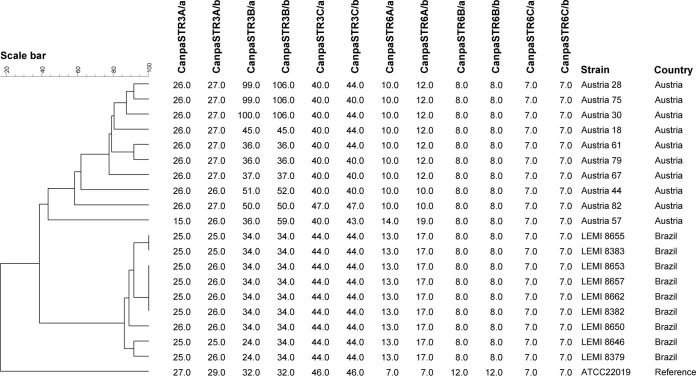
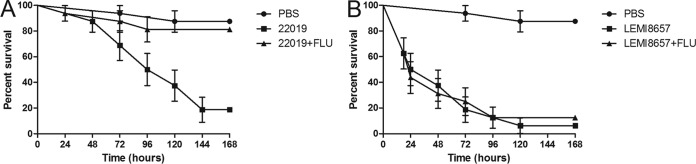
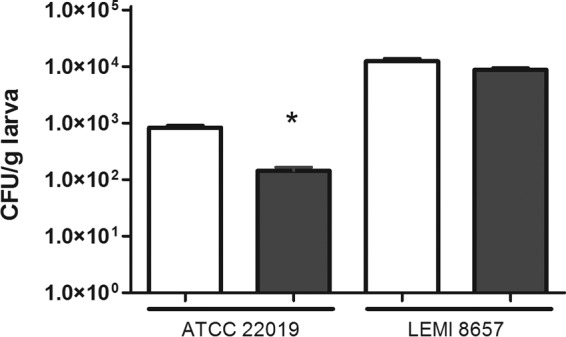
Candida parapsilosis is the main non-albicans Candida species isolated from patients in Latin America. Mutations in the ERG11 gene and overexpression of membrane transporter proteins have been linked to fluconazole resistance. The aim of this study was to evaluate the molecular mechanisms in fluconazole-resistant strains of C. parapsilosis isolated from critically ill patients. The identities of the nine collected C. parapsilosis isolates at the species level were confirmed through molecular identification with a TaqMan qPCR assay. The clonal origin of the strains was checked by microsatellite typing. The Galleria mellonella infection model was used to confirm in vitro resistance. We assessed the presence of ERG11 mutations, as well as the expression of ERG11 and two additional genes that contribute to antifungal resistance (CDR1 and MDR1), by using real-time quantitative PCR. All of the C. parapsilosis (sensu stricto) isolates tested exhibited fluconazole MICs between 8 and 16 μg/ml. The in vitro data were confirmed by the failure of fluconazole in the treatment of G. mellonella infected with fluconazole-resistant strains of C. parapsilosis. Sequencing of the ERG11 gene revealed a common mutation leading to a Y132F amino acid substitution in all of the isolates, a finding consistent with their clonal origin. After fluconazole exposure, overexpression was noted for ERG11, CDR1, and MDR1 in 9/9, 9/9, and 2/9 strains, respectively. We demonstrated that a combination of molecular mechanisms, including the presence of point mutations in the ERG11 gene, overexpression of ERG11, and genes encoding efflux pumps, are involved in fluconazole resistance in C. parapsilosis.
Copyright © 2015, American Society for Microbiology. All Rights Reserved.
Figures
References
-
- Almirante B, Rodriguez D, Park BJ, Cuenca-Estrella M, Planes AM, Almela M, Mensa J, Sanchez F, Ayats J, Gimenez M, Saballs P, Fridkin SK, Morgan J, Rodriguez-Tudela JL, Warnock DW, Pahissa A, Barcelona Candidemia Project Study Group. 2005. Epidemiology and predictors of mortality in cases of Candida bloodstream infection: results from population-based surveillance, Barcelona, Spain, from 2002 to 2003. J Clin Microbiol 43:1829–1835. doi: 10.1128/JCM.43.4.1829-1835.2005. - DOI - PMC - PubMed
Publication types
MeSH terms
Substances
LinkOut - more resources
Full Text Sources
