


An unusual case of duodenal perforation caused by a blister pack: A case report and literature review
- PMID: 26263453
- PMCID: PMC4573598
- DOI: 10.1016/j.ijscr.2015.07.013
An unusual case of duodenal perforation caused by a blister pack: A case report and literature review
Abstract
Introduction: Ingestion of foreign bodies is a relatively common clinical problem. Blister packs have been known to be a causative agent of gastrointestinal perforation. We report a rare case of duodenal perforation caused by a blister pack, which was complicated by retroperitoneal abscess and having a poor outcome.
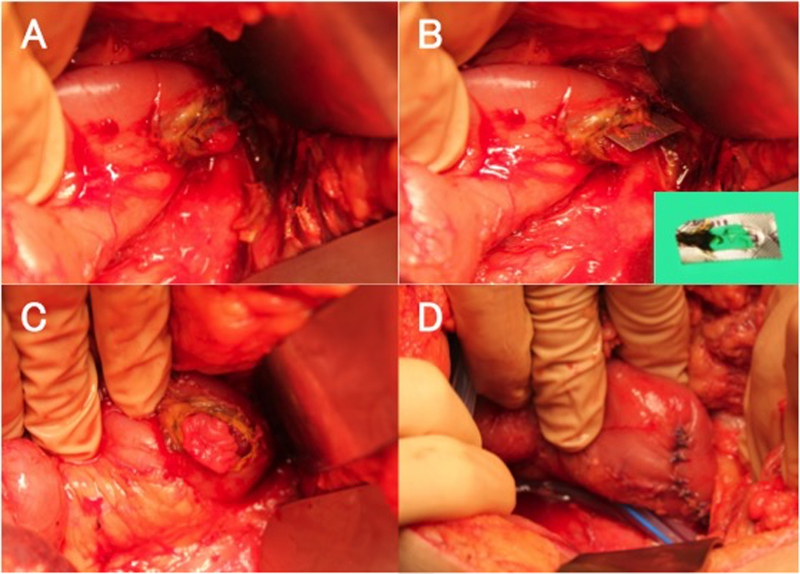
Presentation of case: A 72 year-old man with a history of dementia presented to the emergency department with a 2-day history of backache. Upon radiological findings, perforated peptic ulcer was suspected. However, emergency laparotomy revealed a blister pack protruding from the posterior wall of the third portion of the duodenum. It was complicated by a widespread retroperitoneal abscess. After removal of the foreign body, the perforation was treated with primary suture repair and an omental patch. However, the patient died two days after operation due to sepsis.
Discussion: According to a literature review, the ileum is the most common site of perforation caused by blister packs. To our knowledge, duodenal perforations have not been documented to date. Curative treatment often involves emergent surgery. However, duodenal perforation in the third portion may lead to retroperitoneal abscess, which can result in severe sepsis and have a poor outcome. As there is no consensus about an ideal surgical approach, retroperitoneal abscess is one of the clinical challenges for surgeons. Even with prompt management, duodenal perforation may become fatal.
Conclusion: Unnoticed ingestion of blister packs can cause duodenal perforation. Although prompt management is necessary, duodenal perforation, especially in the third portion, may be potentially fatal.
Keywords: Blister pack; Duodenal perforation; Foreign body; Retroperitoneum abscess.
Copyright © 2015 The Authors. Published by Elsevier Ltd.. All rights reserved.
Figures


References
-
- Goh B.K., Chow P.K., Quah H.M., Ong H.S., Eu K.W., Ooi L.L. Perforation of the gastrointestinal tract secondary to ingestion of foreign bodies. World J. Surg. 2006;30:372–377. - PubMed
-
- Coulier B., Rubay R., Van den Broeck S., Azar A.R., Maldague P., Mailleux P. Perforation of the gastrointestinal tract caused by inadvertent ingestion of blister pill packs: report of two cases diagnosed by MDCT with emphasis on maximal intensity and volume rendering reformations. Abdom. Imaging. 2014;39:685–693. - PubMed
-
- Crowley L.V., Bretzke M.L. Bowel perforation from ingested unit dose blister-pak. Am. J. Gastroenterol. 1988;83:1011–1012. - PubMed
-
- Sato H., Endo T., Tajima K., Sanada Y. A rare case of perineal pain: intestinal perforation caused by a press-through package. Anesth. Analg. 1992;75:456–457. - PubMed
LinkOut - more resources
Full Text Sources
Other Literature Sources
Research Materials
