A 1,000-Year-Old Antimicrobial Remedy with Antistaphylococcal Activity
- PMID: 26265721
- PMCID: PMC4542191
- DOI: 10.1128/mBio.01129-15
A 1,000-Year-Old Antimicrobial Remedy with Antistaphylococcal Activity
Abstract
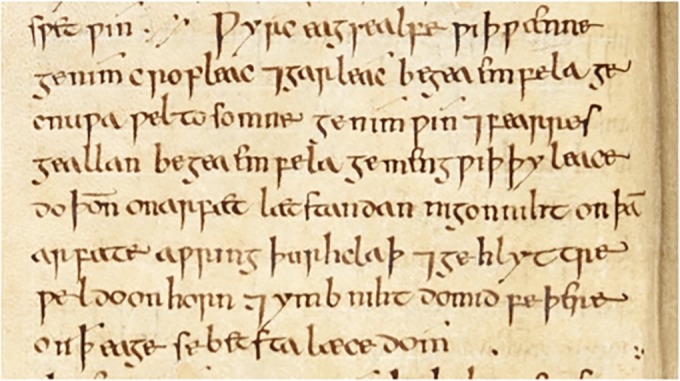
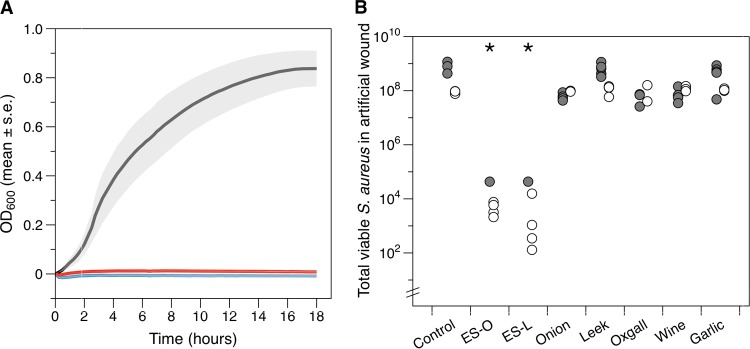
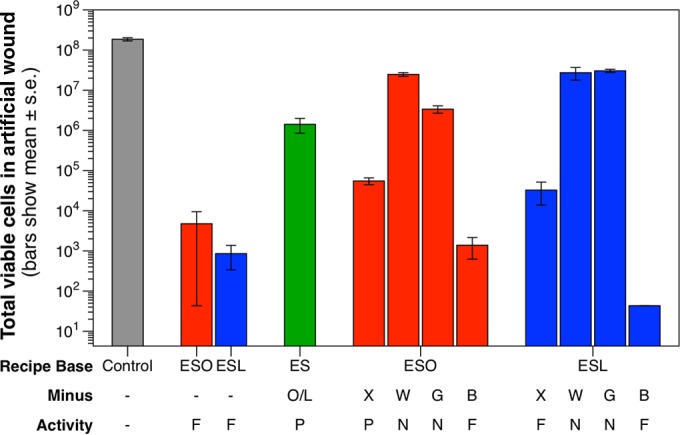
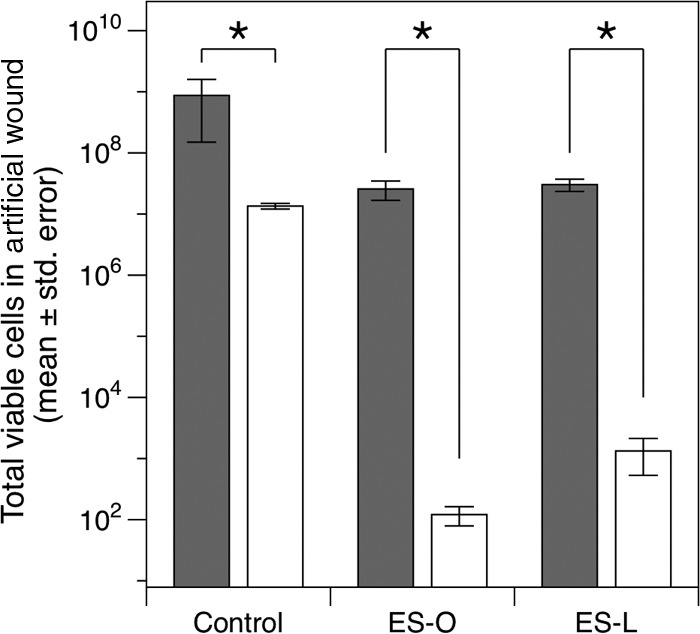
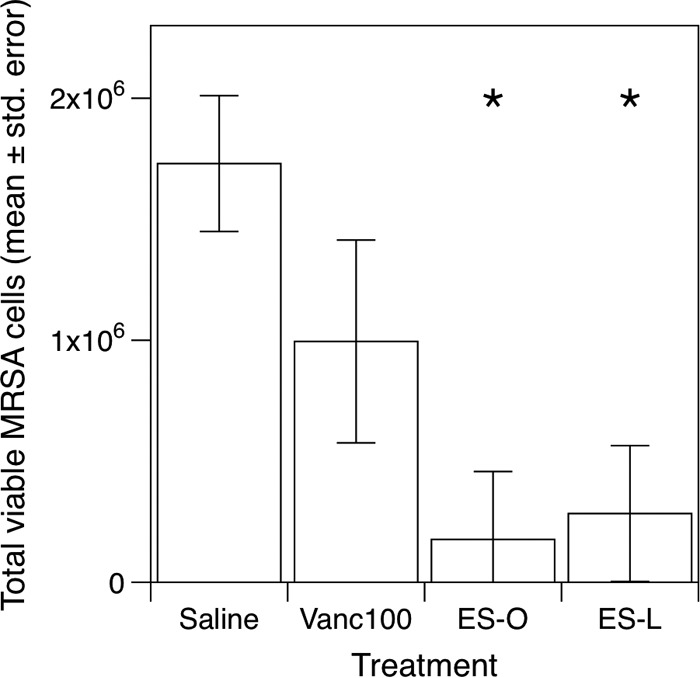
Plant-derived compounds and other natural substances are a rich potential source of compounds that kill or attenuate pathogens that are resistant to current antibiotics. Medieval societies used a range of these natural substances to treat conditions clearly recognizable to the modern eye as microbial infections, and there has been much debate over the likely efficacy of these treatments. Our interdisciplinary team, comprising researchers from both sciences and humanities, identified and reconstructed a potential remedy for Staphylococcus aureus infection from a 10th century Anglo-Saxon leechbook. The remedy repeatedly killed established S. aureus biofilms in an in vitro model of soft tissue infection and killed methicillin-resistant S. aureus (MRSA) in a mouse chronic wound model. While the remedy contained several ingredients that are individually known to have some antibacterial activity, full efficacy required the combined action of several ingredients, highlighting the scholarship of premodern doctors and the potential of ancient texts as a source of new antimicrobial agents.
Importance: While the antibiotic potential of some materials used in historical medicine has been demonstrated, empirical tests of entire remedies are scarce. This is an important omission, because the efficacy of "ancientbiotics" could rely on the combined activity of their various ingredients. This would lead us to underestimate their efficacy and, by extension, the scholarship of premodern doctors. It could also help us to understand why some natural compounds that show antibacterial promise in the laboratory fail to yield positive results in clinical trials. We have reconstructed a 1,000-year-old remedy which kills the bacteria it was designed to treat and have shown that this activity relies on the combined activity of several antimicrobial ingredients. Our results highlight (i) the scholarship and rational methodology of premodern medical professionals and (ii) the untapped potential of premodern remedies for yielding novel therapeutics at a time when new antibiotics are desperately needed.
Copyright © 2015 Harrison et al.
Figures
References
-
- Review on Antimicrobial Resistance 2014. Antimicrobial resistance: tackling a crisis for the health and wealth of nations. http://amr-review.org.
-
- Bjarnsholt T, Jensen PO, Rasmussen TB, Christophersen L, Calum H, Hentzer M, Hougen HP, Rygaard J, Moser C, Eberl L, Høiby N, Givskov M. 2005. Garlic blocks quorum sensing and promotes rapid clearing of pulmonary Pseudomonas aeruginosa infections. Microbiology 151:3873–3880. doi:10.1099/mic.0.27955-0. - DOI - PubMed
-
- Lanzotti V, Bonanomi G, Scala F. 2013. What makes Allium species effective against pathogenic microbes? Phytochem Rev 12:751–772. doi:10.1007/s11101-013-9295-3. - DOI
-
- Jakobsen TH, Van Gennip M, Phipps RK, Shanmugham MS, Christensen LD, Alhede M, Skindersoe ME, Rasmussen TB, Friedrich K, Uthe F, Jensen PØ, Moser C, Nielsen KF, Eberl L, Larsen TO, Tanner D, Høiby N, Bjarnsholt T, Givskov M. 2012. Ajoene, a sulfur-rich molecule from garlic, inhibits genes controlled by quorum sensing. Antimicrob Agents Chemother 56:2314–2325. doi:10.1128/AAC.05919-11. - DOI - PMC - PubMed
Publication types
MeSH terms
Substances
Associated data
LinkOut - more resources
Full Text Sources
Other Literature Sources
Medical
Molecular Biology Databases