


Multimorbidity and the inequalities of global ageing: a cross-sectional study of 28 countries using the World Health Surveys
- PMID: 26268536
- PMCID: PMC4534141
- DOI: 10.1186/s12889-015-2008-7
Multimorbidity and the inequalities of global ageing: a cross-sectional study of 28 countries using the World Health Surveys
Abstract
Background: Multimorbidity defined as the "the coexistence of two or more chronic diseases" in one individual, is increasing in prevalence globally. The aim of this study is to compare the prevalence of multimorbidity across low and middle-income countries (LMICs), and to investigate patterns by age and education, as a proxy for socio-economic status (SES).
Methods: Chronic disease data from 28 countries of the World Health Survey (2003) were extracted and inter-country socio-economic differences were examined by gross domestic product (GDP). Regression analyses were applied to examine associations of education with multimorbidity by region adjusted for age and sex distributions.
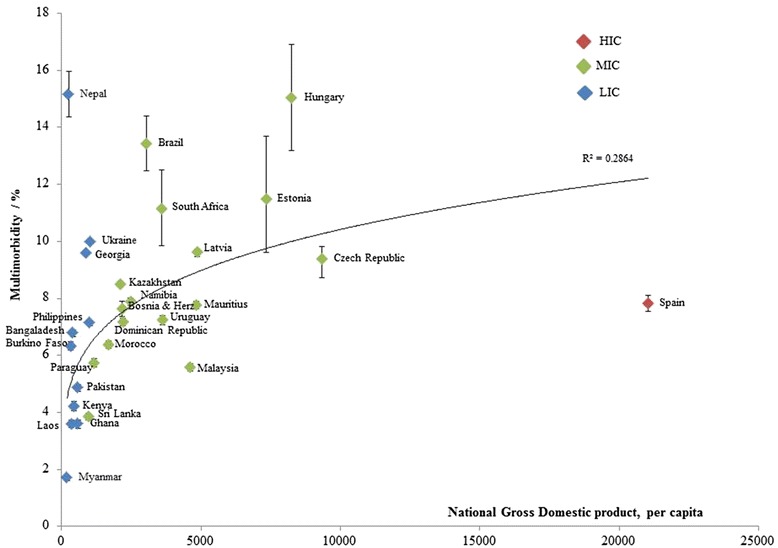
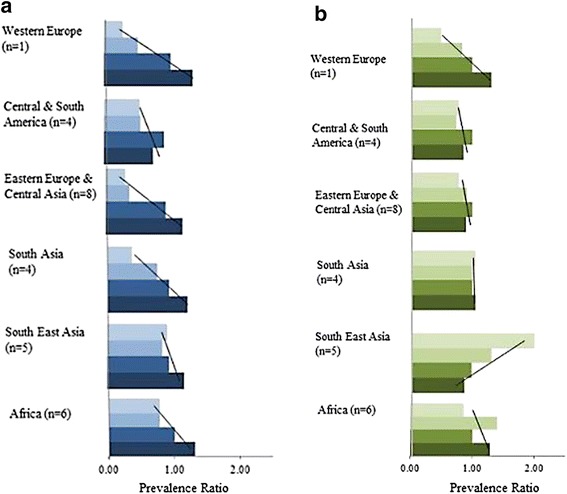
Results: The mean world standardized multimorbidity prevalence for LMICs was 7.8 % (95 % CI, 7.79 % - 7.83 %). In all countries, multimorbidity increased significantly with age. A positive but non-linear relationship was found between country GDP and multimorbidity prevalence. Trend analyses of multimorbidity by education suggest that there are intergenerational differences, with a more inverse education gradient for younger adults compared to older adults. Higher education was significantly associated with a decreased risk of multimorbidity in the all-region analyses.
Conclusions: Multimorbidity is a global phenomenon, not just affecting older adults in HICs. Policy makers worldwide need to address these health inequalities, and support the complex service needs of a growing multimorbid population.
Figures
References
-
- Preparing for an Aging World . The Case for Cross-National Research. Washington DC: The National Academies Press; 2001. - PubMed
-
- Lim SS, Vos T, Flaxman AD, Danaei G, Shibuya K, Adair-Rohani H, et al. A comparative risk assessment of burden of disease and injury attributable to 67 risk factors and risk factor clusters in 21 regions, 1990–2010: a systematic analysis for the Global Burden of Disease Study 2010. The Lancet. 2012;380(9859):2224–60. doi: 10.1016/S0140-6736(12)61766-8. - DOI - PMC - PubMed
Publication types
MeSH terms
LinkOut - more resources
Full Text Sources
Other Literature Sources
Medical
