Review
. 2015 Oct;12(4):807-15.
doi: 10.1007/s13311-015-0373-7.

Early Phase in the Development of Cannabidiol as a Treatment for Addiction: Opioid Relapse Takes Initial Center Stage

Affiliations
Review

Early Phase in the Development of Cannabidiol as a Treatment for Addiction: Opioid Relapse Takes Initial Center Stage

Yasmin L Hurd et al. Neurotherapeutics. 2015 Oct.

Abstract

Multiple cannabinoids derived from the marijuana plant have potential therapeutic benefits but most have not been well investigated, despite the widespread legalization of medical marijuana in the USA and other countries. Therapeutic indications will depend on determinations as to which of the multiple cannabinoids, and other biologically active chemicals that are present in the marijuana plant, can be developed to treat specific symptoms and/or diseases. Such insights are particularly critical for addiction disorders, where different phytocannabinoids appear to induce opposing actions that can confound the development of treatment interventions. Whereas Δ(9)-tetracannabinol has been well documented to be rewarding and to enhance sensitivity to other drugs, cannabidiol (CBD), in contrast, appears to have low reinforcing properties with limited abuse potential and to inhibit drug-seeking behavior. Other considerations such as CBD's anxiolytic properties and minimal adverse side effects also support its potential viability as a treatment option for a variety of symptoms associated with drug addiction. However, significant research is still needed as CBD investigations published to date primarily relate to its effects on opioid drugs, and CBD's efficacy at different phases of the abuse cycle for different classes of addictive substances remain largely understudied. Our paper provides an overview of preclinical animal and human clinical investigations, and presents preliminary clinical data that collectively sets a strong foundation in support of the further exploration of CBD as a therapeutic intervention against opioid relapse. As the legal landscape for medical marijuana unfolds, it is important to distinguish it from "medical CBD" and other specific cannabinoids, that can more appropriately be used to maximize the medicinal potential of the marijuana plant.

Keywords: Cannabis; Craving; Heroin; Human; Rat; THC.


Figures
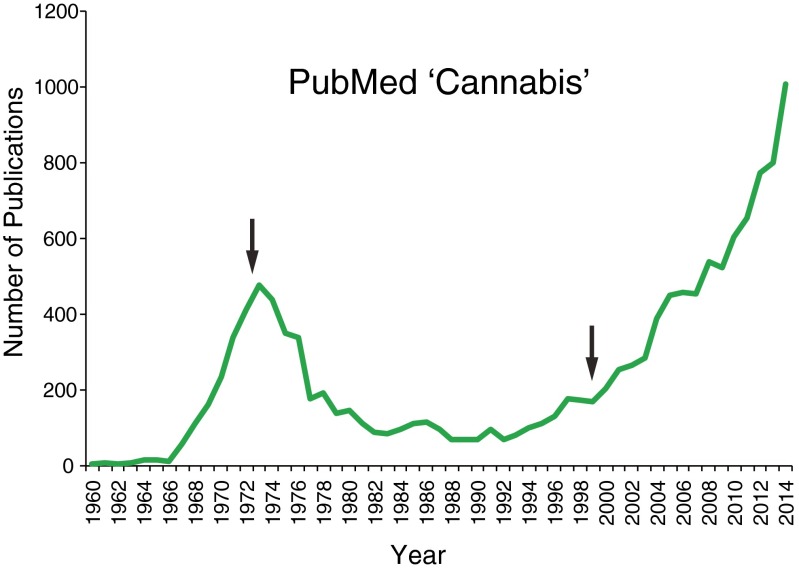
Fig. 1
Fig. 1
The number of publications based on PubMed search for the term “cannabis”. Patterns coincides with governmental policy and societal changes (some denoted by arrows), such as cannabis becoming a Schedule I drug in the USA in 1970, in the 1970s state laws and local regulations begin to ban possession or sale of cannabis, in 1996 California voters passed Proposition 215 that legalized medical cannabis, and in 2000 there were increased attempts for decriminalization and legalized marijuana use around the USA. No other cannabinoid-related PubMed search term showed the same temporal pattern
Fig. 2
Fig. 2
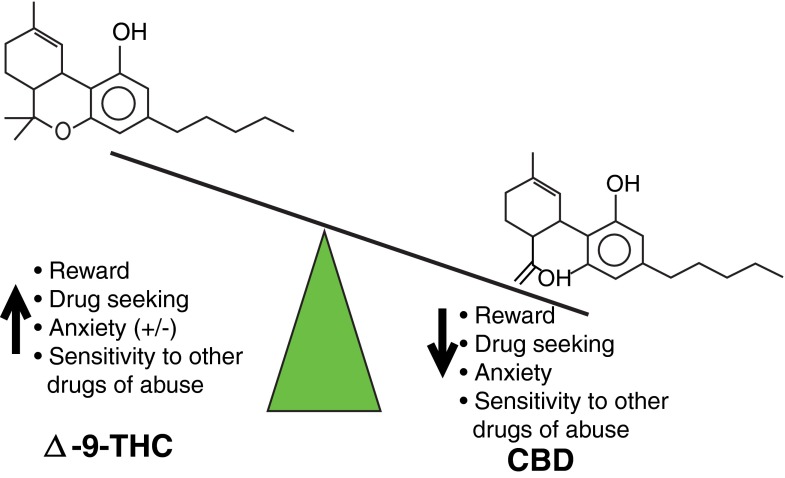
Δ9-tetrahydrocannabinol (THC) and cannabidiol (CBD) have opposing “yin/yang” effects on addiction-related behaviors. In contrast to THC that is rewarding and promotes drug use, CBD has low hedonic property and inhibits drug seeking
Fig. 3
Fig. 3
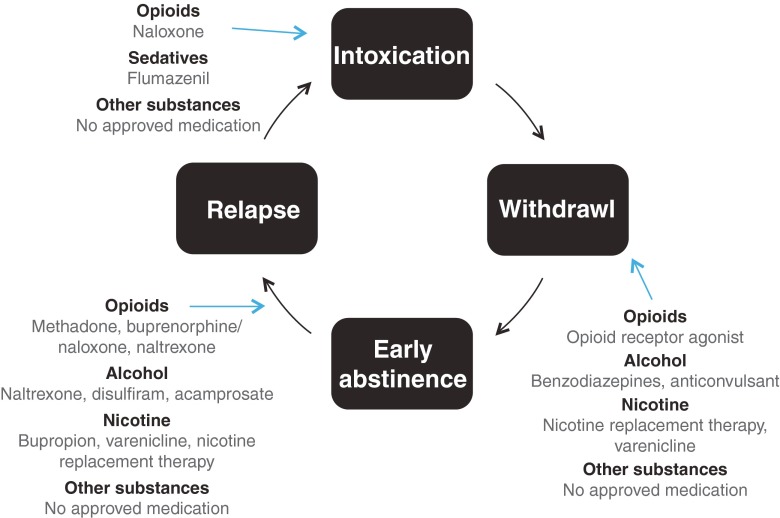
Cycle of addiction and currently available medications for substance use disorders at each stage of the cycle
Fig. 4
Fig. 4
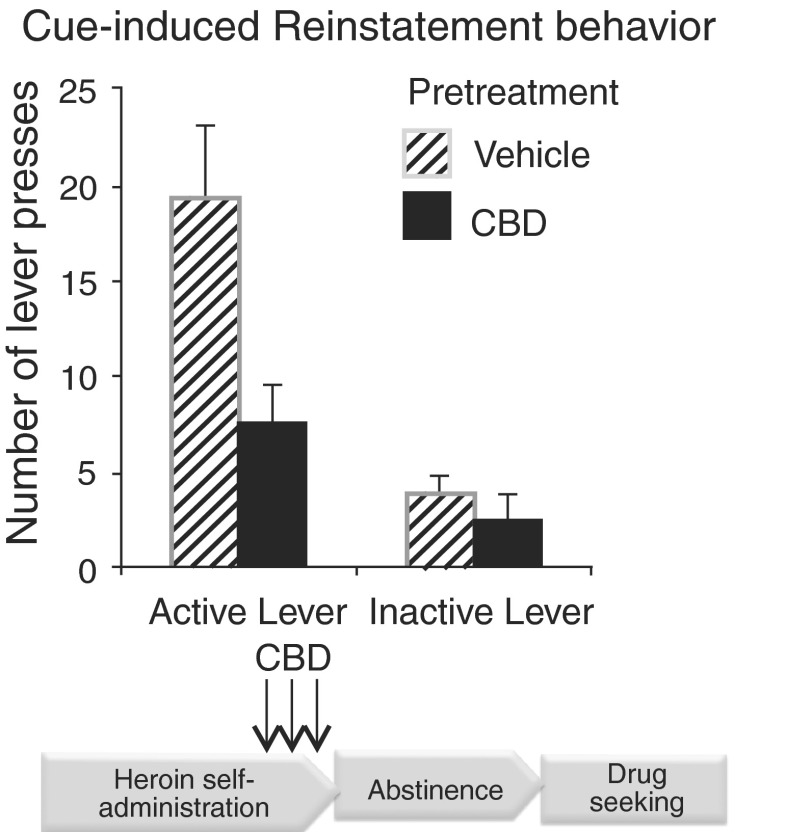
Cannabidiol (CBD) effects on heroin self-administration and cue-induced heroin reinstatement behavior in rats showing CBD reduces heroin reinstatement behavior. Modified from Ren et al. [72]
Fig. 5
Fig. 5
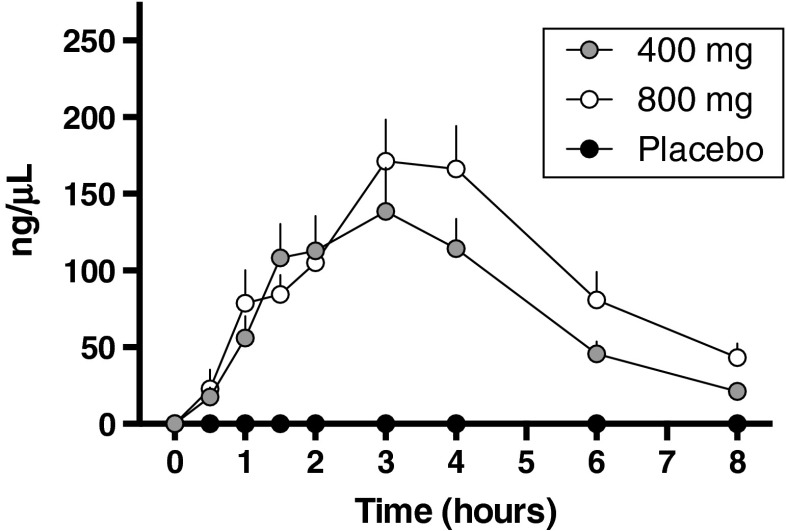
Time course of plasma concentrations of 400 mg and 800 mg cannabidiol and placebo in combination with a potent opioid fentanyl in healthy individuals. Modified from Manini et al. [82]
Fig. 6
Fig. 6
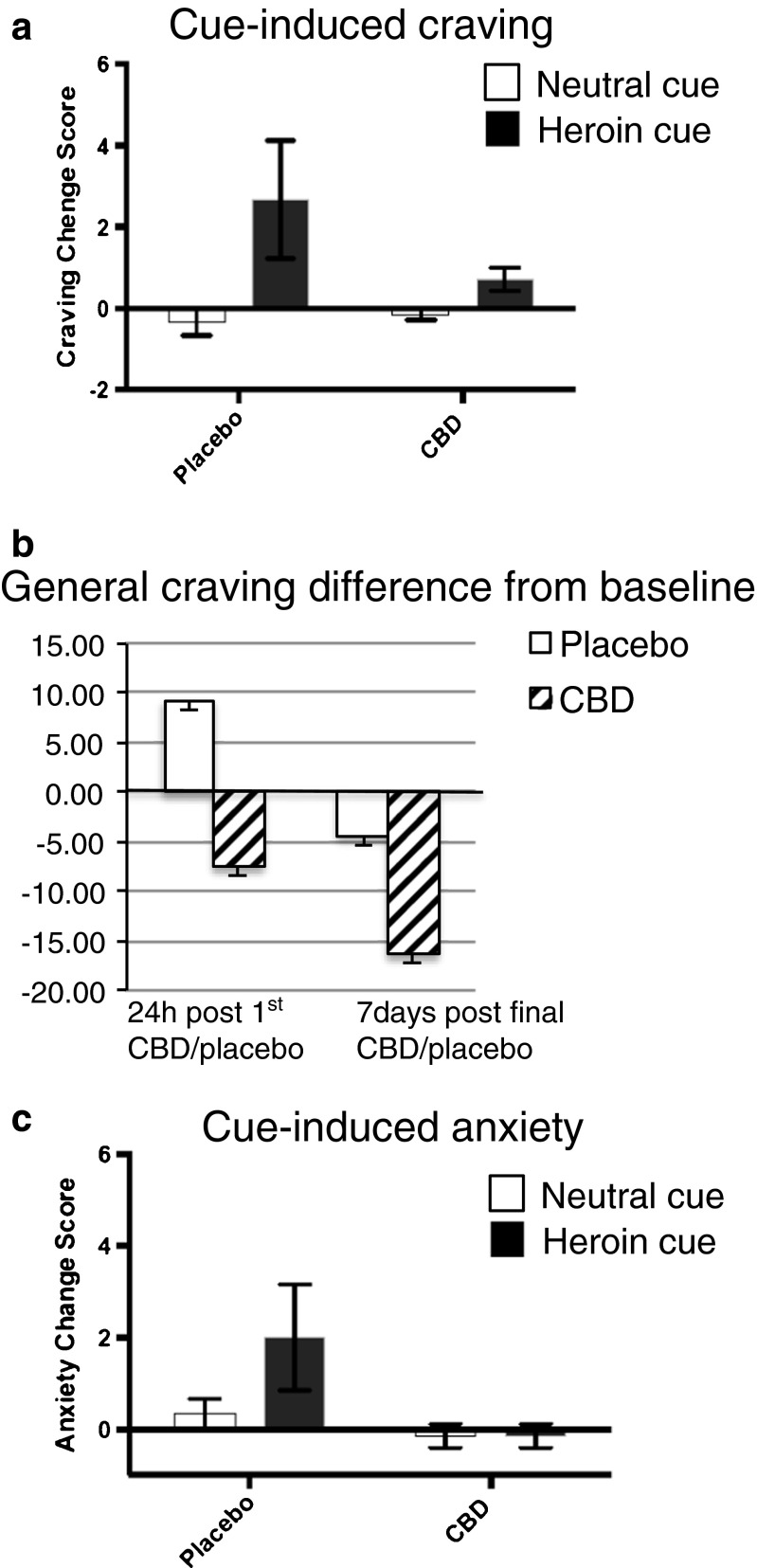
The effect of cannabidiol (CBD) on craving and anxiety in abstinent heroin-dependent subjects. (a) Cue-induced craving (visual analog scale; VAS) induced by heroin video cue was blunted by a single administration of CBD (400 mg or 800 mg combined) in comparison with placebo. Craving calculated as the change scores between pre- and postexposure to neutral or heroin cue videos. (b) General craving (heroin craving questionnaire) tended to decrease 24 h after a single administration of CBD that remained 7 days after 3 daily administrations of CBD in comparison with placebo. Craving calculated as change scores from pre-CBD administration (session 1) score. (c) Cue-induced anxiety induced by heroin cue was blunted 1 h after a single administration of CBD (400 mg or 800 mg combined) in comparison with placebo. Anxiety calculated as the change scores between pre- and postexposure of neutral or heroin cue videos (n = 3–6). Data are mean ± SD

Comment in

  • Can cannabis help ease addiction?
    Nowogrodzki A. Nowogrodzki A. Nature. 2019 Sep;573(7773):S7. doi: 10.1038/d41586-019-02684-4. Nature. 2019. PMID: 31511678 No abstract available.

References

    1. Elsohly MA, Slade D. Chemical constituents of marijuana: the complex mixture of natural cannabinoids. Life Sci. 2005;78:539–548. doi: 10.1016/j.lfs.2005.09.011. - DOI - PubMed
    1. Mechoulam R, Peters M, Murillo-Rodriguez E, Hanus LO. Cannabidiol—recent advances. Chem Biodivers. 2007;4:1678–1692. doi: 10.1002/cbdv.200790147. - DOI - PubMed
    1. Mehmedic Z, Chandra S, Slade D, et al. Potency trends of Δ9-THC and other cannabinoids in confiscated cannabis preparations from 1993 to 2008. J Forensic Sci. 2010;55:1209–1217. doi: 10.1111/j.1556-4029.2010.01441.x. - DOI - PubMed
    1. Cilio MR, Thiele EA, Devinsky O. The case for assessing cannabidiol in epilepsy. Epilepsia. 2014;55:787–790. doi: 10.1111/epi.12635. - DOI - PubMed
    1. Devinsky O, Cilio MR, Cross H, et al. Cannabidiol: pharmacology and potential therapeutic role in epilepsy and other neuropsychiatric disorders. Epilepsia. 2014;55:791–802. doi: 10.1111/epi.12631. - DOI - PMC - PubMed

Publication types