


Validation of potential candidate biomarkers of drug-induced nephrotoxicity and allodynia in medication-overuse headache
- PMID: 26272683
- PMCID: PMC4536253
- DOI: 10.1186/s10194-015-0559-8
Validation of potential candidate biomarkers of drug-induced nephrotoxicity and allodynia in medication-overuse headache
Abstract
Background: Medication-overuse headache (MOH) is a chronic disorder that results from the overuse of analgesics drugs, triptans or other acute headache compounds. Although the exact mechanisms underlying MOH remain still unknown, several studies suggest that it may be associated with development of "central sensitization", which may cause cutaneous allodynia (CA). Furthermore, the epidemiology of drug-induced disorders suggests that medication overuse could lead to nephrotoxicity. The aim of this work was to confirm and validate the results obtained from previous proteomics studies, in which we analyzed the urinary proteome of MOH patients in comparison with healthy non-abusers individuals.
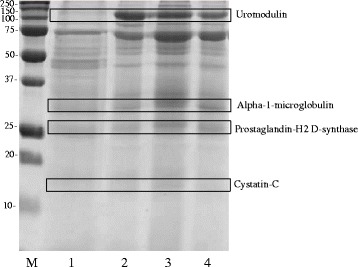
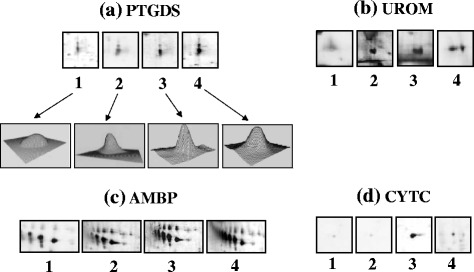
Methods: MOH patients were divided into groups on the basis of the drug abused: triptans, non-steroidal anti-inflammatory drugs (NSAIDs) and mixtures, (mainly containing indomethacin, paracetamol and, in some cases, caffeine). Healthy subjects, with a history of normal renal function, were used as controls. In this study, four proteins that were found differentially expressed in urine, and, on the basis of the literature review, resulted related to kidney diseases, were verified by Western Blot and Enzyme-linked Immunosorbent Assay (ELISA); Prostaglandin-H2 D-synthase (PTGDS), uromodulin (UROM), alpha-1-microglobulin (AMBP) and cystatin-C (CYSC).
Results: Western blot analysis allowed to validate our previous proteomics data, confirming that all MOH patients groups show a significant over-excretion of urinary PTGDS, UROM, AMBP and CYSC (excluding triptans group for this latter), in comparison with controls. Moreover, the expression of PTGDS was further evaluated by ELISA. Also by this assay, a significant increase of PTGDS was observed in all MOH abusers, according to 2-DE and Western blot results.
Conclusions: In this study, we confirmed previous findings concerning urinary proteins alterations in MOH patients, identified and demonstrated the over-expression of PTGDS, UROM, AMBP, and CYSC, particularly in NSAIDs and mixtures abusers. Over-expression of these proteins have been related to renal dysfunction and probably, PTGDS, to the development of CA. The detection and confirmation of this proteins pattern represent a promising tool for a better understanding of potential nephrotoxicity induced by drugs overuse and may enhance awareness related to the MOH-associated risks, even in absence of clinical symptoms.
Figures


References
-
- Dodick D, Silberstein S. Central sensitization theory of migraine: clinical implications. Headache. 2006;46(Suppl 4):S82–S91. - PubMed
Publication types
MeSH terms
Substances
LinkOut - more resources
Full Text Sources
Other Literature Sources
Medical
Miscellaneous
