


A randomized controlled trial of exercise in spinal and bulbar muscular atrophy
- PMID: 26273686
- PMCID: PMC4531056
- DOI: 10.1002/acn3.208
A randomized controlled trial of exercise in spinal and bulbar muscular atrophy
Abstract
Objective: To determine the safety and efficacy of a home-based functional exercise program in spinal and bulbar muscular atrophy (SBMA).
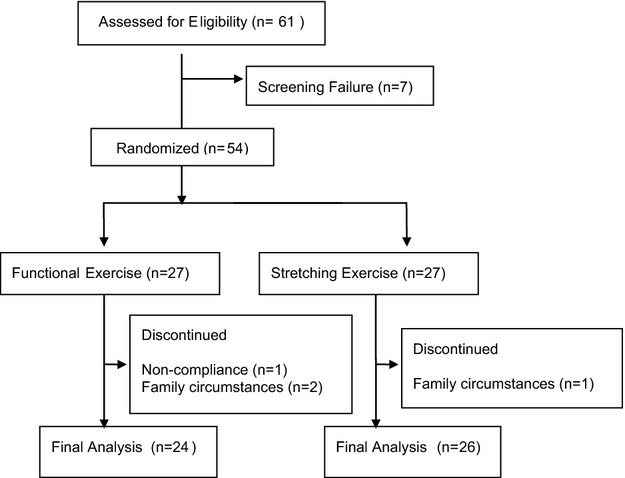
Methods: Subjects were randomly assigned to participate in 12 weeks of either functional exercises (intervention) or a stretching program (control) at the National Institutes of Health in Bethesda, MD. A total of 54 subjects enrolled, and 50 completed the study with 24 in the functional exercise group and 26 in the stretching control group. The primary outcome measure was the Adult Myopathy Assessment Tool (AMAT) total score, and secondary measures included total activity by accelerometry, muscle strength, balance, timed up and go, sit-to-stand test, health-related quality of life, creatine kinase, and insulin-like growth factor-1.
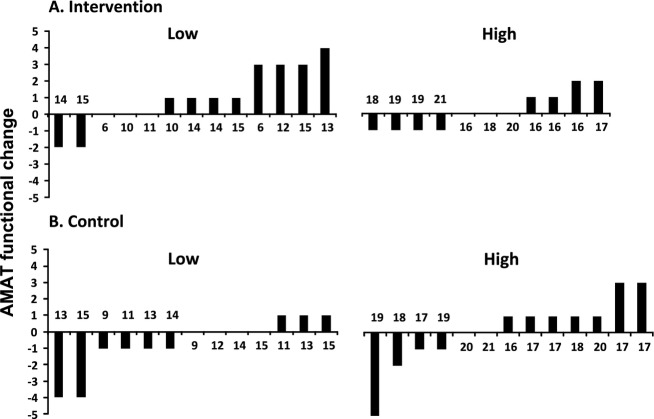
Results: Functional exercise was well tolerated but did not lead to significant group differences in the primary outcome measure or any of the secondary measures. The functional exercise did not produce significantly more adverse events than stretching, and was not perceived to be difficult. To determine whether a subset of the subjects may have benefited, we divided them into high and low functioning based on baseline AMAT scores and performed a post hoc subgroup analysis. Low-functioning individuals receiving the intervention increased AMAT functional subscale scores compared to the control group.
Interpretation: Although these trial results indicate that functional exercise had no significant effect on total AMAT scores or on mobility, strength, balance, and quality of life, post hoc findings indicate that low-functioning men with SBMA may respond better to functional exercises, and this warrants further investigation with appropriate exercise intensity.
Figures
References
-
- Kennedy WR, Alter M, Sung JH. Progressive proximal spinal and bulbar muscular atrophy of late onset. A sex-linked recessive trait. Neurology. 1968;18:671–680. - PubMed
-
- La Spada AR, Wilson EM, Lubahn DB, et al. Androgen receptor gene mutations in X-linked spinal and bulbar muscular atrophy. Nature. 1991;352:77–79. - PubMed
LinkOut - more resources
Full Text Sources
Other Literature Sources
