


Emergency resuscitative thoracotomy performed in European civilian trauma patients with blunt or penetrating injuries: a systematic review
- PMID: 26280486
- PMCID: PMC5124032
- DOI: 10.1007/s00068-015-0559-z
Emergency resuscitative thoracotomy performed in European civilian trauma patients with blunt or penetrating injuries: a systematic review
Abstract
Purpose: Emergency resuscitative thoracotomy (ERT) is a lifesaving procedure in selected patients. Indications are still being debated, but outcome in blunt trauma is believed to be poor. Recent reports from European populations, where blunt trauma predominates, have suggested favorable outcome also in blunt trauma. Our aim was to identify all European studies reported over the last decade and compare reported outcomes to existing knowledge.
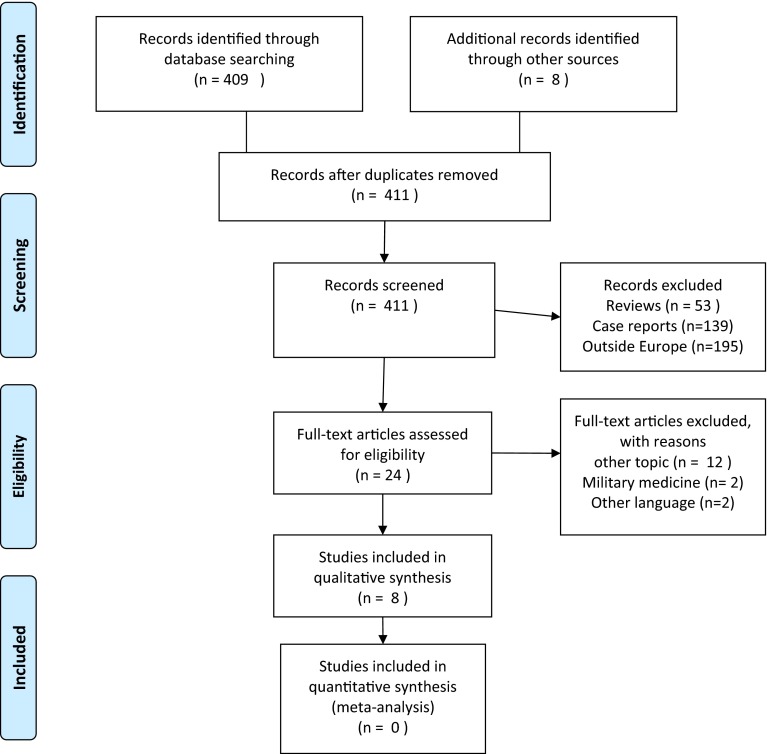
Methods: We performed a systematic literature search according to PRISMA guidelines (January 1st, 2004 to December 31st, 2014). The "grey literature" was included by searching Google Scholar. Qualitative comparison of studies and outcomes was done.
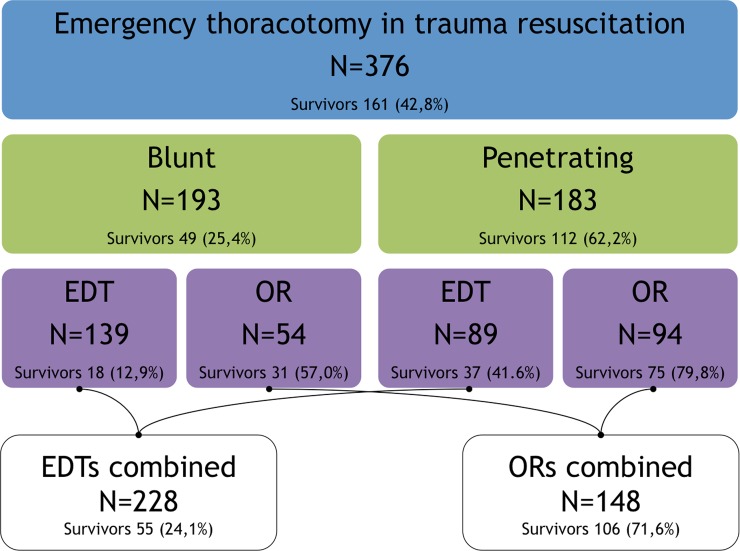
Results: A total of 8 articles from Europe were included originating from Croatia, Norway (n = 2), Denmark, Iceland, the Netherlands, Scotland, and Switzerland. Of 376 resuscitative thoracotomies, 193 (51.3 %) were for blunt trauma. Male:female distribution was 3.5:1. The collectively reported overall survival was 42.8 % (n = 161), with 25.4 % (49 of 193) blunt trauma and 61.2 % (112 of 183) penetrating injuries. When strictly including those ERTs designated as done in the emergency department for blunt mechanism (n = 139) only, a total of 18 patients survived (12.9 %). Survival after EDTs for penetrating trauma was 41.6 % (37 of 89). Neurological outcome (reported in 5 of 8 studies) reported favorable neurological long-term outcome in the majority of survivors, even after blunt trauma. None referred to Glasgow Outcome Score. Heterogeneity in the studies prevented outcome analyses by formal quantitative meta-analysis.
Conclusion: The reported outcome after ERT in European civilian trauma populations is favorable, with one in every four ERTs in the ED surviving. Notably, outcome is at variance with previously reported collective data, in particular for blunt trauma. Multicenter, prospective, observational data are needed to validate the modern role of ERT in blunt trauma.
Keywords: Blunt trauma; Emergency thoracotomy; Penetrating trauma; Resuscitation; Survival.
Conflict of interest statement
Compliance with ethical standardsConflict of interestJon Kristian Narvestad, Maryam Meskinfamfard, and Kjetil Søreide declare that they have no conflict of interest.Ethical standardThis article does not contain any studies with human participants or animals performed by any of the authors.
Figures
References
-
- Working Group, Ad Hoc Subcommittee on Outcomes, American College of Surgeons-Committee on Trauma. Practice management guidelines for emergency department thoracotomy. Working Group, Ad Hoc Subcommittee on Outcomes, American College of Surgeons-Committee on Trauma. J Am Coll Surg. 2001;193(3):303–9. - PubMed
-
- Søreide K, Petrone P, Asensio JA. Emergency thoracotomy in trauma: rationale, risks, and realities. Scand J Surg. 2007;96(1):4–10. - PubMed
Publication types
MeSH terms
LinkOut - more resources
Full Text Sources
Other Literature Sources
