


The Antinociceptive and Antiinflammatory Properties of 3-furan-2-yl-N-p-tolyl-acrylamide, a Positive Allosteric Modulator of α7 Nicotinic Acetylcholine Receptors in Mice
- PMID: 26280585
- PMCID: PMC4847442
- DOI: 10.1213/ANE.0000000000000902
The Antinociceptive and Antiinflammatory Properties of 3-furan-2-yl-N-p-tolyl-acrylamide, a Positive Allosteric Modulator of α7 Nicotinic Acetylcholine Receptors in Mice
Abstract
Background: Positive allosteric modulators (PAMs) facilitate endogenous neurotransmission and/or enhance the efficacy of agonists without directly acting on the orthosteric binding sites. In this regard, selective α7 nicotinic acetylcholine receptor type II PAMs display antinociceptive activity in rodent chronic inflammatory and neuropathic pain models. This study investigates whether 3-furan-2-yl-N-p-tolyl-acrylamide (PAM-2), a new putative α7-selective type II PAM, attenuates experimental inflammatory and neuropathic pains in mice.
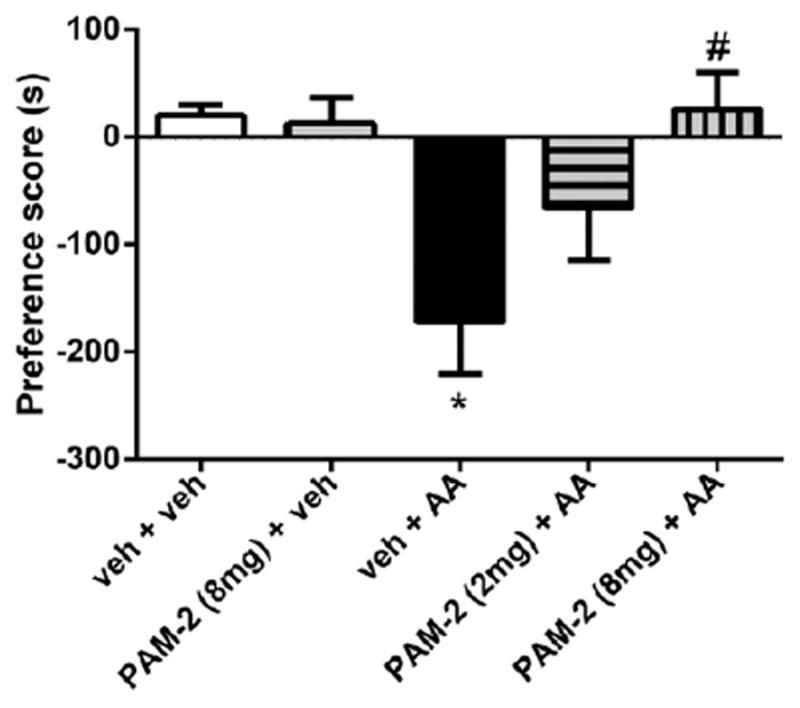
Methods: We tested the activity of PAM-2 after intraperitoneal administration in 3 pain assays: the carrageenan-induced inflammatory pain, the complete Freund adjuvant-induced inflammatory pain, and the chronic constriction injury-induced neuropathic pain in mice. We also tested whether PAM-2 enhanced the effects of the selective α7 agonist choline in the mouse carrageenan test given intrathecally. Because the experience of pain has both sensory and affective dimensions, we also evaluated the effects of PAM-2 on acetic acid-induced aversion by using the conditioned place aversion test.
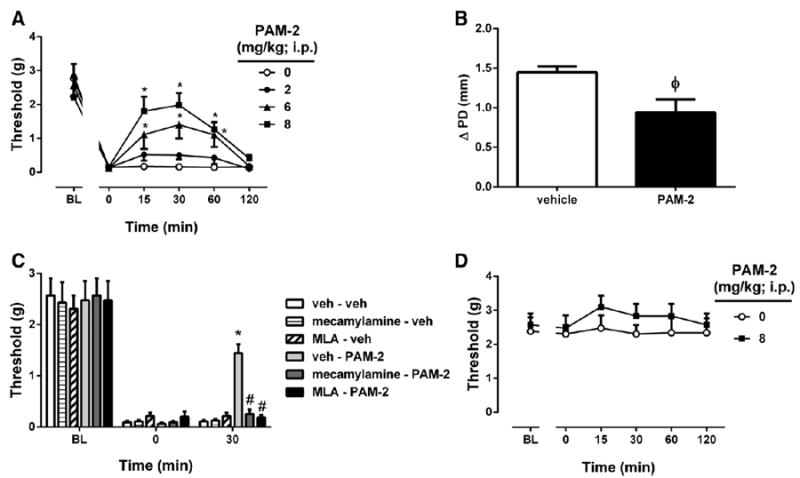
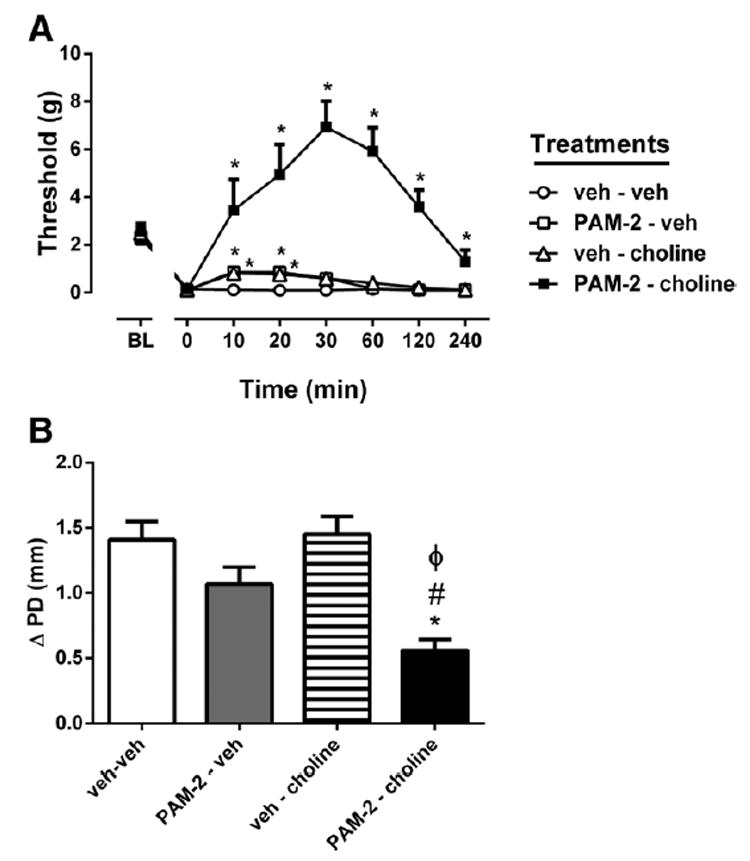
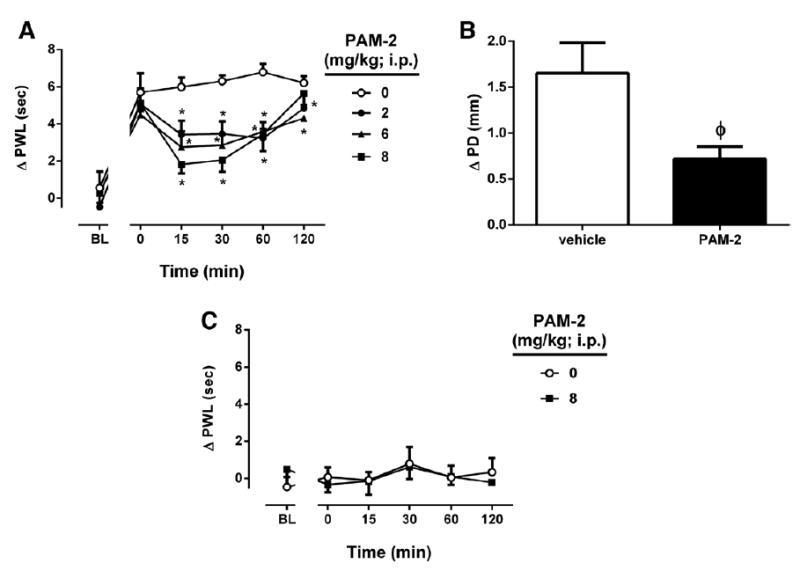
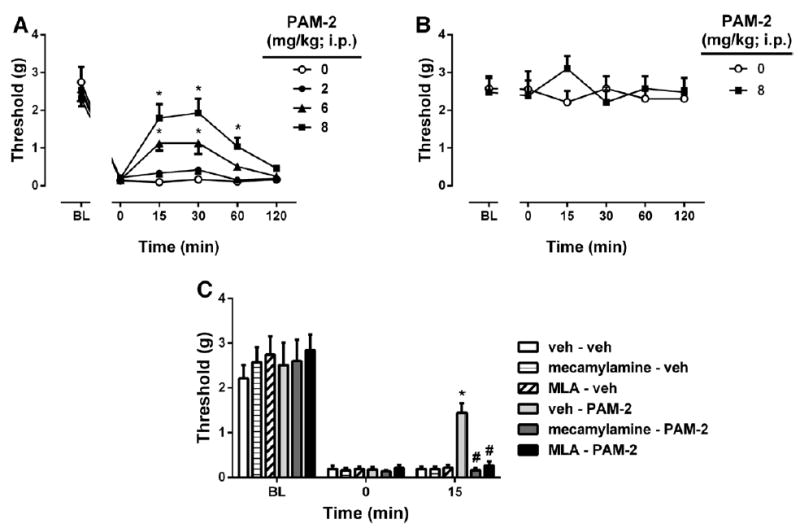
Results: We observed that systemic administration of PAM-2 significantly reversed mechanical allodynia and thermal hyperalgesia in inflammatory and neuropathic pain models in a dose- and time-dependent manner without motor impairment. In addition, by attenuating the paw edema in inflammatory models, PAM-2 showed antiinflammatory properties. The antinociceptive effect of PAM-2 was inhibited by the selective competitive antagonist methyllycaconitine, indicating that the effect is mediated by α7 nicotinic acetylcholine receptors. Furthermore, PAM-2 enhanced the antiallodynic and antiinflammatory effects of choline, a selective α7 agonist, in the mouse carrageenan test. PAM-2 was also effective in reducing acetic acid-induced aversion in the conditioned place aversion assay.
Conclusions: These findings suggest that the administration of PAM-2, a new α7-selective type II PAM, reduces the neuropathic and inflammatory pain sensory and affective behaviors in the mouse. Thus, this drug may have therapeutic applications in the treatment and management of chronic pain.
Conflict of interest statement
The authors declare no conflicts of interest.
Figures

References
-
- Damaj MI, Meyer EM, Martin BR. The antinociceptive effects of alpha7 nicotinic agonists in an acute pain model. Neuropharmacology. 2000;39:2785–91. - PubMed
-
- Wang Y, Su DM, Wang RH, Liu Y, Wang H. Antinociceptive effects of choline against acute and inflammatory pain. Neuroscience. 2005;132:49–56. - PubMed
-
- Medhurst SJ, Hatcher JP, Hille CJ, Bingham S, Clayton NM, Billinton A, Chessell IP. Activation of the alpha7-nicotinic acetylcholine receptor reverses complete freund adjuvant-induced mechanical hyperalgesia in the rat via a central site of action. J Pain. 2008;9:580–7. - PubMed
-
- Feuerbach D, Lingenhoehl K, Olpe HR, Vassout A, Gentsch C, Chaperon F, Nozulak J, Enz A, Bilbe G, McAllister K, Hoyer D. The selective nicotinic acetylcholine receptor alpha7 agonist JN403 is active in animal models of cognition, sensory gating, epilepsy and pain. Neuropharmacology. 2009;56:254–63. - PubMed
Publication types
MeSH terms
Substances
Grants and funding
LinkOut - more resources
Full Text Sources
Medical
Miscellaneous
