


Flavonoid-rich orange juice is associated with acute improvements in cognitive function in healthy middle-aged males
- PMID: 26280945
- PMCID: PMC5009163
- DOI: 10.1007/s00394-015-1016-9
Flavonoid-rich orange juice is associated with acute improvements in cognitive function in healthy middle-aged males
Abstract
Purpose: Epidemiological evidence suggests that chronic consumption of fruit-based flavonoids is associated with cognitive benefits; however, the acute effects of flavonoid-rich (FR) drinks on cognitive function in the immediate postprandial period require examination. The objective was to investigate whether consumption of FR orange juice is associated with acute cognitive benefits over 6 h in healthy middle-aged adults.
Methods: Males aged 30-65 consumed a 240-ml FR orange juice (272 mg) and a calorie-matched placebo in a randomized, double-blind, counterbalanced order on 2 days separated by a 2-week washout. Cognitive function and subjective mood were assessed at baseline (prior to drink consumption) and 2 and 6 h post consumption. The cognitive battery included eight individual cognitive tests. A standardized breakfast was consumed prior to the baseline measures, and a standardized lunch was consumed 3 h post-drink consumption.
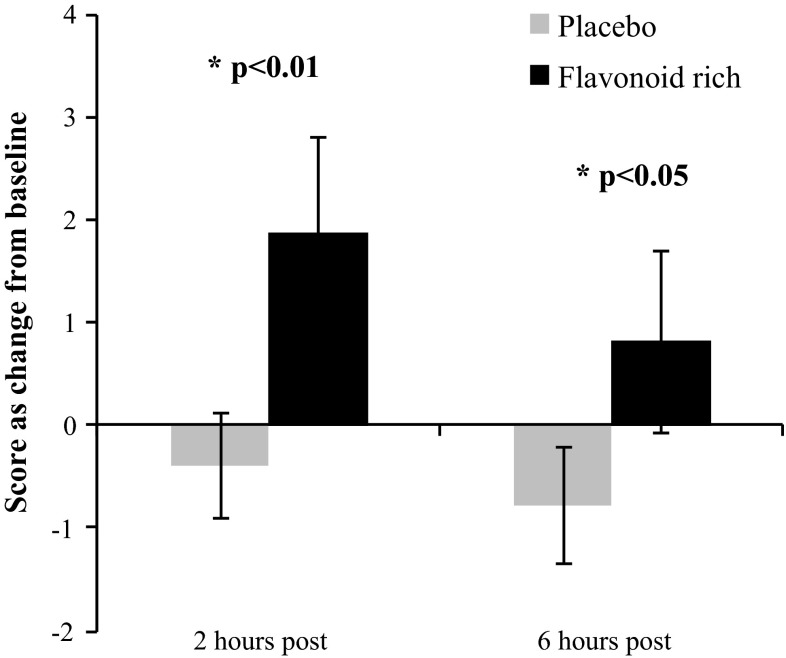
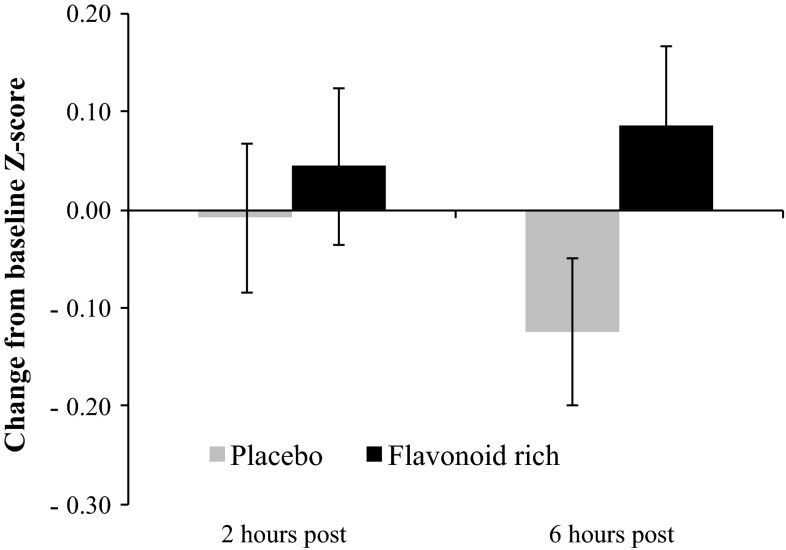
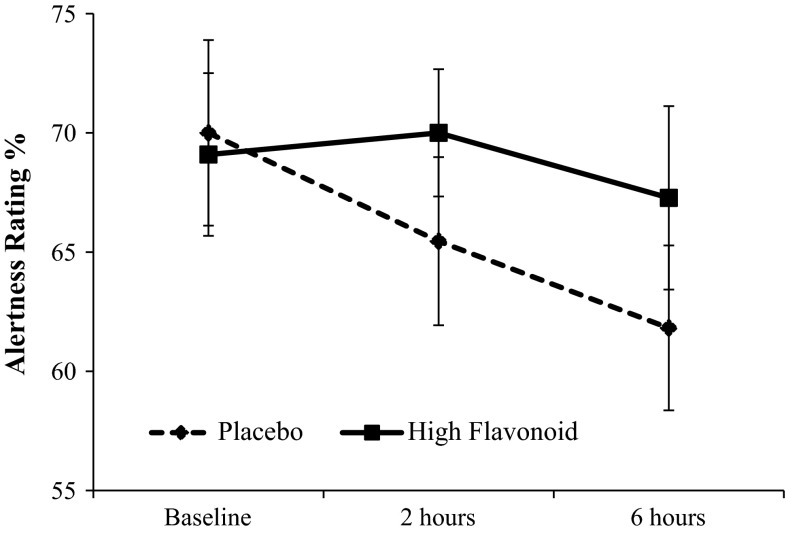
Results: Change from baseline analysis revealed that performance on tests of executive function and psychomotor speed was significantly better following the FR drink compared to the placebo. The effects of objective cognitive function were supported by significant benefits for subjective alertness following the FR drink relative to the placebo.
Conclusions: These data demonstrate that consumption of FR orange juice can acutely enhance objective and subjective cognition over the course of 6 h in healthy middle-aged adults.
Keywords: Cognition; Cognitive function; Flavanones; Flavonoids; Orange juice.
Figures
References
-
- Dauchet L, Ferrières J, Arveiler D, Yarnell JW, Gey F, Ducimetière P, Ruidavets J-B, Haas A, Bingham A, Amouyel P, et al. Frequency of fruit and vegetable consumption and coronary heart disease in France and Northern Ireland: the PRIME study. Br J Nutr. 2004;92:963–972. doi: 10.1079/BJN20041286. - DOI - PubMed
-
- Yamada T, Hayasaka S, Shibata Y, Ojima T, Saegusa T, Gotoh T, Ishikawa S, Nakamura Y, Kayaba K. Frequency of citrus fruit intake is associated with the incidence of cardiovascular disease: the Jichi Medical School cohort study. J Epidemiol. 2011;21:169–175. doi: 10.2188/jea.JE20100084. - DOI - PMC - PubMed
Publication types
MeSH terms
Substances
LinkOut - more resources
Full Text Sources
Other Literature Sources
