


Within-host evolution decreases virulence in an opportunistic bacterial pathogen
- PMID: 26282271
- PMCID: PMC4539714
- DOI: 10.1186/s12862-015-0447-5
Within-host evolution decreases virulence in an opportunistic bacterial pathogen
Abstract
Background: Pathogens evolve in a close antagonistic relationship with their hosts. The conventional theory proposes that evolution of virulence is highly dependent on the efficiency of direct host-to-host transmission. Many opportunistic pathogens, however, are not strictly dependent on the hosts due to their ability to reproduce in the free-living environment. Therefore it is likely that conflicting selection pressures for growth and survival outside versus within the host, rather than transmission potential, shape the evolution of virulence in opportunists. We tested the role of within-host selection in evolution of virulence by letting a pathogen Serratia marcescens db11 sequentially infect Drosophila melanogaster hosts and then compared the virulence to strains that evolved only in the outside-host environment.
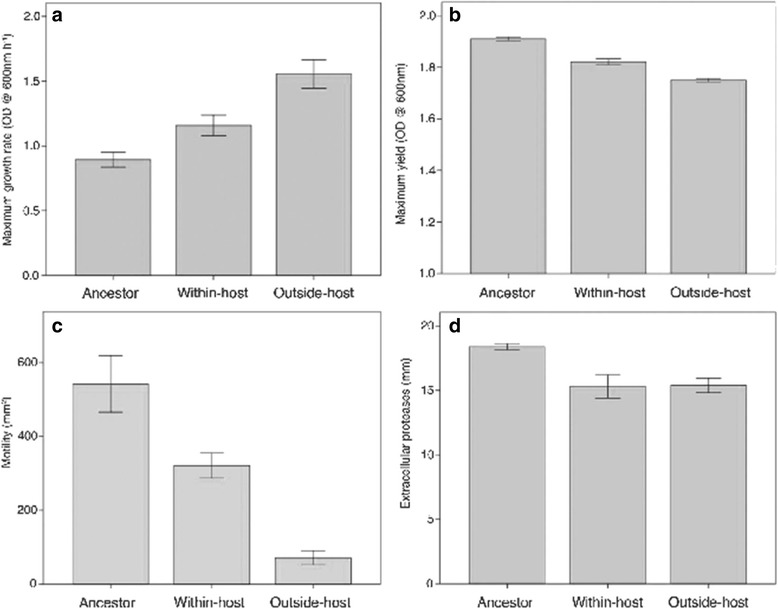
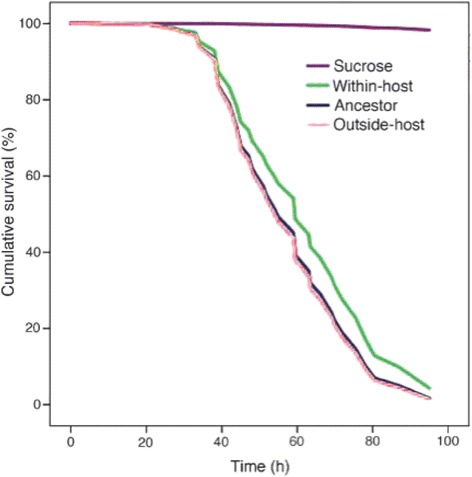
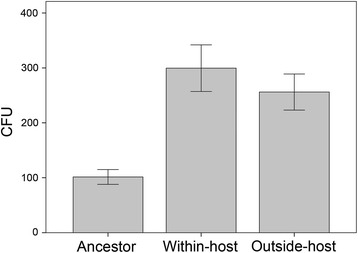
Results: We found that the pathogen adapted to both Drosophila melanogaster host and novel outside-host environment, leading to rapid evolutionary changes in the bacterial life-history traits including motility, in vitro growth rate, biomass yield, and secretion of extracellular proteases. Most significantly, selection within the host led to decreased virulence without decreased bacterial load while the selection lines in the outside-host environment maintained the same level of virulence with ancestral bacteria.
Conclusions: This experimental evidence supports the idea that increased virulence is not an inevitable consequence of within-host adaptation even when the epidemiological restrictions are removed. Evolution of attenuated virulence could occur because of immune evasion within the host. Alternatively, rapid fluctuation between outside-host and within-host environments, which is typical for the life cycle of opportunistic bacterial pathogens, could lead to trade-offs that lower pathogen virulence.
Figures
References
Publication types
MeSH terms
LinkOut - more resources
Full Text Sources
Other Literature Sources
