


RIP3-mediated necrotic cell death accelerates systematic inflammation and mortality
- PMID: 26283397
- PMCID: PMC4568286
- DOI: 10.1073/pnas.1514730112
RIP3-mediated necrotic cell death accelerates systematic inflammation and mortality
Erratum in
-
Correction for Meng et al., RIP3-mediated necrotic cell death accelerates systematic inflammation and mortality.Proc Natl Acad Sci U S A. 2015 Oct 6;112(40):E5552. doi: 10.1073/pnas.1518137112. Epub 2015 Sep 21. Proc Natl Acad Sci U S A. 2015. PMID: 26392560 Free PMC article. No abstract available.
Abstract
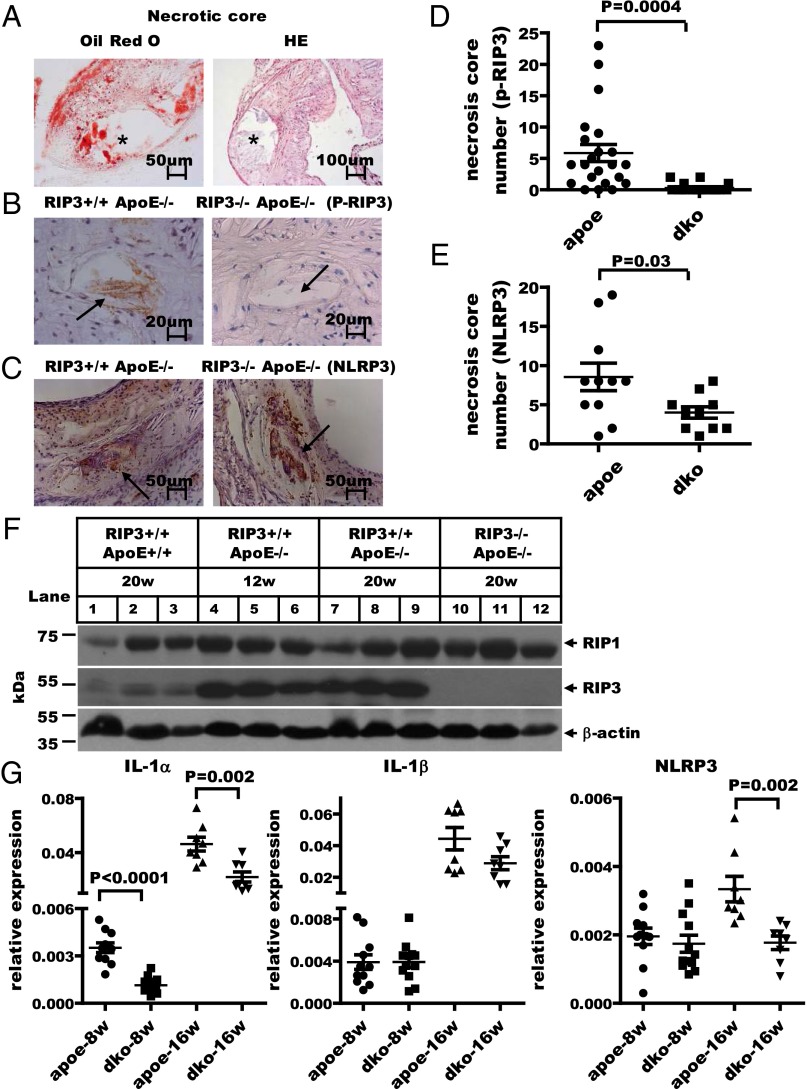
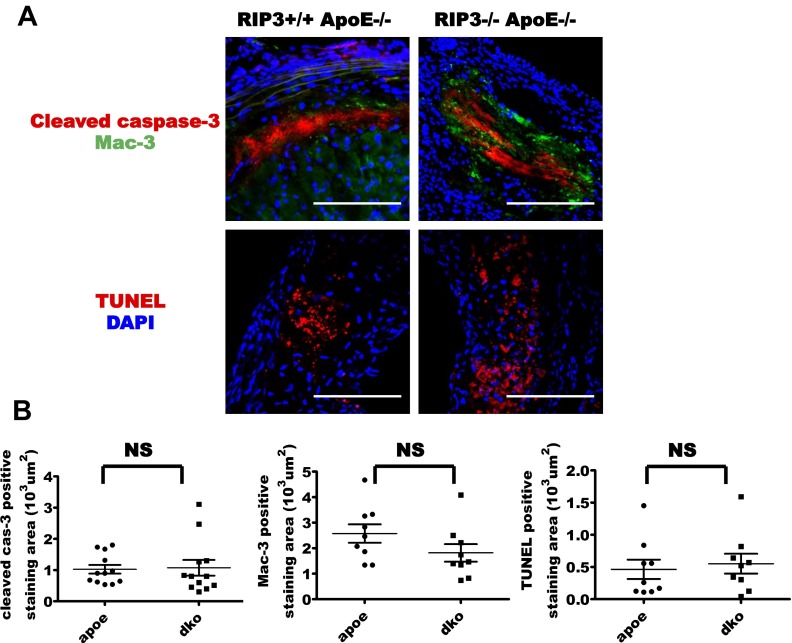
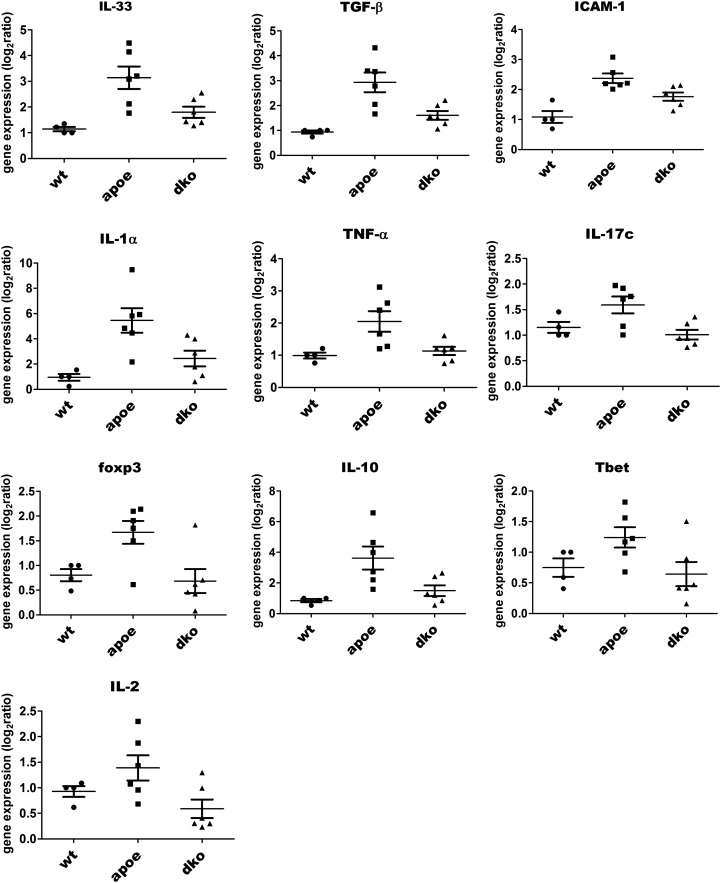
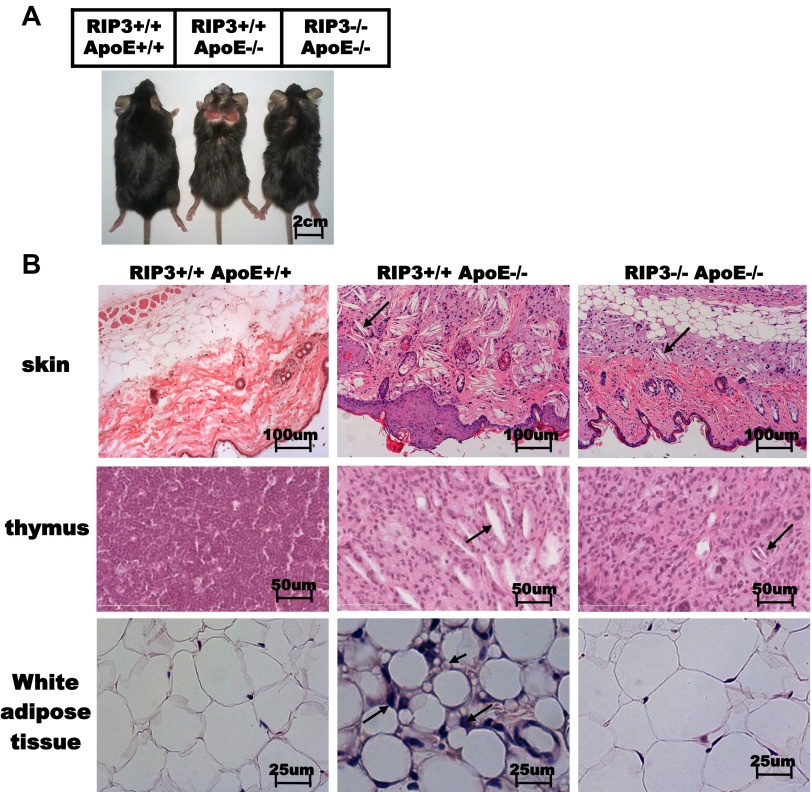
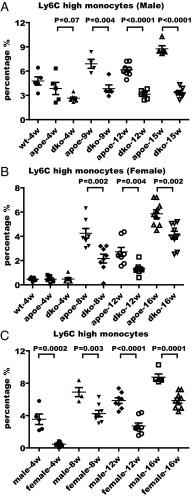
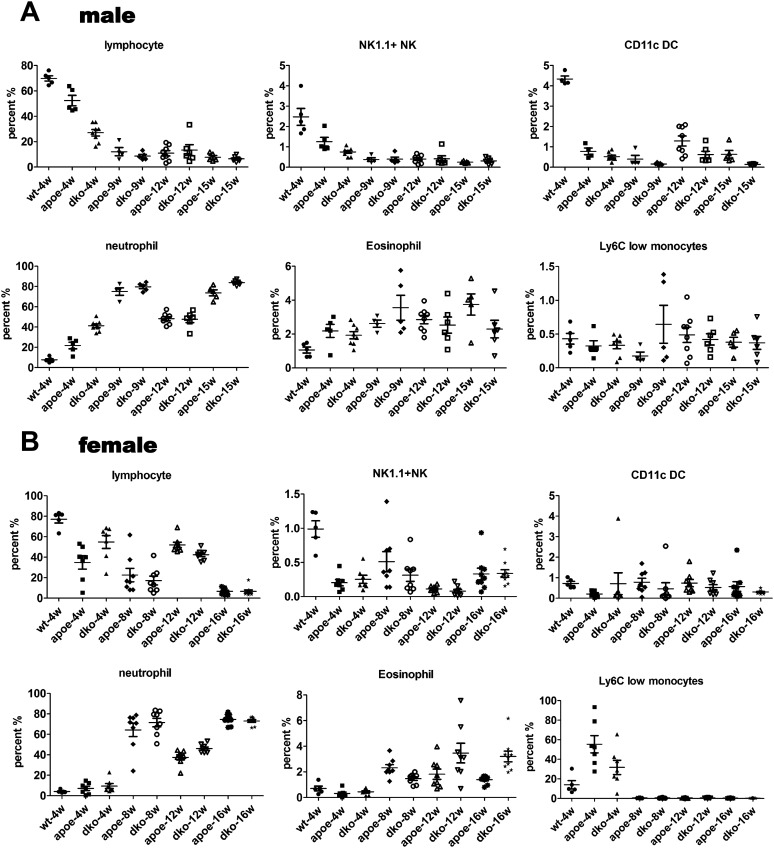
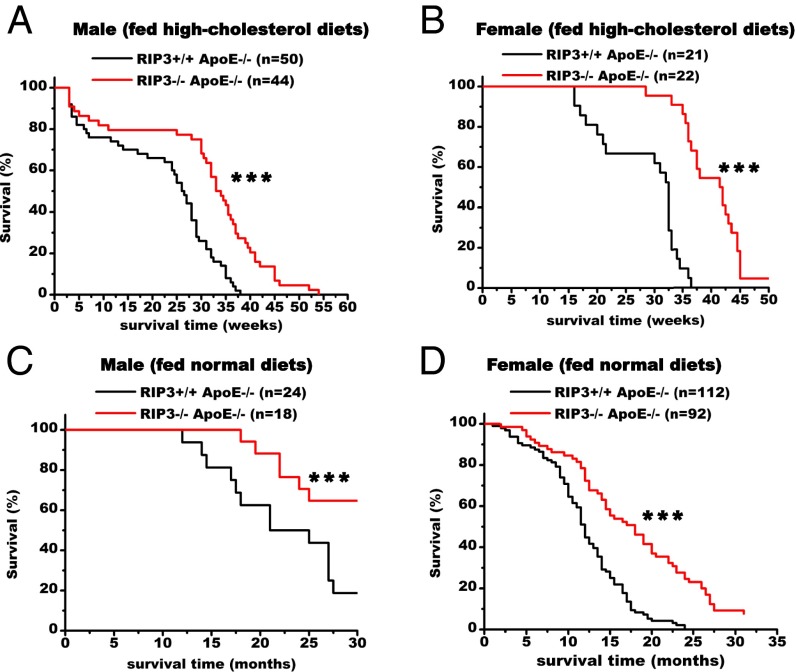
Systematic inflammation contributes to the development of many diseases, including cardiovascular disease, which is the leading cause of mortality worldwide. How such inflammation is initiated and maintained throughout the course of disease remains unclear. In the current study, we report the observation of specific phosphorylation of the receptor-interacting protein 3 (RIP3) kinase that marks the activation of programmed necrosis (also called the "necroptosis pathway") in the atherosclerotic plaques in apolipoprotein E (ApoE)-knockout mice. The mRNA expression levels of 10 inflammatory cytokines, including IL-1α, were decreased significantly in the plaque regions of mice lacking RIP3. Lymphocyte infiltrations in the adipocyte tissue and in skin lesions of ApoE single-knockout mice were significantly mitigated in ApoE/RIP3 double-knockout mice. The high percentage of inflammatory monocytes with high levels of lymphocyte antigen 6C in the blood of ApoE single-knockout mice also was greatly decreased in the ApoE/RIP3 double-knockout mice. Most significantly, the double-knockout mice displayed dramatically delayed mortality compared with ApoE single-knockout mice. Our findings indicate that necrotic death in areas such as atherosclerotic plaques may release cytokines that mobilize monocytes from bone marrow to the lesion sites, exacerbating the lesions in multiple tissues and resulting in the premature death of the animals.
Keywords: RIP3; atherosclerosis; longevity; macrophages; necrosis.
Conflict of interest statement
The authors declare no conflict of interest.
Figures
References
-
- Libby P. Inflammation in atherosclerosis. Nature. 2002;420(6917):868–874. - PubMed
-
- Breslow JL. Mouse models of atherosclerosis. Science. 1996;272(5262):685–688. - PubMed
-
- Kamari Y, et al. Reduced atherosclerosis and inflammatory cytokines in apolipoprotein-E-deficient mice lacking bone marrow-derived interleukin-1α. Biochem Biophys Res Commun. 2011;405(2):197–203. - PubMed
Publication types
MeSH terms
Substances
LinkOut - more resources
Full Text Sources
Other Literature Sources
Molecular Biology Databases
Miscellaneous
