Review
. 2015 Sep;1349(1):96-118.
doi: 10.1111/nyas.12862. Epub 2015 Aug 18.

Alcohol and violence: neuropeptidergic modulation of monoamine systems

Affiliations
Review

Alcohol and violence: neuropeptidergic modulation of monoamine systems

Klaus A Miczek et al. Ann N Y Acad Sci. 2015 Sep.

Abstract

Neurobiological processes underlying the epidemiologically established link between alcohol and several types of social, aggressive, and violent behavior remain poorly understood. Acute low doses of alcohol, as well as withdrawal from long-term alcohol use, may lead to escalated aggressive behavior in a subset of individuals. An urgent task will be to disentangle the host of interacting genetic and environmental risk factors in individuals who are predisposed to engage in escalated aggressive behavior. The modulation of 5-hydroxytryptamine impulse flow by gamma-aminobutyric acid (GABA) and glutamate, acting via distinct ionotropic and metabotropic receptor subtypes in the dorsal raphe nucleus during alcohol consumption, is of critical significance in the suppression and escalation of aggressive behavior. In anticipation and reaction to aggressive behavior, neuropeptides such as corticotropin-releasing factor, neuropeptide Y, opioid peptides, and vasopressin interact with monoamines, GABA, and glutamate to attenuate and amplify aggressive behavior in alcohol-consuming individuals. These neuromodulators represent novel molecular targets for intervention that await clinical validation. Intermittent episodes of brief social defeat during aggressive confrontations are sufficient to cause long-lasting neuroadaptations that can lead to the escalation of alcohol consumption.

Keywords: GABA; aggression; alcohol; glutamate; serotonin; violence.


Figures

Figure 1
Figure 1
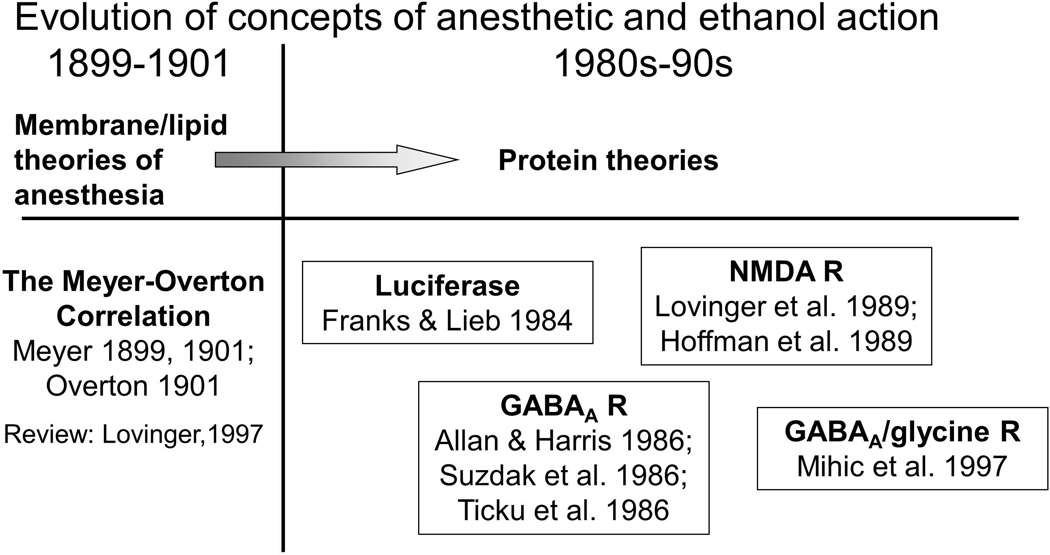
Theories of ethanol action at the cellular level. Adapted from Dunwiddie 2001; works cited.,,,,–
Figure 2
Figure 2
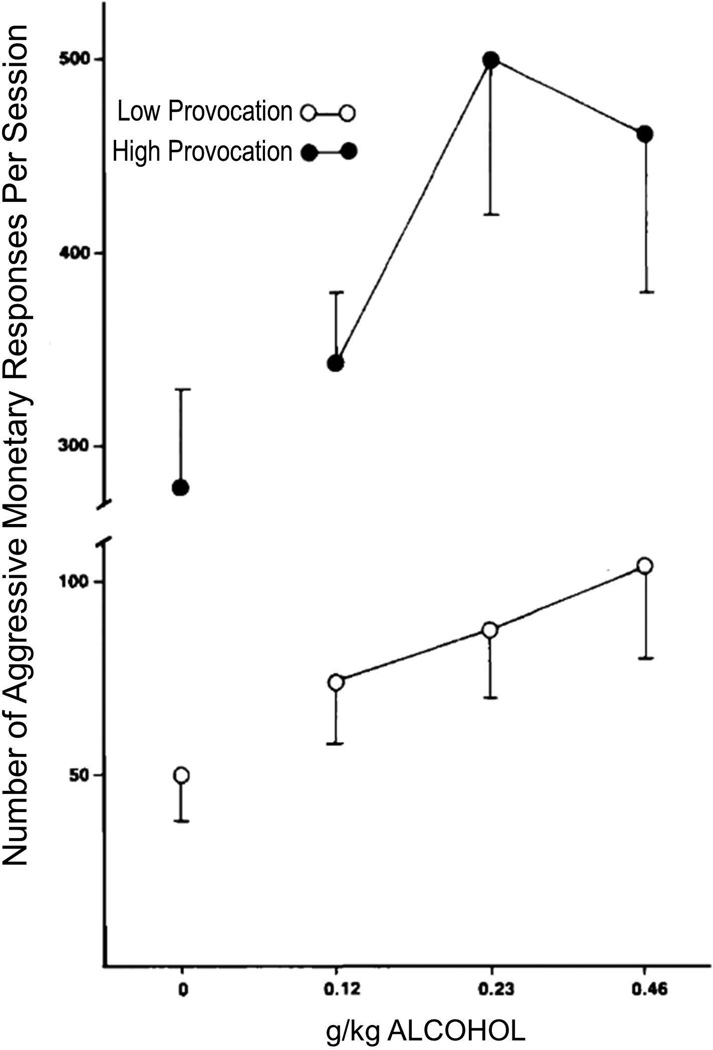
Number of aggressive monetary subtraction responses per session after the administration of placebo or 3 different doses of alcohol. Data points represent means of 4 subjects each in the low- and high-provocation conditions, and vertical lines are ±1 SEM. From Cherek, et al.
Figure 3
Figure 3
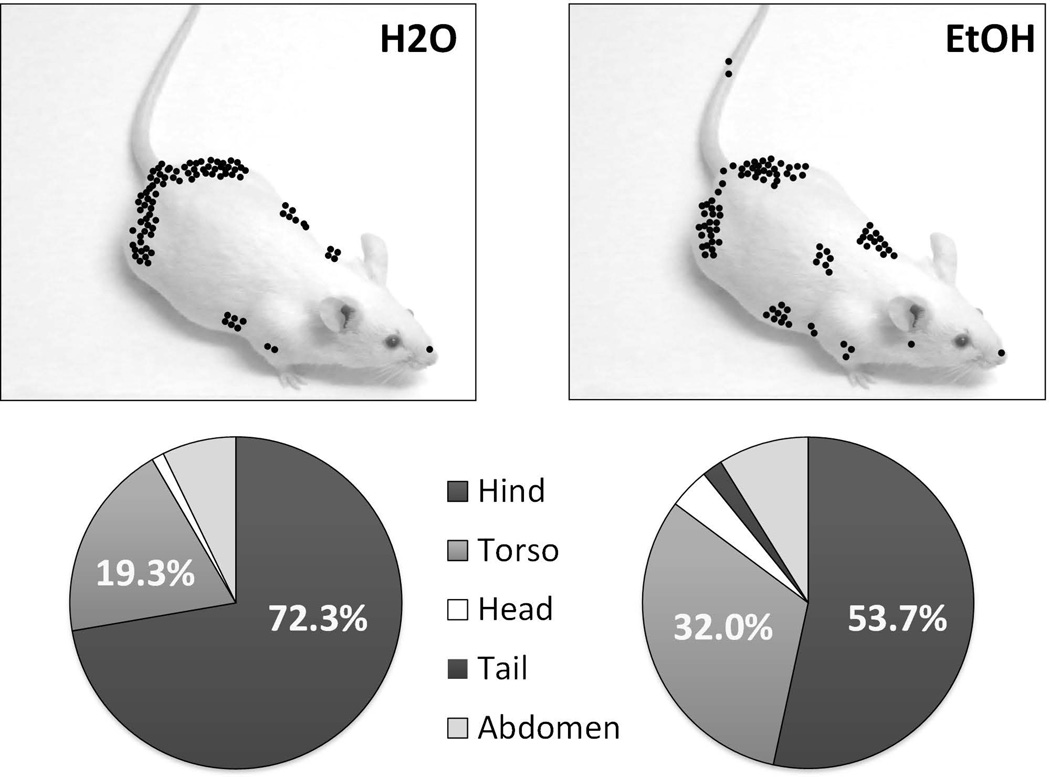
Target areas of bites inflicted by resident mice after oral self-administration of water (left) or 1 g/kg ethanol (right). From Newman, et al. in preparation.
Figure 4
Figure 4
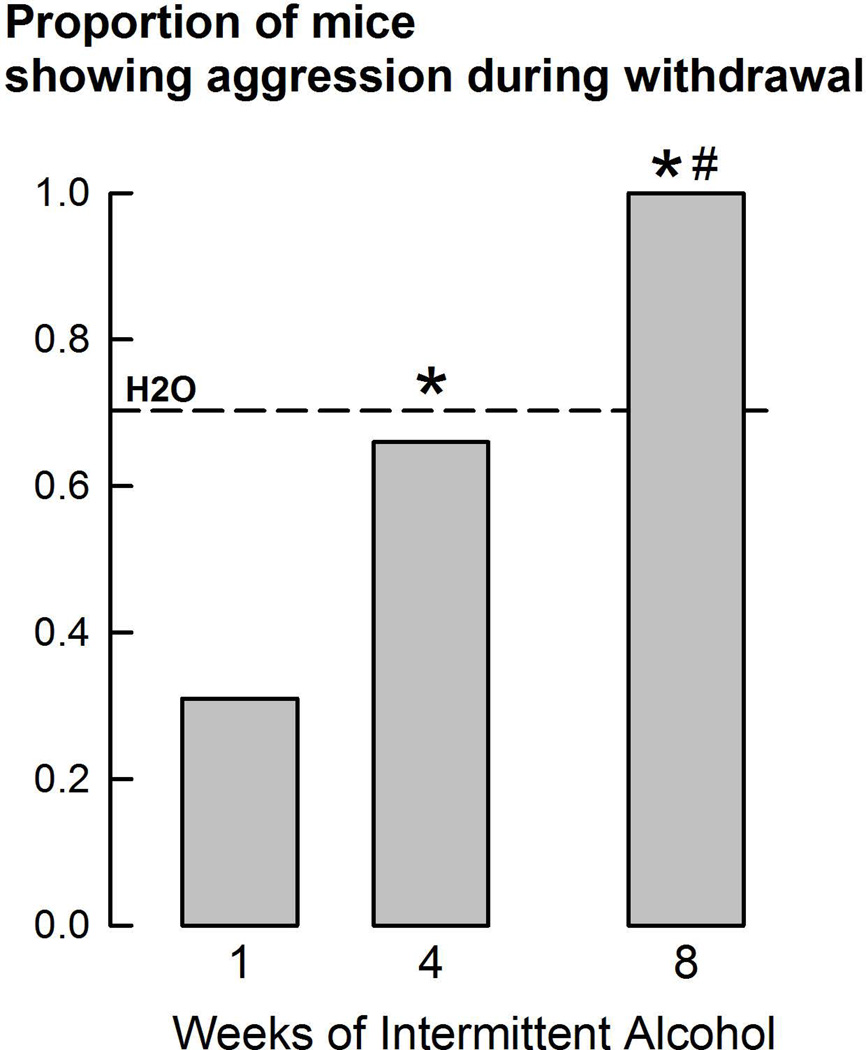
Proportion of mice showing aggression during 8 hour withdrawal from intermittent alcohol access after 1, 4, or 8 weeks of exposure. The dashed line represents the average of water drinkers across age-matched groups. *P < 0.05 vs. wk 1; #P < 0.05 vs. H2O. From Hwa, et al.
Figure 5
Figure 5
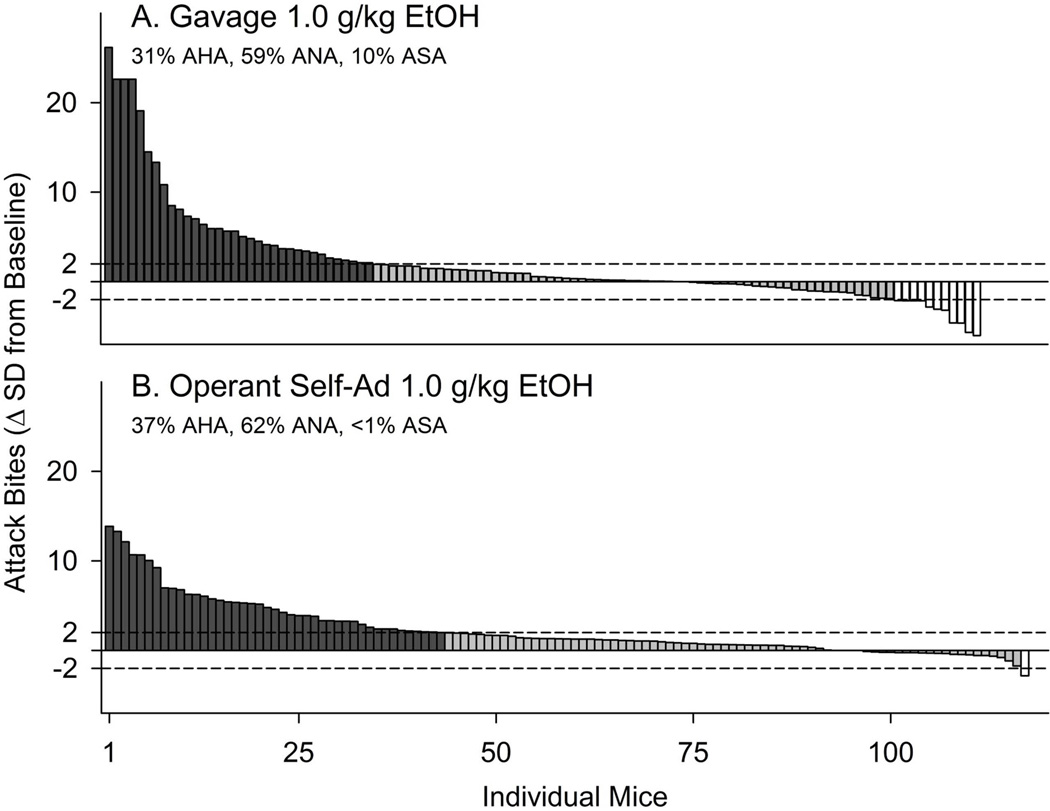
Histogram representing the proportion and individual magnitude of alcohol-heightened aggression after gavage (A) or operant self-administration (B) of 1.0 g/kg alcohol. Dark vertical bars represent outbred CFW mice whose average frequency of attack bites after 1 g/kg alcohol exceeds their baseline levels of aggression by >2 SD (alcohol-heightened aggression, or AHA). Gray vertical bars represent mice whose aggressive behavior is not significantly altered by 1 g/kg alcohol (alcohol non-heightened aggression, or ANA), and white vertical bars represent mice whose aggressive behavior after 1 g/kg alcohol is reduced by >2 SD (alcohol-suppressed aggression, or ASA). Dotted horizontal lines represent a 95% confidence interval, ±2 SD from average baseline. From Miczek, et al.
Figure 6
Figure 6
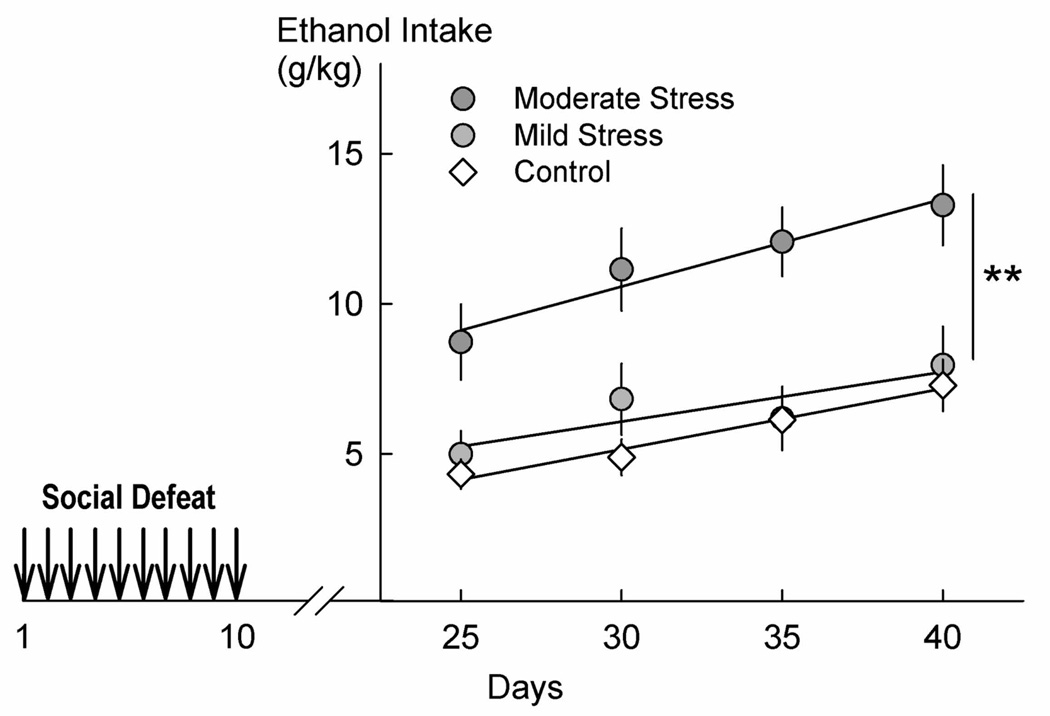
Twenty percent ethanol intake (g/kg/day) during continuous access two-bottle choice over the course of 20 days, starting 10 days after moderate (n = 39) or mild (n = 19) social defeat stress (control, n = 29). Data points are 5-day averages ±SEM beginning on the day indicated (i.e., 25 signifies days 25–29); **P < 0.001 compared to controls. From Norman, et al.
Figure 7
Figure 7
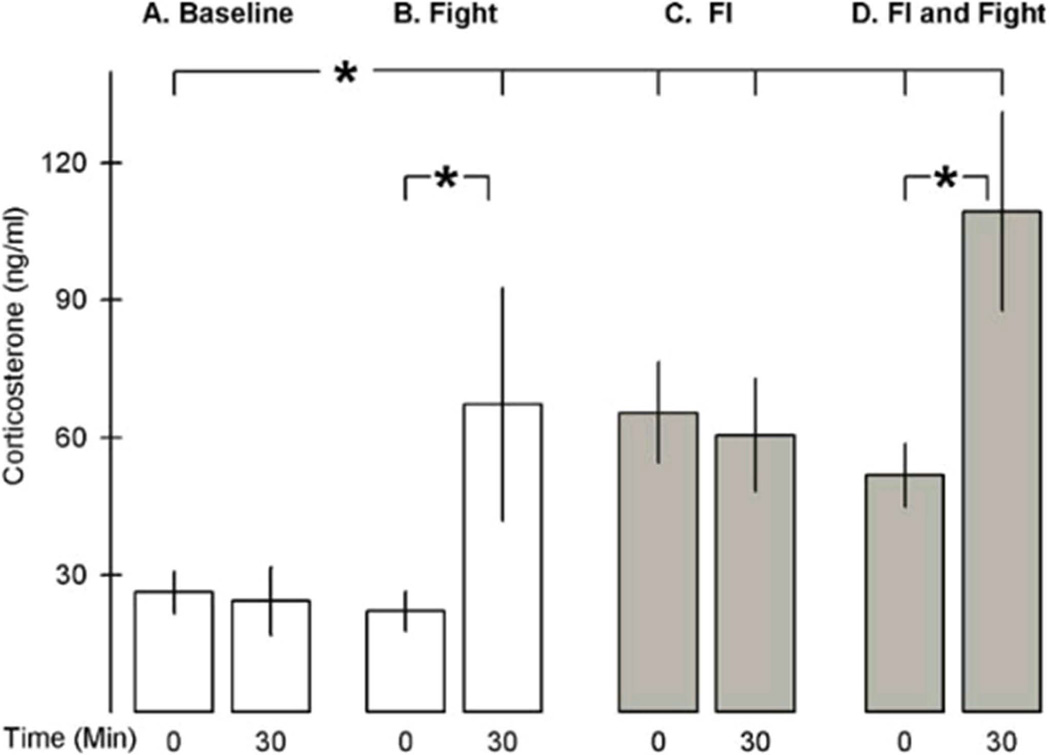
The effects of fixed interval schedule of reinforcement (FI) performance and fighting on corticosterone levels. Mean plasma corticosterone levels (ng/ml) are shown from resident mice immediately or 30 min after four different events. (A) Baseline corticosterone levels at the time of day when mice are conditioned to respond on an FI10 schedule; (B) levels after a brief attack flurry; (C) levels after completing the FI, but when no fight has occurred; and (D) levels after completing the FI and engaging in a brief fight. The open bars represent corticosterone levels when the mice have not responded on the FI10, and the filled gray bars represent levels after completion of the FI10. Vertical lines indicate ± 1 SEM; *P < 0.05. From Fish, et al.
Figure 8
Figure 8
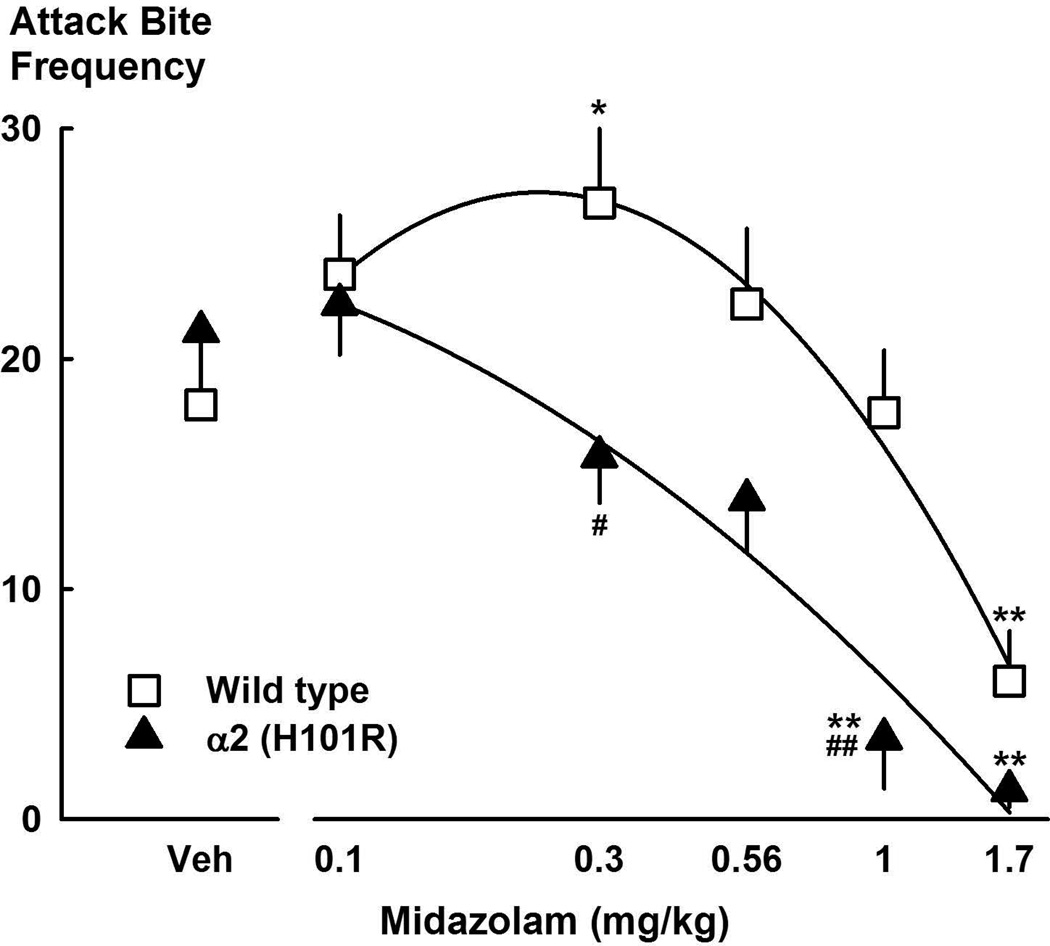
Attack bite frequencies in a novel environment following systemic midazolam treatment of wild-type C57BL6/J and benzodiazepine-insensitive Gabra2 (H101R) point-mutated mice. Values are means ± SEM; *P < 0.05, **P < 0.01 compared to vehicle; #P < 0.05, ##P < 0.01 compared to wild type. From Newman, et al.
Figure 9
Figure 9
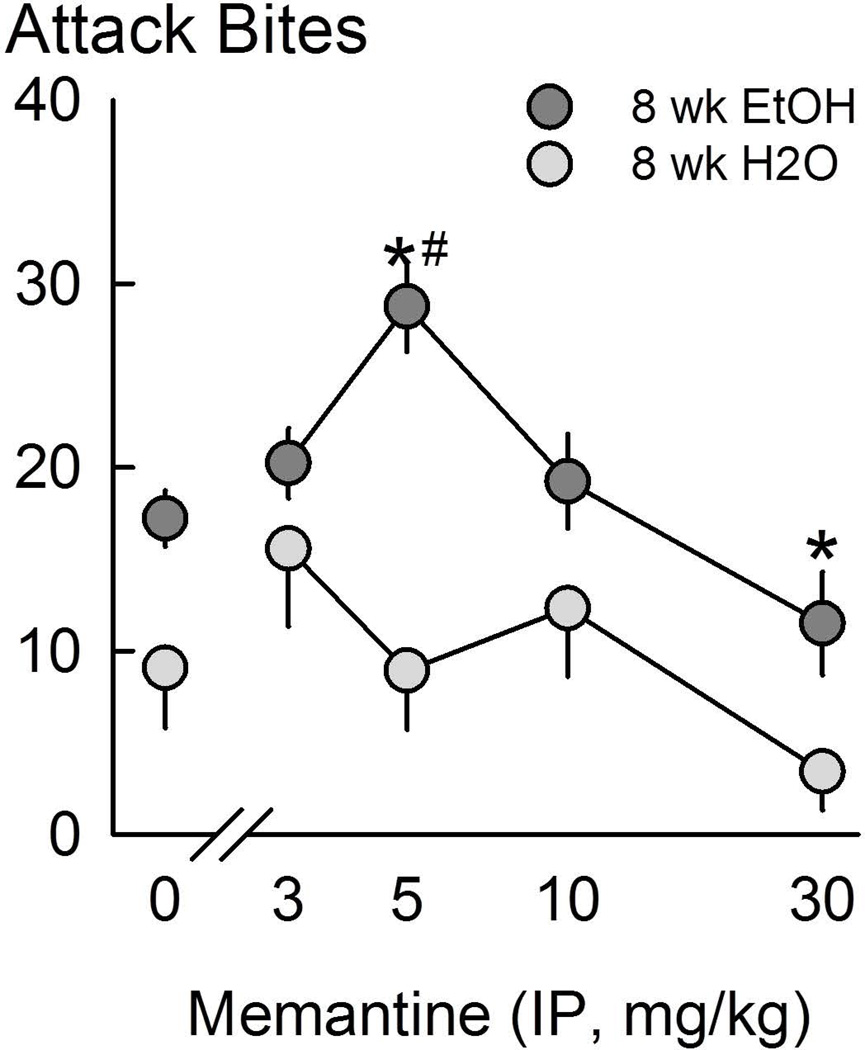
Attack bites during 6–8 h withdrawal from 8 weeks of intermittent alcohol access after treatment with the NMDA receptor antagonist memantine (0–30 mg/kg, i.p.). Black dots represent alcohol drinkers and white dots represent water drinkers. Values are means ± SEM; *P < 0.05 vs. vehicle; #P < 0.05 vs. H2O. From Hwa, et al.

References

    1. Pernanen K. Alcohol and crimes of violence. In: Kissin B, editor. Social Aspects of Alcoholism. New York: Plenum Press; 1976. pp. 351–444.
    1. Roizen J. Issues in epidemiology of alcohol and violence. In: Martin SE, editor. Alcohol and interpersonal violence: Fostering multidisciplinary perspectives. Research Monograph No. 24. Rockville, MD: National Institutes of Health, National Instiute on Alcohol Abuse and Alcoholism; 1993. pp. 3–36.
    1. Rossow I, Bye EK. The problem of alcohol-related violence: An epidemiological and public health perspective. In: McMurran M, editor. Alcohol-Related Violence: Prevention and Treatment. Chichester: Wiley-Blackwell; 2013. pp. 1–18.
    1. Holder HD. Alcohol and violence: a complex nexus of drinking environment and drinking pattern. Addiction. 2008;103:78–79. - PubMed
    1. Shield KD, Parry C, Rehm J. Chronic diseases and conditions related to alcohol use. Alcohol Res. 2013;35:155–173. - PMC - PubMed

MeSH terms