


Combining behavioural activation with physical activity promotion for adults with depression: findings of a parallel-group pilot randomised controlled trial (BAcPAc)
- PMID: 26289425
- PMCID: PMC4545876
- DOI: 10.1186/s13063-015-0881-0
Combining behavioural activation with physical activity promotion for adults with depression: findings of a parallel-group pilot randomised controlled trial (BAcPAc)
Abstract
Background: Depression is associated with physical inactivity, which may mediate the relationship between depression and a range of chronic physical health conditions. However, few interventions have combined a psychological intervention for depression with behaviour change techniques, such as behavioural activation (BA), to promote increased physical activity.
Methods: To determine procedural and clinical uncertainties to inform a definitive randomised controlled trial (RCT), a pilot parallel-group RCT was undertaken within two Improving Access to Psychological Therapies (IAPT) services in South West England. We aimed to recruit 80 adults with depression and randomise them to a supported, written self-help programme based on either BA or BA plus physical activity promotion (BAcPAc). Data were collected at baseline and 4 months post-randomisation to evaluate trial retention, intervention uptake and variance in outcomes to inform a sample size calculation. Qualitative data were collected from participants and psychological wellbeing practitioners (PWPs) to assess the acceptability and feasibility of the trial methods and the intervention. Routine data were collected to evaluate resource use and cost.
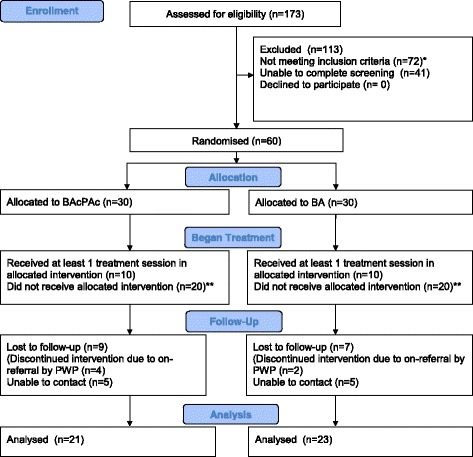
Results: Sixty people with depression were recruited, and a 73 % follow-up rate was achieved. Accelerometer physical activity data were collected for 64 % of those followed. Twenty participants (33 %) attended at least one treatment appointment. Interview data were analysed for 15 participants and 9 study PWPs. The study highlighted the challenges of conducting an RCT within existing IAPT services with high staff turnover and absences, participant scheduling issues, PWP and participant preferences for cognitive focussed treatment, and deviations from BA delivery protocols. The BAcPAc intervention was generally acceptable to patients and PWPs.
Conclusions: Although recruitment procedures and data collection were challenging, participants generally engaged with the BAcPAc self-help booklets and reported willingness to increase their physical activity. A number of feasibility issues were identified, in particular the under-use of BA as a treatment for depression, the difficulty that PWPs had in adapting their existing procedures for study purposes and the instability of the IAPT PWP workforce. These problems would need to be better understood and resolved before proceeding to a full-scale RCT.
Trial registration: ISRCTN74390532 . Registered on 26 March 2013.
Figures
References
-
- Health and Social Care Information Centre, Lifestyles Statistics, NHS Trust . Statistics on obesity, physical activity and diet: England, 2013. London: The Health and Social Care Information Centre; 2013.
Publication types
MeSH terms
Associated data
Grants and funding
LinkOut - more resources
Full Text Sources
Other Literature Sources
Medical
